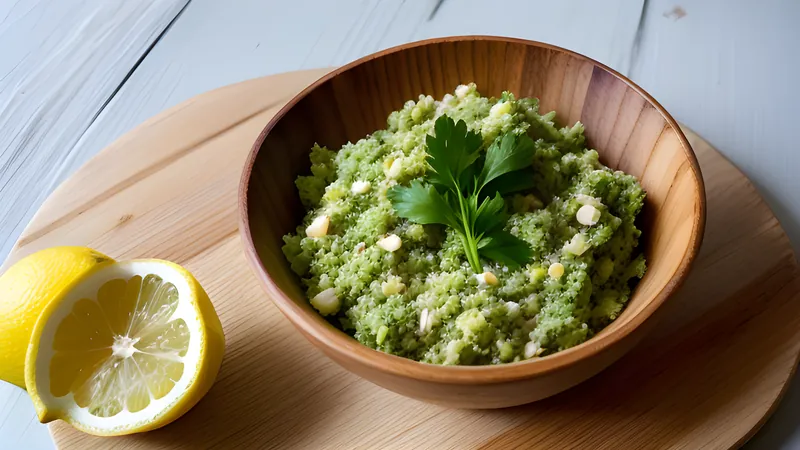
Remoulade: The Danish Version
Yellow, sweet, full of cabbage, and nothing like the one in Louisiana
Contents
↓ Jump to recipeOrder a hot dog from a Copenhagen pølsevogn and it arrives wearing three sauces, a scatter of raw onion, a scatter of crisp fried onion, and a strip of pickled cucumber. One of those sauces is pale yellow, sweet, and full of tiny flecks. That is remoulade, and if your only reference is the French sauce or the Louisiana one, the first mouthful is a surprise.
The French rémoulade is a mayonnaise sharpened with mustard, anchovy, capers and herbs — the sauce that dresses celeriac in a Parisian bistro, and a bracing, savoury, adult thing. Louisiana’s is red with paprika and cayenne and hot enough to matter, the sauce for a fried oyster or a crab cake. The Danish one is yellow with turmeric, sweet with sugar, chunky with cabbage, and mild to the point of being a children’s condiment. It shares a name, a mayonnaise base and a caper with its cousins, and there the family resemblance ends.
Denmark gets through an extraordinary amount of it. The commercial jar — Beauvais or K-Salat, in the yellow-labelled tub — is in essentially every Danish fridge, and per head the country consumes more remoulade than anywhere else on earth by a distance nobody has seriously challenged.
Remoulade: The Danish Version
Ingredients
- 300 g good thick mayonnaise (shop-bought is fine and traditional)
- 100 g white cabbage, cored
- 80 g sweet-sour pickled cucumber (Danish asier or a sweet gherkin), drained
- 40 g pickled cocktail onions or shallots, drained
- 1 tbsp capers, drained and rinsed
- 2 tsp mild curry powder
- 0.5 tsp ground turmeric
- 1.5 tbsp caster sugar
- 2 tsp Dijon mustard
- 2 tbsp of the pickling liquid from the cucumbers
- 1 tbsp white wine vinegar
- 2 tbsp double cream or crème fraîche
- 1 tbsp finely chopped fresh dill (optional)
- 0.5 tsp fine sea salt
- 6 turns white pepper
Method
- Cut the cabbage into 2 cm pieces and pulse in a food processor in 3–4 short bursts until it is in pieces about 2 mm across. Stop before it goes to paste — you want visible flecks, not slurry.
- Tip the cabbage into a sieve, toss with a pinch of salt, and leave over the sink for 20 minutes to draw out water. Then squeeze it hard in a clean tea towel. This step is what stops the remoulade going watery in the jar.
- Chop the pickled cucumber, onions and capers by hand to roughly the same 2 mm dice. Do not use the processor for these; they go to mush instantly.
- In a bowl, whisk the mayonnaise with the curry powder, turmeric, sugar, mustard, pickling liquid, vinegar and cream until completely smooth and evenly yellow.
- Fold in the squeezed cabbage, the diced pickles, onions, capers and the dill, if using.
- Season with the salt and white pepper. Taste: it should be sweet first, then sour, then faintly warm from the curry. Add up to 1 tsp more sugar or vinegar to balance.
- Transfer to a jar, cover, and refrigerate for at least 4 hours and ideally overnight before serving. The curry powder needs time to hydrate and the flavours to marry — it tastes raw and disjointed straight from the bowl.
- Keeps for 1 week in the fridge. Stir before each use.
How the sauce changed nationality
The route from Paris to a Danish hot dog stand runs through the nineteenth century and through industrial food manufacturing.
French cooking dominated European fine dining from the 1700s onward, and Danish restaurant kitchens took the whole vocabulary — sauces, terms, techniques — largely intact. Rémoulade came with it, in its proper savoury form, and appeared in Danish cookbooks in the 1800s looking recognisably French.
What happened next was the pickling industry. Denmark developed a substantial trade in pickled vegetables, and the factories had, as a by-product, enormous quantities of trimmings — offcuts of cabbage, cucumber and onion too small or irregular to jar. Chopping them fine and folding them into mayonnaise turned waste into a product. Turmeric was added because it was cheap and gave a consistent, appetising yellow that survived the jar. Sugar was added because Denmark had cheap colonial sugar and a well-established taste for it — the same instinct that puts caramel on potatoes in brunede kartofler. Curry powder came in through the British trade and gave a warmth that mattered against fried food.
By the mid-twentieth century the industrial version had displaced the French one so completely that a Dane asking for remoulade means the yellow one, and a Danish cookbook specifying the French one has to say so explicitly. The word won; the recipe underneath it was replaced entirely.
The curry powder question
Two teaspoons of mild curry powder into 300 g of mayonnaise sounds like a mistake and is essential. The quantity is far too small to make the sauce taste of curry. It is there for the coriander, the fenugreek and the cumin, which give a rounded savoury warmth underneath the sugar and stop the whole thing reading as sweet mayonnaise.
Use a mild, old-fashioned Madras-style powder rather than anything with heat or a lot of chilli. The Danish commercial versions use a blend that would be recognisable to anyone who grew up with a tin of curry powder in a British larder in 1975, and that is exactly the register you want.
The turmeric is separate and does a different job: colour. Half a teaspoon takes the sauce from beige to the correct pale marigold yellow. Add too much and it goes orange and starts tasting faintly of earth and bitterness.
Both need time. Curry powder and turmeric are dried spices, and their flavour compounds have to hydrate and disperse through a fat-based sauce, which takes hours rather than minutes. Remoulade eaten straight from the mixing bowl tastes dusty and disconnected; the same batch after a night in the fridge tastes like a finished sauce. This is the one instruction people skip and the one that changes the result most.
The cabbage, and the water problem
The vegetables are what make it remoulade rather than flavoured mayonnaise, and they are the technical difficulty.
White cabbage is roughly 92% water. Chop it, fold it into mayonnaise, and over the next twelve hours osmosis will pull that water out into the sauce and you will open a jar of yellow soup with cabbage in it. The mayonnaise emulsion also thins and can split.
Salting and squeezing fixes it. Twenty minutes with a pinch of salt in a sieve draws a surprising amount of liquid out through the cell walls, and a hard squeeze in a tea towel gets the rest. You will lose maybe 25 g of water from 100 g of cabbage, and the remoulade will still be thick on day six.
The dice size matters. Two millimetres — small enough that no single piece dominates a mouthful, large enough to see and to feel. A food processor gets the cabbage there in three or four short pulses, and a fifth pulse turns it to green paste. The pickles and onions must be done by hand, because they are already soft and the processor liquefies them in one turn of the blade.
Danish asier are the authentic cucumber — large hollowed cucumbers pickled in a sweet-sour brine, sold in jars in Scandinavian shops and increasingly in British delis. A good sweet gherkin is a fair substitute. Dill pickles are the wrong direction: too sour, too salty, and they push the balance somewhere that needs a tablespoon of sugar to fix.
Mayonnaise, and a confession
Danish home cooks do not make the mayonnaise. They buy it, and so do I for this.
The reason is honest. Remoulade is a condiment that lives in the fridge for a week and gets used a spoonful at a time. Shop-bought mayonnaise is stabilised, holds its emulsion against the vinegar and the pickle liquid and the cabbage water, and does not split. Homemade mayonnaise is better in a sandwich and less reliable in a jar with 200 g of wet vegetables and two tablespoons of acid in it for six days.
If you do make your own, use a whole-egg mayonnaise with a neutral oil, make it thicker than you think it needs to be, and eat the remoulade within three days.
The two tablespoons of cream are a small liberty of mine that Danish jars do not contain. They soften the mayonnaise slightly and carry the curry, and they make a shop-bought base taste less like a shop-bought base.
Getting the balance right
Remoulade is a sweet-sour sauce and both halves have to be audible. The sequence on the tongue should be sugar, then acid, then the curry warmth arriving late, and if any one of those goes missing the jar is dull.
Taste it twice: once when you mix it, and once after the overnight rest, because the rest changes it substantially. The sugar reads stronger cold, the vinegar softens, and the curry comes forward. Adjust after the rest rather than before — a batch corrected in the bowl is usually over-sweetened by the next morning.
The acid comes from three places and that is deliberate. The pickling liquid brings acetic acid plus the aromatics from the jar. The white wine vinegar brings a cleaner sharpness. The Dijon brings acid and the emulsifying mustard flour that keeps everything tight. Dropping any of them leaves a hole; doubling any of them makes the mayonnaise weep.
If your batch tastes flat, the answer is almost always salt rather than vinegar. Half a teaspoon into 500 ml is the starting point, and shop-bought mayonnaise varies enormously in how much it already carries.
If it tastes harsh and thin, it needs another few hours in the fridge before you touch it. Remoulade rewards leaving alone more than any other sauce I make.
What to put it on
The hot dog first, because that is where most of Denmark’s remoulade goes: a ristet hotdog, the sausage in a toasted bun with ketchup, mustard, remoulade, raw onion, crisp onion and pickled cucumber, and it is a better assembly of ideas than it has any right to be.
After that, fried fish. Remoulade on a fried plaice fillet on buttered rye, with a slice of lemon, is one of the great smørrebrød and the reason the sauce exists in the form it does — the sweetness cuts the fried batter and the pickle cuts the fat. It is also the standard partner for frikadeller, warm or cold, and for a slice of cold roast pork on rye.
Where I would keep it away from is anything delicate. On rejemad — cold prawns on rye — it obliterates the prawn, and the Danes who do this are wrong. Chips are also improved by it and the Belgians have known this for longer.
It keeps a week, and it is better on day two than day one. Stir it before each use; a little liquid will separate at the top and that is normal. It does not freeze — the emulsion breaks and the cabbage goes limp.
For a sharper condiment on the same shelf, piccalilli runs on the same turmeric and mustard but takes the acid route rather than the sugar route, and the two together on a plate of cold pork is a genuinely good afternoon.
Related Content