Red Red: Black-Eyed Beans in Palm Oil with Plantain
A Ghanaian bean stew named for its colour, and the sweet fried plantain that always sits beside it
Contents
↓ Jump to recipeRed Red: Black-Eyed Beans in Palm Oil with Plantain
Ingredients
- 400g dried black-eyed beans, soaked 2+ hours or overnight
- 1 litre water, plus more as needed
- 150ml red palm oil, divided
- 1 large onion, finely chopped, divided
- 3 tomatoes, blended, or 400g tinned chopped tomatoes
- 1-2 scotch bonnet chillies, finely chopped, to taste
- 1 tsp ground ginger, or 2cm fresh ginger, grated
- 1 stock cube
- Salt, to taste
- 3 ripe (mostly black-skinned) plantains, peeled and sliced diagonally
- Vegetable oil, for shallow-frying the plantain
Method
- Drain the soaked beans and place in a pot with 1 litre water. Bring to the boil, then simmer for 40-50 minutes until tender but still holding their shape, topping up with boiling water as needed.
- While the beans cook, heat half the palm oil in a separate pan over medium heat and fry half the chopped onion until soft and translucent, about 5 minutes.
- Add the blended tomatoes, chilli and ginger. Simmer for 15-20 minutes until the sauce reduces and deepens in colour, stirring occasionally to stop it catching.
- Once the beans are tender, drain most but not all of the cooking liquid, leaving about 100ml in the pot. Stir the tomato-palm oil sauce into the beans along with the stock cube.
- Simmer together for a further 10 minutes so the flavours combine, adding a splash of the reserved bean liquid if it looks too thick. Season with salt to taste.
- Meanwhile, heat a shallow layer of vegetable oil in a frying pan over medium heat. Fry the plantain slices for 2-3 minutes per side until golden brown and caramelised at the edges.
- Serve the beans hot with the fried plantain alongside, and the remaining raw chopped onion scattered over the top if you like a sharp, fresh contrast.
Two reds in one name
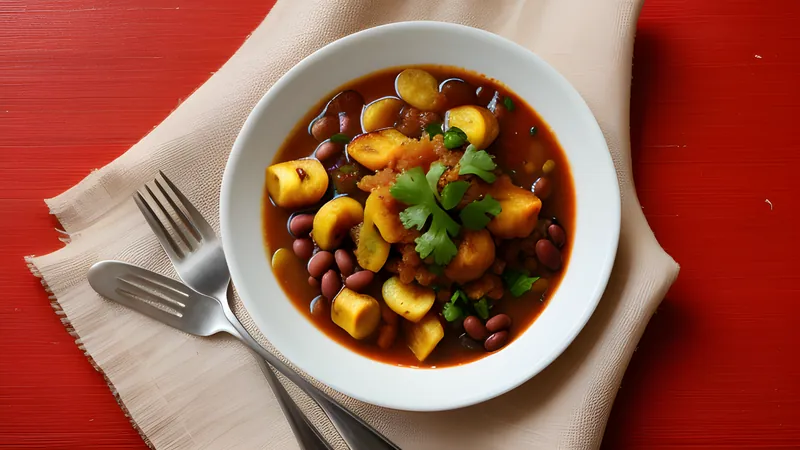
Red red gets its name from a genuine doubling: the beans themselves turn a deep reddish-brown from red palm oil, and they’re served beside plantain fried until its natural sugars caramelise into an equally deep amber-red. It’s a Ghanaian staple, sold from roadside chop bars and market stalls across the country, built on the same black-eyed bean base that turns up across West African cooking in akara and moin moin, but stewed rather than blended, kept whole and intact in a rich, tomato-and-palm-oil sauce rather than pureed into a batter. The dish’s appeal is almost entirely about that colour and the contrast it sets up on the plate: a deep, savoury red stew next to bright, sweet, blistered plantain, eaten together in the same forkful more often than separately.
A chop bar staple with a specific rhythm
Red red belongs to the world of Ghanaian chop bars — informal, often family-run canteens that serve a rotating menu of stewed dishes ladled over rice or eaten with a starch, priced for daily eating rather than special occasions. A chop bar’s red red is usually cooked in a single enormous pot each morning, sold by the scoop through lunch and into the evening, with the fried plantain made in smaller, fresher batches throughout the day so it never sits too long before reaching a plate. It’s considered solid, reliable, everyday food rather than a dish reserved for celebrations — the kind of thing a Ghanaian office worker eats several times a month without a second thought, in the same register as a weekday sandwich or a bowl of pasta elsewhere. That everyday status doesn’t mean it’s cooked carelessly; a chop bar’s reputation often rests heavily on how well they balance the palm oil, tomato and chilli in their particular pot of red red, and regulars can be fiercely loyal to one stall’s version over another’s.
Palm oil is not a garnish here
Red palm oil does more in this dish than in almost any other bean stew — it isn’t just a cooking fat but a primary flavour and colour source, and skimping on quantity or substituting a neutral oil changes the dish fundamentally rather than just subtly. Unrefined red palm oil carries a distinctive earthy, slightly fruity flavour and a deep orange-red colour that comes from a naturally high carotenoid content, the same pigment family that colours carrots and sweet potatoes. Heating it gently, rather than to the point of scorching (which is the entire point of ewa agoyin’s sauce, a very different treatment of the same oil), preserves more of that fruitiness and keeps the finished stew tasting rounded rather than bitter. Divide the oil between frying the onion base and finishing the beans at the end for the fullest flavour throughout, rather than adding it all in one stage.
Building the sauce
The tomato base should reduce properly before it meets the beans — a full fifteen to twenty minutes of steady simmering, stirred occasionally, drives off the raw, slightly acidic edge of fresh or tinned tomatoes and concentrates their sweetness. Rushing this stage is the most common reason a home red red tastes thin and acidic rather than rich and rounded. Fresh ginger, grated directly into the sauce rather than added as a powder, contributes a warmth that plays well against the palm oil’s own natural sweetness; don’t skip it even if ground ginger is what’s on hand, since the flavour difference here is noticeable.
Beans that hold their shape
Unlike ewa agoyin’s deliberately mashed beans, red red beans are meant to stay whole and distinct, suspended in the sauce rather than broken down into it. This means slightly gentler cooking than a dish where the beans are destined for the masher — check for doneness a little earlier and stop the simmer once the beans are tender but still holding their form under a spoon, rather than cooking to the point of collapse. If your beans do start breaking down before the sauce is ready, that’s not a disaster; a few burst beans thicken the stew naturally and most cooks wouldn’t consider it a flaw, but a pot of fully mashed beans has drifted into a different dish entirely.
Getting the plantain right
As with kelewele, ripeness is everything: plantain for red red should be very ripe, skin mostly or fully black, soft to the touch. Underripe, starchy plantain fried the same way stays firm and bland rather than developing the deep caramelised sweetness that makes red red’s plantain side so essential to the dish. Slicing on the diagonal rather than straight across gives more surface area per slice for browning, and a shallow fry — enough oil to come partway up the slices rather than a full deep-fry — gives good colour and caramelisation without the plantain absorbing excessive oil.
Tips for balance
Scotch bonnet quantity is genuinely a matter of household preference in Ghana, and there’s no single correct heat level — start with one chilli, taste the sauce once it’s reduced, and add more only if you want it hotter, since it’s much easier to add heat than remove it. Salt the beans and sauce separately before combining, tasting again once they’re stirred together, since the stock cube’s saltiness compounds with any salt already in the bean cooking water. A final scattering of raw, finely chopped onion over the top, added just before serving, gives a sharp textural and flavour contrast against the soft, rich stew that many red red sellers include as standard.
Judging the sauce by sight
A well-made red red sauce should look glossy rather than dull, with visible droplets of red oil sitting at the surface rather than fully incorporated into a flat, matte stew — this separation is normal and expected, a sign the palm oil hasn’t been over-emulsified or boiled too hard. If your sauce looks uniformly thick and opaque with no oil visible at all, it’s often a sign the tomato reduced too far before the oil went in properly, concentrating the acid without the fat there to round it out. Stirring gently rather than vigorously once the beans and sauce are combined helps preserve that characteristic sheen, since aggressive stirring breaks the oil into the stew more thoroughly than the dish traditionally wants.
Substitutions
If red palm oil isn’t available, a mix of vegetable oil with a small amount of tomato purée and a pinch of paprika approximates the colour, though the distinctive palm flavour is genuinely irreplaceable. Kidney beans or black beans can stand in for black-eyed beans in a pinch, giving a creamier or earthier result respectively, though black-eyed beans remain the traditional and most common choice. For a version with added protein, some cooks stir in flaked smoked fish or a portion of cooked, shredded chicken toward the end of the stew’s simmer.
Storage and reheating
Red red keeps for up to four days refrigerated and, like most stewed bean dishes, tastes even better the next day once the sauce has had time to fully penetrate the beans. Reheat gently on the stove with a splash of water to loosen the sauce. Fried plantain is best made fresh and eaten within the hour — it loses its crisp caramelised edge quickly on standing, and reheating in a hot oven or air fryer recovers texture far better than a microwave does. The bean component freezes well for up to two months; freeze the plantain separately, if at all, since its texture suffers more from freezing and thawing than the stew does.
Why beans and plantain, specifically
The pairing of savoury stewed beans against sweet fried plantain isn’t arbitrary — it’s a deliberate balance that shows up across West African cooking wherever beans are the main event, from red red itself to the sweet plantain often served alongside Nigerian bean dishes. Black-eyed beans, even cooked into a rich sauce, carry an earthy, slightly mineral flavour that benefits from something sweet on the same plate to round it out; plain rice or bread can play a similar structural role, but neither delivers the same textural contrast as plantain’s caramelised, slightly crisp exterior against a soft, custardy interior. Once you’ve eaten red red with its proper plantain side a few times, the stew on its own — however well seasoned — starts to feel like it’s missing something, in the way rice without a curry might.
Timing the two components together
Getting beans and plantain to the table hot at the same moment takes a little planning, since they cook on entirely different schedules. Start the beans first — they need the full hour, mostly unattended simmering — and hold off slicing and frying the plantain until the beans are in their final ten-minute simmer with the sauce combined. Fried plantain cooks in under ten minutes total and loses its best texture within twenty or thirty minutes of coming off the heat, so timing it to finish just as the beans are ready, rather than frying it early and letting it sit, makes a real difference to the finished plate. If you do need to hold the plantain briefly, an open wire rack rather than a covered dish keeps steam from softening its crisp edges.
A note on sourcing red palm oil
Unrefined red palm oil, sold in most West African and Caribbean grocers as well as some larger supermarkets, is worth distinguishing from refined palm oil, which has been bleached and deodorised and lacks both the colour and the fruity flavour this dish depends on. Check the label or the oil itself — unrefined red palm oil is genuinely bright orange-red and semi-solid at cool room temperature, melting to a liquid once warmed. It’s also worth being aware, if you’re buying for the first time, that palm oil production carries real environmental concerns around deforestation in parts of Southeast Asia; sourcing from West African or Certified Sustainable Palm Oil suppliers where possible is a reasonable way to keep cooking a dish that genuinely depends on this specific ingredient without contributing to the worst of that industry’s practices.
Related Content