Red Lentil and Coconut Dal with Crispy Curry Leaves
Weeknight comfort with a crackling finish
Contents
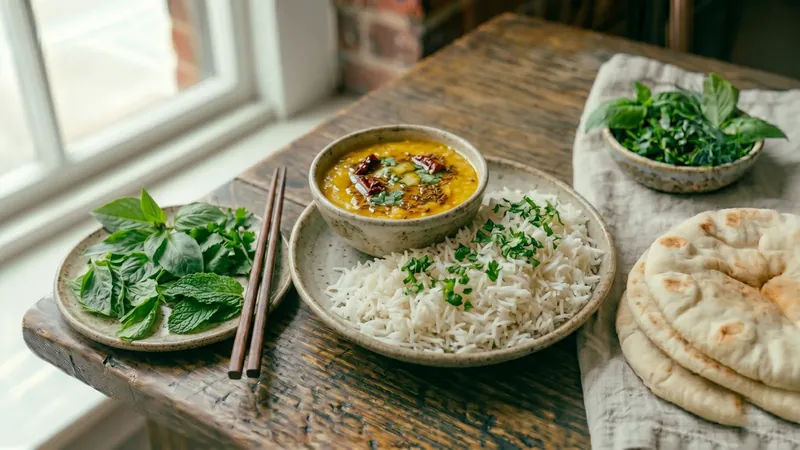
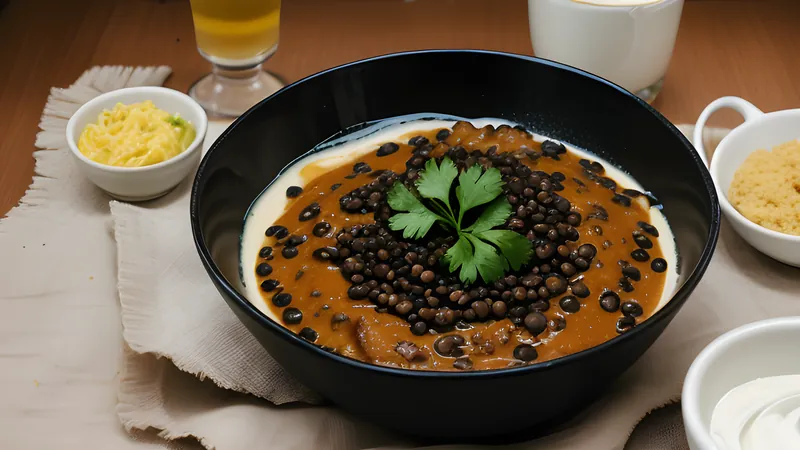
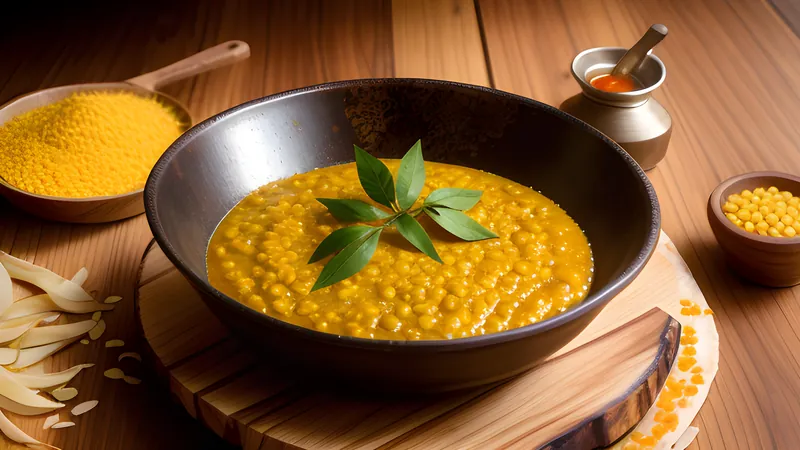
↓ Jump to recipeThere is a particular kind of tiredness that only dal can fix. Not the dramatic exhaustion that sends you to the takeaway menu, but the low, ordinary fatigue of a Tuesday, when you want something warm and nourishing and you want it without a trip to the shops. This red lentil and coconut dal is my answer, built almost entirely from the cupboard, and it carries one small flourish that turns it from supper into something I actually look forward to: a sizzling spoonful of coconut oil shot through with crackling curry leaves, poured over at the last second.
Red Lentil and Coconut Dal with Crispy Curry Leaves
Ingredients
- 300g red split lentils, rinsed until the water runs clear
- 1 tbsp coconut oil
- 1 large onion, finely chopped
- 4 garlic cloves, crushed
- 1 thumb of ginger, grated
- 1 green chilli, finely chopped
- 2 tsp ground cumin
- 1.5 tsp ground turmeric
- 1 tsp ground coriander
- 1 x 400ml tin full-fat coconut milk
- 700ml vegetable stock or water
- 1 tsp salt, plus more to taste
- Juice of 1 lime
- For the tarka: 2 tbsp coconut oil
- 20 fresh curry leaves
- 1 tsp black mustard seeds
- 2 dried red chillies, broken
- Coriander and extra lime, to serve
Method
- Rinse the red lentils in several changes of water until it runs clear, then drain.
- Melt the coconut oil in a large pan and cook the onion gently for 8 minutes until soft and golden.
- Stir in the garlic, ginger and green chilli and cook for 2 minutes, then add the cumin, turmeric and coriander and toast for 1 minute.
- Add the lentils, coconut milk, stock and salt. Bring to a gentle simmer.
- Cook uncovered for 25 to 30 minutes, stirring often, until the lentils collapse into a soft, loose porridge. Add a splash more water if it thickens too far.
- Stir in the lime juice and taste for salt. Keep warm over the lowest heat.
- For the tarka, heat the coconut oil in a small frying pan until shimmering. Add the mustard seeds and let them pop, then add the curry leaves and dried chillies for 20 seconds until the leaves crackle and crisp.
- Pour the sizzling tarka over the dal at the table, scatter with coriander and serve with extra lime and rice or flatbread.
What dal actually is
It helps to know that dal is two things at once. The word, from the Sanskrit dala meaning to split, refers both to the dried split pulses themselves and to the finished dish made from them, which is why an Indian cook will talk about buying dal and cooking dal in the same breath. There are dozens of pulses that qualify: chana dal from split chickpeas, toor dal from pigeon peas, urad and moong and more, each with its own texture and regional loyalties. What I have used here is masoor dal, the salmon-coloured split red lentil, which is the fastest-cooking and most forgiving of the lot.
Dal in some form has been eaten across the Indian subcontinent for thousands of years; lentils and pulses appear among the earliest cultivated crops of the region, and a bowl of dal with rice or bread remains the everyday backbone of countless households, providing cheap, complete protein when the two are eaten together. The coconut milk here nudges the dish southwards, towards the cooking of Kerala, Tamil Nadu and Sri Lanka, where coconut and curry leaves are pantry staples rather than the flourishes they are treated as elsewhere. This is not a museum-piece recipe, then, but a home cook’s composite: a fast northern-style red lentil dal enriched in a southern idiom.
Why this version works
Red split lentils, or masoor dal, are the quiet heroes of weeknight cooking. They need no soaking, they cook in under half an hour, and they break down into a creamy, comforting base without any coaxing. A tin of full-fat coconut milk gives the whole thing a gentle sweetness and a silky body that water alone never manages, and it tempers the turmeric and cumin into something rounded rather than sharp.
The key, and people skip this at their peril, is to rinse the lentils properly first. A few changes of cold water washes away the starchy dust that otherwise turns your dal gluey and dull. You want it loose and almost soupy, the lentils collapsed but still with a little texture, so add water freely if it thickens past the point of comfort. Dal always sets as it sits, so err on the side of looser than you think you need.
The clever twist: the tarka
If there is one technique worth learning from Indian home cooking, it is the tarka, also called a tadka or chhonk. You bloom whole spices and aromatics in hot fat until they crackle, then pour the lot, sizzling, over the finished dish. It is finishing and seasoning in a single dramatic gesture, and it is the difference between a dal that is merely fine and one that makes you pause.
Almost every dal-eating household has a version of this, and the practice is ancient: the technique appears in Ayurvedic texts, where blooming spices in fat is understood both to release their aroma and to make them more digestible. The fat you choose matters. I use coconut oil here to echo the coconut milk in the dal, but ghee is the classic choice and gives a rounder, nuttier result, while a neutral oil works if you want the spices themselves to lead. Whatever the fat, it must be genuinely hot before the seeds go in, hot enough that a single test mustard seed pops within a second or two, or the spices will stew rather than bloom and the whole gesture falls flat.
Here the tarka is built around fresh curry leaves, which are not, despite the name, anything to do with curry powder. They are the glossy leaves of the curry tree, and when they hit hot oil they crisp up and release a nutty, citrusy, almost smoky aroma that perfumes the whole pot. Black mustard seeds add their gentle pop and a faint warmth, and a couple of broken dried chillies bring a slow background heat. Do try to find fresh curry leaves; Asian grocers sell them in bunches and they freeze beautifully, so a single trip keeps you in tarkas for months. The dried ones, sadly, are a pale shadow.
The trick with the tarka is timing and nerve. Get the oil properly hot, add the mustard seeds and wait for them to start popping, then add the curry leaves and stand back, because they will spit. Twenty seconds is all you need; the leaves should crisp and darken but not blacken. Pour it straight over the dal and listen to it hiss. That sound is the whole point.
Building flavour from the bottom
Everything before the tarka is about quiet groundwork. Cook the onion slowly and properly, giving it the full eight minutes to soften and turn golden, because this sweetness underpins the whole dish. I am, as anyone who has cooked with me knows, militant about garlic, and four cloves here is the floor, not the ceiling; add a fifth if your conscience allows. The ginger and green chilli go in next, then the ground spices get a brief toast in the oil to wake them up before any liquid arrives. Sixty seconds is enough, just until they smell fragrant, and watch the turmeric, which scorches quickly.
The lime juice at the end is not optional. Lentils and coconut are both soft, rounded flavours, and without a hit of acid the dal can feel a touch flat and sleepy. A whole lime’s worth of juice, stirred through right before serving, lifts everything and makes the spices sing. Add it at the very end and off direct heat, though, because boiling lime juice hard for any length of time dulls its brightness back to nothing.
A word on consistency, since it is where most home dal goes wrong. You are aiming for something looser than porridge but thicker than soup, coating the back of a spoon and slowly finding its own level in the bowl. Red lentils keep absorbing liquid even off the heat, so what looks perfect in the pan will be noticeably stiffer by the time it reaches the table, and stiffer again the next day. Cook it slightly looser than you think it should be. Stir it often as it simmers, too, because the collapsing lentils sink and catch on the base of the pan, and a scorched patch will taint the whole pot with a bitter, burnt note that no amount of lime will rescue.
How to serve it, and variations
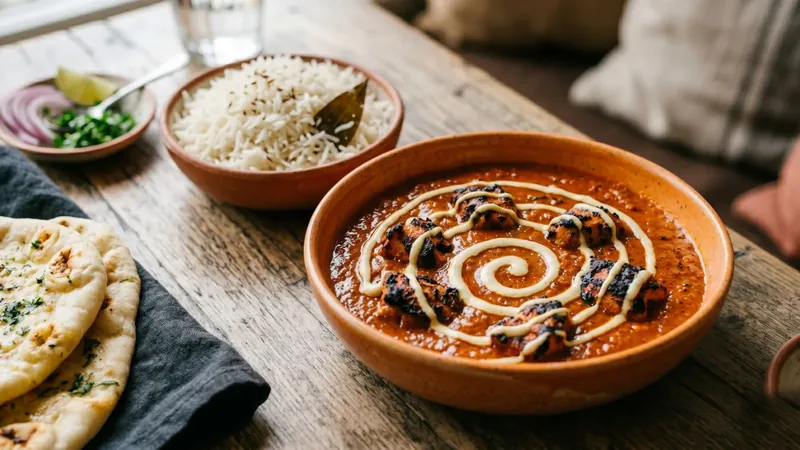
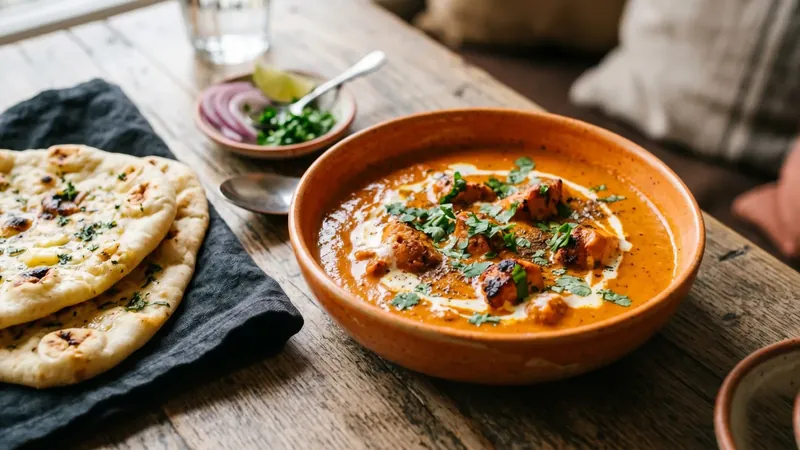
I eat this most often with plain basmati rice and a torn flatbread for mopping, but it is happy alongside almost anything. A spoonful of thick yoghurt cools it, a pile of quick-pickled red onions sharpens it, and a handful of wilted spinach stirred in at the end turns it into a one-pot meal. For more substance, add a tin of drained chickpeas with the lentils, or fold through chunks of roasted squash near the end.
For a bigger spread, this sits happily next to other gently spiced things. If you like this style of coconut-rich, aromatic cooking, the same instincts run through a Thai green curry, where coconut milk and fresh aromatics do similar work in a different register. And if it is the tarka that has won you over, that same principle of blooming aromatics in hot fat is exactly what drives a good chilli oil with crispy shallots and Sichuan peppercorn, which keeps in the fridge and would be very welcome spooned over a bowl of this dal.
Make-ahead and storage
It keeps brilliantly. Cooled and covered, it holds in the fridge for up to four days, thickening overnight into something almost solid, and like most spiced stews it tastes even better on day two once the flavours have settled. It also freezes well for up to three months; freeze the dal only, not the tarka. Loosen it with water or a little extra stock when you reheat, warming it gently and stirring so it does not catch on the base of the pan, and make a fresh tarka if you can be bothered, because the crispy curry leaves are at their best the moment they hit the bowl. This is humble food, cheap and fast and forgiving, but with that final crackling pour it never once feels like a compromise. It is the sort of thing I cook without thinking, on autopilot, and still look forward to every single time.
Related Content