Rechta: Hand-Cut Steamed Noodles with Chicken and Turnip
Algeria's steamed noodle dish for a white, gentle broth
Contents
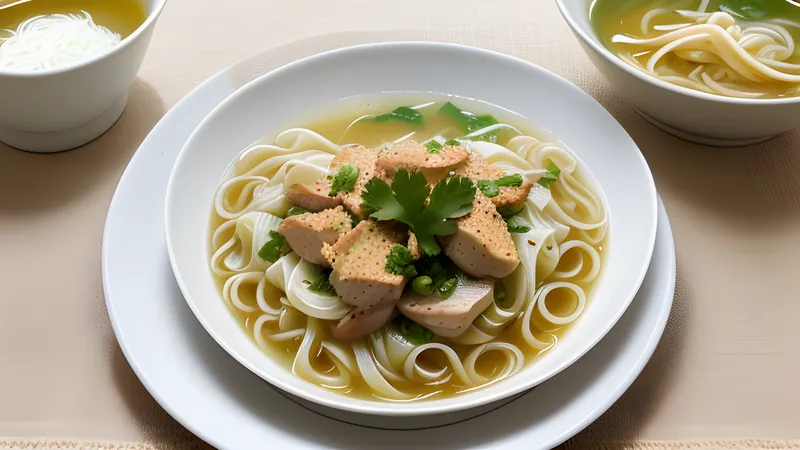
↓ Jump to recipeRechta belongs to a small family of Algerian dishes built on hand-cut noodles steamed the same way couscous is steamed — over an aromatic broth, in stages, with the cook returning again and again to fluff and separate the strands so they don’t clump into a solid mass. It’s a celebration dish more than a weeknight one, traditionally served at Eid and family gatherings, largely because the noodle-making and multi-stage steaming take real time and attention that a Tuesday evening doesn’t usually offer.
Rechta: Hand-Cut Steamed Noodles with Chicken and Turnip
Ingredients
- 400g plain flour, plus extra for dusting
- 1 tsp fine salt
- 180ml lukewarm water
- 2 tbsp olive oil, plus extra for the noodles
- 1.2kg whole chicken, jointed, or 6 bone-in chicken thighs
- 2 onions, 1 sliced and 1 grated
- 3 medium turnips, peeled and quartered
- 3 carrots, peeled and halved lengthways
- 2 cinnamon sticks
- 1/2 tsp ground white pepper
- 1/2 tsp ground ginger
- 1 tsp salt, plus more to taste
- 50g unsalted butter
- 1.5 litres water or light chicken stock
- Chickpeas, cooked, 200g (optional)
- Chopped parsley, to finish
Method
- Make the dough: combine the flour and salt, then gradually add the lukewarm water and 1 tbsp oil, kneading for 10 minutes to a firm, smooth dough. Rest, covered, for 30 minutes.
- Roll the dough out very thin on a floured surface and cut into wide ribbons, then further into short, irregular noodle strips roughly 3-4cm long.
- Toss the cut noodles with a little oil and flour to separate them and set aside on a tray.
- In a large pot or the base of a couscoussier, heat the remaining olive oil and brown the chicken pieces on all sides, then remove.
- Soften the sliced and grated onion in the same pot for 5 minutes, then return the chicken along with the turnips, carrots, cinnamon sticks, white pepper, ginger and salt.
- Add the water or stock, bring to a boil, then reduce to a simmer, cover, and cook for 40 minutes until the chicken and vegetables are tender.
- Meanwhile, steam the noodles over simmering water in a couscoussier or steamer basket lined with muslin for 20 minutes, fluffing and separating them with oiled hands halfway through.
- Toss the steamed noodles with the butter and a ladle of hot broth from the chicken pot, then steam a further 10 minutes.
- Stir the chickpeas, if using, into the chicken broth to warm through.
- Mound the buttered noodles on a large serving platter, arrange the chicken, turnip and carrot on top, and ladle over enough broth to moisten everything generously.
- Scatter with chopped parsley and serve the remaining broth on the side in a jug.
The noodles are the whole point
Unlike pasta made for boiling, rechta noodles are cut deliberately irregular — short, roughly torn or knife-cut ribbons rather than uniform strands. This isn’t a shortcut; the irregular shapes and sizes are what let the noodles separate cleanly during steaming rather than fusing into sheets. A too-uniform cut, all noodles the same width and length, tends to stack and stick during the steam, since flat surfaces align and seal against each other under the pressure of the steamer basket.
The dough itself is simple — flour, water, salt, a little oil — but it needs to be rolled properly thin, closer to lasagne sheet thickness than to a thick pasta dough, because the noodles cook entirely by steam rather than submerged in liquid, and a thick noodle won’t cook through in the time allotted. Roll it thinner than feels natural if you’re used to making egg pasta; rechta dough has no egg and is consequently less elastic, which makes it easier to roll thin than you might expect.
Steaming, not boiling: what changes
The couscoussier — the traditional two-tier steamer used across the Maghreb for couscous, and for rechta here — is what makes this dish work. Steaming the noodles over the aromatic broth rather than boiling them in plain water means they absorb fragrance from the rising steam throughout cooking, picking up a faint whisper of the cinnamon, ginger and chicken fat below even before the final broth ladling happens. Boiling would strip that opportunity entirely and leave the noodles tasting only of themselves.
The technique demands returning to the noodles partway through steaming to break up clumps by hand, working in a little oil or butter to keep strands separate — skip this step and you end up with a solid, gluey mass rather than the light, individually distinct noodles rechta is meant to have. This is the single most labour-intensive part of the dish and the reason it’s reserved for occasions rather than routine cooking.
The broth: white, not red
Rechta’s broth is deliberately pale — no tomato, unlike most Algerian stews and soups, which lean heavily on tomato as a base. Instead the colour and depth come from chicken, browned onion, and a restrained set of warm spices: cinnamon, white pepper and ginger rather than the paprika and cumin common elsewhere in Algerian cooking. White pepper specifically, not black, is traditional here, partly for the milder flavour and partly to avoid speckling the pale broth with visible black flecks.
Turnip is the defining vegetable, giving the broth a faint peppery sweetness as it softens, distinct from the more common carrot-and-potato combination in other Algerian stews. Quartering rather than dicing the turnip keeps it intact through the long simmer, so it holds its shape on the platter rather than dissolving into the broth.
Assembly and why the order matters
The traditional presentation stacks the buttered, steamed noodles as a base, with the chicken and vegetables arranged on top and broth ladled generously over everything just before serving. Assembling it this way rather than mixing the noodles directly into the broth pot keeps the noodles’ texture intact — steamed noodles sitting in liquid too long turn soft and lose the light, separate quality that steaming was meant to achieve. Extra broth served on the side in a jug lets each diner add as much as they like without oversaturating the platter before it even reaches the table.
Substitutions and variations
Bone-in chicken thighs are a reasonable substitute for a whole jointed chicken and considerably less fiddly, though a whole bird gives a richer broth thanks to the bones and skin left in longer. Chickpeas are optional but common, adding both texture and a little protein bulk to the broth — soak dried chickpeas overnight and pre-cook them, or use tinned for convenience, added only at the end to warm through rather than simmered from the start, which would overcook them.
For a version closer to some southern Algerian households’ style, a small handful of raisins added to the broth in the last ten minutes gives a faint sweetness that plays well against the turnip’s bitterness — a genuinely regional variation rather than a universal addition, so treat it as optional.
If a couscoussier isn’t available, a metal steamer basket set over a wide pot works, provided it’s lined with muslin or a clean tea towel to stop the noodles falling through the holes. The technique matters more than the specific equipment.
Storage and reheating
Rechta is best eaten the day it’s made — the noodles’ light, separate texture doesn’t survive refrigeration especially well, tending to clump and turn slightly gummy once cold. If you do have leftovers, store the noodles and broth separately, and reheat the noodles by steaming again briefly rather than microwaving, which turns them dense. The chicken and vegetables reheat fine in their broth over low heat. For make-ahead convenience, the noodle dough itself can be cut and left to dry slightly on a tray a few hours ahead, then steamed fresh just before serving.
Rechta sits well alongside other Algerian dishes built on a similar technique — chorba frik shares the warm-spiced chicken broth backbone, while chakhchoukha uses a comparable torn-and-steamed flatbread base under a different, tomato-forward sauce, making the two a useful comparison for understanding how differently Algerian home cooking treats the same basic idea of grain or dough steamed under a savoury broth.
Where rechta sits in Algerian celebration cooking
Rechta belongs to a specific category of Algerian dishes reserved for Eid al-Fitr, the celebration marking the end of Ramadan, and other significant family occasions rather than everyday meals. That placement isn’t arbitrary — the multi-stage steaming process, the hand-cutting of noodles, and the need for a couscoussier or equivalent equipment all demand a kind of unhurried attention that a working household reserves for days already set aside for cooking and gathering. Grandmothers and mothers in many Algerian families still make rechta as a demonstration piece, the dish that shows a cook’s patience and skill in a way that a quicker stew doesn’t.
The dish also carries regional variation across Algeria’s different areas. In the west, around Tlemcen, rechta is closely associated with wedding feasts and is often made with extra saffron for a richer golden hue to both broth and noodles. In and around Algiers, the version tends to stay paler and simpler, closer to the recipe here, with the emphasis on the delicate white broth rather than added colour. Neither version is more authentic than the other; both reflect genuine regional cooking traditions shaped by what was locally available and celebrated.
Getting the dough consistency right
The dough should feel firm but not stiff — press a finger into it and it should spring back slowly rather than staying dented, and it shouldn’t crack at the edges when rolled. If the dough tears while rolling, it’s usually too dry; work in a teaspoon of water at a time until it becomes more pliable. If it sticks stubbornly to the rolling pin and surface, it’s slightly too wet, and a light dusting of flour, worked in briefly, corrects it without needing to start over.
Resting the dough for the full 30 minutes matters more than it might seem. Unrested dough resists rolling and springs back to a thicker shape than intended the moment you lift the rolling pin, meaning you end up fighting the dough rather than shaping it. The rest lets the gluten relax, and thirty minutes covered at room temperature is generally enough for a small batch like this one; larger batches benefit from resting closer to an hour.
A note on equipment if you’re set on doing this properly
A genuine couscoussier — the tall, two-part aluminium or clay pot with a perforated steaming basket that sits above a broth pot — is worth acquiring if Algerian, Tunisian or Moroccan steamed dishes are going to be a recurring project rather than a one-off. It’s not an expensive piece of equipment in most Middle Eastern or North African grocers, and it does a genuinely better job than an improvised steamer basket, mostly because its shape is built specifically to let steam rise evenly through a wide surface of loosely piled noodles or couscous grains, rather than concentrating the steam through a narrower gap the way a standard vegetable steamer does.
What can go wrong
A gluey, clumped noodle pile is the most common failure and almost always traces back to skipping the mid-steam fluffing step, or to rolling the dough too thick to begin with. If it happens, there’s a partial fix: tip the clumped noodles back into the steamer, break them apart as best you can with oiled hands, and steam a further 10 minutes, fluffing every few minutes this time rather than once. The texture won’t be perfect, but it recovers considerably.
A watery, flavourless broth usually means the chicken wasn’t browned properly at the start — that initial searing step builds a fond on the pot base that underpins the whole broth’s depth, and skipping it in the interest of speed is the single easiest way to end up with a broth that tastes thin despite having simmered for the full 40 minutes.
Related Content