Rasam: Tamarind and Pepper Broth
A thin, fiery Tamil soup built on lentil water and crushed pepper
Contents
↓ Jump to recipeRasam sits somewhere between a soup and a digestive tonic: thinner and sharper than either, built to be poured over rice, drunk in small cups between courses, or sipped on its own when someone in the house has a cold. The name comes from the Sanskrit rasa — essence, juice — and that is exactly what it is: the concentrated run-off of tamarind, tomato, pepper and lentil water, simmered just long enough to marry and then finished with a tempering so aggressive it announces itself from the next room.
My twist here is a double one. I char the garlic in the dry pan before it goes in, so it carries a faint bitter smokiness under the sourness, and I lean the spice ratio hard toward black pepper rather than the more balanced blends most rasam powders use — closer to what Tamil cooks call milagu rasam, pepper rasam, traditionally made for the first heavy monsoon cold or the first day back at the table after a stomach bug.
Rasam: Tamarind and Pepper Broth
Ingredients
- 100g toor dal (split pigeon peas)
- 1.2 litres water, plus more for the dal
- 50g tamarind pulp, soaked in 150ml hot water
- 2 ripe tomatoes, chopped
- 1/2 tsp ground turmeric
- 2 tbsp coriander seeds
- 1 tbsp cumin seeds
- 1.5 tbsp black peppercorns
- 1 tbsp chana dal
- 3 dried red chillies
- 6 garlic cloves, unpeeled
- 2 tbsp ghee
- 1 tsp black mustard seeds
- 1/4 tsp asafoetida
- 2 sprigs fresh curry leaves
- Fine sea salt, to taste
- Small handful fresh coriander leaves, chopped
Method
- Rinse the toor dal, cover with 400ml water and simmer 25-30 minutes until soft and falling apart. Mash roughly and reserve both the dal and its cooking water.
- Soak the tamarind pulp in 150ml hot water for 10 minutes, then squeeze through your fingers and strain, discarding the fibre.
- Dry-toast the coriander seeds, cumin seeds, peppercorns, chana dal and dried red chillies in a small pan over medium heat for 2-3 minutes until fragrant and a shade darker. Cool, then grind coarsely in a spice grinder or mortar.
- Char the unpeeled garlic cloves directly in the dry pan for 3-4 minutes, turning, until the skins blacken in patches. Peel once cool enough to handle and crush lightly with the flat of a knife.
- In a saucepan, combine the tamarind water, chopped tomatoes, turmeric and 800ml water. Bring to a simmer and cook 10 minutes until the tomatoes break down.
- Stir in the ground spice mix, the charred garlic, the mashed dal with its cooking water, and salt. Simmer gently 8-10 minutes; do not let it boil hard once the dal is in, or the broth turns cloudy and flat.
- Heat the ghee in a small pan. Add the mustard seeds and let them pop, then the asafoetida and curry leaves, and fry 20 seconds until the leaves crisp. Pour the sizzling tempering over the rasam.
- Scatter with coriander leaves and serve hot, ideally spooned over plain rice or drunk straight from a cup.
The oldest course on a Tamil banana leaf
Rasam is the second course on a traditional South Indian banana-leaf meal, arriving after the initial rice-and-sambar and before the final rice-and-curd. It is served thin enough to drink and often is, tipped straight from the small steel cup that sits at the edge of the leaf. The dish predates the tomato by a long way — tomatoes only reached South India after the Portuguese brought them from the Americas in the sixteenth century, and older versions relied purely on tamarind, pepper and a fermented sourness for their acidity. What we cook today, tomato included, only really settled into its current form in the last two or three centuries, which by the standards of Tamil cuisine still counts as recent.
British colonial cooks in Madras encountered rasam, or something close to it, in the eighteenth century and carried a version of it back to England under the name mulligatawny, a garbled rendering of the Tamil milagu thanni — pepper water. What started as a thin, peppery broth thickened over the journey into the cream-and-apple soup that ended up in English hotel dining rooms; if you want to see how far the same starting point can travel, my mulligatawny with apple and curry keeps the pepper backbone but takes the anglicised turn rasam itself never made.
Every Tamil household has its own rasam podi, the dry spice mix that gives the dish its identity, and the ratio of coriander to pepper to cumin is argued over the way Italians argue over the right amount of garlic in a ragù. Grandmothers roast and grind their own in batches, sun-drying the ingredients first if the season allows; a jar of good rasam podi is treated as a small inheritance. Store-bought versions exist and are perfectly fine on a Tuesday, but they are noticeably one-note next to a blend ground the same morning, because the volatile oils in freshly cracked pepper and coriander seed fade within a couple of weeks of grinding.
Why the dal water matters
The lentil water is not incidental. Toor dal simmered soft and mashed back into its own cooking liquid gives rasam a faint body and a rounding sweetness that keeps the tamarind and pepper from turning shrill. Skip it and you get something closer to a spiced tamarind tea — drinkable, but thin in a way that has nothing to do with the dish’s intended thinness. If you already have a pot of dal cooking for something else, such as the lentils that sit underneath khichdi with ghee and crispy onion, a ladle of its cooking water and a spoon of the mashed dal will do the job here without extra effort.
The order of operations matters more than the ingredient list suggests. Rasam is meant to foam slightly and rise once the tempering hits the pot, and Tamil cooking instructions traditionally say to take the pot off the heat entirely just before adding the dal, then bring it back to barely a simmer rather than a boil. Boil it hard after the dal goes in and the proteins seize, turning the broth cloudy and slightly grainy instead of clear and light. This is the single most common way rasam goes wrong in a home kitchen that is used to boiling everything to be safe.
Getting the pepper right
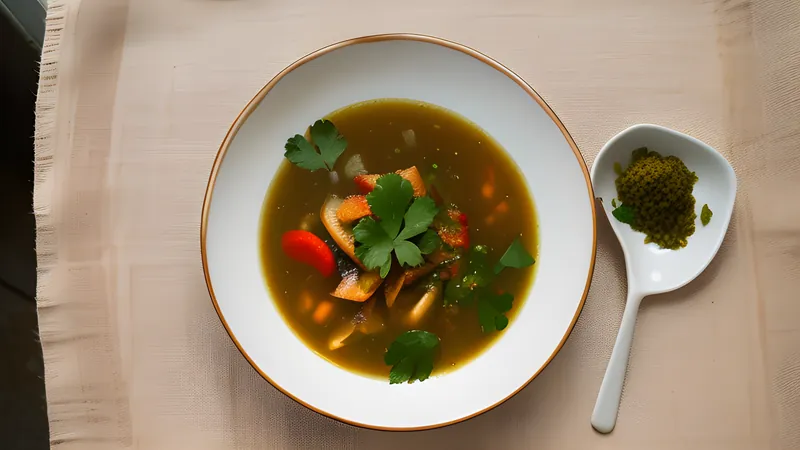
Because this version is pepper-forward, the grind matters. Crack the peppercorns coarsely rather than to a fine powder — you want distinct fragments that release their oils slowly into the broth and give a little textural bite against the back of the throat, rather than a uniform dusty heat. Pre-ground pepper from a shaker falls short here, since it has already lost most of its aromatic oils to oxidation, leaving the rasam tasting flat and merely hot rather than complex and hot. Toasting the whole spices briefly before grinding, rather than grinding them raw, is what gives the finished broth its deep amber-brown colour instead of a thin orange.
Tempering, the part that actually finishes the dish
The tempering — tadka in Hindi, thalippu or poo in Tamil — does the real structural work of the dish: it is where the ghee carries the aromatic compounds from the mustard seed, asafoetida and curry leaf that would otherwise never dissolve properly into a watery broth; fat is the solvent those flavours need. Pour it in while it is still audibly crackling, and stir it through rather than letting it sit as an oily slick on top. The asafoetida is worth sourcing specifically — it has a genuinely unpleasant raw smell but transforms in hot fat into something savoury and almost oniony, and traditional rasam without it tastes conspicuously incomplete to anyone who grew up eating the real thing.
Serving and keeping
Serve rasam hot, spooned over plain steamed rice with a side of vegetable poriyal, or drunk on its own from a cup as the meal’s digestive punctuation. It also works as a genuine remedy for a cold or a heavy stomach — the pepper clears the sinuses and the tamarind settles digestion, which is likely why it became the go-to dish for anyone feeling unwell in a Tamil household. Leftovers keep for two days in the fridge in a sealed container; the flavour deepens overnight as the spices continue to infuse, though the broth will thicken slightly and may need loosening with a splash of hot water before reheating gently — never at a rolling boil, for the same clarity reasons as the first cook.
If you are building a full South Indian breakfast or lunch spread around this, a plate of medu vada alongside gives you the crisp, savoury contrast rasam is made to be dunked into, and a bowl of ven pongal shares the same pepper-forward instincts if you want the whole meal singing from the same spice.
Sourcing the two ingredients that actually matter
Two ingredients decide whether this tastes like the real thing or like a vague approximation. The first is tamarind: buy the block pulp with seeds and fibre still in it, sold in most South Asian grocers as a dense, dark brick, rather than the smooth ready-made paste in small jars. The block version needs soaking and squeezing but gives a rounder, less aggressively acidic sourness, and you control the strength yourself by how much water you use to loosen it. Ready-made paste is concentrated differently by every brand, and a spoonful that looks equivalent on paper can be twice as sharp.
The second is curry leaf, and here there is genuinely no substitute. Dried curry leaves lose almost all their aromatic oil in the drying process and taste like little more than bitter, papery flakes; a rasam tempered with dried curry leaf is a rasam that has skipped its own signature note. Fresh curry leaves freeze well for months in a sealed bag straight off the stem, so if you find a source, buy more than you need for one pot and freeze the rest — they crisp in hot ghee straight from frozen with no need to defrost first.
Variations worth knowing
Rasam is a template as much as a fixed recipe, and Tamil kitchens rotate through several standard variants depending on season and what is to hand. Lemon rasam swaps the tamarind for fresh lemon juice stirred in off the heat at the very end, which keeps the sourness bright and citrus-forward rather than the deeper, more mellow tang tamarind gives — good in hot weather, when a long-simmered tamarind broth can feel heavier than you want. Garlic rasam, poondu rasam, pushes far more crushed garlic into the base itself rather than using it as an accent, and is the version most often made specifically as a cold remedy. Pineapple rasam takes the opposite direction entirely, adding chunks of ripe pineapple for a sweet-sour version popular in Andhra households, proof that the base formula tolerates far more experimentation than its reputation as a strict, ancestral recipe might suggest.
Karnataka’s version of the same idea is called saaru and tends to be thinner and less pepper-forward than the Tamil style, often built without dal at all, while Andhra rasam frequently pushes the chilli heat harder than either. These are regional dialects of the same underlying grammar of sour, hot and tempered fat, and once you understand what each element is doing you can adjust the balance to your own taste without breaking the dish.
What actually goes wrong
The most common failure, beyond boiling the dal water too hard, is under-salting. Rasam needs more salt than instinct suggests, because the tamarind’s sourness and the pepper’s heat both mute the perception of salt on the tongue; a rasam that tastes flat is very often simply under-salted rather than under-spiced. Taste right at the end, after the tempering has gone in, because the ghee and asafoetida shift the whole balance and a rasam salted correctly before tempering can taste oddly sharp afterwards. The second common mistake is skipping the toast on the raw spices before grinding: raw-ground pepper and coriander taste sourly vegetal rather than warm, and the difference a ninety-second toast makes is larger than almost any other single step in this recipe.
Related Content