Raclette at Home: Melted Cheese, Potatoes and Pickles
A three-hour dinner that requires almost no cooking
Contents
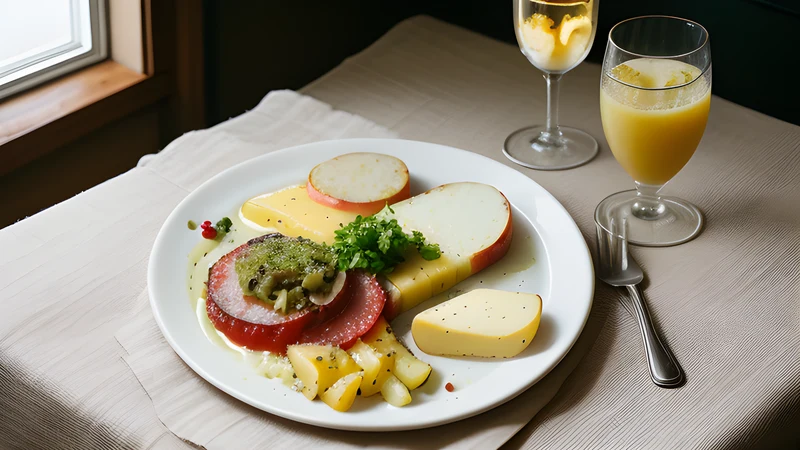
↓ Jump to recipeRaclette is a cheese, a verb and an entire evening. The verb came first: racler is French for “to scrape”, and the dish is named after the action of scraping molten cheese off the cut face of a half-wheel that has been held up to a fire. Everything else — the little pans, the tabletop grills, the three hours at the table — is downstream of one Valais herdsman putting a cheese next to a flame.
It is also the least demanding dish I have ever written up. There is almost no cooking. What there is instead is a set of buying decisions and one piece of physics, and getting both right is the difference between an evening and a bowl of oily curds.
Raclette at Home: Melted Cheese, Potatoes and Pickles
Ingredients
- 1.2 kg raclette cheese, rind on, cut into 5 mm slices (200 g per person)
- 1.5 kg small waxy potatoes, such as Charlotte or Ratte, similar in size
- 1 tbsp fine sea salt, for the water
- 1 tsp caraway seeds
- 250 g cornichons
- 250 g pickled silverskin onions
- 150 g pickled gherkins, sliced
- 2 tsp freshly ground black pepper, in a mill on the table
- 2 tsp sweet paprika
- 1 tsp freshly grated nutmeg
- 200 g air-dried ham or Bündnerfleisch, thinly sliced (optional)
- 1 bunch flat-leaf parsley
- 750 ml dry white wine, such as Fendant or Chasselas, to drink
Method
- Take the cheese out of the fridge 90 minutes before you eat. Cold cheese melts unevenly and splits more readily.
- Scrub the potatoes but leave them unpeeled. Put them in a large pan, cover with cold water by 4 cm, add the 1 tbsp salt and the caraway seeds, and bring to a simmer.
- Cook at a bare simmer for 18–22 minutes, depending on size, until a knife slides in with no resistance. Boiling hard splits the skins and waterlogs them.
- Drain and return them to the dry pan over a low heat for 2 minutes, shaking once, to steam off the surface water. Tip into a serving bowl and cover with a folded tea towel — this keeps them hot for 30 minutes without making them soggy.
- Arrange the cornichons, silverskin onions and gherkins in small bowls. Put the pepper mill, paprika and nutmeg on the table. Lay out the ham on a plate if using.
- Preheat the raclette grill for 10 minutes on its highest setting. If using a half-wheel machine, bring the cut face to within 3 cm of the element.
- For a tabletop grill with pans: lay a 5 mm slice of cheese in each small pan, slide it under the element, and melt for 3–5 minutes until the surface bubbles and browns in patches. It should be molten and just blistered.
- Scrape or tip the melted cheese straight onto a hot potato that has been crushed open with a fork on the plate. Speed matters — raclette starts firming within 40 seconds.
- Grind black pepper over generously, add a pinch of paprika or nutmeg to taste, and eat with a cornichon and a pickled onion in the same mouthful.
- Refill and repeat for as long as everyone is hungry, which will be longer than you expect. Serve the wine cold and drink water sparingly.
What the cheese has to be
The single most common mistake is buying the wrong cheese, and the packaging will not help you.
Raclette is a semi-hard cow’s-milk cheese from the Valais, made with a specific set of properties in mind. It has a moisture content of around 40%, which is high for a pressed cheese. Its pH sits near 5.5 — noticeably less acidic than cheddar. And it is aged for only three to six months, so the casein network is still relatively intact and elastic.
Those three numbers are why it melts the way it does. High moisture means the fat and protein can flow rather than seize. A high pH means the calcium is still bound into the casein matrix, which lets the proteins slide past each other instead of clumping — this is exactly why an aged, acidic cheese like a two-year cheddar breaks into oil and rubber when you melt it, while raclette goes to a smooth, thick, pourable liquid. And a short age means the proteolysis has not gone far enough to make the paste crumbly.
Buy proper raclette. Raclette du Valais AOP is the protected original and it is the best of them; French raclette from Savoie is a genuine second and considerably cheaper; Swiss raclette from other cantons sits between. Avoid anything sold as “raclette-style” in a plastic block with a list of stabilisers. Buy it with the rind on — the rind is washed, it carries most of the aroma, and it goes crisp and chewy under the grill.
Two hundred grams a head sounds like a great deal of cheese. It is the correct amount. People eat more raclette than they intend to, every time, and running out at 9pm with everyone still at the table is a genuine social failure.
The melt, and the split
Here is the one piece of physics. Cheese held too hot for too long will break. The casein proteins contract as they heat, wringing the fat out of the matrix, and once the fat has pooled the emulsion does not come back. You see it as a slick of orange oil with a rubbery lump underneath.
Raclette’s chemistry gives you a wide window — this is what it was bred for — but the window is not infinite, and a tabletop grill left on for three hours with a pan of cheese forgotten under it will find the edge of it. The target is a fast, hot melt: three to five minutes to molten with the surface just blistering, then out. Leaving cheese under the element to “get browner” past that point is how it goes wrong.
Serve it onto a hot potato. Molten raclette hitting a cold plate or a lukewarm potato firms up within forty seconds and becomes something you have to cut. The plate should be warm, the potato should be steaming, and the distance from grill to mouth should be short.
The same rule governs any cheese sauce — the reason I insist on taking the pan off the heat before the cheese goes into Älplermagronen is precisely this, and it is worth understanding once and applying everywhere.
Equipment, honestly assessed
The half-wheel machine is the real thing: a vertical element that heats the cut face of a half-wheel, and you scrape the melted layer off with a broad blade. It is glorious and it costs several hundred pounds and it requires you to buy a half-wheel of cheese. If you have one, or a friend has one, use it.
The tabletop grill with little pans is what almost everyone actually has. It is a perfectly good approximation: an electric element with eight small non-stick pans (coupelles) underneath and usually a stone or grill plate on top. The pans give everyone control over their own timing, which is much of the pleasure.
Improvising works better than you would think. A grill (broiler) on high with the cheese in a small ovenproof dish, three minutes, produces effectively the same thing; you just have to keep getting up. A heavy frying pan over a low heat, cheese slices laid in it, lid on, works too. What none of these give you is the tabletop rhythm, which is the actual point of the meal.
The pickles are not optional
Two hundred grams of melted cheese per person is an assault, and the only defence is acid.
Cornichons, silverskin onions and sharp gherkins are the Swiss standard, and they are structural in the same way that apple sauce is structural next to alpine macaroni. Each mouthful should be cheese, potato and something vinegary. Without the pickle, the third plate defeats you; with it, you can go for hours.
Make your own if you have the inclination — bread and butter pickles are sweeter than the Swiss norm and work surprisingly well, though a straight sharp cornichon is more correct. Whatever you use, it must be genuinely sour. Sweet pickles alone do not cut fat; acid does.
The other Swiss rule concerns the drink, and it comes with a folk explanation that is at least half true. You drink cold white wine — Fendant, Chasselas, something dry and high in acid — or hot black tea, and you avoid cold water. The traditional claim is that cold water makes the cheese solidify into a lump in your stomach, which has no physiological basis whatsoever. The genuine effect is duller: a large volume of cold liquid with a very fatty meal slows gastric emptying and makes people uncomfortable, and that wine’s acid and alcohol both help emulsify fat. Either way, the Swiss have run this experiment several million times and their conclusion is worth respecting.
Where it came from
The written record starts earlier than you might expect. A monastery document from Obwalden dated 1291 refers to Bratchäs — roasted cheese — as food for the herdsmen, and the practice it describes is exactly the one you are copying: a half-wheel set beside a fire, the cut face softening, the melted layer scraped onto whatever bread or potato was at hand. Herdsmen and vine-workers in the Valais ate it through the winter for centuries under that name.
The word raclette is much younger. It only becomes the standard term in the twentieth century, and the dish’s promotion from Valais peasant supper to Swiss national symbol dates to the 1909 cantonal exhibition in Sion, where it was served to visitors as a regional speciality and the name stuck. The tabletop electric grill with its little pans is younger still — a post-war domestic appliance that untethered the dish from the fireplace and, in doing so, made it the thing families eat at New Year.
The potato is also an interloper. Potatoes did not reach Alpine subsistence agriculture in quantity until the nineteenth century; before that, raclette was scraped onto dark rye bread.
Building the evening
Potatoes: small, waxy, unpeeled, boiled with caraway. Waxy because they hold together under a fork and a load of cheese, where a floury Maris Piper collapses into paste. The skins go on the plate and are eaten. Caraway in the water is an Alpine habit and it gives the potatoes a faint anise note that is very good against the cheese.
Around the edges: air-dried ham or Bündnerfleisch, a bowl of parsley, black pepper in a mill, paprika, nutmeg. That is the entire spread. Raclette resists elaboration — people put mushrooms, prawns, courgettes and pineapple in the little pans, and each addition makes the meal slightly less itself.
The one thing to plan for is time. Raclette is a three-hour dinner. Everyone melts their own, at their own speed, and there is no service, no courses and no moment where it is finished. This is why it is a winter dish and a group dish and why the Swiss eat it on New Year’s Eve. It is not a meal you schedule around.
For the rest of the Alpine dairy canon: rösti is the great Swiss potato construction, and Zopf is what you eat the next morning when you cannot face anything else.
Troubleshooting and leftovers
The cheese split into oil. Too hot, too long, or the wrong cheese. Check what you bought.
It went hard on the plate. Cold plate, cold potato, slow walk. Warm the plates in the oven at 70°C.
It tastes of nothing. Under-seasoned. Raclette needs a serious grind of black pepper on every portion, and the cheese was probably too young or too industrial.
Everyone was full after twenty minutes. You served bread. Bread with raclette fills people up and stops the evening dead. Potatoes only.
Leftover raclette is excellent, and the best use of it is a toasted sandwich with ham and a cornichon inside. It grates badly — too soft — so slice it. Cut cheese keeps five days wrapped in greaseproof paper rather than clingfilm, which suffocates the rind. Leftover boiled potatoes, chilled overnight, are exactly what you need for a rösti the following day, which is a satisfyingly circular way to end a Swiss weekend.
Related Content