Quick Pickled Red Onions (Three Flavour Variations)
the pink jar that fixes a dull plate
Contents
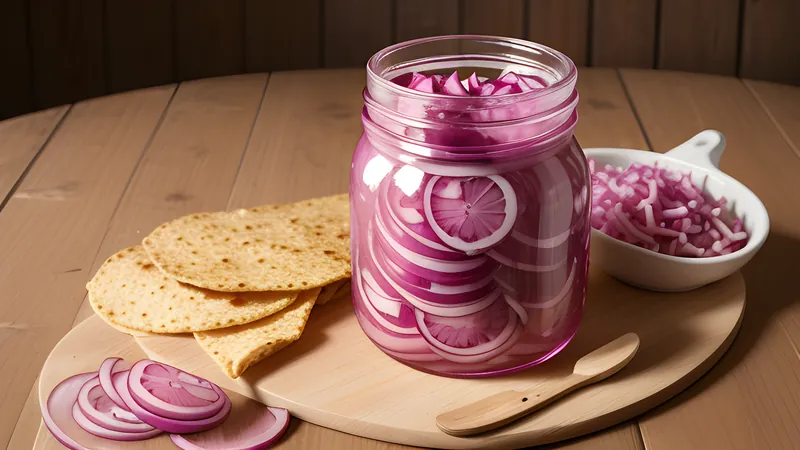
↓ Jump to recipeThere is a particular kind of magic to a jar of bright pink pickled onions in the fridge. They cost almost nothing, take ten minutes, and yet they make you look like someone who has their life together. A taco, a fried egg on toast, a sad supermarket sandwich, a bowl of leftover rice — all of them go from “fine” to “actually rather good” the moment you drape over a tangle of these. They are the closest thing I have to a culinary cheat code.
I keep a jar going almost permanently. When it runs low I make another, usually while something else is cooking, because the active work is genuinely about the length of one song.
Quick Pickled Red Onions (Three Flavour Variations)
Ingredients
- 2 medium red onions, thinly sliced
- 120 ml (1/2 cup) red wine vinegar
- 120 ml (1/2 cup) water
- 1 tbsp caster sugar
- 1.5 tsp fine salt
- 1 tsp toasted cumin seeds (the twist, for the classic version)
- For the citrus version: 1 tsp coriander seeds, peel of 1/2 orange, 1 bay leaf
- For the fiery version: 1 sliced red chilli, 1 tsp black peppercorns, 1 smashed garlic clove
Method
- Slice the onions as thinly as you can manage; a mandoline is ideal but a sharp knife is fine.
- Pack the slices into a clean heatproof jar.
- In a small pan, warm the vinegar, water, sugar and salt with your chosen aromatics until the sugar and salt dissolve and it just reaches a simmer.
- Pour the hot brine over the onions until fully submerged, pressing them down.
- Let cool to room temperature, then seal and refrigerate.
- They are good after 30 minutes and even better after a few hours; keep for up to two weeks.
A note on where quick pickles sit
It is worth being clear about what these are and are not. A quick pickle, sometimes called a refrigerator pickle or by the Japanese term tsukemono for its salt-and-vinegar cousins, is not a preserve. It relies on acid and cold, not on the lactic fermentation that makes something like sauerkraut or kimchi shelf-stable, and it is not sealed and processed for long storage. That is precisely why it is fast: the hot brine seasons and semi-cooks the onions in minutes rather than the days or weeks a fermented pickle needs. The trade-off is that these live in the fridge and are eaten within a fortnight, but for a condiment you make on a whim that is no hardship at all. Pickling onions in vinegar is an old British habit — think of the dark malt-vinegar pickled onions of a ploughman’s lunch — and the bright, quick version here borrows the taqueria trick of a lighter brine and warm spices.
Why they work so well
What pickled onions do is supply the thing most home-cooked plates are missing: acid. We are good at salt and fat and savouriness, but bright, sharp sourness is the note people forget, and it is exactly what cuts through richness and wakes a dish up. A taco heavy with cheese and meat tastes muddy until something sharp slices through it. That something can be a squeeze of lime, but lime fades; a forkful of pickled onion delivers acid, sweetness, crunch and colour all at once, and it sits there waiting in the fridge for whenever you need it.
The colour, by the way, is a genuine delight and entirely free. Red onions are full of anthocyanins, the same pigments that colour blackberries and red cabbage, and these pigments are natural pH indicators: in the acidic brine they shift towards a vivid magenta, which is why the onions turn that shocking pink the instant the vinegar hits them rather than staying their raw purplish-grey. It is the most satisfying chemistry in the kitchen, and it happens in seconds.
The method, and the one clever twist
The technique could not be simpler. Slice 2 medium red onions as thinly as you can manage — a mandoline is ideal but a sharp knife is fine — and pack them into a clean heatproof jar of about 350 ml. In a small pan, warm 120 ml red wine vinegar, 120 ml water, 1 tablespoon caster sugar and 1½ teaspoons fine salt with your chosen aromatics until the sugar and salt dissolve and it just reaches a simmer, then pour it over the onions until they are fully submerged, pressing them down. Let it cool to room temperature, seal and refrigerate. The heat softens the onions just enough to take the raw, eye-watering edge off while keeping a proper crunch. Within half an hour they are ready; within a couple of hours they are excellent.
The twist that earns these onions a place above the average quick pickle is toasting whole spices first. For the classic jar I toast a teaspoon of cumin seeds in a dry pan over medium heat for about thirty seconds, shaking the pan, until they darken a shade and smell nutty and warm, then drop them straight into the hot brine. That brief toasting matters more than it looks: heat drives the Maillard and pyrolysis reactions in the seed and releases the volatile aromatic oils that a raw seed keeps locked away, which is why toasted cumin tastes fragrant and rounded where untoasted cumin tastes dusty and a little bitter. Add whole seeds rather than ground, too — ground spice would cloud the brine and turn gritty, while whole seeds infuse cleanly and can be strained out or eaten as you please. It is a tiny step that everyone notices and nobody can name, and it gives the onions a gentle, smoky earthiness that whispers taqueria.
A few practical notes. Slice thinly — thick slices stay harsh and never pickle through. Don’t skip the sugar; it is not there to make them sweet but to balance the vinegar so the result is rounded rather than mouth-puckering. And use a non-reactive jar (glass is perfect); the acid will pick up a metallic tang from some metal lids over time.
Three variations
The base recipe is a launchpad. Same onions, same brine ratio, different aromatics — and suddenly you have three quite different condiments.
Classic taqueria (cumin). The one above. Toasted cumin, nothing else clever. This is my default and the most versatile: tacos, burritos, nachos, anything from the Mexican shelf of the fridge, but also burgers and grilled cheese.
Citrus and bay. Swap the cumin for a teaspoon of coriander seeds, a couple of strips of orange peel and a bay leaf. This version is more perfumed and grown-up, all bitter-orange and herbal warmth. It is the one I reach for with oily fish, with a rich pâté, or scattered over a goat’s cheese salad. The orange peel softens the vinegar into something almost floral.
Fiery (chilli and garlic). Add a sliced red chilli, a smashed garlic clove and a teaspoon of black peppercorns. This is the punchy one — sharp, hot and pungent — and it is glorious on anything fatty: pork tacos, a bacon sandwich, a bowl of beans, a hot dog. The garlic mellows in the brine into a sweet, pickled background hum, and the chilli builds slowly with each forkful.
Substitutions and troubleshooting
The vinegar is the one place to think a little. Red wine vinegar is my default because it is bright without being harsh and its colour flatters the pink. Cider vinegar works well and tastes a touch fruitier; white wine vinegar is fine; but I would steer clear of dark malt vinegar here, which is too aggressive and muddies the colour, and of straight distilled white vinegar, which at 5 per cent acidity can be sharp enough to need a little extra sugar. Whatever you use, do not drop the vinegar much below half the liquid, because the acid is what does the preserving and the pickling; a weaker brine gives you limp, dull onions that spoil faster and never develop that clean, bright bite. If you like a softer, less aggressive pickle, add a touch more sugar rather than more water, which keeps the acidity high enough to work while rounding off the sharpness on the palate.
Two things go wrong for people. The first is slicing too thick: chunky slices stay harsh and squeaky and never pickle through, so thin is non-negotiable. The second is skipping the sugar to keep them savoury — don’t; the sugar is not there to make them sweet but to round off the vinegar’s edge so the result is balanced rather than mouth-puckering. And always use a non-reactive jar; glass is perfect, because the acid will pick up a metallic tang from some metal lids over time.
Keeping and using them
Once cooled, seal the jar and keep it in the fridge. They will be good for a fortnight, though the texture is at its crispest in the first week. The brine itself becomes a wonderful by-product: pink, sharp and faintly spiced, it makes a brilliant addition to a salad dressing or a shot in a Bloody Mary, so don’t tip it away when the onions are gone. You can even top up a nearly empty jar with a handful of fresh onion and give the leftover brine one more, slightly milder, life.
Beyond the obvious tacos, try them on avocado toast, folded through a potato salad, piled onto a cheese board, stirred into rice bowls, or laid across roast vegetables. They are the natural partner to a rich, spiced main: pile them onto lamb kofta with mint yoghurt where the sharpness cuts the fat, or serve them alongside a bowl of red lentil and coconut dal for a bright, acidic lift against all that comfort. If you enjoy keeping a fridge stocked with quick condiments like this, a jar of quick kimchi makes a fine, funkier companion. Once a jar lives in your fridge you start finding excuses, and within a week you will wonder how a plate ever looked complete without that bright pink tangle on the side.
Related Content