Quiche Lorraine with Smoked Bacon and Gruyere
A buttery French classic, silky within
Contents
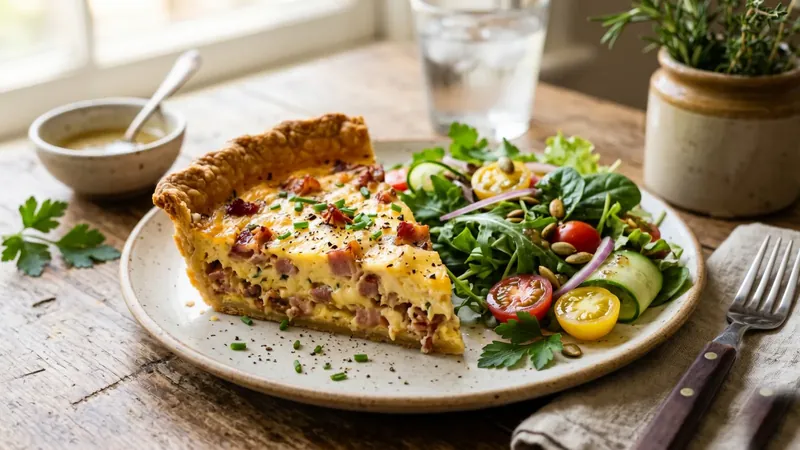
↓ Jump to recipeA proper quiche Lorraine is all about restraint: a crisp, buttery shortcrust holding a custard so silky it barely sets. This version stays faithful to that ideal while leaning into smoky depth, with crisp smoked bacon lardons and a generous handful of nutty Gruyere folded through. The secret to that meltingly soft filling is a gentle oven and pulling the tart while the centre still has a faint wobble. Serve warm, with a sharp green salad alongside.
The story of a border dish
Quiche Lorraine takes its name from Lorraine, the region in north-eastern France pressed up against the German border, and the dish carries that frontier heritage in its very name. The word quiche comes to French from the Lorraine-Franconian dialect Küchen, itself from the German Kuchen, meaning cake — a reminder of the centuries of German and French cultural overlap that shaped the cooking of this contested corner of Europe, which passed back and forth between the two countries more than once. The earliest documented references to the dish appear in the sixteenth century, and by the nineteenth it was firmly established as the emblematic tart of Nancy and the surrounding countryside.
In its earliest, most traditional form the quiche Lorraine was a simple affair: an open case, originally of bread dough rather than pastry, filled with a migaine of eggs and cream and enriched with pieces of smoked pork belly. It was rustic food, born of a farming region and reliant on ingredients that kept through a cold winter. What surprises many modern cooks is that the original contained no cheese at all. The custard was purely eggs, cream and bacon, and French purists still argue that adding cheese means you are making a quiche au fromage, not a true Lorraine. The Gruyere here is therefore a deliberate, gentle twist rather than a claim to authenticity — a nod to the later, cheese-enriched versions that have become just as loved. That firm, nutty Alpine cheese melts smoothly into the custard and lends a savoury richness that complements rather than overwhelms the smoky bacon.
Quiche Lorraine with Smoked Bacon and Gruyere
Ingredients
- 200g plain flour, plus extra for dusting
- 100g cold unsalted butter, diced
- 1/2 tsp salt
- 1 egg yolk
- 2-3 tbsp cold water
- 200g smoked streaky bacon, cut into lardons
- 3 eggs
- 200ml double cream
- 100ml whole milk
- 100g Gruyere, grated
- Freshly grated nutmeg
- Salt and black pepper
Method
- Rub the butter into the flour and salt until it resembles breadcrumbs, then bind with the egg yolk and cold water. Wrap and chill for 30 minutes.
- Roll out the pastry and line a 23cm tart tin, leaving a little overhang. Chill for 15 minutes.
- Line the pastry with baking paper and baking beans and blind bake at 190C (170C fan) for 15 minutes.
- Remove the beans and paper and bake for a further 8 minutes until the base is pale gold and dry. Trim the overhang.
- Meanwhile, fry the bacon lardons in a dry pan until crisp and golden, then drain.
- Whisk together the eggs, cream and milk, and season with salt, pepper and a little nutmeg.
- Scatter the bacon and most of the Gruyere over the pastry base.
- Pour over the egg mixture and top with the remaining cheese.
- Bake at 180C (160C fan) for 30-35 minutes until just set with a slight wobble in the centre.
- Cool for 15 minutes before slicing and serving warm.
Getting the pastry right
The shortcrust is the foundation, and it is where a home quiche most often falls down before the filling even goes near it. The goal is a pastry that is short and crisp rather than tough, and toughness comes from overworked gluten. So keep everything cold: cold butter, cold water, cold hands if you can manage it, because warm butter smears into the flour and greases the gluten strands instead of leaving them in distinct flakes. Rub the diced butter into the flour only until it looks like coarse breadcrumbs — a few slightly larger flecks of butter are a good thing, since they melt in the oven and leave tiny pockets of steam that lift and flake the pastry.
Add the water sparingly. Too much and the dough turns elastic and shrinks in the tin; too little and it cracks when you roll it. Bring it together just until it coheres, then stop. The 30-minute chill is not optional padding: it lets the flour hydrate evenly and, crucially, relaxes the gluten you have inevitably developed, so the pastry rolls out without springing back and holds its shape rather than slumping down the sides of the tin as it bakes. Roll it a little larger than the tin and ease it in without stretching — stretched pastry always shrinks back — pressing it gently into the corners and leaving that overhang to trim once baked. If the pastry cracks as you line the tin, patch it with an offcut; a small repair is invisible once the custard goes in, whereas a hole will leak the custard out under the base and glue the tart to the tin. One more habit worth forming: leave the pastry standing a couple of millimetres proud of the rim before blind baking, because all shortcrust shrinks a little as its butter renders and its water evaporates, and that small margin keeps the finished edge level with the tin rather than sunk below it.
Why the technique matters more than the recipe
Two steps decide whether your quiche is a triumph or a disappointment, and neither is on the ingredient list. The first is blind baking. Pastry and wet custard are natural enemies: pour raw filling into raw pastry and the base steams rather than bakes, leaving you with the dreaded soggy bottom. Blind baking dries and part-cooks the shell first, and the second stint without the beans is what sets the very base so it can stay crisp under the custard. If you want extra insurance, brush the hot, part-baked shell with a little beaten egg and return it to the oven for two minutes; the egg seals any tiny cracks and forms a waterproof layer.
The second is the custard, and this is where most home quiches go wrong. The enemy is heat and too many eggs. Egg proteins set gently up to around 70°C; push them hotter and they contract sharply, squeezing out water, which is what curdles a custard into a rubbery, weeping mess with a scummy skin. So two things protect you: a ratio weighted towards cream and milk rather than egg (three eggs to 300ml of dairy here, not five or six), and a moderate oven. Pull the quiche while the centre still trembles like a barely set jelly. Carry-over heat finishes the setting as it cools on the counter, and the result stays luxuriously soft rather than firm. A quiche that is completely solid when it leaves the oven is already overcooked.
Make-ahead, storage and variations
The pastry can be made up to two days ahead and kept wrapped in the fridge, or frozen raw for up to a month. You can blind bake the shell a day in advance too; keep it in the tin at room temperature and fill it when you are ready. A finished quiche keeps for three days in the fridge and, unusually for a custard tart, reheats well: 12 to 15 minutes in a 160C fan oven brings back the crisp pastry far better than a microwave, which turns the base flabby. It also freezes in slices for up to two months. It is genuinely better warm than fridge-cold, and better still the day it is baked.
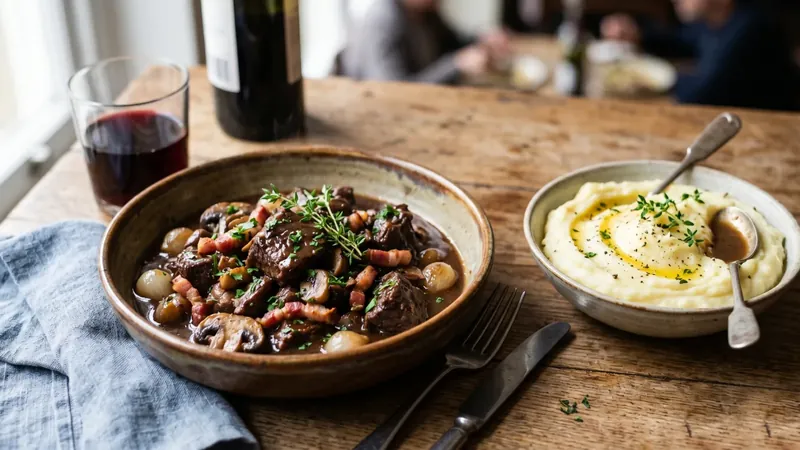
For variations, hold the classic ratio and swap the fillings: soften a couple of sliced leeks in butter for a quiche aux poireaux, or fold through wilted, well-squeezed spinach and a little more nutmeg. Smoked salmon and dill make an elegant brunch version. If you love this kind of savoury, smoky depth, the same crisp bacon does wonderful things in my corn chowder with bacon and chive, and for another French classic built on patience and a good pastry-free braise, try the beef bourguignon. The result here is a tart that manages to be both humble and elegant, equally at home on a brunch table or a picnic blanket — crisp pastry, smoky bacon and that barely set, savoury custard, which is exactly what has kept this regional French classic on tables well beyond its home valley for well over a century.
Related Content