Quenelles de Brochet: The Pike Dumplings of the Rhône
Pike, panade and butter beaten cold, poached to a soufflé, sauced with crayfish
Contents
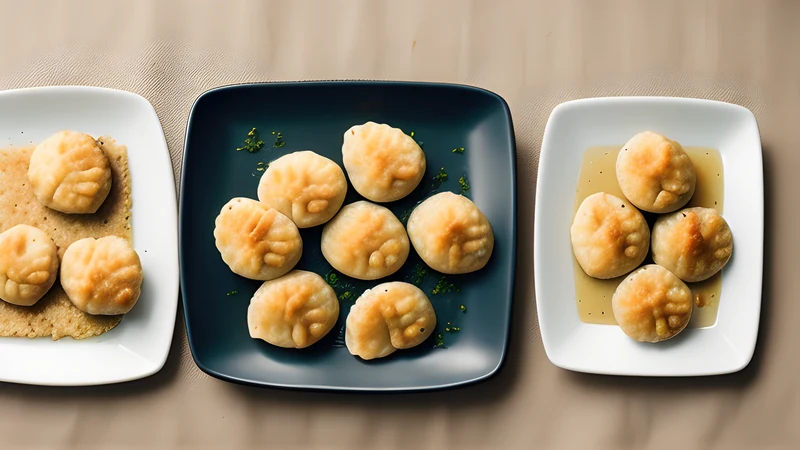
↓ Jump to recipeA quenelle de brochet swells to three times its raw size in the oven and then, if you dawdle, deflates on the way to the table. Lyon’s bouchons time the service around it. The dish arrives in its dish, domed and browned and faintly trembling, and you have about four minutes.
The reason it exists at all is that pike is a horrible fish to handle. The flesh is sweet and firm and excellent; the skeleton is the problem. Esox lucius has, in addition to its normal skeleton, a set of forked intramuscular bones called epipleurals that are embedded in the fillet at intervals and branch like tuning forks. You cannot pull them out. They are not in a line. Anybody who has tried to eat a pike fillet has spent the meal picking splinters out of their teeth.
So the cooks of the Rhône did the only sensible thing: they destroyed the fish completely. Pound it to a paste, and the bones go with it. What began as a way to make an unmanageable river fish edible turned into one of the most technically refined things in French cooking, which is a fairly typical French sequence of events.
Quenelles de Brochet: The Pike Dumplings of the Rhône
Ingredients
- 250 ml whole milk, for the panade
- 100 g unsalted butter, for the panade
- 150 g plain flour, sifted
- 3 eggs, for the panade
- 300 g pike fillet, skinned, pin-boned, well chilled
- 150 g unsalted butter, softened but cool
- 2 eggs, for the mousseline
- 1 egg white
- 9 g fine salt
- 0.25 tsp freshly grated nutmeg
- 0.5 tsp ground white pepper
- 400 g whole crayfish, or 300 g raw prawn shells and heads
- 2 tbsp olive oil, for the sauce
- 1 shallot, diced
- 1 carrot, diced
- 2 tbsp tomato purée
- 40 ml Cognac
- 150 ml dry white wine
- 400 ml double cream
- 2 tsp tarragon vinegar
- 1 tbsp chopped tarragon leaves
- 30 g Gruyère, finely grated
Method
- Make the panade. Bring the milk and 100 g butter to a boil in a saucepan. Tip in all the flour at once and beat hard with a wooden spoon over medium heat for 3 minutes, until the paste comes away from the sides in a single ball with a film on the pan base.
- Off the heat, beat in the 3 eggs one at a time, working each one fully in before the next. Spread the panade on a tray, cover its surface with cling film and refrigerate for at least 4 hours, or overnight. It must be cold.
- Chill the food processor bowl and blade in the freezer for 20 minutes.
- Blitz the chilled pike with the salt, nutmeg and white pepper for 60 seconds to a smooth paste, scraping down once.
- Add the cold panade in four pieces, pulsing 10 seconds after each. Add the 2 eggs and the egg white and blitz 30 seconds.
- With the motor running, add the 150 g soft butter in six pieces over 90 seconds. Stop as soon as it is uniform and pale. Chill the mixture 2 hours.
- Poach a test quenelle. Shape a tablespoon of the mixture and slide it into water held at 80C for 6 minutes. It should swell, hold together and taste seasoned. If it disintegrates, beat in 1 more egg white and chill again.
- Shape the rest with two wet dessert spoons, passing the mixture between them to form three-sided ovals about 8 cm long.
- Poach in a wide pan of salted water at 80C — trembling, never bubbling — for 12 minutes, turning once at 6 minutes. They will roughly double. Lift onto a rack and refrigerate 2 hours.
- Make the sauce. Crush the crayfish or prawn shells. Fry them in olive oil over high heat for 5 minutes until deep coral. Add the shallot and carrot and cook 5 minutes.
- Stir in the tomato purée, cook 2 minutes, add the Cognac and flame or boil off for 1 minute. Add the wine and reduce by half, then the cream. Simmer 15 minutes.
- Blitz the sauce, then push it through a fine sieve, pressing hard on the solids. Discard the shells. Stir in the tarragon vinegar and tarragon.
- Sit the cold quenelles in a buttered gratin dish, pour over the sauce, scatter with Gruyère and bake at 190C fan for 20 minutes, until swollen and browned. Serve immediately.
The panade, and why it has to be cold
A panade is a starch paste that gives a mousseline its structure. This one is a pâte à choux — milk, butter, flour, eggs — cooked exactly the way you’d start a profiterole, and it does the same job here that it does there. The gelatinised flour holds water, and when the quenelle hits oven heat, that water turns to steam and inflates the whole thing from inside.
It has to be properly cold, and this is the step people rush. There are two reasons.
Warm panade melts the butter. You’re going to beat 150 g of soft butter into this mixture and the butter needs to stay as an emulsion of solid fat droplets suspended in protein. If the panade is at 30C, the butter melts and the mixture splits into a greasy slick that will never come back.
Warm panade cooks the fish. Fish proteins denature at surprisingly low temperatures — around 40C for the first ones. A food processor generates real heat, and if you start warm, you finish with partly cooked pike that has already squeezed out its water and won’t bind.
Four hours in the fridge, minimum. Overnight is better. Spread it thin on a tray so it cools fast and cover the surface directly with cling film to stop a skin forming.
Cold is the whole technique
Freeze the processor bowl and blade for 20 minutes. Chill the pike hard. Have the butter soft but at 16C rather than 22C — pliable, still cool to the touch.
A mousseline is an emulsion held by fish myosin, and myosin does its job in a narrow window. Below about 4C it’s too stiff to unwind properly and won’t capture the fat. Above about 12C it denatures and releases the fat it was holding. The whole shaping-and-poaching process needs to happen inside that band, which is why professional kitchens work over ice and why home cooks who leave the bowl out for ten minutes to answer the door come back to a broken mixture.
If it does break — grainy, weeping fat — chill it hard for an hour and blitz in one cold egg white. It usually recovers.
The tarragon vinegar
The twist. The traditional partner is sauce Nantua, named for the town on the edge of the Jura, and it is built on crayfish butter, cream and more cream. It’s magnificent for three mouthfuls and then it stops.
The problem is arithmetic. You have a dumpling that is 40 per cent butter and panade, and you are covering it in 400 ml of double cream. There is no acid anywhere on the plate. The classical answer is a squeeze of lemon at the end, which works but reads as lemon.
Two teaspoons of tarragon vinegar, stirred in off the heat, does the job invisibly. Vinegar’s acetic acid is more volatile than citric acid, so it lifts off the sauce as aroma rather than sitting on the tongue as sourness, and the tarragon in it belongs to the same family of anise notes that pike and crayfish have always been served with in the Rhône. It sharpens the sauce without anybody being able to name what you did.
Add it off the heat and after the sieve. Boiled vinegar loses its aromatics and leaves the sour part behind, which is precisely backwards.
The poach, and the number that matters
80C. The surface should shift slightly and show no bubbles at all — hold it below a simmer the whole way through.
At a simmer, the moving water tears the raw mousseline apart before its proteins have set — you’ll open the pan to grey scum and nothing else. At 80C the outside sets in the first 30 seconds and forms a skin that holds the rest together while it cooks through.
Use a wide, shallow pan and a probe. If you don’t have a probe, watch for the point where a few small bubbles rise from the base and burst before reaching the surface, then turn the heat down one notch from there.
Poach a test quenelle first. Always. It costs six minutes and it tells you whether the mixture will hold and whether it’s seasoned, and both of those are unfixable later.
Shaping with two spoons
The three-sided oval is the shape the word describes — quenelle comes from the German Knödel, dumpling, by way of Alsace, and the form is old.
Two dessert spoons, both dipped in hot water before every single quenelle. Scoop a heaped spoonful, then pass it from one spoon to the other, letting the bowl of the receiving spoon smooth the top into a curve each time. Three or four passes gives you three flat-ish facets and a smooth surface. Slide it off into the water rather than dropping it.
Hot water on the spoons matters more than it sounds. Dry metal grips the butter in the mixture and tears the surface; wet, warm metal releases it. If the quenelles are coming out ragged, your water has gone cold.
They should be around 8 cm long and weigh about 90 g raw. Bigger than that and the centre hasn’t set by the time the outside is overcooked. Lyon sells enormous single quenelles that feed one person, and they’re poached for closer to 20 minutes.
The two-stage cook
Poach, chill, then bake. This sequence is structural.
Poaching sets the proteins and gives you a solid object you can handle. The chill firms it. Then the oven, at 190C under sauce, turns the remaining water to steam and inflates the set structure like a soufflé. Skip the poach and bake the raw mixture and it spreads into a puddle. Skip the chill and the quenelle is too soft to move into the dish.
Poached quenelles keep two days in the fridge and freeze for a month, which makes this a dish you can genuinely build in stages. Bake from chilled, adding four minutes if frozen.
What goes wrong
They dissolved in the pan. Water too hot, or the mixture too warm and split. Chill it, beat in a cold egg white, and check your temperature.
They’re dense and rubbery. Overworked in the processor, or too many eggs. The blitz after the butter goes in should last seconds. You are combining the fat into an emulsion that already exists, and every extra revolution works the proteins harder.
They deflated on the way to the table. Normal, and the reason quenelles are served in their baking dish. There is no fix beyond speed. Have the plates warm and the table ready before the dish leaves the oven.
The sauce is thin. Under-reduced, or you sieved out the shells before extracting from them. Press the solids hard against the sieve with a ladle; most of the flavour and a good deal of the body is in what you’re about to throw away.
The sauce is greasy. Cream boiled too hard for too long. Simmer it at a bare movement for 15 minutes and no more.
Substitutions and what to serve alongside
Pike is hard to find outside a good fishmonger with river connections. Pollack, haddock or whiting all work — you want a lean white fish with firm flesh and no oil. Salmon and mackerel are too fatty and the mousseline splits. Scallop makes a luxurious version and costs a fortune.
Crayfish shells are equally awkward. 300 g of raw prawn shells and heads, saved in the freezer over a few months, make an honest substitute; the heads matter most, since that’s where the flavour concentrates.
Serve with rice, or plain boiled potatoes, and nothing else. This is a rich plate and it doesn’t want company. A green salad afterwards, and a glass of the same white you put in the sauce.
If the whole two-day arc is more than you fancy, brandade runs on the same cold-emulsion logic and teaches the same lesson about protein and fat with rather less to go wrong. For pure comfort, gratin dauphinois and a roast is the Lyonnais Sunday and takes a fifth of the effort.
Related Content