Queijadas de Sintra: The Little Cheese Tarts of Sintra
Paper-thin pastry, fresh cheese and a great deal of cinnamon
Contents
↓ Jump to recipeSintra sits in the hills above Lisbon under a permanent haze of Atlantic damp, and it has been the summer retreat of Portuguese royalty since the fourteenth century. It has a Moorish castle, a palace painted in colours that should not work, and a small greasy-papered box of tarts that has been made there for something like eight hundred years.
The documentary record is unusually good. Queijadas de Sintra appear in medieval records as a form of tax — tenants of the Sintra region paid rent in queijadas, which means the recipe predates the paperwork that mentions it. By the nineteenth century the queijadeiras, the women who made them, were selling them at the roadside to travellers coming up from Lisbon. Fábrica das Verdadeiras Queijadas da Sapa, founded in 1756 and still operating, has been at it for nine generations and prints its opening date on the box with justified smugness.
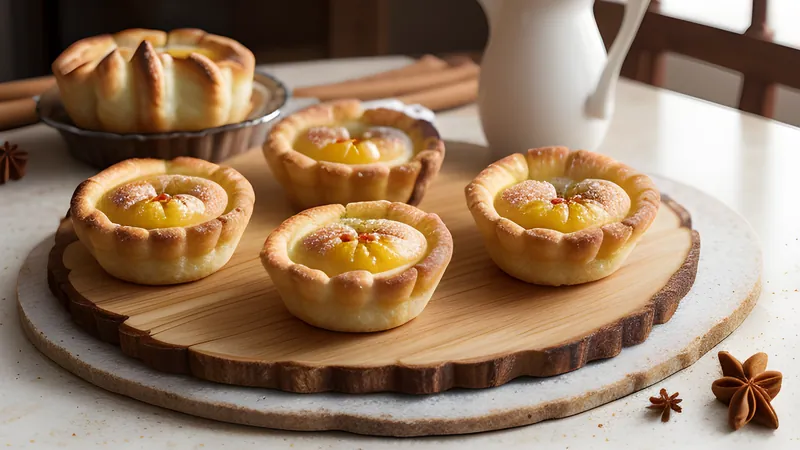
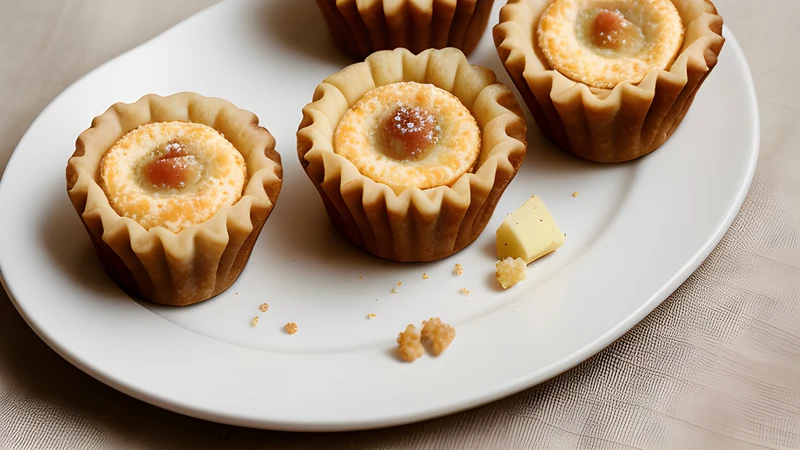
They are small. About 6cm across, a couple of centimetres deep, with a pastry that ruffles up around the filling in stiff brown petals. They come in cylinders of six wrapped in paper. You eat one and immediately eat three more, which is the design.
Queijadas de Sintra: The Little Cheese Tarts of Sintra
Ingredients
- For the pastry: 200g plain flour
- 1/4 tsp fine sea salt
- 110ml water, at room temperature
- 15g unsalted butter, very soft
- Plain flour, for dusting
- For the filling: 250g requeijão, ricotta or fresh curd cheese, well drained
- 180g caster sugar
- 2 large eggs, plus 1 egg yolk
- 30g plain flour
- 2 tsp ground cinnamon, plus more to dust
- 1/4 tsp fine sea salt
- 1/2 tsp orange blossom water
- Finely grated zest of 1 lemon
Method
- Make the pastry first. Combine 200g flour and 1/4 tsp salt in a bowl, add the water, and mix to a shaggy dough. Turn out and knead for 8 minutes until completely smooth and elastic. It should be soft and slightly tacky.
- Smear the very soft butter over the ball of dough, wrap tightly, and rest at room temperature for at least 30 minutes and up to 2 hours. This rest is what lets you stretch it.
- Drain the cheese: press it in a sieve lined with muslin for 20 minutes if it is at all wet. Excess whey makes a filling that weeps.
- Beat the drained cheese with the sugar until smooth and no grains remain, 2 minutes. Add the eggs and yolk one at a time, beating well after each.
- Sift in 30g flour, the cinnamon and 1/4 tsp salt, and fold through. Stir in the orange blossom water and lemon zest. The filling should be the consistency of double cream. Rest it for 15 minutes.
- Heat the oven to 220C with a baking tray inside. Grease an 18-hole shallow bun tin.
- Divide the rested dough into 18 pieces of roughly 17g each. Keep them covered.
- Flour a work surface generously. Roll one piece to a rough 8cm circle, then pick it up and stretch it over the backs of your floured knuckles, working outwards from the centre, until it is about 12cm across and thin enough to read print through. Small tears are acceptable; large ones are not.
- Press each round into a hole of the tin, letting the excess flop over the rim in loose folds. Do not trim it.
- Fill each to just below the rim, about 1 tbsp. Do not overfill; the filling rises.
- Bake on the hot tray for 16-18 minutes, until the filling is puffed and set with brown blisters and the pastry frills are crisp and golden.
- Cool in the tin for 5 minutes, then lift out onto a rack. Dust heavily with cinnamon while still warm. Eat the same day.
The pastry is the whole trick
There is no fat in this dough beyond a smear of butter on the outside, and no rolling pin does what you need. It is a water dough — flour, water, salt — kneaded hard until the gluten is fully developed, then rested, then stretched by hand until it is translucent. The technique is the same one behind strudel pastry and the Yemeni malawach: build the network, let it relax, then let it go thin.
Knead for the full eight minutes. Underdeveloped dough tears the moment you stretch it. Then rest it — thirty minutes minimum, and an hour is better. Gluten that has just been worked is elastic and springs back; gluten that has rested is extensible and will hold the shape you pull it into. This is not optional and no amount of force substitutes for it. If it snaps back at you, it needs another twenty minutes.
The butter is smeared on the outside of the ball rather than kneaded in. It stops the surface skinning over during the rest and it gives the finished frills a little colour.
To stretch: flour your hands well, roll the piece out to a rough circle first, then drape it over the backs of your knuckles and move them slowly apart, rotating as you go. Knuckles rather than fingertips, because fingertips punch through. You are aiming for something you could read a newspaper through. It will feel like it is about to tear the entire time. It usually does not.
Let the pastry hang over
Press the round into the tin and leave the excess flopping over the rim in untidy folds. Do not trim it, do not tuck it in. Those folds are what bake into the frilled crown that makes a queijada recognisable, and they crisp into something like filo. A neatly trimmed queijada is a small cheesecake and nobody wants that.
The cheese
Traditionally requeijão, Portugal’s fresh whey cheese — the direct equivalent of Italian ricotta, made the same way from the whey left over after a firm cheese. Ricotta is the honest substitute and I use it without guilt. Any fresh curd cheese with a mild flavour works; what you cannot use is cream cheese, which brings gums and stabilisers and a sour tang that fights the cinnamon.
Drain it. This is where people fail. Supermarket ricotta sits in a tub in its own whey and if that whey goes into the filling you get tarts that weep a puddle and never set properly. Twenty minutes in a muslin-lined sieve, with a plate on top, and the difference is visible.
Beat the cheese and sugar together first and beat properly — two full minutes. Sugar crystals are abrasive and they break down the curd grains. Skip this and the filling stays slightly grainy on the tongue.
Orange blossom, and the cinnamon problem
The change I make is half a teaspoon of orange blossom water. Fresh cheese and sugar together can sit heavy and slightly dairy-dull, and two teaspoons of cinnamon on top of that becomes a single brown note. Orange blossom is a bridge — a Moorish flavour that belongs entirely in this part of the world, and one that lifts the curd and gives the cinnamon something bright to hit against. Half a teaspoon. It is potent and a full teaspoon makes the tarts taste of soap.
The cinnamon itself should be more than feels reasonable: two teaspoons in the filling and a heavy dusting on the warm tarts afterwards. Cassia, the ordinary supermarket cinnamon, is what Portugal uses and what you want here — it is louder and more aggressive than delicate Ceylon and it needs to carry across all that sugar. If you have made cardamom cinnamon rolls you already know cinnamon rewards a heavy hand.
Heat
220C and a preheated tray. The high temperature does two jobs at once: it sets the filling fast, which puffs it and gives it those dark blisters, and it drives the thin pastry to crisp before the filling has time to soak into it. A moderate oven gives you a soggy base and a pale flat top.
Sixteen to eighteen minutes. They should look slightly overdone — the blisters are correct. They collapse a little as they cool, which is also correct.
Storage, and the honest truth about it
Eat them the day they are made. The pastry is thin enough that it goes soft against the moist filling within hours, and by the next morning the frills have surrendered. The commercial ones survive because of factory drying that you cannot replicate. Refreshing them for four minutes at 180C brings the crisp back about halfway.
Do not refrigerate. Cold makes the pastry tough and mutes the cinnamon.
The convent connection
Portuguese pastry is dominated by egg yolks and sugar and the reason is institutional. From the fifteenth century onwards the country’s convents and monasteries used enormous quantities of egg white — to clarify wine, and to starch the nuns’ habits stiff — which left them with mountains of surplus yolk. Sugar was arriving cheaply from Madeira and later Brazil. What the religious houses did with yolks and sugar became the doçaria conventual, and it is the reason a small country has something like a hundred distinct named pastries, most of them yellow.
Queijadas sit slightly outside that story, because they are older and because their protein comes from cheese rather than yolk. But you can see the tradition leaning on them: the extra yolk in the filling, the sheer quantity of sugar, the smallness. Portuguese sweets are almost always tiny, and that is a rational response to how intense they are.
Sintra’s queijadeiras were selling by the roadside long before the convents industrialised. The town’s altitude, cool damp air and hill pastures meant fresh cheese, and fresh cheese does not travel, so it got baked into something that would.
What can go wrong
The pastry tore everywhere. Under-kneaded, under-rested, or both. Eight minutes of kneading and a genuine half hour of rest, and stretch over knuckles rather than fingertips.
The filling is watery and the base is soggy. The cheese was not drained. Twenty minutes in muslin with a weight on top.
The filling cracked and split. Overbaked, or the oven was fan-assisted at full whack. Blisters are correct; deep fissures mean the egg proteins have over-coagulated and squeezed their water out.
They are grainy. The cheese and sugar were not beaten long enough, or you used a ricotta made from acid-set whole milk rather than the smoother whey type.
They stuck to the tin. Grease properly, and lift them out at five minutes rather than fifteen — the sugar in the filling sets to toffee as it cools.
Getting ahead
The pastry dough can be made a day early, wrapped tight and kept in the fridge; bring it fully to room temperature before you attempt to stretch it, because cold gluten will not extend. The filling keeps two days refrigerated and should also come back to room temperature, or it will chill the pastry and slow the bake.
What you cannot do is assemble ahead. The moment the wet filling meets that gossamer pastry it starts soaking it, and an hour’s wait gives you a base that never crisps. Fill and bake within ten minutes.
Tin choice
A shallow bun tin with holes about 6cm across and 2cm deep is the closest domestic thing to the proper queijada mould. Deep muffin tins are the common mistake: they make something the size of a cupcake, with far too much filling relative to pastry, and the ratio is the dish. Small and intense.
Metal, and dark metal for preference, because you need the base to set fast against the hot tray. Silicone moulds insulate and give you a pale limp bottom.
You will get roughly eighteen from this quantity. If your tin holds twelve, bake in two batches and keep the second lot of pastry pieces covered with a damp cloth so they do not skin over.
Why so much sugar
A hundred and eighty grams of sugar to 250g of cheese is a ratio that stops people in their tracks, and it is correct. Fresh curd cheese is bland, wet and slightly sour, and it has almost no fat to carry flavour. Sugar is doing structural work here as well as sweetening: it lowers the freezing point and raises the setting temperature of the egg proteins, which keeps the filling tender rather than rubbery, and it holds water in the bake so the tart does not dry out in eighteen minutes at 220C.
It is also what browns. Those dark blisters on top are sugar caramelising and reacting with the egg protein, and a reduced-sugar version comes out pale, flat and faintly cheesy in a way nobody enjoys.
If it still sounds excessive, remember the serving size. One queijada is about 45g and holds roughly two teaspoons of sugar, which is less than a digestive biscuit and considerably less than most things sold as a treat. Portugal solved the intensity problem by making the object small, and that solution works.
Variations
Travesseiros de Sintra are the other Sintra pastry — puff pastry pillows filled with almond egg cream, from Piriquita, and a different project entirely. Queijadas de Évora are the Alentejo cousin, made with sheep’s cheese and baked in little tins with no frills at all.
For something in the same register of tiny, egg-rich and Portuguese, the almond, olive oil and orange blossom cake uses the same floral note at a larger scale, and the pão de deus is what to make when you want the same afternoon and less stretching.
Related Content