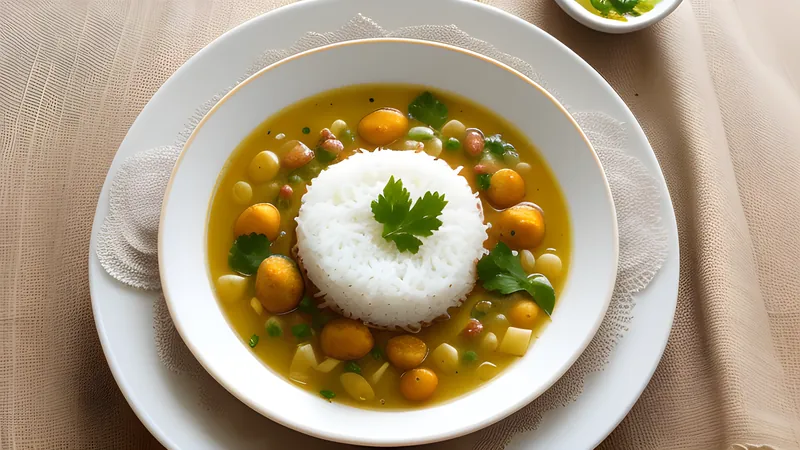
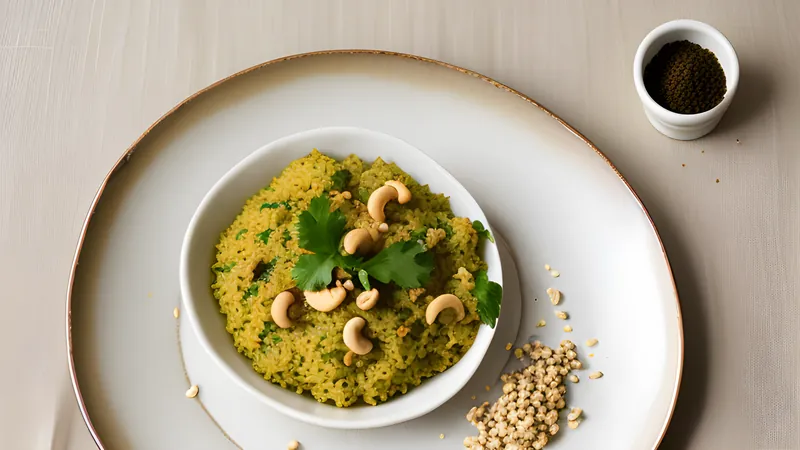
Puttu and Kadala Curry: Steamed Rice Logs with Black Chickpeas
Layered rice flour and coconut, steamed in a cylinder, beside a dark chickpea curry
Contents
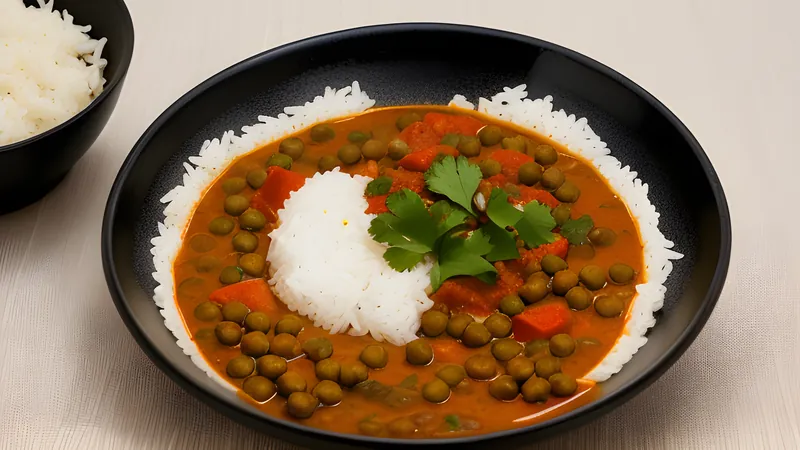
↓ Jump to recipePuttu is steamed rather than fried or griddled, which sets it apart from most of the South Indian breakfast repertoire, and it comes out of its mould looking almost architectural: a pale, cylindrical log built from alternating bands of moistened rice flour and grated coconut, each layer distinct if you slice into it. Kadala curry, its standard partner, is a dark, roasted-coconut chickpea curry with enough depth and spice to carry the plain, faintly sweet puttu, which on its own is deliberately understated — a blank, absorbent canvas rather than a dish built to stand alone.
My twist sits in the curry, where I roast the coconut, coriander, cumin, fennel and dried chillies together into a paste before it goes anywhere near the pot, rather than adding raw ground spices to the onion-tomato base the way some quicker versions do. Roasting the coconut alongside the whole spices deepens the paste to a genuinely dark, nutty brown and gives the finished curry a toasted complexity that a version built from straight ground spice powder simply cannot match.
Puttu and Kadala Curry: Steamed Rice Logs with Black Chickpeas
Ingredients
- 300g coarse roasted rice flour (puttu podi)
- 150g fresh grated coconut, plus more to serve
- 1/2 tsp fine sea salt
- Water, as needed
- 200g dried black chickpeas (kadala), soaked overnight
- 3 tbsp coconut oil
- 1 onion, finely chopped
- 2 tomatoes, chopped
- 1 thumb ginger, grated
- 5 garlic cloves, grated
- 2 green chillies, slit
- 2 sprigs fresh curry leaves
- 60g fresh grated coconut, for the roasted masala paste
- 1 tbsp coriander seeds
- 1 tsp cumin seeds
- 1 tsp fennel seeds
- 4 dried red chillies
- 1 tsp ground turmeric
- 1.5 tsp Kashmiri chilli powder
- 1 tsp garam masala
- Fine sea salt, to taste
Method
- Drain the soaked chickpeas, cover with fresh water in a pot and boil 40-50 minutes, or pressure-cook 15-20 minutes, until soft but still holding their shape. Reserve the cooking liquid.
- Dry-roast the coriander, cumin, fennel and dried red chillies for 2-3 minutes until fragrant, then blend with the 60g fresh coconut and a splash of water to a smooth, dark paste.
- Heat 3 tbsp coconut oil in a pot and fry the onion for 6-8 minutes until golden. Add ginger, garlic, green chillies and curry leaves; cook 2 minutes.
- Stir in the tomatoes and cook 5-6 minutes until soft and jammy, then add the turmeric, chilli powder and the roasted coconut-spice paste. Cook 3-4 minutes until the raw smell of the paste has gone and the oil begins to separate at the edges.
- Add the cooked chickpeas with enough of their cooking liquid to give a thick, clinging gravy. Simmer 15-20 minutes, stirring occasionally, until deepened in colour and reduced to your preferred thickness.
- Stir in the garam masala and season with salt. Keep warm.
- For the puttu, rub the rice flour between your palms with a few tablespoons of water at a time until it reaches a texture like damp, coarse breadcrumbs that holds together when pressed but crumbles apart easily, with no dry patches and no wet clumps.
- Assemble in a puttu steamer (or a clean, perforated cylindrical mould set over a pot of boiling water): a thin layer of grated coconut at the base, then a layer of the moistened flour pressed in loosely, alternating coconut and flour until the cylinder is full, finishing with coconut on top.
- Steam over vigorously boiling water for 8-10 minutes per batch, until a skewer inserted through the top comes out clean and steam rises freely through the top vent.
- Push the steamed cylinder out onto a plate — it should hold its shape as a soft, layered log — and serve immediately with the kadala curry.
A steamed staple with its own dedicated tool
Puttu is specific enough to Kerala’s breakfast table that most households own a purpose-built steamer for nothing else: a cylindrical metal mould that sits atop a narrow-necked pot, the puttu kutti, designed so steam rises directly up through the perforated base of the mould and cooks the layered flour and coconut from within rather than around the outside. Older versions used sections of dried bamboo as the steaming cylinder, and some households in rural Kerala still do, which gives a very faint bamboo aroma that the modern aluminium or steel versions cannot replicate. The dish is old enough and central enough to Kerala’s food culture that its rhythm — steam a batch, push it out, steam the next — is a genuine everyday morning ritual in many homes.
Kadala curry’s name is simply the Malayalam word for chickpea, and the dish’s signature dark colour and toasted depth come specifically from roasting coconut with whole spices before grinding, a technique shared with several other Kerala coconut curries but rarely explained to outsiders who assume the colour comes from a heavy hand with chilli alone. It is standard temple and roadside breakfast fare across Kerala, sold from small stalls specifically as the puttu accompaniment, and the pairing is fixed enough culturally that ordering puttu without asking about kadala curry gets you both without needing to specify.
Getting the rice flour texture right
The single hardest part of making puttu at home is the flour’s moisture, and it decides everything about the finished texture. Puttu podi, the specific coarse, par-roasted rice flour sold for this dish, needs only a light dampening — rub it between your palms with water added a tablespoon at a time, checking constantly, until it clumps loosely when squeezed but falls apart again with a light shake, closer to damp sand than to dough. Too little water and the steam cannot penetrate the dry flour properly, leaving a chalky, undercooked core; too much and the layers compress into a dense, gluey mass that never develops the light, slightly crumbly texture that makes a good puttu distinct from a rice dumpling.
Steam only rises efficiently through a properly loose, aerated fill, which is also why the layering matters — press the flour in gently rather than packing it tight, leaving enough space between granules for steam to move through the whole column rather than only cooking the outer surface of a dense plug.
Why the coconut gets roasted for the curry
Raw coconut ground straight into a curry paste, the way it works in avial or most stews finished with a fresh coconut and yoghurt base, gives a pale, sweet, mellow flavour appropriate to those gentler dishes. Kadala curry wants something darker and more assertive to stand up against the plain puttu, and dry-roasting the coconut alongside whole coriander, cumin, fennel and dried red chillies before grinding drives off moisture and triggers genuine browning in the coconut’s natural sugars — the same Maillard-adjacent process that darkens toasted desiccated coconut on a baking tray. The roasted paste smells distinctly nuttier and more savoury than a raw one, and it is this step, more than any additional spice, that gives kadala curry its characteristic dark brown colour and depth.
Frying the finished paste again briefly in the onion-tomato base, until the oil visibly separates at the edges of the pan, cooks off any remaining raw edge and concentrates the flavour further — a shortcut past this step leaves the curry tasting thin regardless of how long you simmer it afterward.
Serving and keeping
Serve puttu hot, straight from the steamer, with the kadala curry spooned alongside or over the top; a small pat of extra coconut oil melted into each serving is traditional and worth doing. A ripe banana served alongside is the everyday Kerala way to eat puttu when you want something sweeter than the curry provides, and it is worth trying at least once for the contrast against the curry’s spice.
Puttu itself does not keep well once steamed — the texture firms and dries within a couple of hours — so steam only as much as you plan to eat immediately and hold the remaining moistened flour, covered, for a second batch later. Kadala curry, by contrast, keeps well for up to three days refrigerated and its flavour genuinely improves overnight as the roasted coconut paste continues to infuse the gravy; reheat gently with a splash of water to loosen it back to its original consistency. If you want to prepare ahead for a group breakfast, cook the curry the day before and only steam the puttu fresh that morning.
Why the chickpeas need an overnight soak
Dried kadala benefit from a full overnight soak of at least eight hours, since black chickpeas are noticeably denser and slower to hydrate than the more common pale chickpea, having a tougher seed coat and a lower moisture content to begin with. Skipping or shortening the soak leaves you either extending the boiling time considerably or ending up with chickpeas that are soft on the outside but still faintly chalky at the centre. If you forgot to soak the night before, a hot-water soak for two to three hours with a pinch of bicarbonate of soda gets you most of the way there, though the texture is never quite as even as a proper overnight soak produces.
Reserve the chickpea cooking liquid rather than draining it away entirely — it carries a starchy body that helps the finished curry cling rather than running thin, and using it in place of plain water for the simmer is a small, nearly free way to make the gravy taste more considered than a recipe that reaches for the tap instead.
Variations on the puttu itself
Rice flour puttu is the everyday version, but the technique adapts to other grains and flavours across Kerala’s kitchens. Wheat puttu, made from a coarser wheat flour rather than rice, is common in some households as a change from the everyday version, with the same layering and steaming method. Sweet puttu skips the curry pairing entirely, using jaggery syrup or grated jaggery layered in with the coconut instead of served alongside a savoury dish, and is more of a snack or dessert version than a breakfast one.
Egg puttu, a more recent restaurant-menu invention rather than a traditional home preparation, scrambles egg through the steamed puttu once it is pushed out of the mould, giving a heartier, protein-rich version popular in Kerala’s Gulf-influenced restaurant scene. None of these change the underlying steaming technique; only the layered ingredients shift.
What goes wrong
A puttu that comes out gummy and heavy rather than light and layered has almost always had too much water worked into the flour — when in doubt, err drier, since a slightly dry mix still steams through given enough time, while an over-wet one compacts into something closer to a rice dumpling regardless of how long it steams. A puttu that crumbles apart entirely rather than holding its cylindrical shape when pushed out, on the other hand, usually means the flour was under-moistened or packed too loosely, with not enough contact between the damp granules for the starch to bind them together once steamed.
For the curry, a thin, watery result rather than a thick clinging gravy comes down to two possible causes: not roasting the coconut paste long enough before it goes into the tomato base, or simmering the finished curry too briefly after the chickpeas go in. Give it the full fifteen to twenty minutes at a steady simmer, stirring occasionally so the bottom doesn’t catch, and the gravy will reduce and thicken naturally as the starch from the reserved cooking liquid does its work.
No puttu kutti? An improvised steamer works
Not every kitchen has a dedicated puttu steamer, and it is worth knowing a reasonable substitute exists: a clean, empty tin can with both ends removed, or a section cut from a sturdy cardboard-free plastic tube built for food use, set inside a large steamer basket over boiling water, works well enough for occasional puttu-making. Line the improvised cylinder loosely with muslin or a perforated liner if the material is at all porous to fine flour, and check for steam rising freely through the top; if it is not, the layers are packed too tightly regardless of which vessel you are using. It will not have the built-in top vent of a proper puttu kutti, so watch the skewer test a little more carefully rather than relying on visible steam alone to judge doneness.
A full Kerala breakfast table
Puttu and kadala curry rarely appear alone on a Kerala breakfast table; the fuller spread usually includes something to cut the richness, most often sliced banana or a simple pickle. If you are building a bigger spread across a weekend, meen moilee makes a good midday follow-on from the same coconut-forward pantry, keeping the theme consistent from breakfast through lunch without repeating a single dish.
Related Content