Puran Poli: Jaggery and Lentil Stuffed Flatbread
A sweet chana dal filling rolled thin inside a griddled wholewheat flatbread
Contents
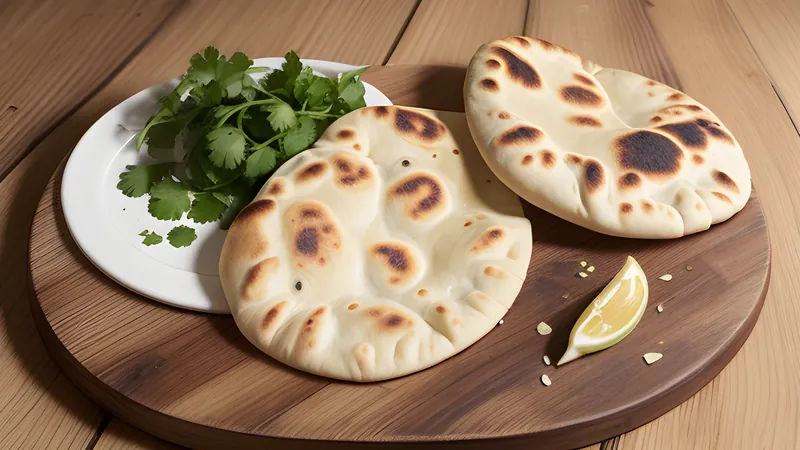
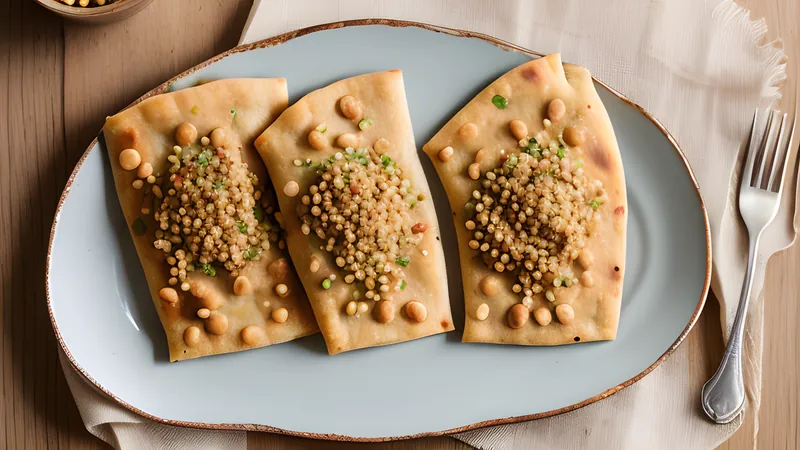
↓ Jump to recipePuran poli takes the idea of a stuffed flatbread and pushes the filling-to-dough ratio further than almost any other version in the world: a thin wholewheat skin wrapped around a dense, sweet, jaggery-cooked lentil paste, rolled paper-thin again so the two cook together as one bread. It is Maharashtra’s principal festival sweet, made for Holi and Ganesh Chaturthi in households that treat the rolling technique as a genuine skill to be learned, and the payoff for getting it right is a bread that is sweet, nutty and faintly spiced in every single bite.
Puran Poli: Jaggery and Lentil Stuffed Flatbread
Ingredients
- 250g chana dal, rinsed
- 600ml water, for cooking the dal
- 250g jaggery, grated
- 1 tsp ground cardamom
- 0.25 tsp grated nutmeg
- Pinch of salt
- 300g wholewheat atta (chapati flour), plus extra for dusting
- 1 tbsp plain flour
- 2 tbsp oil, plus extra for kneading
- 0.25 tsp ground turmeric
- About 180ml warm water, to bind the dough
- Ghee, for cooking and serving
Method
- Cook the chana dal in the 600ml water in a covered pan for 25-30 minutes, topping up with hot water as needed, until completely soft and mashable; drain off any excess liquid.
- Mash the drained dal well, then return to the pan with the jaggery and cook over a low heat for 10-12 minutes, stirring constantly, until it thickens into a very stiff paste that pulls away from the sides of the pan.
- Stir in the cardamom, nutmeg and salt, then spread the filling (puran) on a plate to cool completely; it will firm up further as it cools.
- Meanwhile, make the dough: mix the atta, plain flour, oil and turmeric with enough warm water to form a soft, pliable dough, softer than a chapati dough. Cover and rest 20 minutes.
- Divide the cooled puran into 8 balls, and the dough into 8 slightly smaller balls.
- Flatten a dough ball into a small disc, place a puran ball in the centre, and gather the dough edges up and over to fully enclose the filling, pinching to seal.
- Dust generously with flour and roll out gently on a well-floured surface into a thin round about 18cm across, taking care not to let the filling burst through; patch any small tears with a pinch of dry dough.
- Heat a dry griddle or tawa over a medium heat. Cook the rolled poli for 1-2 minutes on the first side until small bubbles appear.
- Flip, brush with ghee, and cook a further 1-2 minutes, then flip again and brush the other side with ghee, cooking until both sides show golden-brown spots.
- Stack on a plate under a clean cloth to keep soft, and serve warm with extra ghee spooned over.
The Story
Puran poli belongs to a family of stuffed sweet breads found right across the Indian peninsula under different names, bobbatlu in Andhra Pradesh, obbattu in Karnataka, but Maharashtra’s version, made around the festivals of Holi and Ganesh Chaturthi, is the one most associated with the dish’s Marathi name. It is traditionally a labour of love rather than a quick sweet: making the puran alone takes the better part of an hour of standing over the stove mashing and stirring, and rolling the stuffed dough out thin without splitting it takes practice most cooks only build up over years of making it for the same festivals every year. A Maharashtrian grandmother’s puran poli is, in most households, judged partly on how thin and even she can get the poli, a skill passed down rather than written into any recipe card.
Ganesh Chaturthi, the festival marking the birth of the elephant-headed god Ganesha, is when puran poli appears most reliably on Maharashtrian tables, often served with a ladle of warm milk or ghee poured over the top and a side of amti, a tangy dal, to cut the sweetness. The dish also travels well cold, which historically mattered for festivals that involved long days of visiting relatives and shared plates passed between houses.
Making puran poli in quantity is traditionally a shared, multi-person job in bigger households: one person mashes and stirs the puran over the stove while another rolls and griddles a steady stream of poli, since the filling needs near-constant attention right as the dough-rolling stage wants a second pair of hands. Families who make it only once or twice a year for a festival often relearn the rolling technique together each time, which is part of why it stays a genuinely communal, generational dish rather than something cooked casually on a random weekday.
Getting the puran stiff enough to roll
The single technical hurdle in puran poli is cooking the filling to the right consistency, because too wet a puran will burst through the dough the moment you try to roll it thin. The tell is visual and textural: keep stirring and mashing the dal and jaggery mixture over a low heat until it forms a mass stiff enough to hold its shape unsupported on a spoon, and until it visibly starts pulling away from the sides and base of the pan rather than clinging and steaming. This can take longer than it sounds like it should, particularly if the dal was not drained thoroughly after boiling, so do not rush this stage; a too-wet puran cannot be fixed once it is already sealed inside the dough.
Rolling without splitting
Rolling a stuffed ball of dough this thin, thinner than a standard chapati, without exposing the filling underneath is the part that intimidates first-time cooks most, and the fix is generous flour and a light touch rather than force. Dust the surface and the poli itself liberally, and roll from the centre outward in short strokes, rotating the dough a quarter turn between each roll rather than pressing hard in one direction, which is what tends to blow the filling straight through the thinning dough. If a small tear does appear, a pinch of dry dough pressed over the gap and dusted with more flour patches it invisibly once cooked. Cooking on a dry griddle for the first side, before any ghee goes anywhere near the pan, also matters: ghee added too early can seep into a thin, still-fragile poli and cause it to tear as you try to flip it.
Jaggery, and why it behaves differently to sugar
Jaggery is unrefined, made by boiling down sugarcane or palm juice until it sets into a solid block, and it carries mineral impurities and molasses that white sugar has had stripped away. That difference matters practically here: jaggery melts at a lower temperature than refined sugar and releases more moisture as it does, which is part of why the puran needs such determined cooking down before it is stiff enough to work with. It also brings a deeper, slightly smoky sweetness that plain sugar cannot replicate, closer to a light muscovado than to caster sugar. Buy jaggery in blocks rather than the softer, more processed liquid jaggery sold in some shops, since the firmer block grates easily and gives you more control over exactly how much goes into the pan.
Nutmeg and cardamom, in proportion
It is worth resisting the urge to add more warm spice than the recipe calls for. Puran poli is meant to taste primarily of dal and jaggery, with cardamom and a whisper of nutmeg rounding the sweetness rather than dominating it; over-spice the filling and it starts to taste more like a spiced fruit cake than a Maharashtrian festival bread. A quarter teaspoon of nutmeg sounds like very little against 250g of dal and jaggery, but nutmeg’s flavour is potent and bitter in excess, and the point here is a background warmth rather than a forward spice note.
What can go wrong
An under-cooked puran, still slightly loose rather than fully stiff, is the single most common reason a first attempt at puran poli ends in a burst or leaking poli; if the filling holds its shape only briefly on a spoon before slumping, it needs more time over the heat, however tempting it is to stop stirring early.
Rolling too aggressively in one direction, rather than turning the dough a quarter-turn between each pass, is the second common fault, and it is what pushes the filling straight through a thinning patch of dough rather than spreading the pressure evenly. A too-hot griddle is the third: it browns the outside of the poli within seconds while the inside remains gummy and underdone, so keep the heat moderate and be patient, even though a thin bread like this looks like it should cook almost instantly.
Regional cousins
Bobbatlu in Andhra Pradesh and obbattu in Karnataka use the same basic technique of a sweet lentil filling wrapped in a thin wheat or maida dough, though obbattu is often made with toor dal rather than chana dal and can include desiccated coconut in the filling for a different texture. A version enriched further with khoya (reduced milk solids) worked into the puran is a special-occasion upgrade in some households, giving a richer, creamier filling at the cost of a shorter shelf life once made.
Substitutions, storage and serving
Toor dal can substitute for chana dal in the puran if that is what is on hand, giving a slightly softer, less nutty filling. Puran poli keeps for two to three days at room temperature wrapped in foil or a cloth, and reheats well on a dry griddle or briefly in a low oven; avoid the microwave, which tends to toughen the dough. It also freezes for up to a month, layered between sheets of baking paper. The puran itself can be made up to two days ahead and kept covered in the fridge, which spreads the work across two sessions and is worth doing if you are making a large batch for a festival; bring it back to room temperature before shaping, since cold puran is stiffer and harder to portion evenly. A splash of milk brushed over the finished poli instead of ghee, common in some households, gives a softer crust and a slightly different flavour, though ghee remains the more traditional and arguably better finish for both taste and shine.
Serve it warm with a spoonful of ghee, or alongside a savoury Maharashtrian main like the peanut-stuffed bharli vangi for the full sweet-and-savoury balance of a proper festival spread. For another Maharashtrian dish built for a crowd, the sprouted bean curry misal pav makes an unusual but genuinely good contrast on the same table.
Related Content