Pupusas: El Salvador's Stuffed Griddle Cake
Thick corn cakes packed with cheese and beans, served with a fermented cabbage slaw
Contents
↓ Jump to recipeA pupusa’s whole reputation rests on a seal that has to hold under heat for six or seven minutes without splitting open and dumping molten cheese onto the griddle. Get the sealing technique wrong and you’ll know it immediately — the filling leaks out, scorches on the hot surface, and you’re left patching a hole in the dough with the pupusa already half-cooked. Get it right and you have El Salvador’s defining street food: a thick, slightly charred corn cake with a stretchy, savoury centre, torn into pieces by hand and eaten alongside a sharp, vinegary cabbage slaw that cuts straight through the richness.
Pupusas: El Salvador's Stuffed Griddle Cake
Ingredients
- 500g masa harina
- 450ml warm water, plus more as needed
- 1/2 tsp salt
- 300g queso fresco or a mild mozzarella, grated
- 250g refried beans
- 150g cooked, finely chopped pork (chicharrón or shoulder), optional
- oil, for the griddle
- For the curtido: 1/2 head white cabbage, finely shredded
- 2 carrots, grated
- 1/2 white onion, thinly sliced
- 1/2 tsp dried oregano
- 1/4 tsp chile flakes
- 200ml white vinegar
- 200ml water
- 1 tsp salt
- 1 tsp sugar
Method
- Make the curtido first: combine cabbage, carrot and onion in a bowl, pour over vinegar mixed with water, oregano, chile flakes, salt and sugar, and leave to pickle at room temperature for at least 1 hour, or refrigerate overnight for a stronger flavour.
- Mix the masa harina and salt, then gradually work in warm water until you have a soft, non-sticky dough that holds together, similar to soft playdough.
- Rest the dough covered for 10 minutes.
- Combine the grated cheese with the beans and chopped pork if using, to make a single mixed filling.
- Divide the dough into 8 balls, about 90g each. Flatten one ball in your palm, place 2 tablespoons of filling in the centre, and gather the edges up and over to seal completely.
- Gently flatten the sealed ball back into a disc about 12cm across and 1cm thick, patching any tears with a little extra dough.
- Heat a dry, lightly oiled griddle or heavy pan over medium heat and cook each pupusa for 3 to 4 minutes a side until browned in patches and cooked through, pressing gently with a spatula.
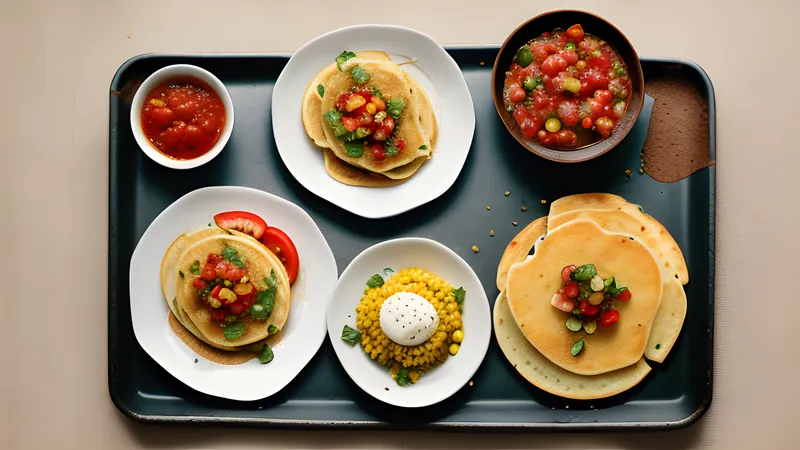
- Serve hot with curtido and a simple tomato salsa alongside.
A dish claimed by more than one country
Pupusas are El Salvador’s national dish by wide consensus and by law — the country designated the second Sunday of November as National Pupusa Day — but the same stuffed corn cake, under the same name, is eaten across Honduras as well, and similar stuffed masa cakes with different names turn up in parts of Guatemala. The dish’s exact origin is genuinely contested rather than settled, with some historians and Salvadoran cultural institutions tracing it to the pre-Hispanic Pipil people of what’s now western El Salvador, and archaeological evidence from the region has been cited to argue for a corn-stuffing tradition considerably older than European contact. Honduran food writers, for their part, make their own case for the dish’s origins on their side of the border, and the argument between the two countries over which one actually invented the pupusa is lively enough that it occasionally becomes a minor point of diplomatic friction rather than just a kitchen-table debate.
What’s not in dispute is that pupusas became central to Salvadoran identity specifically through the country’s twentieth-century diaspora. Civil war and economic hardship through the 1980s pushed large numbers of Salvadorans to the United States, and pupuserías — small, often family-run restaurants specialising in pupusas — became one of the most visible markers of Salvadoran-American communities in cities like Los Angeles, Washington D.C. and Houston, doing more than almost any other food to put El Salvador on the culinary map for people who’d otherwise have had little exposure to Salvadoran cooking specifically, as opposed to a general regional idea of Central American food.
The filling combinations that define the dish
The most common pupusa filling combination is called revuelta — a mix of cheese, refried beans and chicharrón (cooked, finely chopped pork) all folded in together, which is what this recipe follows. Simpler versions exist too: queso alone, just melted cheese with no beans or meat, is a completely legitimate and widely eaten choice, particularly popular with children and as a lighter option. Frijol con queso — beans and cheese without the pork — splits the difference.
A specific and much-loved regional variation uses loroco, the edible flower bud of a vine native to Central America, folded into the cheese filling for a faintly earthy, slightly grassy flavour that’s hard to replace with anything else — if you can find loroco at a Central American grocer, either fresh or in jars, it’s worth trying at least once to understand why it’s held in such regard. Ayote (a type of squash) is another traditional filling, cooked down until sweet and soft and mixed with cheese, more common in rural areas than in city pupuserías.
The sealing technique that actually works
Flatten the dough ball in your palm first, into a shallow bowl shape rather than a flat disc, before adding the filling — this gives you a rim of dough already gathered up around the edge, which makes the actual sealing motion far easier than trying to fold a flat disc closed around a scoop of filling. Once the filling is in the centre, bring the edges up and over the top, pinching them together at the centre, then gently press the whole sealed ball flat again between your palms, rotating it as you go so the filling redistributes evenly rather than bunching to one side.
If the dough tears during this process — and it happens even to experienced cooks — patch it immediately with a small piece of extra dough pressed firmly over the tear before it goes anywhere near the griddle. A tear patched before cooking holds; a tear that opens up once the pupusa’s on the heat is very hard to save, since the cheese inside is already starting to melt and push outward.
Rice flour pupusas, a lesser-known variant
Most pupusas are made from corn masa, but a rice-flour version — pupusas de arroz — is also traditional in parts of El Salvador, particularly associated with the town of Olocuilta near the international airport, where roadside pupusa stands using rice flour have become a destination in their own right for travellers passing through. Rice flour gives a slightly lighter, more delicate texture than corn masa, with a subtler flavour that lets the filling come through a little more, and it’s worth trying if you come across a recipe or a restaurant offering it specifically, though corn masa remains the more widely made version both in El Salvador and in diaspora kitchens abroad.
Getting the cheese to melt properly rather than seize
Queso fresco, the traditional cheese, doesn’t melt the same way a Western mozzarella does — it softens and turns creamy rather than stretching into strings, which is part of why many home cooks outside Latin America blend it with a little grated mozzarella for a meltier, stretchier result closer to what a good pupusería serves. If you’re using queso fresco alone, grate or crumble it finely before mixing with the beans, since larger chunks won’t fully soften in the six to eight minutes the pupusa spends on the griddle, leaving cool, unmelted pockets in an otherwise hot filling.
What tends to go wrong
Beyond a poor seal, the next most common issue is dough that’s too dry to shape without cracking. Masa dough for pupusas should feel like soft playdough — pliable and slightly tacky, holding a shape without cracking at the folds. If it’s cracking as you shape the bowl or gather the edges, work in a little more warm water; if it’s sticking heavily to your hands, work in a touch more masa harina.
Cooking over too high a heat is the third common failure. A hot griddle chars the outside before the thick centre has had time to cook through and the filling has had time to properly melt and warm — medium heat and the full six to eight minutes total gives the interior time to catch up with the exterior. Press down gently with a spatula partway through cooking, which helps the pupusa cook more evenly and gives it the characteristic slightly flattened shape, but don’t press hard enough to force filling out through the seal.
Curtido, and why it needs the vinegar
Curtido is a lightly fermented or vinegar-pickled cabbage slaw, and it’s not an optional garnish — the acidity is doing real work cutting through the fatty, starchy richness of the pupusa itself, in much the same role kimchi plays alongside rich Korean dishes or pickled onions play alongside tacos. A quick vinegar pickle, given at least an hour to soften and take on flavour, is the realistic home version and is what most pupuserías actually serve; a longer, genuinely fermented version left at room temperature for a few days develops a deeper sourness that some cooks prefer, though it requires more attention to keep it from spoiling.
The salsa alongside the curtido
Most pupuserías serve a thin, mild tomato salsa alongside the curtido, distinct from the punchier table salsas you’d find with Mexican food — it’s usually just tomato, onion and a little garlic simmered down and blended smooth, without much chile heat, meant to add moisture and a mild acidity rather than to bring fire to the plate. If your curtido is on the sharper, more vinegary side, a milder salsa balances it better than a hot one would; save the chile heat for a separate hot sauce on the side if that’s what you’re after, rather than folding it into the salsa itself.
Storage and make-ahead
The masa dough itself is best made and used the same day, since it dries out and turns crumbly if left too long, but the curtido genuinely improves after a day or two in the fridge as the vegetables soften and the flavours meld, and it keeps well for up to two weeks refrigerated in an airtight container. Cooked pupusas reheat reasonably well in a dry pan over medium heat for a couple of minutes a side, though they’re always best fresh off the griddle while the cheese is still fully melted and the exterior still has some crispness.
How pupusas are actually eaten
Pupusas are eaten by hand, not with a knife and fork, and the traditional method is to top each one directly with curtido and a spoonful of salsa before tearing off pieces rather than plating the slaw neatly on the side as a garnish to be eaten separately. Piling the curtido straight on top lets its vinegar liquid soak slightly into the hot pupusa’s surface as you eat, which is part of the intended experience rather than an incidental mess — a pupusa eaten with the curtido kept fastidiously separate misses some of what makes the combination work. It’s a dish designed for eating standing at a roadside stand or seated at a shared table with a stack of them in the middle, not for a formal individually plated presentation.
If you’re exploring more of Central America’s stuffed and griddled corn cakes, our baleadas piece covers Honduras’s flour-tortilla answer to the same everyday need for a filling, portable meal, and gallo pinto traces the rice-and-beans breakfast that shows up on tables right across the isthmus alongside dishes like this one. Both dishes rely on the same principle that runs through Central American cooking generally: a cheap, filling base of corn, rice or beans, dressed up with whatever sharp, acidic or spiced accompaniment turns a plain staple into something worth queuing for.
Related Content