Pulpo a la Gallega: Galicia's Paprika-Dusted Octopus
Three dips, a copper pot, and a dressing built from the cooking water
Contents
↓ Jump to recipeThe best pulpo I have eaten was served on a wooden plate the size of a dinner plate, by a woman who had cut the whole octopus with kitchen scissors in about eleven seconds and had never once looked at what she was doing. The dressing was olive oil, paprika and salt. There was no garlic, no lemon wedge, no parsley. It cost eight euros and it was better than most things I have cooked.
That restraint is the dish. Galician octopus is boiled in unsalted water and dressed with three things, and every additional ingredient you are tempted to add makes it worse. What follows is mostly a set of instructions for not ruining something.
Pulpo a la Gallega: Galicia's Paprika-Dusted Octopus
Ingredients
- 1 whole octopus, 1.5–2kg, cleaned and frozen for at least 48 hours, then fully thawed
- 4 litres water
- 1 medium onion, peeled and halved
- 1 dried bay leaf
- 500g waxy potatoes (such as Charlotte or Cachelos), peeled
- 100ml Spanish extra virgin olive oil, plus 1 tbsp for the reduction
- 2 tsp sweet smoked paprika (pimentón de la Vera dulce)
- 1 tsp hot smoked paprika (pimentón de la Vera picante)
- 2 tsp flaky sea salt, plus 1 tsp for the potatoes
- 1 strip of lemon zest, pith removed
Method
- Thaw the octopus completely in the fridge over 24 hours. Rinse it under cold water and rub the tentacles to remove any grit from the suckers. Pat dry.
- Bring 4 litres of water to a rolling boil in a tall, wide pot with the onion halves and bay leaf. Add no salt.
- Hold the octopus by the head. Lower the tentacles into the boiling water for 5 seconds, then lift them clear for 10 seconds. Repeat twice more — the tentacles will curl tightly and the skin will turn deep purple.
- On the fourth dip, lower the whole octopus in. Bring the water back to the boil, then reduce to a gentle simmer with the surface just breaking.
- Simmer uncovered for 40–55 minutes depending on size. Test at 40 minutes: a skewer pushed into the thickest part of a tentacle, where it meets the head, should meet no resistance and slide out cleanly.
- Turn off the heat and leave the octopus in the water for 20 minutes to rest and reabsorb liquid.
- Lift the octopus out onto a board. Ladle 400ml of the cooking water into a small pan, add the lemon zest, and boil hard for 10–12 minutes until reduced to about 3 tbsp of dark, glossy liquid. Discard the zest and whisk in 1 tbsp of olive oil. Set aside.
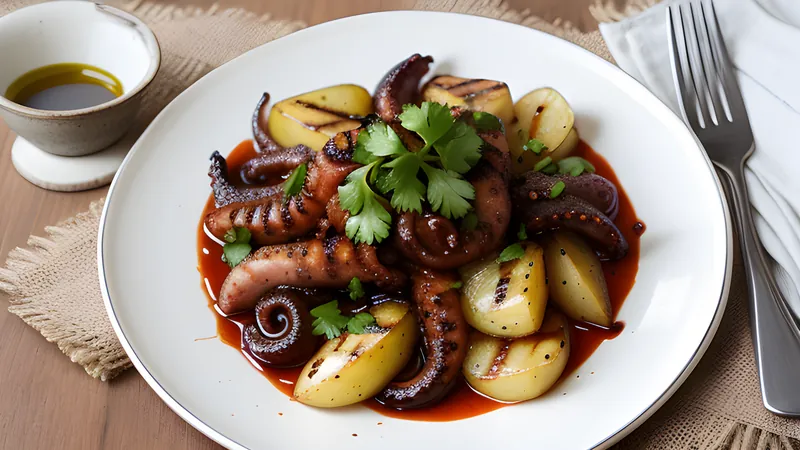
- Cut the potatoes into 1.5cm rounds and boil them in the remaining octopus water for 12–15 minutes until tender. Drain and arrange on a warm wooden plate. Season with 1 tsp flaky salt.
- Cut the tentacles from the head with scissors. Snip each tentacle at a slight angle into 1cm coins and scatter them over the potatoes.
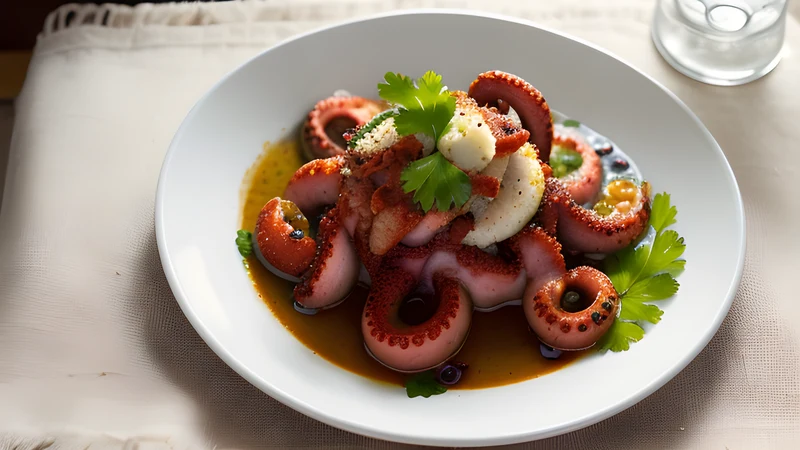
- Spoon the reduction over the octopus, then pour over the 100ml of olive oil. Dust generously with both paprikas and finish with 2 tsp flaky sea salt. Serve immediately, with cocktail sticks.
The pulpeiras and the fairground pot
Pulpo á feira means “fair-style octopus”, and the name is literal. Galicia is a fishing region on the Atlantic corner of Spain, all granite and rain and estuaries, and its inland fairs — the feiras of Ourense and Lugo, hundreds of kilometres from any octopus — were where most Galicians first ate it. The reason is a tax. Medieval monasteries on the coast, notably the Cistercians at Oseira, took part of their tithe from fishermen in octopus, which nobody wanted because it was cheap and the good fish sold. The monks dried it and carried it inland, where it was rehydrated and boiled at fairs and markets.
The people who cook it are pulpeiras, and it has been a woman’s trade for generations, handed down within families in towns like O Carballiño, which holds an octopus festival every August that draws tens of thousands of people and gets through something like 50 tonnes of the stuff in a weekend. The pulpeiras work at enormous copper cauldrons over gas burners, and copper is the one piece of equipment folklore that survives scrutiny — copper conducts heat evenly and the octopus at the edges cooks at the same rate as the ones in the middle. In a stainless pot the edges run hotter. It matters less at home with one octopus than it does with forty.
Everything is served on pratos de madeira, round wooden plates. The wood is doing a job. It does not conduct heat, so the octopus stays warm without cooking further, and it does not sweat the way a ceramic plate does — a puddle of water under your octopus dilutes the oil and slackens the paprika into a paste. If you have a wooden board, warm it in a low oven for ten minutes and use it.
The freezer does what the fist used to
Octopus muscle is dense with collagen and arranged in helices, and it seizes into rubber when heated fast. Galician fishermen dealt with this by beating the octopus against rocks on the quay, forty or fifty blows, which physically ruptured the muscle fibres. You can still see it done.
Freezing does the same job better. Ice crystals form inside the cells and shred the fibre structure from within, and 48 hours at −18°C is worth an afternoon of violence. Nearly all octopus sold in Britain has been frozen at sea already, which means the hard part is done before you buy it. If you somehow find a fresh one, freeze it for two days anyway.
Then there is the asustar do pulpo — scaring the octopus. Three dips into boiling water, five seconds in and ten seconds out, before it goes in for good. The tentacles curl into tight spirals and the purple skin tightens instead of sloughing off in grey rags. Ask three pulpeiras why and you will get three answers. The mechanism that holds up is thermal: the brief shocks set the outer collagen layer and fix the skin to the flesh, so the long simmer that follows cannot lift it away. Skip it and the octopus is still edible, but the skin peels and takes the suckers with it, and the suckers are the best part.
Salt stays out of the water entirely. Salted water draws moisture from the octopus and firms it, and you want the opposite. Season at the end, on the plate, where you can see what you are doing.
The cooking water is an ingredient
Here is my one departure. After an hour, that pot holds four litres of intensely savoury octopus broth, and almost every recipe tells you to throw it away once the potatoes are done.
Instead, ladle out 400ml, drop in a strip of lemon zest, and boil it hard until it collapses to about three tablespoons of something dark, syrupy and faintly briny. Whisk in a spoonful of olive oil and it becomes a glaze. Spoon it over the octopus before the finishing oil goes on, and it puts back the flavour that leached out during cooking — the dish tastes twice as much of itself and there is still nothing on the plate that did not come out of the pot. The lemon zest is there for the oil in the peel, which cuts the iodine note that a hard reduction concentrates.
The potatoes, meanwhile, boil in the remaining broth. Galicians call them cachelos, and they are the reason the dish is a meal rather than a snack. Use a waxy variety; a floury potato disintegrates and clouds the water.
Buying it, and the hour at the stove
Buy a whole octopus of 1.5 to 2kg. Smaller ones cook faster and dry out in the window between tender and tough; larger ones are common in Galicia but awkward in a domestic pot. Ask the fishmonger to clean it — the beak comes out of the centre of the tentacles like a small parrot’s, the eyes are cut away, and the head is turned inside out and emptied. Frozen, cleaned octopus from a supermarket freezer is entirely respectable and often better travelled than the fresh.
Thaw it slowly in the fridge over 24 hours. A quick thaw under a running tap costs you liquid, and liquid is flavour. When it is soft, rinse it and run your thumb along the suckers, which trap sand.
The pot wants to be tall and wide enough that the octopus is loose in the water — crowded, it steams unevenly. Four litres, an onion halved, a bay leaf, and a hard rolling boil. The onion is doing real work here: Galician cooks have long claimed it tenderises, which is unlikely, but its sugars sweeten a broth that would otherwise be flatly saline, and you are going to reduce that broth later.
Then the dips. Hold the head, count five with the tentacles submerged, lift for ten, repeat twice. By the third the tentacles have drawn up into tight coils and gone a deep aubergine colour. On the fourth, the whole animal goes in and stays.
Bring it back to a boil and then drop the heat hard — you want the surface to shiver, with a bubble breaking every second or so, and you want it uncovered so you can see what is happening. A lid traps heat and pushes the pot back to a boil the moment you look away.
Now leave it. Forty minutes for 1.5kg, closer to 55 for 2kg, and start testing at 40. The octopus will shrink by roughly a third; this is normal and it is why a 2kg animal feeds four as a starter and not eight.
Cutting and dressing
Cut with scissors, and cut at a slight angle. Straight-down coins sit flat and look like tyre treads; angled ones fan and catch the oil. One centimetre is the number — thinner and the pieces go floppy, thicker and you are chewing.
The order of the dressing is fixed, and every step of it earns its place. Potatoes down first, salted. Octopus over them. The reduction next, while everything is hot enough to take it. Then the olive oil, poured with more generosity than feels reasonable — a hundred millilitres for four people, which will look like a mistake and turns out to be the measure. Then the paprika, dusted from a height through your fingers so it falls evenly rather than landing in a heap. Salt last, flaky, so it stays on top and crunches.
Paprika under the oil turns to sludge. Paprika on top of the oil sits in a thin red slick and blooms in it as it warms, which is what you want. Two parts sweet to one part hot is the ratio I like; Galicians vary it by mood, and some pulpeiras mix the two in a shaker and never measure.
Judging doneness, and the things that go wrong
Rubbery octopus means undercooked, nearly always. Collagen needs sustained heat above 70°C to convert to gelatine, and the window for octopus is generous — a 2kg animal can take 55 minutes and stay good for another ten. Test with a skewer at the thick end of a tentacle. No resistance and a clean withdrawal means done; if it grips the skewer, give it another eight minutes and try again.
Mush and floating skin means the boil was too hard. A rolling boil batters the tentacles against each other. Keep the surface just barely breaking.
Flat, watery flavour means it was cut and dressed straight from the pot. The 20-minute rest in the cooling water lets the flesh reabsorb liquid, and it is the difference between good and very good.
Acrid, dusty paprika means it went on too hot, or it is old. Pimentón de la Vera is oak-smoked and loses its aromatics within about eight months of opening. Buy small tins and keep them in the dark.
What to serve with it, and what to do with the rest
Bread, and a cold, sharp Albariño or a bowl of Ribeiro from the same region. Nothing else — pulpo is one dish that resists being part of a spread, though it sits happily on a table with patatas bravas and a plate of salt and pepper squid if you are feeding a crowd.
Leftover octopus keeps three days in the fridge, covered in olive oil, and it improves for the first two. Char the coins hard in a smoking-hot pan for 90 seconds a side and you have something close to grilled octopus with smoked paprika and potato, which is the same flavour with a blackened edge on it. The reduction keeps a week in a jar and does remarkable things to a bowl of white beans.
Freeze the remaining broth in an ice-cube tray. Two cubes will lift any fish soup you make for the next six months, which is a decent return on an octopus you have already eaten.
Related Content