Provoleta: The Grilled Cheese That Opens an Asado
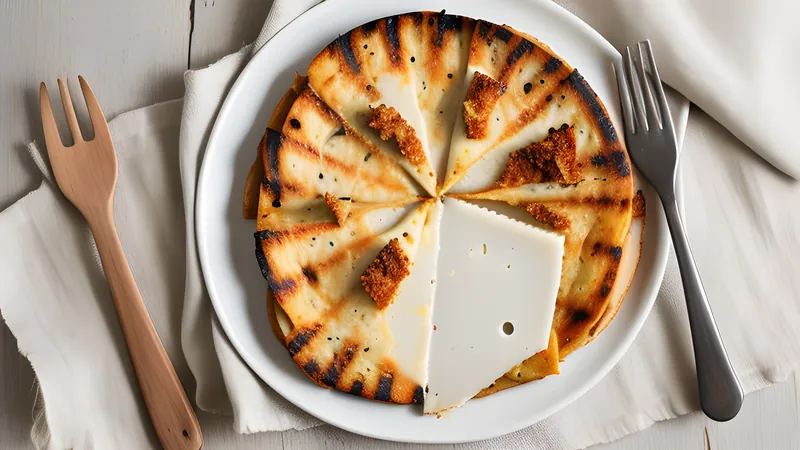
A thick round of provolone, grilled until it blisters and holds its shape
Contents
↓ Jump to recipeProvoleta is served before anything else at an Argentine asado, while the main cuts are still on the grill and everyone’s standing around with a glass of Malbec pretending they aren’t hungry yet. It’s a whole round of cheese, grilled hard enough to blister and brown on the outside while staying just short of collapsing into a puddle — a genuinely difficult balance to hit, and one that separates a good provoleta from a disappointing one more starkly than almost any other cheese dish I know.
The cheese itself is provolone, but not the mild, rubbery stuff sold as sandwich provolone in most supermarkets. Provoleta specifically calls for a firmer, more aged provolone — sold in Argentina in rounds specifically labelled and cut for grilling — with enough structural integrity to survive direct high heat without turning into liquid before the outside has had a chance to brown. This is the entire technical challenge of the dish: getting the outside dark and blistered while the interior stays cohesive enough to lift out of the pan and serve in wedges rather than scooping it out as fondue.
Provoleta: The Grilled Cheese That Opens an Asado
Ingredients
- 1 round of provolone cheese, aged/semi-hard, about 4cm thick and 12cm across (roughly 400g)
- 1 tablespoon dried oregano
- 1/2 teaspoon chilli flakes
- 2 tablespoons olive oil
- Freshly cracked black pepper
- 1 tablespoon fresh parsley, finely chopped, to finish
- Crusty bread, to serve
Method
- Remove the wax rind from the provolone if present, leaving the natural cheese surface exposed.
- Pat the cheese dry thoroughly with a clean cloth — surface moisture is what causes it to split when grilled.
- Leave the round uncovered in the fridge for at least 2 hours, or ideally overnight, so the surface dries out further.
- Score a shallow crosshatch into the top surface with a sharp knife, about 3mm deep, without cutting all the way through.
- Bring a heavy cast-iron pan or plancha to high heat directly on the grill or hob.
- Place the cheese in the dry, hot pan and grill for 3-4 minutes until the underside is deeply browned and blistered but the round still holds together.
- Carefully flip using two spatulas and grill the second side for a further 3-4 minutes.
- Remove from the heat, drizzle with olive oil, and scatter over the oregano, chilli flakes, black pepper and parsley.
- Serve immediately, directly from the pan, with crusty bread for scooping.
An asado tradition
The asado is the centrepiece of Argentine food culture, a long, unhurried grilling ritual built around beef but structured, almost ceremonially, around a sequence — offal and sausages first, then provoleta and other starters, then the main cuts, timed to a slow-burning wood or charcoal fire that the asador tends for hours rather than minutes. Provoleta’s place in that sequence isn’t accidental: it’s fast enough to grill while the fire is still building toward the temperature needed for a proper steak, and rich enough to take the edge off hunger without filling anyone up before the beef arrives.
Provolone itself came to Argentina with the wave of Italian immigration that shaped so much of the country’s food culture through the late nineteenth and early twentieth centuries — the same migration that gave Argentina its love of pasta, its particular relationship with pizza, and its distinct version of Italian cured meats. Provoleta is what happened when Italian cheese-making met the Argentine instinct to put everything on the grill: an adaptation specific enough to the local fire-cooking culture that it doesn’t really exist in this form anywhere in Italy.
Drying the cheese
The step that home cooks skip most often, and the one that causes the most heartbreak, is drying the cheese before it goes anywhere near heat. Surface moisture on the provolone turns to steam the instant it hits a hot pan, and that steam works its way into the cheese’s structure, weakening it exactly where you need it strongest. A wet round of provolone will split, ooze, and often collapse entirely before it’s had time to brown.
Patting the surface dry with a cloth handles the immediate moisture, but the real work happens in the fridge, uncovered, for at least a couple of hours and ideally overnight. Refrigerator air is dry, and an uncovered surface loses moisture steadily over that time, firming up the exterior of the cheese in a way that makes an enormous difference once it’s on the heat. This single step, more than any other, is what determines whether your provoleta holds together as a round you can lift and slice or falls apart into a hot cheese puddle you’re eating with a spoon.
Scoring and cooking
The shallow crosshatch scored into the top surface isn’t decorative — it lets steam escape from inside the cheese as it heats, relieving pressure that would otherwise build up and force its way out through a crack somewhere less controlled. Score it lightly, no more than a few millimetres deep; cutting through to any real depth just opens a channel for the cheese to run out rather than letting steam vent.
A completely dry pan is essential — no oil before the cheese goes in, because provolone releases its own fat as it cooks and any additional oil in the pan just makes it more likely to slide around and lose contact with the hot surface, which is where the actual browning happens. Cast iron holds and distributes heat more evenly than a thin steel pan, which matters because uneven heat is what causes one side of the round to brown while another stays pale and underdone.
The flip is the moment of maximum risk. By the time the underside is properly browned, the cheese has softened considerably, and a badly executed flip can break the round apart entirely. Two spatulas, one supporting from underneath and one steadying from the side, make this far more reliable than trying to flip with a single implement and a prayer.
Reading doneness
You’re looking for a deep golden-brown, almost approaching dark in patches, with visible blistering across the surface — small raised bubbles where the cheese has puffed and set. The centre should feel warm and slightly yielding when you press it gently with the back of a spatula, but it shouldn’t feel liquid or loose. If you press and the whole round wobbles like a water balloon, it needs another minute; if it feels firm all the way through with no give at all, you’ve likely overcooked it and the interior will be closer to rubber than the soft, warm cheese you’re after.
Because provoleta cooks fast, once at the browning stage things move quickly — thirty seconds can be the difference between perfectly blistered and starting to run past the point of recovery. Stay at the pan rather than wandering off, especially for your first attempt, until you’ve got a feel for how your particular pan and heat source behave.
Finishing and serving
Olive oil drizzled over the hot cheese the moment it comes off the heat does double duty — it adds richness and it helps the dried oregano and chilli flakes stick rather than just sitting loose on a dry surface. Argentine cooks tend toward a heavy hand with dried oregano specifically rather than fresh, and there’s a reason for it beyond habit: dried oregano’s flavour is more concentrated and stands up better against the richness of hot, salty cheese than fresh oregano’s brighter, grassier notes would.
Serve provoleta directly from the pan it was cooked in, while it’s still audibly sizzling if you can manage the timing. It cools and firms quickly once off the heat, and firmed-up provoleta is a different, lesser dish than the version eaten in the first few minutes — the textural contrast between the crisp, blistered crust and the soft, warm interior is at its sharpest right off the grill and fades within ten minutes.
Bread for scooping up any cheese that does run is essential — a crusty baguette or a chunk of country loaf works, torn rather than sliced, so you’ve got a rough surface to catch melted cheese and browned bits from the pan.
What can go wrong
The single most common failure is the cheese splitting open mid-cook and running out onto the pan before it’s browned. This is almost always a moisture problem traced back to skipping or shortening the drying step — if you’re pressed for time and can only manage an hour uncovered in the fridge rather than overnight, pat the surface dry again immediately before it goes into the pan, since even an hour helps meaningfully over skipping the step entirely.
A provoleta that browns unevenly, dark on one side and pale on the other, usually means the pan itself isn’t heating evenly, which is common with thin pans on a domestic hob. Rotate the round a quarter turn every minute rather than leaving it stationary, and you’ll get more even colour even from an imperfect pan.
If the cheese sticks hard to the pan and tears apart on the flip, the pan likely wasn’t hot enough when the cheese went in — a proper sear forms a crust that releases from the pan surface on its own once it’s ready, and cheese that’s still stuck fast after three or four minutes is a sign the initial heat wasn’t sufficient to start that process.
Choosing your cheese
Argentine grocers sell provolone specifically labelled for grilling — provoleta or provolone para asar — aged longer and firmer than table provolone, usually available in a squat cylindrical shape roughly the right size and thickness for this dish without any trimming. Outside Argentina, look for aged provolone (sometimes labelled “provolone piccante” or “aged provolone” rather than the mild “dolce” style sold for sandwiches) and choose the thickest round or wedge you can find, since thickness is what buys you time to brown the exterior before the interior liquefies.
Avoid pre-sliced or thin-cut provolone entirely — there simply isn’t enough mass to hold together under high heat, and thin pieces will melt through before any real browning develops. A minimum thickness of three to four centimetres gives you a fighting chance; thinner than that, and you’re better off making a simpler pan-fried cheese dish rather than attempting the traditional provoleta technique.
A note on the pan itself
Traditional Argentine cooks often use a small, shallow cazuela — a terracotta or cast-iron dish specifically sized to the cheese round — rather than a general-purpose frying pan, because the snug fit means less of the cheese’s surface area is exposed to open air where it can dry out and crack rather than staying contained. If you don’t have one, a small cast-iron skillet, just slightly larger than the cheese itself, is the closest substitute, and it’s worth seeking out a pan close to the right size rather than using an oversized one where the cheese has room to spread and lose its shape entirely.
Pairing it with the rest of the asado
Provoleta is traditionally the opening act, so think about what follows. A choripán alongside covers the other essential Argentine grill starter — chorizo, split and grilled, tucked into bread with chimichurri — and the two together make a genuinely representative start to an asado before any beef appears. A sharp, herby chimichurri with toasted cumin on the side cuts through the richness of the cheese if you want something acidic to reset the palate between bites.
If you’re building a full spread, keep in mind that provoleta is rich enough that a little goes further than it looks — a single 400g round genuinely serves four as a starter rather than two, once you factor in everything else queued up behind it on the grill.
Related Content