Preserved Lemons: Two Ingredients, Four Weeks, a Year of Flavour
salt, citrus, and a jar that does the work for you
Contents
↓ Jump to recipeThere is a particular kind of cooking magic that asks almost nothing of you and pays out for the better part of a year. Preserved lemons are the purest example I know. Two ingredients — lemons and salt — go into a jar, and four weeks later you have a condiment that makes you look like you know exactly what you are doing in the kitchen, even on a Tuesday when you absolutely do not.
I came to them late. For years I bought tiny, expensive jars from the deli, used two spoonfuls, and let the rest fossilise at the back of the fridge. Then a friend who cooks a lot of North African food showed me how absurdly simple they are to make, and I have never bought a jar since. One afternoon of mild effort buys you a shelf-stable flavour bomb that costs about the price of a bag of lemons.
Preserved Lemons: Two Ingredients, Four Weeks, a Year of Flavour
Ingredients
- 8 unwaxed lemons, plus 4–6 more for juicing
- 120g (about 1/2 cup) coarse sea salt
- 2 bay leaves
- 1 tsp coriander seeds (optional)
- 1 small dried chilli (optional)
Method
- Scrub the lemons, then cut each almost into quarters from the top, leaving the base intact so it stays hinged together.
- Pack a generous spoonful of salt into the cut flesh of each lemon.
- Spoon a layer of salt into the base of a sterilised jar, then push the salted lemons in tightly, pressing as you go.
- Tuck in the bay leaves, coriander and chilli, and add more salt between the layers.
- Squeeze the spare lemons and pour the juice in until the fruit is fully submerged.
- Seal and leave at room temperature for 4 weeks, turning the jar every few days, then move to the fridge.
What preserved lemons actually are
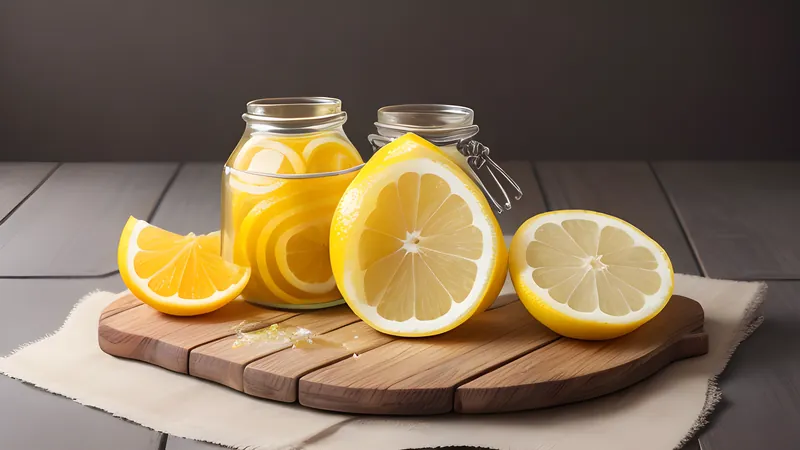
The salt does two jobs. It draws moisture out of the lemons through osmosis, creating a brine, and that salty, acidic environment shuts down the microbes that would otherwise spoil the fruit while allowing a slow, gentle fermentation to proceed. Over a few weeks the rinds soften completely, the harsh bitterness of the pith leaches away, and the flavour transforms into something deeper and rounder than fresh lemon — savoury, almost floral, with a mellow, briny edge that fresh citrus never has. The change is chemical as much as sensory: the salt and acid break down the cell walls and the bitter compounds, so what remains is the perfume of the peel without its rasp.
It is a technique that turns up across the southern Mediterranean and the Middle East, but it is most associated with Morocco, where preserved lemons — l’hamd markad, sometimes written l’hamd mrakad — are essential to tagines, especially the classic chicken with olives and the fish dishes of the coast. The rind is the prize. You scrape away and discard the salty pulp, then slice or chop the soft skin into whatever you are cooking. The variety traditionally used in Morocco is the small, thin-skinned doqq or the beldi lemon, but any thin-skinned, unwaxed lemon you can buy here works well.
The one clever twist: a coriander-and-chilli aromatic
The two-ingredient version is genuinely all you need, and I made it that way for a long time. But the twist I now swear by is tucking a few aromatics into the jar: bruised coriander seeds, a bay leaf or two, and one small dried chilli. They do not overpower anything. What they do is give the finished lemons a low, warm, savoury background that makes them taste less like a single bright note and more like a finished seasoning. The chilli in particular adds a whisper of heat that you cannot quite name in the final dish — people just say it tastes “more interesting.”
How to make them, step by step
Start with unwaxed lemons if you can find them, because you eat the skin. If you can only get waxed, scrub them hard under hot water first. Cut each lemon almost into quarters from the top, stopping short of the base so the segments stay joined like a flower. Open them up, pack coarse salt into the cut flesh, and be generous — this is not the time to count grams nervously.
Spoon a layer of salt into a clean, sterilised jar, then press the salted lemons in as tightly as you can, squashing them down so they release their juice. Pack in your aromatics as you build up the layers. Once the jar is full, top it up with the juice of a few more lemons until everything is submerged. Submersion matters: any rind poking above the brine can grow mould.
Seal the jar and leave it on the worktop, out of direct sun, for four weeks. Turn it every few days to keep the salt moving. You will see the brine go cloudy and the rinds turn glassy and soft — that is exactly right. After four weeks they are ready, and once opened they keep happily in the fridge for up to a year.
How to use them
This is where the year of flavour pays off. Chop the rind finely and stir it through a herby couscous or a grain salad. Add it to roast chicken with olives and a little of the brine, which is exactly the logic behind my chicken thighs with preserved lemon and olives and the slow-cooked chicken and preserved lemon tagine — the jar you make today is the shortcut those dishes depend on. Whisk it into a salad dressing where you would normally use lemon zest. Fold it through softened butter with garlic and parsley for the best fish you will cook all month. A spoonful lifts hummus, lentil soups and slow-braised lamb out of the ordinary.
A few honest pointers. Always rinse the rind and discard the pulp unless a recipe says otherwise, because the pulp is fiercely salty. Go easy on added salt in any dish using them — taste first, then season. And do not be alarmed by a white film on the surface of the brine; if it is soft and yeasty rather than fuzzy, raised or coloured, it is harmless kahm yeast that you can simply skim off. Genuine mould is different: fuzzy, green, black or pink, usually clinging to a piece of rind that has bobbed above the brine. That is why submersion is non-negotiable. If mould appears, the safe course is to discard the jar and start again rather than pick around it.
Substitutions, storage and getting the salt right
Coarse sea salt is what you want, not fine table salt with added anti-caking agents, which can cloud the brine and, at worst, carry an off flavour. Weigh it if you can: around 120g for eight lemons packs the flesh generously without being fussy. There is no need to sterilise the salt or the lemons, but the jar must be spotlessly clean and sterilised — run it through a hot dishwasher cycle, or wash it and dry it in a low oven — because a dirty jar is the one reliable way to invite spoilage into an otherwise foolproof process.
Preserved lemons keep for up to a year in the fridge once opened, and often longer; the flavour goes on deepening. If the top layer ever dries out, top the jar back up with fresh lemon juice to keep everything submerged. You can speed a batch along by warming the sealed jar gently in a sunny window, though four weeks at normal room temperature is the reliable benchmark I go by. If you are impatient, thinly slicing the lemons rather than quartering them cuts the wait to about two weeks, since there is more surface for the salt to work on, though I prefer the whole-fruit version for its clean, glassy rinds.
This same patient, salt-and-time approach underpins a whole family of preserving. If you enjoy the alchemy of it, the fast, punchy quick kimchi (mak kimchi) fermented in two days scratches the same itch on a shorter timescale, using salt to draw water from cabbage before the ferment takes over. It is the same principle, dressed for a different cuisine.
Two variations are worth knowing once the plain jar becomes second nature. Limes preserve just as well and give a sharper, more fragrant result that suits Southeast Asian and Mexican cooking; treat them exactly as the lemons, though they soften a touch faster. And a spoonful of the brine itself is a secret weapon in its own right: it is salty, sour and faintly funky, and a teaspoon whisked into a vinaigrette, a marinade or a Bloody Mary does the work of both salt and acid at once. Do not waste it when the last lemon is gone.
One final reassurance for anyone nervous about food safety. This is one of the oldest and safest forms of preserving there is, because the combination of high salt and low pH is genuinely hostile to the bacteria that cause illness — it is the same principle that keeps a jar of olives or a crock of salted anchovies stable for months. Keep everything submerged, keep the jar clean, use unwaxed fruit, and the process looks after itself. That is the quiet miracle of the thing: a shelf of jars doing slow chemistry while you get on with your week.
A small jar of patience
What I love most about preserved lemons is that they reward the kind of cooking I actually do — busy, distracted, last-minute — by front-loading all the effort into one calm afternoon. The jar sits there quietly doing chemistry while you get on with your life, and then one evening you open it, and dinner suddenly has the confidence of a restaurant. Two ingredients, four weeks, and a year of meals that taste like you tried much harder than you did.
Related Content