Prawn and Chorizo Linguine with Cherry Tomatoes
A smoky, garlicky one-pan supper in twenty minutes
Contents
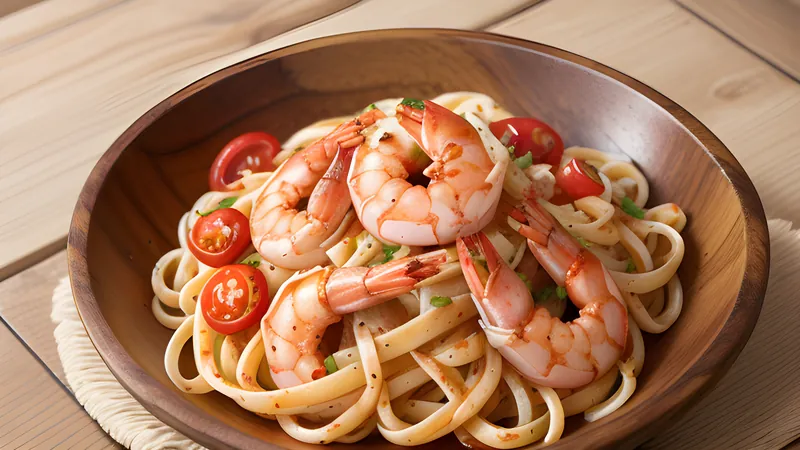
↓ Jump to recipeThis is the supper I reach for when I am hungry, tired and unwilling to wash more than one pan. Smoky cooking chorizo renders down into a slick of paprika-stained oil, which then becomes the cooking fat for sweet king prawns and a tumble of cherry tomatoes that collapse into a quick, glossy sauce. My one small twist is to skip the usual splash of cream or wine entirely and instead build the sauce from the chorizo oil and a ladle of starchy pasta water, finished with lemon. The result is brighter, cleaner and far more moreish than the heavy version, and it lands on the table in about twenty minutes.
Prawn and Chorizo Linguine with Cherry Tomatoes
Ingredients
- 200g dried linguine
- 150g cooking chorizo, skin removed and crumbled
- 200g raw king prawns, peeled with tails left on
- 250g cherry tomatoes, halved
- 4 garlic cloves, thinly sliced
- 1/2 tsp dried chilli flakes
- 1 tbsp olive oil
- Zest and juice of 1/2 lemon
- Small handful flat-leaf parsley, chopped
- Salt and black pepper, to taste
Method
- Cook the linguine in well-salted boiling water until just shy of al dente, reserving a mugful of cooking water before draining.
- Fry the crumbled chorizo in the olive oil over a medium heat for 4 to 5 minutes until crisp and its red oil has run.
- Add the sliced garlic and chilli flakes and cook for 1 minute until fragrant.
- Tip in the cherry tomatoes and cook for 4 to 5 minutes, pressing them, until they slump into a sauce.
- Add the prawns and cook for 2 to 3 minutes, turning once, until just pink and opaque.
- Add the drained linguine with a splash of pasta water and toss hard over the heat until the sauce turns glossy.
- Off the heat, stir through the lemon zest and juice, season, and fold in most of the parsley.
- Serve at once, scattered with the remaining parsley and a grind of black pepper.
The Story
There is an ongoing, good-natured argument about whether prawns and chorizo belong anywhere near a plate of Italian pasta. Purists will tell you that southern Italy treats seafood and cured pork as a strict either-or, and that cheese on fish pasta is close to a crime. They are not entirely wrong, but this dish is best understood as a child of the British kitchen rather than an Italian one, born of the moment fresh cooking chorizo arrived in supermarkets and home cooks discovered that its smoky, paprika-rich fat could season almost anything it touched. Britain’s love affair with chorizo took off in earnest in the 2000s, when writers such as Rick Stein and the River Cottage cooks put it into everything from stews to breakfasts, and this pasta is squarely in that lineage rather than any Italian one.
Chorizo itself comes in two broad forms, and the distinction matters here more than almost anywhere. The cured, sliceable kind you eat with bread is wonderful in its place but will turn leathery and mean in a hot pan. What you want is fresh cooking chorizo, soft enough to crumble from its skin, which renders its fat and spice into the pan as it browns. That brick-red oil is the entire point of the recipe: it is liquid smoked pimentón, garlic and pork, and it does more for the dish than any amount of stock or wine could. The colour comes from Spanish smoked paprika, which is what separates chorizo from every other sausage and gives the finished bowl its warm, faintly smoky depth.
The technique that ties everything together is the one good pasta cooks guard most jealously: the emulsion. By cooking the linguine a shade under and saving a mugful of its cloudy, starchy water, you give yourself the means to bind the chorizo oil and tomato juices into a sauce that clings to every strand. Starch is an emulsifier; whisked and tossed hard with fat and a little water, it holds the two together the way an egg yolk holds a mayonnaise. The vigorous tossing in the pan at the end is not optional theatre. It is the moment fat and water come together into something glossy and silky. Skip it and you get oily pasta sitting in a thin puddle, which is a different and sadder dish entirely. The same trick powers a good pizza sauce made from fresh tomatoes, where reducing the juices concentrates flavour rather than leaving it watery.
A few small things will improve your result. Buy the best prawns you can and add them late, because overcooked prawns turn to rubber bullets in seconds, and they need only a couple of minutes to go from grey to sweet and pink. Leaving the tails on looks handsome and gives something to hold, though by all means remove them for an easier supper. The lemon at the end is essential, cutting through the richness of the chorizo and lifting the whole bowl. If you like things hotter, a fresh red chilli sliced in with the garlic will do nicely, and a handful of rocket folded through at the end turns it into something almost like a warm salad.
Timing and Twists
The whole pleasure of this supper lies in its timing, and the trick is to treat the boiling pasta as your clock. By the time the water is bubbling and the linguine is in, the chorizo should already be rendering in the frying pan, so that the two finish within a minute of each other. Drain the pasta a touch early and let it finish cooking in the sauce, where it drinks up the chorizo oil and tomato juices and arrives at the table properly seasoned through rather than merely coated. Cooks who time it well find they barely need to think; the rhythm of the two pans takes over.
It also rewards a stocked store cupboard. A spoonful of sun-dried tomato paste deepens the sauce on a day when your fresh tomatoes are pale and out of season, while a splash of the brine from a jar of capers or olives adds a salty lift. I sometimes finish the bowl with a handful of toasted breadcrumbs fried in a little of the chorizo oil, the Italian pangrattato trick, for a contrasting crunch against the soft prawns. None of it is essential, which is rather the point: this bends to whatever the kitchen happens to hold, and it has rescued more of my weeknights than I care to admit.
Getting the prawns and the substitutions right
Prawns are the one ingredient you cannot rush or fudge. Buy raw, not pre-cooked: pre-cooked prawns have already given their best in the factory and will only tighten into rubber the moment they hit the pan. Add them late, after the tomatoes have slumped, and pull them the instant they turn from grey to opaque pink and curl into a loose C, about 2 to 3 minutes. A tight, tense curl means you have gone too far. Shell-on, tail-on prawns look handsome and lend a little sweetness to the sauce, but by all means peel them fully for an easier fork-and-no-fingers supper.
Frozen raw prawns, defrosted properly in the fridge and patted very dry, are perfectly good here and often better value than the “fresh” ones on the fish counter, which were usually frozen and thawed anyway. Pat them dry whatever you use; a wet prawn steams rather than sears and weeps water into your carefully built sauce.
If you cannot get cooking chorizo, a firm cured chorizo will still work provided you dice it small and render it slowly over a lower heat so it releases its oil before it hardens. Nduja, the soft spreadable Calabrian sausage, is a gloriously spicy alternative that melts straight into the oil. Vegetarians can chase the same smoky effect with a heaped teaspoon of smoked paprika bloomed in olive oil, plus a handful of griddled halloumi or butter beans in place of the meat and prawns; it is a different dish, but it borrows the best idea. For a heartier, spoonable cousin of this flavour, my chorizo and white bean stew leans on exactly the same paprika oil.
Finally, the lemon at the end is not a garnish, it is structural. The acid cuts the richness of the chorizo fat and lifts the whole bowl; leave it out and the dish tastes heavy and a little dull. If you like more heat, slice a fresh red chilli in with the garlic, and a handful of rocket folded through at the very end turns it into something close to a warm salad.
Related Content