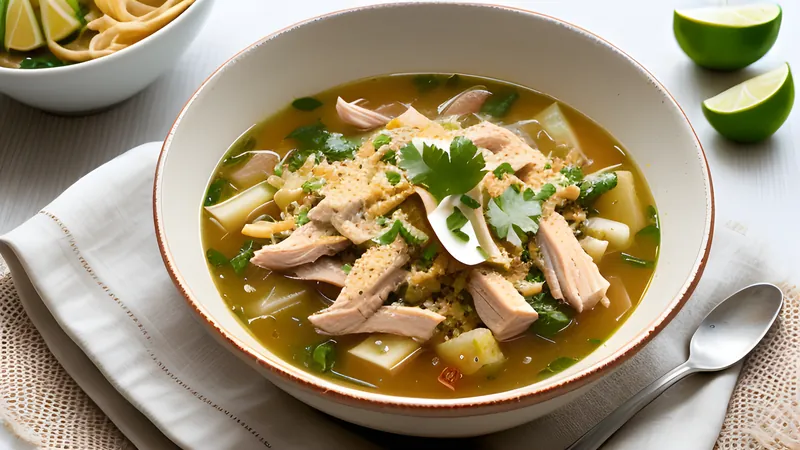
Pozole Verde With Chicken and Pepitas
The green hominy soup that turns a Sunday into a table full of hands
Contents
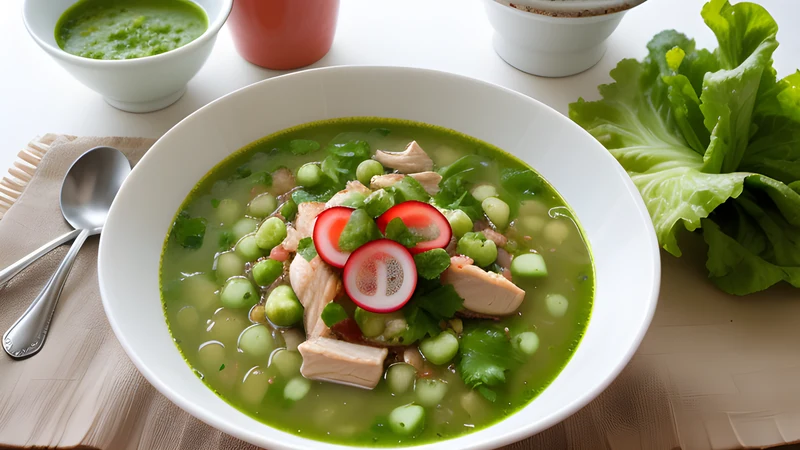
↓ Jump to recipeThere is a moment, about twenty minutes into eating pozole, when the table goes quiet in the good way. Everyone has built their bowl the way they like it, the radishes have gone soft at the edges, and someone reaches across for the lime without asking. This is the soup at its job. Pozole verde is a communal dish first and a recipe second, and the garnish tray in the middle of the table is doing at least half the work.
I make the green version far more often than the red or the white, because the tomatillo base is bright and grassy in a way that keeps you eating past the point of sense. The pepitas ground into the sauce give it body and a faint nuttiness that stops the whole thing tasting merely sour. It is a weekend pot in the sense that it wants an unhurried afternoon, but almost none of that time is you standing over it. You char some things, you blend some things, you let a pot mutter to itself.
Pozole Verde With Chicken and Pepitas
Ingredients
- 1.2 kg bone-in chicken thighs and drumsticks
- 2 litres water
- 1 white onion, halved
- 6 garlic cloves, 4 whole and 2 for the sauce
- 2 bay leaves
- 2 tsp fine salt, plus more to taste
- 700 g tomatillos, husked and rinsed
- 2 poblano peppers
- 2 jalapeños, stems removed
- 1 large handful coriander, leaves and stems
- 1 small handful flat-leaf parsley
- 80 g raw hulled pepitas (pumpkin seeds), plus 2 tbsp to garnish
- 1 tsp dried Mexican oregano
- 1/2 tsp ground cumin
- 2 x 400 g tins white hominy, drained and rinsed
- 2 tbsp neutral oil
- For the table: shredded iceberg, thinly sliced radish, diced white onion, dried oregano, lime wedges, sliced avocado, tostadas
Method
- Put the chicken in a large pot with 2 litres water, half the onion, 4 whole garlic cloves, bay leaves and 2 tsp salt. Bring to a gentle simmer and cook 35 minutes, skimming the grey foam. Lift out the chicken; keep the broth.
- While the chicken cooks, char the tomatillos, poblanos and jalapeños. Grill or dry-fry until blackened in patches and softened, about 8 minutes, turning. Steam the poblanos in a covered bowl 10 minutes, then peel off the loose skin and deseed.
- Toast 80 g pepitas in a dry pan over medium heat until they puff and pop, 3 to 4 minutes. Reserve 2 tbsp for garnish; the rest go in the blender.
- Blend the charred tomatillos, poblanos, jalapeños, remaining onion half, 2 raw garlic cloves, coriander, parsley, toasted pepitas, oregano, cumin and 250 ml of the chicken broth until smooth.
- Heat 2 tbsp oil in a clean heavy pot over medium-high. Pour in the green sauce (stand back, it spits) and fry, stirring, for 6 to 8 minutes until it darkens and thickens to a paste.
- Shred the cooled chicken off the bone into bite-sized pieces. Strain the reserved broth.
- Stir 1.4 litres strained broth into the fried sauce. Add the hominy and shredded chicken. Simmer 25 minutes so the hominy blooms and the flavours marry. Taste and adjust salt.
- Serve in deep bowls. Toast the reserved pepitas fresh and scatter over. Bring the garnish tray to the table and let everyone build their own bowl.
What pozole actually is
Pozole is old. The word comes from the Nahuatl pozolli, and the dish predates the Spanish arrival by centuries; it was a ceremonial food among the Mexica, cooked for feast days and tied up with a history far darker than a Sunday lunch, which the friars documented and which the modern dish has thoroughly left behind. What survived and thrived is the essential architecture: large-kernel hominy corn, a rich broth, meat, and a mountain of raw garnishes added at the table.
The corn is the point. Hominy is field corn that has been nixtamalised — simmered in an alkaline solution, traditionally cal (slaked lime) — which loosens the tough hull, changes the flavour, and famously makes the corn’s niacin available to the body. When you buy tinned hominy you are buying corn that has already been through this transformation. The giant, chewy, faintly floral kernels are unlike anything sweetcorn does, and in the pot they “bloom,” splitting open like tiny flowers. If you can find dried nixtamalised corn (sometimes labelled maíz pozolero or cacahuazintle), soaking and simmering it for a few hours gives a superior chew, but good tinned hominy makes a genuinely excellent pozole and is what I reach for on a normal weekend.
Verde, rojo, blanco — green, red, white — describe the broth. Guerrero is pozole country, and the green there leans on tomatillos, pepitas and herbs; Jalisco is more associated with the red, built on dried guajillo and ancho chillies. My green here is a Guerrero-leaning bowl with the pepita thickening that I love. It sits happily alongside the other Mexican dishes I keep in rotation, like tinga de pollo with chipotle and onion when I want something faster on a weeknight, or birria de res with consomé for dipping when I want the long red braise instead.
Building the green base
The two techniques that make or break this soup are the char and the fry.
Charring the tomatillos and green chillies before blending does two things. It cooks off the aggressive raw-tomatillo sourness and swaps it for a rounder, jammier acidity, and the blackened skin lends a whisper of smoke. Do it on a grill, under a hot grill element, or in a dry cast-iron pan. You want real blackened patches, not a gentle tan. The poblanos want a proper blistering all over so the skin lifts; sweating them in a covered bowl for ten minutes afterwards makes peeling them a matter of rubbing rather than surgery.
Frying the sauce is the step people skip and then wonder why their pozole tastes thin. When you pour the raw blended green purée into hot oil and let it cook down for a solid six to eight minutes, it darkens from a bright shrieking green to a deeper olive, thickens to a paste, and the flavours concentrate and settle. This is the same principle behind refried beans and the base of a good mole — the frying is where flavour is built, not just where ingredients are warmed. It will spit at you. Keep the heat high enough that it fries rather than stews, and use a pot with tall sides.
The pepitas go into the blender toasted. Toasting raw pumpkin seeds in a dry pan until they puff and pop takes only a few minutes and transforms their flavour from green to golden-nutty. I hold back a couple of tablespoons to toast fresh right before serving, because a scatter of crunchy seeds on top is one of the small joys of the bowl.
The chicken and the broth
I poach bone-in thighs and drumsticks rather than breast, because the collagen from the bones and the fat under the skin build a broth with actual body. Thirty-five minutes of gentle simmering — a lazy shimmer, never a rolling boil, which would toughen the meat and cloud the broth — gets the chicken cooked and the broth on its way. Skim the grey foam that rises in the first ten minutes and your finished soup will be clear and clean-tasting.
Once the chicken is cool enough to handle, shred it by hand into rough bite-sized pieces and discard skin and bone. Strain the poaching liquid; this is the backbone of your soup, so treat it well. If you have time, poaching a day ahead and chilling the broth lets you lift off the set fat, which some people prefer. I usually leave a little of it in — it carries flavour.
Bringing it together
Sauce fried, broth strained, chicken shredded, hominy rinsed. The assembly is calm: loosen the fried green paste with the strained broth, tip in the hominy and chicken, and let it all simmer together for twenty-five minutes. This final simmer matters more than it looks. The hominy needs the time to bloom and absorb the green broth, and the sauce needs the time to stop tasting like separate components and start tasting like pozole. Taste for salt at the end and be braver with it than you think — a big pot of soup takes a lot of seasoning, and hominy is bland on its own.
What can go wrong, and why
A few failures come up again and again, and all of them are avoidable.
Thin, watery broth. Almost always the fried-sauce step was cut short. If you pour the raw purée in and immediately drown it in broth, you skip the concentration that gives the soup its backbone. Fry the paste hard until it visibly darkens and thickens before you add liquid, and use bone-in chicken so the broth itself has body.
Aggressively sour, one-note green. Raw tomatillos are sharp and vegetal, and under-charred ones carry that rawness straight into the pot. Char them until genuinely blackened in patches; the heat mellows the acid into something rounder and lets the pepitas and herbs come forward.
Bitter herbs. Coriander stems are welcome — they hold most of the flavour — but if you blend in a large amount of parsley or leave the sauce boiling hard for a long time, the green can turn slightly bitter and dull. Keep the final simmer gentle, and taste before you decide whether it needs more salt or a squeeze of lime rather than more herb.
Bland hominy. Hominy is starchy and mild and drinks up seasoning, so a pot that tasted fine before you added it can fall flat afterwards. Always season at the very end, after the hominy has simmered and had its say, and salt more assertively than instinct suggests.
A word on the corn
If you become fond of pozole, it is worth seeking out dried nixtamalised corn rather than always reaching for tins. Sold as maíz pozolero or under the cacahuazintle variety name in Latin American shops, it needs an overnight soak and a couple of hours of simmering, sometimes with a pinch of cal to help the kernels butterfly open into that dramatic flower shape. The chew is springier and the corn flavour deeper than any tin delivers. It is a small ritual that turns the soup into more of an occasion, and the cooking liquid becomes part of your broth. For a weeknight, tinned hominy is honest and good; for a proper Sunday, the dried corn rewards the extra hours.
The garnish tray is not optional
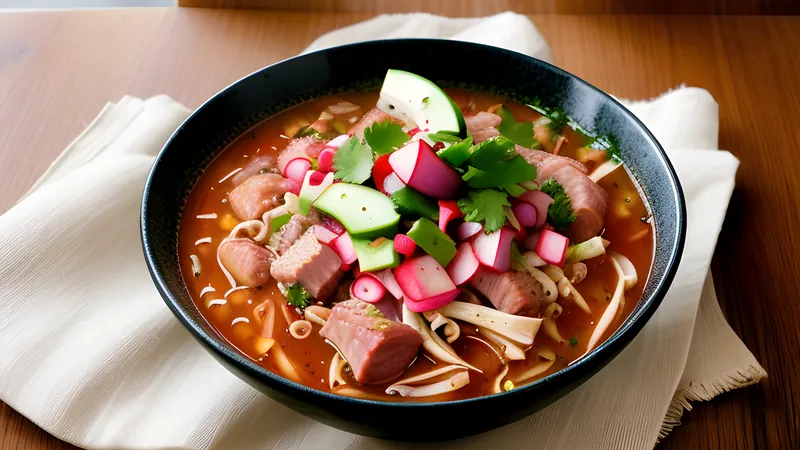
Serve the pozole slightly under-garnished and put everything else on the table. The contrast is the whole experience: a hot, herbaceous, savoury broth hitting cold shredded lettuce, the pepper-crunch of raw radish, the sharp bite of diced raw onion, a shower of dried oregano crushed between your palms, and a hard squeeze of lime to lift the lot. Tostadas or plain tortilla chips on the side for scooping and crunch. Sliced avocado if you want it richer. A few extra toasted pepitas.
Each person builds their own bowl to their own taste, adds more lime halfway through, and that is where the meal slows down and becomes an afternoon. It is the same spirit as putting out a bowl of esquites, the corn cup with everything — the assembly is the fun — or spooning salsa macha over the top if your crowd likes real heat.
Tips, swaps and storage
- Heat level. Two jalapeños give a warm hum rather than a burn. For more, leave the seeds in, or add a serrano. For less, use one jalapeño and lean on the poblanos, which are mild.
- Pork instead of chicken. Traditional pozole often uses pork shoulder and trotters. Swap the chicken for 1.2 kg pork shoulder cut into chunks and simmer for around 1 hour 45 minutes until tender; the broth will be richer.
- Vegetarian. Skip the meat, use a good vegetable broth, and add extra hominy plus a tin of white beans and some sautéed courgette. The pepita-thickened green base carries it well.
- Tomatillos. If you can only find tinned tomatillos, drain them and skip the charring for those, but still char the fresh chillies for smoke.
- Make-ahead. Pozole is better on day two. The flavours deepen and the hominy relaxes further. Cool it quickly, refrigerate up to four days, and reheat gently, loosening with a splash of water if it has thickened. It freezes well for up to three months; freeze the broth-and-solids and add fresh garnishes when you serve.
Give it the unhurried afternoon it asks for, put the garnish tray in the middle of the table, and let people build their own. The quiet will arrive right on schedule.
Related Content