Poulet DG: The Director General's Chicken and Plantain
A Cameroonian boardroom dish that outgrew the boardroom
Contents
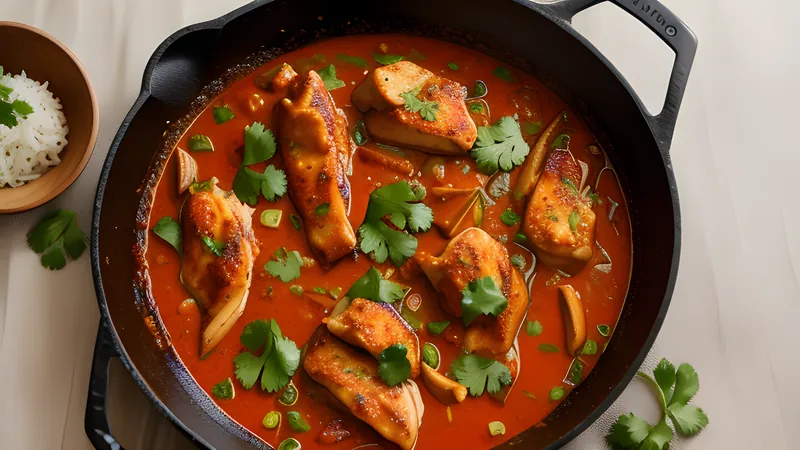
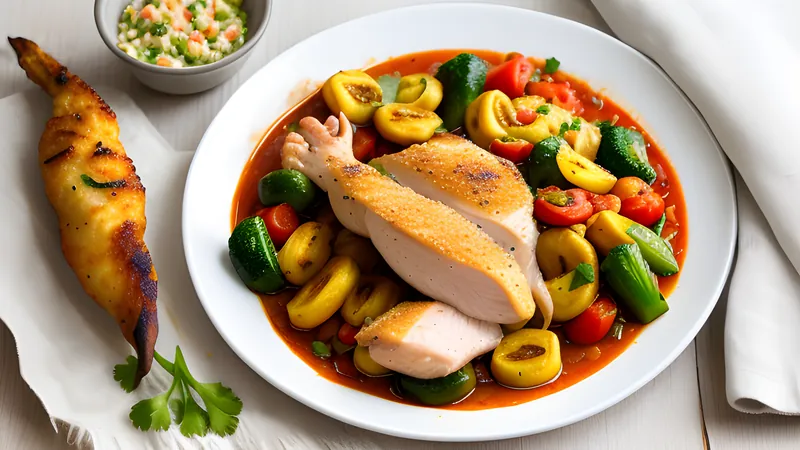
↓ Jump to recipeThe name gives away everything about who used to order this dish. Poulet DG — chicken, directeur général — is said to have been created in the 1970s or 80s for the executives and company directors who lunched at restaurants in Douala and Yaoundé, Cameroon’s two biggest cities, and wanted something that read as substantial and a little indulgent without being a full formal banquet. Fried chicken, fried plantain, a chunky vegetable sauce thick with tomato: it’s a dish built to look generous on a plate, and it has spent the decades since trickling down from boardroom lunches into home kitchens and street restaurants (known locally as nganda) across the country.
Poulet DG: The Director General's Chicken and Plantain
Ingredients
- 1.2kg chicken thighs and drumsticks, skin on, bone in
- 2 teaspoons fine salt, divided
- 1 teaspoon ground black pepper
- 1 teaspoon curry powder
- 1 chicken stock cube, crumbled
- 4 tablespoons vegetable oil, divided
- 3 large ripe (yellow, black-spotted) plantains, peeled and cut into 3cm chunks
- 1 large onion, sliced
- 3 garlic cloves, minced
- 1 thumb ginger, minced
- 1 red bell pepper, sliced
- 1 green bell pepper, sliced
- 2 carrots, sliced into rounds
- 150g green beans, trimmed and halved
- 3 large tomatoes, blended smooth
- 2 tablespoons tomato purée
- 1 scotch bonnet chilli, whole (pierced once) or minced for more heat
- 1 teaspoon dried thyme
- 2 bay leaves
- 200ml water or chicken stock
Method
- Season the chicken with 1 teaspoon salt, the black pepper, curry powder and crumbled stock cube, and leave to marinate for at least 20 minutes.
- Heat 2 tablespoons oil in a large pot over medium-high heat and fry the chicken pieces in batches until deeply browned on all sides, about 10 minutes per batch; set aside.
- In the same pot, fry the plantain chunks in the remaining oil until golden on all sides, about 6-8 minutes; remove and set aside with the chicken.
- Add a splash more oil if needed and soften the onion for 4 minutes, then add the garlic and ginger and cook for 1 minute until fragrant.
- Add the bell peppers and carrots and cook for 5 minutes, stirring occasionally, until starting to soften at the edges.
- Stir in the blended tomatoes, tomato purée, remaining teaspoon of salt, whole scotch bonnet, thyme and bay leaves. Simmer for 10 minutes until the sauce thickens and deepens in colour.
- Return the fried chicken to the pot, add the water or stock, and simmer covered for 20 minutes until the chicken is cooked through and tender.
- Stir in the green beans and fried plantain, and simmer uncovered for a further 5 minutes until the beans are just tender but still bright.
- Remove the scotch bonnet and bay leaves, taste and adjust salt, and serve hot.
Why fried chicken, twice-cooked
The chicken in poulet DG goes through two cooking stages rather than one, and both matter. First it’s marinated with a stock cube, curry powder and black pepper, then shallow-fried until the skin is deeply browned — not cooked through at this stage, just coloured, so the fond left in the pot becomes the base of the sauce. Then it finishes by simmering in the tomato-vegetable sauce for twenty minutes, which is what actually cooks it through and lets it absorb the sauce’s flavour.
Skipping the initial fry and just simmering raw chicken in the sauce from the start gives a technically edible but noticeably flatter dish — you lose the browned, slightly crisp edges under the sauce and the deep fond flavour that only comes from proper contact with hot oil. The two-stage method takes longer but it’s the difference between a dish that tastes considered and one that tastes like a fast tomato stew with chicken added.
The plantain has to be ripe
Poulet DG uses ripe plantain — yellow with black spotting, soft enough to yield slightly under a thumb — never the firm green plantain used for chips or foutou elsewhere in West and Central African cooking. Ripe plantain caramelises when fried, developing a genuine sweetness at the edges that plays directly against the savoury, slightly spicy tomato sauce. Green plantain, by contrast, fries starchy and neutral, closer to a potato, and misses the point of the dish entirely.
If your plantains still have patches of green when you need to cook, they’ll fry fine but won’t caramelise as deeply — ripening plantain at room temperature for a few extra days, or sealed in a paper bag to speed things along, is worth the wait if the dish is the priority.
Where DG culture comes from
Cameroon inherited a French-influenced restaurant and business-lunch culture through its colonial history, and by the post-independence decades, a layer of well-paid civil servants, company managers and foreign-company executives had emerged in Douala and Yaoundé with disposable income and a taste for dishes that signalled status without being French. Poulet DG filled that gap: recognisably local — chicken, plantain, scotch bonnet, palm or vegetable oil — but plated with a formality (multiple vegetables, a glossy reduced sauce, careful browning) that distinguished it from a simple home-style chicken stew.
The name stuck as the dish spread beyond executive dining rooms into ordinary restaurants and then home kitchens, the way “surf and turf” or “millionaire’s” labels attach themselves to dishes long after the economic context that named them has faded. Today it’s cooked for Sunday family lunches and birthday parties as often as it’s served in any actual boardroom, and most Cameroonians cooking it at home have never eaten it anywhere near a company director.
Some food historians in Yaoundé place the dish’s origin more specifically at Chinese-Cameroonian and Lebanese-Cameroonian owned restaurants that catered to the business class in the capital during the 1980s, where fried plantain — already common in Cameroonian home cooking — was paired with a chicken preparation closer to Chinese-style stir-fried chicken in sauce than to a traditional Cameroonian stew. Whether or not that specific account is precise, it fits the broader pattern: poulet DG reads as a hybrid dish from the start, built at the intersection of expatriate restaurant kitchens and Cameroonian home flavours, which is part of why it doesn’t map cleanly onto any single older regional recipe the way a dish like ndolé does.
Building the sauce properly
The vegetable mix — bell peppers, carrots, green beans, onion, garlic, ginger — is meant to stay distinct rather than dissolve into the sauce. Each vegetable goes in at a point calibrated to how long it needs: onion and aromatics first since they need the longest, then the firmer bell peppers and carrots, and finally the green beans right at the end so they keep their colour and a slight bite. A sauce where every vegetable has cooked down to mush has gone too far; you want a chunky, textured stew where the tomato base binds everything without erasing the individual vegetables.
The whole scotch bonnet, pierced once rather than chopped, is the traditional way to add heat without making the dish aggressively spicy for anyone at the table who’s sensitive to it — it infuses warmth into the sauce over the simmer and gets removed before serving. Mince it in instead if you want real heat throughout, but be aware that’s a meaningfully spicier dish than the classic version.
Serving it
Poulet DG is usually served on its own, without rice or another starch, since the fried plantain already fills that role — piling a heap of rice alongside it is considered excessive even by the standards of a dish invented to look generous. A simple side salad of shredded cabbage and grated carrot dressed with a little vinegar sometimes accompanies it at restaurants, offering a sharp, cold contrast to the warm, richly sauced main. At home celebrations, it’s common to see poulet DG served alongside other dishes as part of a wider spread rather than as the single centrepiece, especially at birthdays or graduations where the goal is table variety rather than one dominant dish.
Substitutions
Chicken thighs and drumsticks, bone-in and skin-on, give the best result because the bones add flavour to the sauce during the long simmer and the skin crisps properly during the initial fry — boneless breast will work in a pinch but dries out faster and won’t develop the same fond. If you’re avoiding pork-adjacent stock cubes or want a lighter dish, a good homemade chicken stock in place of the cube-and-water combination works just as well; just add a touch more salt to compensate.
Green beans can be swapped for mangetout or sugar snap peas if that’s what’s available, added at the same late stage. Some households add a handful of button mushrooms alongside the bell peppers for extra bulk, though this is a home variation rather than a restaurant standard.
Storage
Poulet DG keeps well in the fridge for up to three days and, like most tomato-based stews, often tastes better the next day once the flavours have had time to settle. Reheat gently on the stove rather than in the microwave to keep the fried plantain from turning mushy — a splash of water helps loosen the sauce if it’s thickened too much overnight. It also freezes well for up to two months, though the plantain softens further on reheating from frozen, so some cooks fry a fresh batch of plantain to add back in rather than freezing it with the sauce.
Common mistakes
Frying the plantain and chicken in the same batch of oil without cleaning the pan between them is the most common shortcut that goes wrong. Chicken releases moisture and small browned fragments into the oil as it fries, and if the plantain goes in straight after without the pan being wiped or the oil refreshed slightly, it steams in those fragments rather than frying cleanly, and comes out soft and greasy rather than caramelised at the edges. It’s worth the extra two minutes to tip out any burnt bits and add a touch of fresh oil before the plantain goes in.
Rushing the tomato reduction is the second common error. The blended tomato and purée need a genuine ten minutes of simmering before the chicken goes back in — this is what cooks out the raw, sharp edge of fresh tomato and concentrates the sauce into something that clings to the chicken rather than tasting thin and acidic. A sauce that still tastes sharply of raw tomato after simmering hasn’t been given long enough; a further five minutes generally fixes it.
Overcooking the green beans is the third: they go in at the very end specifically to avoid this, but it’s tempting to add them earlier so everything finishes together. Resist it — beans that have simmered the full twenty minutes with the chicken turn grey and limp, losing the crunch that’s meant to contrast with the soft plantain and tender chicken.
Variations
Some restaurant versions of poulet DG add small chunks of smoked fish or dried shrimp to the sauce for an extra savoury layer, a nod to the coastal Douala palate where smoked and dried seafood season nearly everything. Others substitute beef or goat for chicken entirely — poulet DG’s structure (fried protein, fried plantain, chunky tomato-vegetable sauce) works with any well-marbled meat that can handle a long simmer, though the dish then usually gets renamed viande DG or similar rather than keeping the chicken-specific name.
A lighter home variation skips the initial deep-fry of the chicken and instead browns it more briefly in less oil, accepting a slightly less crisp result in exchange for a lighter dish — common in households cooking for a weeknight rather than a celebration. The plantain, though, is rarely skipped or substituted; it’s considered the dish’s second-most essential element after the chicken itself, and a poulet DG without plantain would strike most Cameroonian cooks as an unfinished dish rather than a valid variation.
Related on the site
For the plantain half of this dish taken further on its own, kelewele, Ghana’s ginger and chilli fried plantain, shows a different West African approach to the same ripe fruit. Cameroon’s other signature stew, ndolé, the bitterleaf and groundnut stew built around beef and prawns, is worth cooking alongside poulet DG if you want to see how differently the country treats chicken versus its national leafy-green dish. And for the Congolese take on a rich, palm-oil-based chicken stew from just across the border, moambe, Congo’s palm butter chicken, makes an interesting comparison in technique.
Related Content