Potica: The Slovenian Rolled Walnut Cake
A metre of dough, rolled thin enough to see through, coiled around walnuts
Contents
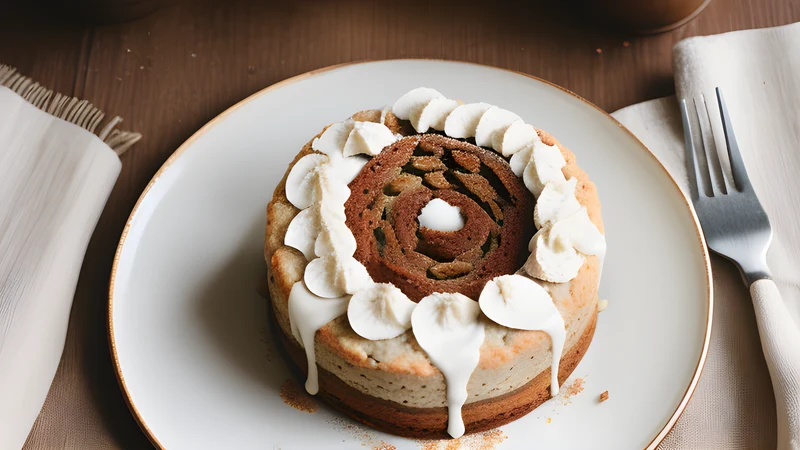
↓ Jump to recipePotica is on the Slovenian two-euro coin. The design is a cross-section of the cake itself, showing the spiral, where most currencies put a head of state or a cathedral. That tells you roughly everything about how seriously this is taken. There is a registered protected designation for prekmurska gibanica and a whole institute’s worth of ethnographic work on potica variants, of which somewhere around eighty are documented, and there is an annual festival, and there are households where the walnut ratio is a matter of family identity.
I have made it perhaps a dozen times and about half of those were failures. It is the hardest thing in this section of the site, and the difficulty is concentrated almost entirely in one place: getting a rich, buttery, egg-yolk dough thin enough without tearing it.
Potica: The Slovenian Rolled Walnut Cake
Ingredients
- 500g strong white bread flour
- 7g fast-action dried yeast
- 60g caster sugar
- 1 tsp fine sea salt
- 200ml whole milk, warmed to 37C
- 3 large egg yolks
- 1 large egg
- 80g unsalted butter, softened
- 1 tsp vanilla extract
- Finely grated zest of 1 lemon
- 400g walnut halves
- 200ml double cream
- 120g caster sugar, for the filling
- 80g unsalted butter, for the filling
- 3 tbsp dark rum
- 2 large egg whites
- 50g fine dried breadcrumbs
- 1 tsp ground cinnamon
- 1/4 tsp fine sea salt, for the filling
- 1 egg yolk beaten with 1 tbsp milk, to glaze
Method
- Whisk the flour, yeast, 60g sugar and 1 tsp salt together in a large bowl. Make a well.
- Whisk the warm milk, egg yolks, whole egg, vanilla and lemon zest together and pour into the well. Mix to a shaggy dough.
- Knead on an unfloured surface for 10 minutes until smooth. Add the 80g softened butter in 4 pieces, kneading each fully in before the next. The dough will break apart and come back together; keep going.
- Knead for a further 8 minutes until the dough is glossy, slack and passes a windowpane test.
- Cover and prove at room temperature for 90 minutes, until doubled.
- Meanwhile, toast the walnuts on a tray at 170C fan for 8 minutes. Cool completely, then grind to a coarse meal in a food processor, pulsing so you keep some texture.
- Heat the cream, 120g sugar and 80g butter in a pan until the butter melts and it steams. Pour over the ground walnuts and stir. Add the rum, cinnamon and 1/4 tsp salt.
- Whisk the 2 egg whites to soft peaks and fold them into the cooled walnut mixture with the breadcrumbs. Leave to thicken for 20 minutes.
- Cover a large table with a clean cotton tablecloth and flour it lightly. Roll the dough out on it to roughly 50 x 40cm.
- Work your floured hands underneath and stretch the dough outwards from the centre, walking around the table, until it is about 90 x 60cm and thin enough to see the cloth through. Trim the thick edges.
- Spread the walnut filling evenly over the whole sheet, leaving a 3cm border along one long edge.
- Lift the cloth from the far long edge and use it to roll the dough towards you into a tight cylinder. Pinch the seam shut.
- Grease a 24cm bundt or ring tin well. Lift the cylinder in, seam down, and press the ends together to close the ring.
- Prick the top all over with a skewer, right down to the base. Cover and prove for 45 minutes until risen by half.
- Heat the oven to 160C fan. Brush the top with the egg yolk glaze.
- Bake for 55-65 minutes, until deep brown and the centre reads 93C. Cover with foil at 40 minutes if it is colouring fast.
- Cool in the tin for 15 minutes, turn out, and cool completely before slicing. Potica cut warm tears.
What it is, and the eighty variants
Potica is an enriched yeasted dough, stretched paper-thin, spread with a filling, rolled into a long cylinder, coiled into a ring tin and baked. The name comes from povitica, “something rolled up”, and the same word travels — Croatian povitica, the American-Croatian povitica of Kansas City, which is a genuine diaspora survival and a very good cake.
The walnut version is the one on the coin and the one people mean when they say potica without qualification. The others are real and defended: pehtranova potica with tarragon, which is savoury-sweet and much stranger and much better than it sounds; poppy seed; honey; crackling; hazelnut; cottage cheese; the tarragon-and-cottage-cheese hybrid. The register runs from Christmas cake to Easter breakfast to a thing you eat with coffee on a Sunday.
Slovenian food writing dates recognisable potica to the sixteenth century, and it arrives in print in 1689 in Valvasor’s Glory of the Duchy of Carniola, which describes a rolled walnut cake at feast days. It is a feast-day food by construction, because it is built from things that were expensive: white flour, eggs, butter, cream, and four hundred grams of walnuts, in a mountain economy where three of those were seasonal luxuries. Nobody made potica on a Tuesday.
The walnuts are the point. Slovenia grows a lot of them, the domestic varieties are oily and slightly bitter, and the entire dish is a delivery mechanism for a very large quantity of them.
The dough, and why it fights you
Five hundred grams of flour, three yolks, a whole egg, eighty grams of butter, sugar, milk. This is brioche-adjacent, and the problem is that everything that makes it delicious makes it hard to stretch.
Fat coats gluten strands and shortens them. Sugar competes for water and slows gluten development. Egg yolk contributes lecithin, which is an emulsifier and a tenderiser. Each of those is working directly against the elastic, extensible network you need in order to pull a sheet to ninety centimetres without holes. A lean bread dough stretches almost by itself. This one has to be persuaded.
Three things make it possible.
Strong flour, and no cheating. You need the protein. Plain flour makes a softer, tastier dough that tears the moment you stretch it, and I have watched a whole afternoon disappear that way.
Butter last, and slowly. Knead the dough to smoothness first with no fat in it at all, so the gluten develops in a clean environment, then work the softened butter in a quarter at a time. The dough will come apart into a greasy mess each time and reassemble as you keep kneading. This is normal and alarming. Adding all the butter at the start gives you a short, sandy dough that never develops.
A slack dough. It should be tacky and soft, slumping rather than holding a ball. A stiff dough is a dough that will spring back the moment you stop pulling.
Ten minutes of kneading, butter in over another five, eight more minutes after. Windowpane test: pull a piece thin enough to see light through without tearing. If it tears, keep kneading. This is a genuine test rather than a decoration, because the stretch later is exactly the same physical demand at forty times the area.
Stretching across a table
Clear the kitchen table. Put a clean cotton tablecloth on it and flour the cloth lightly. This is the same setup and largely the same technique as apfelstrudel pastry, with the significant difference that a strudel dough is lean and elastic and forgiving and this one is not.
Roll first, with a pin, to about 50 x 40cm. Then stop rolling. A pin cannot take an enriched dough much thinner than that — it compresses and tears rather than extending. The rest is done with the backs of your floured hands, worked underneath the sheet, lifting and drawing outwards from the centre while you walk slowly around the table.
Work from the centre out, and keep moving around. Stretching from one position gives you a sheet that is thin where you are standing and thick on the far side. The dough will tell you when it needs a rest: if it starts springing back, walk away for five minutes and let the gluten relax, then continue. Fighting a resistant dough is how holes happen.
The target is thin enough to read the pattern of the tablecloth through it. Ninety by sixty centimetres from 500g of flour. The edges will always be thicker — trim them off with a knife and eat them.
Small holes are survivable. Patch them with a trimmed scrap and press. A hole larger than a coin in the middle of the sheet will let filling out into the tin and burn, so patch properly.
The twist: hot cream on the walnuts
The filling technique is the piece I would defend hardest, and it is standard in good Slovenian practice while being missing from most English-language recipes, which just tell you to mix ground walnuts with sugar and milk.
Toast the walnuts, cool them, grind them coarsely. Then pour hot cream, sugar and butter over the ground nuts and stir.
Two things happen. The heat drives the walnut oils out of the ground meal and into the cream, so the fat carries the flavour through the whole filling instead of leaving it locked in the particles. And the hot liquid softens the nut meal into a spreadable paste — a cold filling is granular and stiff and will tear your painstakingly stretched sheet as you push it around.
Toasting first matters for the same reason it always does, and the eight minutes at 170C is a floor rather than a target; walnuts have a lot of latent bitterness in the skins and heat converts it to something aromatic. Cool them completely before grinding or the oil separates and you get walnut butter.
The whisked egg whites folded in at the end lighten the filling so it does not compress into a dense band, and the breadcrumbs absorb the free liquid so nothing leaks at the seam. Both are traditional and both are load-bearing.
Rum is optional in principle and present in every potica I have ever eaten in Slovenia.
Rolling, coiling, and the skewer
Use the cloth to roll. Lift the far edge of the tablecloth and let the dough fold over onto itself, then keep lifting so the cylinder rolls towards you under its own weight. Your hands go nowhere near it. Trying to roll a ninety-centimetre sheet of filled dough by hand is how it tears.
Tight, with no air. Gaps in the coil become caverns in the finished slice and the spiral falls apart when you cut it.
Prick the top all over with a skewer, right down to the base of the tin, after it goes in and before the final prove. This looks like vandalism and it is the single most important structural step in the recipe. Potica generates a lot of steam — from the cream, the eggs, the wet nut paste — and that steam has nowhere to go inside a sealed coil. It collects, forms a void under the top surface, and lifts the crust away from the cake in a dome. Slice it and you find a cave. The skewer holes give the steam a route out.
The honest case against a whole afternoon
Potica takes about five hours from cold, of which perhaps ninety minutes is active work and the stretching is genuinely stressful the first three times. Slovenian bakeries sell excellent ones for around fifteen euros, and Slovenian supermarkets sell decent frozen ones, and a large proportion of Slovenian households now buy rather than make. This is worth knowing before you clear the table.
What you get for the afternoon is a specific thing that the bought version usually lacks: the walnut-to-dough ratio. Commercial potica runs light on the filling because walnuts are the expensive part, and a shop ring will typically give you a spiral where the dough dominates and the nut layer is a thin dark line. The recipe above uses 400g of walnuts to 500g of flour, which is close to parity by weight, and the result is a cake that is mostly walnut held together by a suggestion of bread. That ratio is what a household making it for Christmas would do, and it is the version worth the work.
The other gain is the thinness. A machine cannot stretch this dough — it gets sheeted through rollers, which means it stays thicker, which means fewer turns in the spiral. Count the coils on a shop-bought slice and you will find five or six. A hand-stretched one gives you nine or ten.
If neither of those matters to you, buy it. If you have made it once and it failed, make it again — the second attempt is dramatically easier, because the only thing you were missing was knowing what the dough is supposed to feel like under your hands.
Failures, storage and variations
Dough tore during stretching. Under-kneaded, too stiff, or butter added too early. There is no recovery; roll it thicker and accept a coarser spiral.
A cave under the crust. You did not prick it, or not deeply enough.
Filling leaked and burned in the tin. Unpatched hole, or the seam was not pinched, or the filling was too wet — the breadcrumbs are there for this.
Dense, heavy, under-risen. Yeast killed by milk over 45C, or the second prove was rushed. It needs the full 45 minutes.
Spiral separated into rings when sliced. Rolled too loosely, or cut while warm.
Dry. Overbaked. Use a thermometer; 93C in the centre is done, and ten minutes past that is a different cake.
Potica keeps a week wrapped in a tea towel at room temperature and is arguably better on day two, once the walnut oil has migrated into the dough. It freezes whole for three months. Never refrigerate it.
For the tarragon version, replace half the walnuts with 40g of finely chopped fresh tarragon and 250g of drained cottage cheese. For a poppy-seed potica, swap the walnuts gram for gram for ground poppy seeds and add the zest of an orange. Serve it in thin slices with coffee. It sits in the same European tradition as the Romanian cozonac and the Estonian kringle — enriched dough, coiled filling, a feast day somewhere behind it — and of the three, this is the one that will take you a whole afternoon and teach you the most.
Related Content