Pillowy Potato Gnocchi with Brown-Butter Sage
Light little dumplings in a nutty butter
Contents
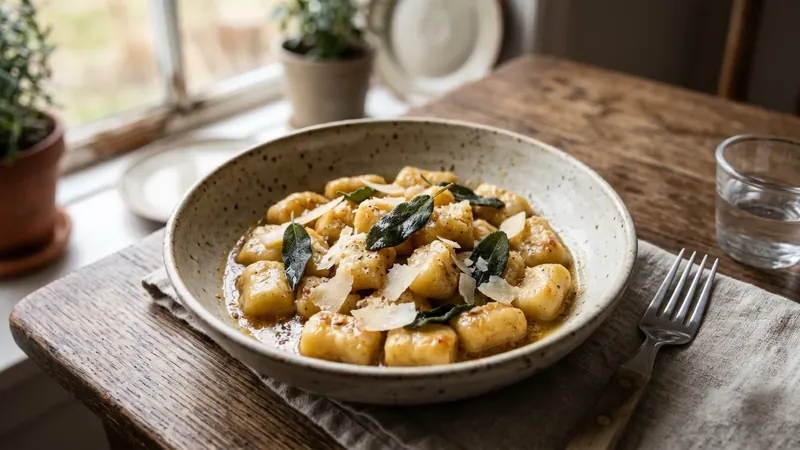
↓ Jump to recipeGnocchi has a reputation for turning out gluey and heavy, but the secret is a light hand and dry, floury potatoes. Get those two things right and these little dumplings are tender enough to give way under a fork with barely any resistance. The twist lies entirely in the sauce: butter cooked past melting until it turns golden and nutty, with sage leaves crisped to a whisper. It is barely a recipe, and yet it tastes like the best thing you have eaten all week.
A dumpling older than the potato
Gnocchi are among the oldest shapes in Italian cooking. The name is generally traced to the Italian for a knot or a knuckle, a nod to their small, knobbly form, and the earliest versions had nothing to do with potatoes at all: they were dumplings bound with breadcrumbs, semolina or plain flour, sometimes ricotta. The potato arrived in Europe from the Andes in the sixteenth century, after Spanish contact with the Inca, but it was slow to be trusted as food and slower still to reach the pot. Only once it had taken root in the cooler soils of northern Italy did the version most people now picture come into being: a soft potato dough, lightly bound with egg and flour and quickly boiled.
That northern home is also where the sauce belongs. Across Lombardy, Piedmont and the Veneto, butter rather than olive oil is the traditional cooking fat, and the pairing of browned butter and sage — burro e salvia — dresses everything from filled pasta such as ravioli to these very dumplings. It is a two-ingredient sauce that has survived precisely because it needs nothing else.
Pillowy Potato Gnocchi with Brown-Butter Sage
Ingredients
- 900g floury potatoes (Maris Piper or King Edward), unpeeled
- 1 medium egg yolk
- 180g plain flour, plus extra for dusting
- 50g finely grated Parmesan, plus more to serve
- Pinch of freshly grated nutmeg
- 1 tsp fine sea salt
- 100g unsalted butter
- 20 fresh sage leaves
- Flaky sea salt and black pepper, to finish
Method
- Boil the unpeeled potatoes in salted water for 25-30 minutes until tender, then drain and leave until cool enough to handle.
- Peel the warm potatoes and pass them through a ricer onto a clean work surface. Spread them out to let the steam escape.
- Scatter over the flour, Parmesan, nutmeg and salt, add the egg yolk, and gently bring together into a soft dough. Stop as soon as it holds; do not knead.
- Cut the dough into pieces and roll each into a long rope about 2cm thick. Cut into 2cm pillows and, if you like, roll over a fork to make ridges.
- Bring a large pan of salted water to a gentle boil. Cook the gnocchi in batches; they are ready a few seconds after they float to the surface.
- Lift out with a slotted spoon and set aside while you make the sauce.
- Melt the butter in a wide pan over medium heat. Add the sage leaves and let the butter foam, swirling, until it turns golden and smells nutty, about 3-4 minutes.
- Tip in the drained gnocchi and toss gently to coat in the brown butter and crisp sage.
- Season with flaky salt and black pepper, and serve at once with extra Parmesan.
Why the potato choice decides everything
The single most important decision here is the potato, and it is made at the shop rather than the stove. Floury, low-moisture varieties such as Maris Piper or King Edward rice into a dry, fluffy crumb that binds with very little flour, and it is that restraint with flour that keeps the dumplings light. Waxy salad potatoes hold far more water; to get a workable dough from them you end up adding more and more flour, and every extra spoonful develops more gluten and turns the finished gnocchi into the dense, chewy erasers that give homemade gnocchi its bad name.
For the same reason, some cooks bake the potatoes in their skins rather than boiling them: dry heat drives off more moisture than a pan of water can, giving an even drier crumb and needing even less flour. Boiling unpeeled, as here, is the easier route and works well, provided you rice the potatoes while warm and let the steam escape before adding flour. Warm potato releases starch more freely and needs less flour to come together; cold, claggy mash fights you.
The “do not knead” instruction is the other half of the battle. Kneading is how you develop gluten, which is exactly what you want in bread and exactly what you do not want here. Work the dough only until it just holds, then stop. If you can still see flecks of potato, that is fine.
The single most useful habit I have is to test one before committing the batch. Once the dough is mixed, roll and cut a single gnocco and drop it into the simmering water. If it holds together and floats up light, the dough is right. If it dissolves or falls apart, work in a tablespoon more flour and test again; if it comes up rubbery and tight, you have too much flour and the best fix is to accept it this time and buy drier potatoes next. That one test saves you from boiling a whole tray of failures, and it costs you thirty seconds.
The water should be at a gentle, lazy boil, not a rolling one. A violent boil batters the soft dumplings and can knock them apart before they set; a bare simmer lets them cook through and rise calmly to the surface. Salt the water properly — it should taste of the sea — because gnocchi are bland dumplings that need seasoning from the outside in, and there is no seasoning in the dough beyond the teaspoon of salt and the cheese.
The brown butter, and getting ahead
Cooking butter past the point of melting toasts its milk solids, developing the amber colour and deep, biscuity aroma the French call beurre noisette, hazelnut butter. Watch it: it goes from golden and fragrant to acrid and brown in under a minute, so pull it off the heat the moment it smells nutty and the foam subsides, and let the residual warmth finish the job. The sage, dropped in whole, perfumes the fat and crisps into fragile, savoury leaves.
The pairing works because it is spare. The nuttiness of the butter against the gentle potato and the salty edge of Parmesan is enough to carry the plate on its own; a final grind of pepper and a shower of cheese is all the gilding required.
There is a second finish worth knowing, which turns boiled gnocchi into something with a crisp shell. After boiling and draining, tip the gnocchi into the browning butter and let them sit undisturbed for a minute or two before tossing, so the underside catches and gains a golden, chewy crust. It is the best of both textures — soft within, crisp without — and it makes the dish feel like more than the sum of its two ingredients. A squeeze of lemon at the very end, or a few toasted pine nuts, are the only additions I ever reach for; anything more and you bury the point of the thing. A little of the reserved potato-cooking water, splashed into the butter as you toss, helps the sauce cling and coat rather than slide off, the same emulsion trick that binds any good pasta sauce.
You can shape the gnocchi a few hours ahead: dust them with flour, spread them out on a floured tray so they do not touch, and refrigerate uncovered. They also freeze well raw — freeze on the tray until solid so they keep their shape, then tip into a bag, and boil straight from frozen, adding a minute to the cooking time. Do not thaw them first; a thawed raw gnocco turns sticky and slumps. Cooked gnocchi, by contrast, do not keep well: they firm up and go claggy in the fridge, so this is a dish to make and eat in one sitting, which is no hardship at all. If you want to prepare ahead, freeze them raw rather than cooking in advance. For a change of sauce, they are lovely folded through a spoonful of my charred lemon hummus loosened with pasta water, or served alongside a bowl of butternut squash soup as a substantial autumn supper. And if you have brown butter left over, or simply love the flavour as much as I do, it is the making of my brown butter chocolate chip cookies. Treat the dough kindly, salt the water well, test one before you commit the batch, and these reward you handsomely every single time.
Related Content