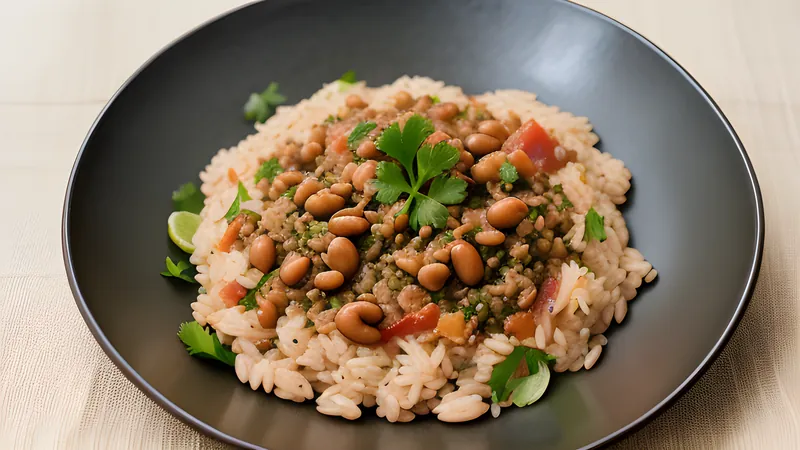
Porotos Granados: Chile's Summer Bean Pot
Fresh cranberry beans simmered with corn, squash and basil
Contents
↓ Jump to recipePorotos granados only works as a genuine seasonal marker if you can get your hands on fresh cranberry beans, still in their pods, alongside corn and squash at the same moment — a window that in Chile falls in late summer, when all three crops overlap briefly before the beans dry out on the vine and move into their dried, shelf-stable form for the rest of the year. The name itself, granados, refers to the beans being fresh and plump rather than dried — grain-like in that swollen, just-shelled state rather than the shrivelled dried version most of us cook with year-round.
This is peasant food in the best sense of that phrase — built from what three different crops all happen to be producing at once, thickened with pureed corn stirred straight into the liquid to give the stew body, rather than flour or cream. It’s a dish that makes total sense as a response to a specific agricultural moment and very little sense as an abstract recipe disconnected from that timing, which is part of why I think it’s worth understanding the seasonal logic even if you’re making it with supermarket ingredients in the middle of winter.
Porotos Granados: Chile's Summer Bean Pot
Ingredients
- 800g fresh cranberry (borlotti) beans, shelled (or 500g dried, soaked overnight)
- 2 tablespoons olive oil
- 1 large onion, finely chopped
- 3 garlic cloves, minced
- 1 teaspoon smoked paprika
- 1 teaspoon dried oregano
- 500g butternut squash, peeled and cut into 2cm cubes
- 900g fresh or frozen sweetcorn kernels, divided
- 1 litre vegetable or chicken stock
- 8-10 fresh basil leaves, torn, plus extra to serve
- Salt and black pepper
- Pebre or fresh chilli, to serve (optional)
Method
- If using fresh cranberry beans, no soaking is needed. If using dried beans, drain the overnight soak and rinse well.
- Heat the olive oil in a large, heavy pot and cook the onion over medium heat for 6-8 minutes until soft.
- Add the garlic, smoked paprika and oregano and cook for 1 minute until fragrant.
- Add the beans and stock (use enough stock to cover the beans by 3cm; top up with water if needed).
- Bring to a simmer, cover partially, and cook for 30-40 minutes (fresh beans) or up to 1 hour 15 minutes (dried, pre-soaked beans) until tender.
- Add the squash and continue simmering for 15 minutes until just tender but not falling apart.
- Blitz two-thirds of the corn kernels with a splash of the stew's liquid until smooth, then stir this puree into the pot along with the remaining whole kernels.
- Simmer for a further 8-10 minutes, stirring occasionally, until the stew has thickened to a hearty, coating consistency.
- Stir through the torn basil off the heat and season generously with salt and pepper.
- Serve hot, with extra basil scattered over and pebre or fresh chilli on the side.
Three crops, one pot
Beans, corn and squash together form what’s often called the “three sisters” in agricultural terms across much of the Americas — crops traditionally grown together because they support each other agronomically, corn providing a stalk for beans to climb, beans fixing nitrogen in the soil that benefits the other two, squash’s broad leaves shading the ground and suppressing weeds. Porotos granados is one of the clearer culinary expressions of that agricultural relationship, a dish that puts all three crops in one pot at the exact point in the growing season when a farmer would have had all three ready to harvest simultaneously.
This is Chilean and broader Andean cooking at its most direct link to indigenous agricultural knowledge that long predates Spanish contact — beans, corn and squash were all domesticated in the Americas, and a dish built from exactly this trio, without meat as the centrepiece, reflects a food culture where these three crops carried the nutritional load long before European livestock arrived to supplement them.
Fresh cranberry beans — sold in their pods at markets during the brief window they’re available — cook dramatically faster than dried beans and have a creamier, less starchy texture once cooked. If you can find them, even briefly at a farmers’ market, they’re worth the extra effort of shelling; the difference in texture between a stew made with fresh beans and one made with reconstituted dried beans is more noticeable here than in most bean dishes, because the beans aren’t hidden under heavy seasoning — this dish lets them speak plainly.
Building the base
The onion, garlic, smoked paprika and oregano cooked briefly before the beans go in isn’t a lot of aromatics by the standards of many stews, and that’s deliberate — porotos granados is meant to taste like beans, corn and squash first, with seasoning supporting rather than dominating. Oversalt or over-spice this dish and you lose the thing that makes it distinct, which is the clean, vegetal sweetness of three vegetables at their peak.
Cooking time for the beans varies enormously depending on whether you’re using fresh or dried, and it’s worth checking regularly rather than trusting a fixed time — fresh cranberry beans can be tender in as little as twenty-five minutes, while dried beans, even soaked overnight, can take well over an hour depending on their age. Old dried beans, sitting in a cupboard for a year or more, take noticeably longer and sometimes never fully soften no matter how long you cook them, which is worth knowing before you commit a whole pot to a bag of beans of uncertain vintage.
Squash timing
Butternut squash goes in only once the beans are most of the way to tender, not at the start alongside everything else — squash cooks much faster than beans do, and cubes added too early will have disintegrated into the stew long before the beans catch up, leaving you with no discernible squash texture at all rather than the distinct, just-tender cubes the dish is meant to have.
Fifteen minutes is usually enough for 2cm cubes to soften through without falling apart, but check by piercing a cube with a knife tip rather than trusting the clock exactly — squash varies in density by variety and by how ripe it was when cut, and a slightly underripe squash can need a few extra minutes.
The corn thickening
This is the technique that makes porotos granados distinct from a generic bean-and-vegetable stew: blitzing a portion of the corn kernels with some of the cooking liquid and stirring that puree back into the pot, rather than thickening with flour, cornflour, or a roux the way you might in a European stew. The corn puree brings its own sweetness along with the thickening, and it ties the dish together in a way a neutral starch thickener never would — you can taste that the body of the stew is coming from an ingredient that’s actually in the dish, not an invisible thickening agent.
Leaving a third of the corn kernels whole, rather than pureeing all of it, keeps some textural pop against the otherwise smooth, thickened broth — the same principle at work in pastel de choclo’s corn topping, where a mix of pureed and whole kernels reads better than either extreme on its own.
Basil, added at the end
Basil isn’t a universal addition across every Chilean household’s version of this dish, but it’s common, and it’s added at the very end, off the heat, specifically so its flavour stays bright rather than dulling under sustained simmering. Stir it through just before serving, and add a little more as a fresh garnish on each bowl — basil that’s simmered for even a few minutes loses most of what makes it worth including in the first place.
Serving and keeping
Porotos granados is substantial enough to serve as a main course on its own, particularly with a scoop of pebre — the Chilean condiment of chopped chilli, coriander, onion and lime — on the side for those who want extra heat, since the stew itself carries very little of its own.
It keeps for up to four days refrigerated, and like most bean stews it tends to improve by the second day once the flavours have had more time to settle together. It also freezes well for up to three months, though the squash softens further on thawing, so expect a slightly less distinct texture from a previously-frozen batch than from one served fresh.
What can go wrong
Beans that stay stubbornly firm no matter how long you simmer them are almost always old beans, whether fresh or dried — beans lose moisture and their pectin structure changes over storage time, and beans that have been sitting for a year or more can resist softening entirely regardless of cooking time. There isn’t a reliable fix once you’ve discovered this partway through cooking; the only real prevention is buying beans from a source with reasonable turnover and, for dried beans, not assuming a bag from the back of the cupboard will behave the same as one bought last month.
A stew that tastes watery and thin despite following the method usually means not enough of the corn was pureed, or the puree wasn’t cooked in long enough afterward to actually thicken the broth. Give the stew the full eight to ten minutes after adding the corn puree, and if it’s still thin at that point, blitz a bit more of the whole kernels and stir that in too rather than reaching for a starch thickener that doesn’t belong in this dish.
If the squash has turned to mush by the time you serve, it went in too early or was simmered too long once added — check at the ten-minute mark on any batch after your first, since squash density and therefore cooking time varies noticeably between individual squashes even of the same variety.
Dried beans versus fresh
Since fresh cranberry beans in the pod are a genuinely seasonal, often hard-to-find ingredient outside markets that cater specifically to Latin American or Mediterranean cooking, dried cranberry beans (sold as borlotti beans in most UK and European shops) are the realistic year-round option, and they make a perfectly good version of this dish once you account for the longer soak and cook time. Soak overnight in plenty of cold water — dried beans roughly double in size as they rehydrate, so use a bowl larger than seems necessary — and expect the simmering stage to run closer to an hour and a quarter rather than the thirty to forty minutes fresh beans need.
Canned beans are not a good substitute here despite the convenience, because the dish relies on the beans cooking alongside the aromatics and absorbing flavour from the stock over an extended simmer — beans that are already fully cooked before they go in the pot never pick up that same depth, and they tend to turn mushy well before the squash and corn have had their proper cooking time.
A dish that rewards patience
There’s a temptation, given how simple the ingredient list looks on paper, to rush porotos granados — to underestimate how much the long, gentle simmer at each stage is doing for the final flavour. Resist that temptation. The dish’s appeal comes almost entirely from three vegetables given enough time to properly soften and release their sugars into a shared broth, and shortcutting any one stage — beans, squash, or the corn thickening — produces a stew that tastes assembled rather than genuinely cooked together. I’ve made the mistake myself, on a weeknight with limited patience, of pulling the squash out five minutes early and pureeing less corn than the method calls for — the resulting stew was edible but forgettable, thin where it should have been rich, and it taught me that this particular dish has almost no shortcuts worth taking.
This is a natural companion to pastel de choclo, since both draw on the same late-summer Chilean corn harvest, and it sits comfortably alongside chorizo white bean stew if you want to compare how a Mediterranean bean stew and an Andean one solve a similar problem — hearty, filling food built mostly from what the land is producing at that exact moment — with entirely different seasoning traditions.
Related Content