Pörkölt: The Hungarian Paprika Stew That Isn't Goulash
Onions, lard, paprika and beef shin, with almost no liquid at all
Contents
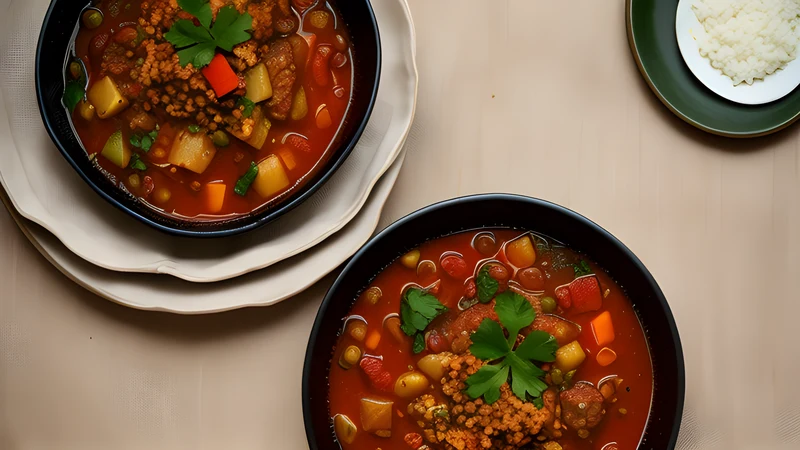
↓ Jump to recipeThere is a dish sold across Europe as “goulash” that is a thick brown beef stew with paprika in it, served with dumplings, and it is a fine thing to eat. It is also, in Hungary, a different dish with a different name. Goulash — gulyás — is a soup. What the rest of the world eats and calls goulash is pörkölt, and once you know the difference the whole logic of Hungarian braising falls into place.
Pörkölt means “roasted” or “singed”, from pörköl, to scorch. The name describes the first act: onions cooked down in lard until they surrender completely, then paprika hit against that hot fat for a few seconds. Everything after that is patience. My one addition to the classical method is a tablespoon of red wine vinegar stirred in at the very end, off the heat, which lifts a stew that has spent two hours getting richer and richer and gives it somewhere to go.
Pörkölt: The Hungarian Paprika Stew That Isn't Goulash
Ingredients
- 1kg beef shin, cut into 4cm cubes
- 1kg onions (about 6 medium), halved and sliced 3mm thick
- 60g lard (or 4 tbsp sunflower oil)
- 3 tbsp sweet Hungarian paprika (édesnemes)
- 1 tsp hot Hungarian paprika, or to taste
- 4 garlic cloves, crushed to a paste with a pinch of salt
- 1 tsp caraway seeds, lightly crushed
- 2 sweet pointed peppers, deseeded and diced
- 1 medium tomato, skinned and chopped
- 2 tsp fine sea salt
- 150ml water, only if needed
- 1 tbsp red wine vinegar, to finish
- 2 tbsp soured cream (tejföl), to finish (optional)
Method
- Melt the lard in a heavy casserole over a medium-low heat. Add the sliced onions and 1 tsp of the salt.
- Cook the onions for 30-35 minutes, stirring every few minutes, until they have collapsed to roughly a quarter of their volume and turned pale gold and jammy. Do not rush this and do not let them brown deeply.
- Add the crushed garlic and caraway. Cook for 60 seconds.
- Take the pot off the heat entirely. Count to twenty, then add both paprikas and stir hard for 15 seconds so every grain is coated in fat and the mixture turns deep red.
- Immediately add the beef and stir to coat. Return to a medium heat and cook for 5 minutes, stirring, until the meat has lost its raw colour on all sides.
- Add the diced peppers, chopped tomato and remaining 1 tsp salt. Stir once.
- Clamp on a tight lid, drop the heat to its lowest setting, and cook for 90 minutes without opening it. The onions and meat will release enough liquid to braise in.
- Check at 90 minutes. If the pot is dry and catching, add 100ml water. Cook covered for a further 45-60 minutes until the beef pulls apart under gentle pressure from a spoon.
- Remove the lid and simmer for a final 10-15 minutes if the sauce is thin. It should cling to the meat and pool red fat at the surface, with no free liquid.
- Stir in the vinegar off the heat. Taste and adjust the salt.
- Rest for 10 minutes before serving. Serve with nokedli, boiled potatoes or bread, with a spoon of soured cream on top if you like.
The dish and its confused name
Hungarian paprika stews come in a family, and the members are distinguished by liquid and by dairy.
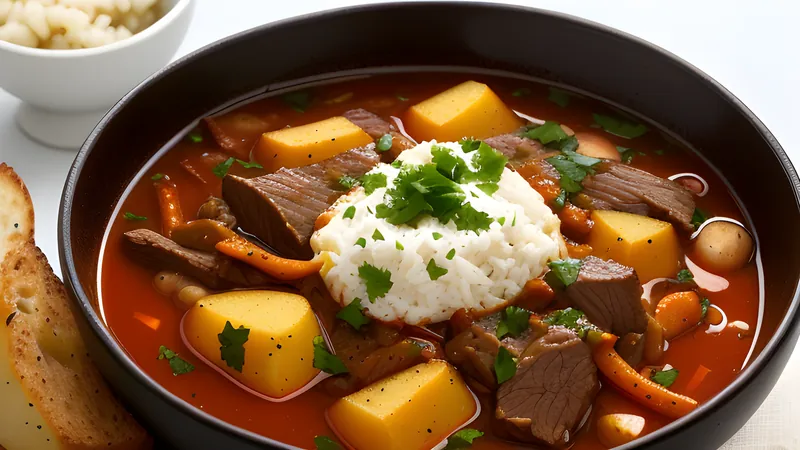
Gulyás is the soup of the cattle herders — the gulyások who drove animals across the Great Plain and cooked in a bogrács, a cauldron slung over a fire. It has stock, diced potato, carrot, sometimes pinched-off csipetke noodles, and it comes to the table in a bowl you drink from. Ours is here.
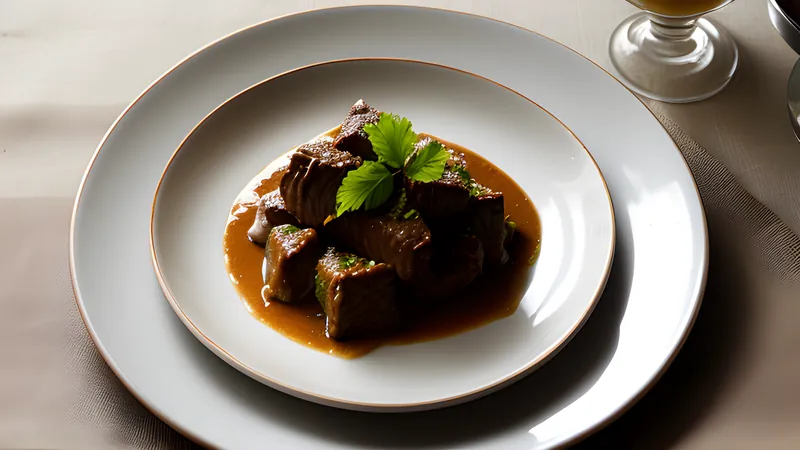
Pörkölt is the same flavour base with nearly all the water taken out. No stock goes in at any point. The onions and the meat provide the liquid, and the sauce is what remains after two hours of the pot doing the work.
Paprikás is pörkölt finished with soured cream, usually made with chicken or veal rather than beef — csirkepaprikás is the one you have probably eaten.
Tokány uses strips of meat instead of cubes, and less paprika, often with mushrooms and cream.
The English-speaking world collapsed all of this into one word sometime in the nineteenth century, when Hungarian nationalism made peasant cooking politically fashionable and Budapest restaurants started serving herders’ food to Viennese tourists. The tourists took home the name and left the taxonomy behind. Meanwhile beef goulash with smoked paprika has become its own respectable thing in British kitchens, and I have no quarrel with it — it is simply a cousin rather than the original.
The onion is the recipe
A kilo of onions to a kilo of meat looks like a typo. It is the entire point.
There is no flour in pörkölt, no stock, no tomato purée and no cornflour slurry at the end. The sauce is onion. Thirty-five minutes of slow cooking in lard breaks down the cell walls and drives off most of the water, and what remains is a pectin-rich, sugar-rich pulp that dissolves into the braising liquid and thickens it from within. By the time the stew is finished you cannot see a single piece of onion. You can only see the result of them.
Which means the onion stage is unskippable and unhurryable. Fifteen minutes gets you sweet onions with texture, and texture is failure here — the finished stew will have stringy strands in it and a sauce that never thickened. You want them past sweet and into jammy, collapsed to about a quarter of their raw volume, pale gold rather than deeply browned. Deep browning brings caramel bitterness that fights the paprika.
Slice them with the grain, at about 3mm. With the grain they hold together long enough to render properly before they fall apart. Sliced across, they turn to mush in ten minutes and then sit there frying.
Paprika, and the twenty-second rule
Step four says to take the pot off the heat and count to twenty before the paprika goes in. This is the most important instruction in the recipe.
Ground paprika contains around 10% sugar and a great deal of very fine, already-dried plant matter. In fat above about 140°C it scorches in seconds, and scorched paprika is bitter in a way nothing can fix. Off the heat, the fat drops through the danger zone fast, and the paprika can bloom instead of burn.
Blooming is a real chemical event. The colour and aroma of paprika live in carotenoids — capsanthin, capsorubin, beta-carotene — which are fat-soluble and barely soluble in water. Hot fat extracts them almost completely. This is why a properly made pörkölt is brick red the whole way through, with a slick of scarlet fat at the surface, while one made by stirring paprika into liquid is a disappointing orange-brown.
Three tablespoons is a lot of paprika. It is meant to be. Buy it Hungarian, in a tin, and replace it annually — paprika oxidises and the carotenoids degrade, so an old tin gives you dust-coloured stew and a faint bitterness. Édesnemes is the grade you want. If yours smells of nothing when you open it, it will taste of nothing in the pot.
Cut, heat and time
Beef shin is the right cut and I would argue with anyone about it. It is worked muscle, dense with collagen, and two and a half hours of low wet heat converts that collagen to gelatine, which gives the sauce a body that no amount of reduction can imitate. Chuck works. Brisket works. A lean cut like topside will be dry and stringy at every point on its cooking curve, because there is nothing in it to melt.
Cut the cubes generously at 4cm. They shrink by a third and small pieces disintegrate.
No searing. This surprises people trained on French braising. There is no browning step for the meat in pörkölt — it goes in raw, into the paprika-red onion base, and simply loses its colour. Searing would add Maillard notes that muddy the paprika. The depth here comes entirely from the onions.
No liquid. Trust it. A kilo of onions is about 90% water and a kilo of beef is about 70%. Under a tight lid on a low flame, that is more than enough to braise in. If your lid is loose or your hob’s lowest setting is still fierce, you may need the 100ml of water at the 90-minute check. If you add water at the start, you are making soup and you will spend the last half hour boiling it back off.
The caraway is contentious. Some Hungarian cooks consider it a gulyás ingredient that has no place in pörkölt; others put it in everything. I use a teaspoon, crushed lightly, because it gives the paprika something to lean on. Leave it out if you dislike it and nothing collapses.
What goes wrong
The sauce is thin and won’t thicken. The onions were undercooked. You cannot fix it retroactively — the pectin has already gone into the liquid or it hasn’t. Reduce hard with the lid off and accept a slightly looser stew.
It’s bitter. The paprika scorched. Start again; there is no rescue.
The meat is tough at two hours. It needs more time at the same low temperature. Collagen conversion is a function of time at temperature, and the window is roughly 70-80°C for a long stretch. Turning the heat up boils the muscle fibres and squeezes water out, giving you meat that is simultaneously tough and dry. Give it another 30 minutes covered and check again.
It’s flat. Salt first, then the vinegar. Two teaspoons of salt across a kilo of meat and a kilo of onions is a starting point, and a rich stew will absorb more than that before it comes into focus.
Nokedli, because you should make them
The dumplings take twelve minutes and turn the stew into a meal. For four people: whisk 250g plain flour with 2 large eggs, 1 tsp fine salt and about 120ml water until you have a thick, sticky batter that falls off a spoon in a slow ribbon. Rest it for 10 minutes so the flour hydrates and the gluten relaxes.
Bring a wide pan of well-salted water to a rolling boil. Hungarians use a nokedli szaggató, a perforated plate you push the batter through with a scraper. A colander with 5-8mm holes does the same job, and so does a wet teaspoon flicking blobs off the side of a wet chopping board. Work in two batches so the pan stays at a boil.
They are done 60-90 seconds after they float. Lift them out with a slotted spoon into a bowl with a knob of butter and toss. If they sit in the water past two minutes they bloat and go slimy on the outside.
Two things go wrong. A batter that is too loose gives you shapeless threads instead of dumplings; too stiff and it will not push through the holes at all. Aim for something between thick pancake batter and soft dough — it should hold a mound for a second before slumping. And the water needs to be at a genuine rolling boil, because a gentle simmer lets the outside dissolve before the inside sets.
The case against
Pörkölt is a two-and-a-half-hour dish with fifteen minutes of interesting cooking in it. The rest is a pot on the lowest flame and you standing somewhere else. That is fine on a Sunday and impossible on a Tuesday.
It is also unapologetically heavy. Sixty grams of lard, a kilo of shin, a spoon of soured cream on top — this is food built for people who spent the day outdoors on the Great Plain in November. Eaten in a heated flat in front of a laptop, it can sit on you. The pickles and the vinegar exist for that reason, and I would not serve it without both.
Serving, storing, and the next day
Nokedli are the traditional partner, and their job is to be a soft neutral thing that mops up red fat. Boiled potatoes with parsley do the same. Bread does it best of all. A tangle of sharp pickled gherkin on the side is close to mandatory.
It improves overnight. The gelatine sets, the paprika keeps bleeding into the fat, and day two is genuinely better than day one. It keeps five days covered in the fridge and freezes for three months. Reheat it gently on the hob with a splash of water; a microwave splits the fat out and the texture never recovers.
If you have some lecsó in the fridge, a spoonful stirred into the finished pörkölt is a shortcut to the pepper sweetness that the diced peppers were reaching for. And if you want to see the same paprika-and-lard logic applied to cabbage instead of beef, töltött káposzta is the next stop.
Related Content