Pork Belly Bao Buns with Pickled Daikon
Cloud-soft buns folded around sticky braised pork
Contents
↓ Jump to recipeThere is a specific joy to a freshly steamed bao bun: that pillowy, faintly sweet dough giving way to something sticky and savoury inside, eaten with your hands and almost certainly down your chin. These are folded gua bao, the ones you see stacked on street stalls and, more recently, on half the restaurants on every high street, filled here with soy-braised pork belly and a sharp daikon pickle. They take an afternoon, but most of that is hands-off waiting, and very little compares to handing someone a warm shell they fold around the filling themselves. The clever twist here is the pickle: a quick, bright tangle of daikon and carrot that cuts the richness of the pork so cleanly you reach for a second bun before you have finished the first.
Pork Belly Bao Buns with Pickled Daikon
Ingredients
- 300g plain flour
- 1 tsp instant yeast
- 1 tbsp caster sugar
- 0.5 tsp baking powder
- 0.5 tsp fine salt
- 150ml warm milk
- 1 tbsp neutral oil, plus extra for brushing
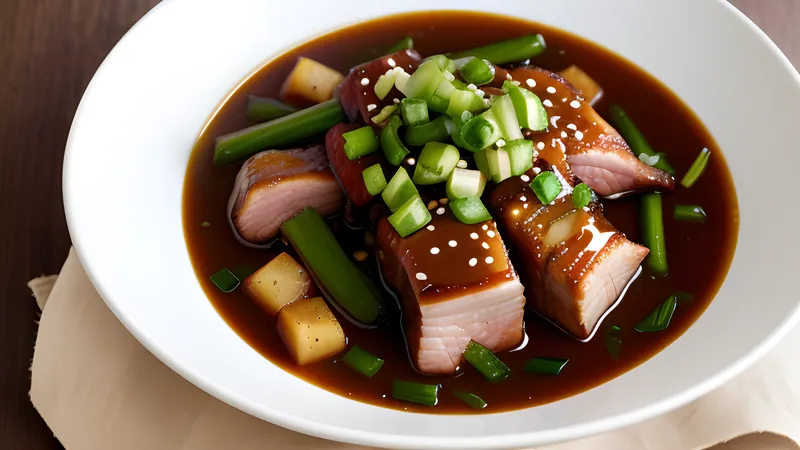
- 800g pork belly, skin removed, cut into thick strips
- 2 tbsp dark soy sauce
- 2 tbsp light soy sauce
- 2 tbsp Shaoxing wine
- 2 tbsp brown sugar
- 1 star anise
- 3 slices fresh ginger
- 2 garlic cloves, crushed
- 1 cinnamon stick
- 300ml water
- 100g daikon, julienned
- 1 carrot, julienned
- 4 tbsp rice vinegar
- 1 tsp caster sugar (for the pickle)
- Hoisin sauce, fresh coriander, sliced chilli and crushed roasted peanuts, to serve
Method
- Make the dough: mix the flour, yeast, sugar, baking powder and salt, then add the warm milk and oil and bring together into a dough.
- Knead for 8 to 10 minutes until smooth and elastic, then cover and prove in a warm place for about an hour until doubled.
- Meanwhile, braise the pork: sear the pork belly strips in a hot pan until browned all over, then add the soy sauces, Shaoxing wine, brown sugar, star anise, ginger, garlic, cinnamon and water.
- Bring to a simmer, cover and cook gently for 1.5 to 2 hours until the pork is meltingly tender, then reduce the liquid to a sticky glaze.
- Make the pickle: combine the daikon and carrot with the rice vinegar, sugar and a pinch of salt and set aside for at least 30 minutes.
- Knock back the dough, roll into a sausage and divide into 10 pieces. Roll each into an oval, brush with oil, fold in half over a chopstick or strip of paper, and place on squares of greaseproof paper.
- Prove the folded buns for 20 to 30 minutes until puffy.
- Steam the buns in batches in a covered steamer for 10 minutes, then turn off the heat and leave for 2 minutes before lifting the lid.
- Open each warm bun and spread with a little hoisin, fill with sliced braised pork, drained pickle, coriander, chilli and crushed peanuts.
Fuzhou, night markets, and the tiger that bites the pig
Gua bao is Taiwanese, but its lineage runs back across the strait to Fujian province on the mainland, most often traced to the coastal cities of Fuzhou and Quanzhou. Fuzhounese immigrants are generally credited with carrying the folded bun to Taiwan, where it settled into the night markets and became a fixture. Its ancestor is the humble mantou, the plain steamed bread of northern China that bao developed from as a filled version; food historians place the roots of steamed bao as far back as the Three Kingdoms period, around 220 to 280 AD.
The bun has a wonderful nickname in Taiwan: hó͘-kā-ti, “tiger bites pig”, because the folded shell clamping down on its slab of pork looks like a tiger’s mouth mid-bite. It also carries a specific occasion. Gua bao is the traditional food of the weiya, the year-end banquet a company throws for its staff, and one of the earliest written mentions comes from a 1927 diary entry by a member of the Taiwanese gentry, Huang Wangcheng, noting a request to make “tiger bites pig” to thank the workers for their year’s labour. The traditional filling is red-braised pork belly with stir-fried suan cai (pickled mustard greens), coriander and ground peanuts. My daikon pickle is a lighter, crunchier substitute for the mustard greens, but the principle is identical: something sharp and cold to fight the fat.
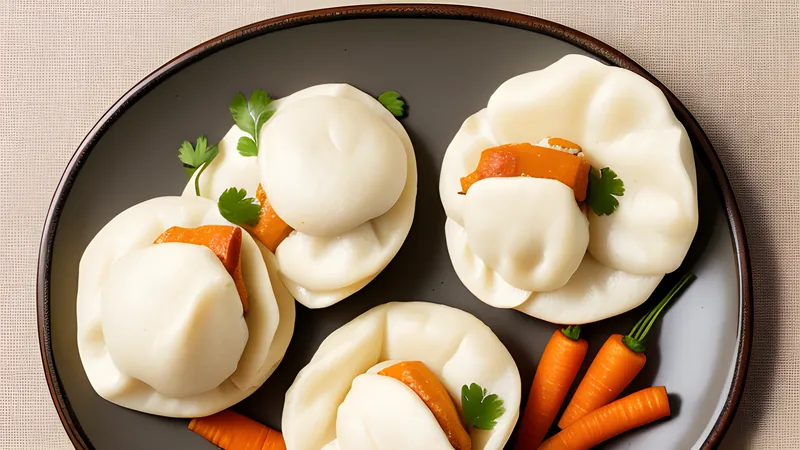
The half-moon fold is not decoration. Steaming the flattened oval draped over an oiled strip stops the two halves from sealing shut, so the finished bun opens like a pocket. That shape is the whole design, and it is what lets you fill each one at the table.
Making the buns and the pork in parallel
Two things happen at once here, and neither is hard. The dough is an enriched, slightly sweet steamed dough leavened with yeast and a little baking powder, the combination that gives it that cloud-like, faintly springy crumb. Mix the flour, yeast, sugar, baking powder and salt, add the warm milk and oil, and knead for 8 to 10 minutes until smooth and elastic. Prove it in a warm place for about an hour, until doubled. Then knock it back, roll it into a sausage and divide into 10 pieces; roll each into an oval, brush with oil, and fold in half over a chopstick or a strip of greaseproof so the fold will open after steaming. Prove the shaped buns a second time, 20 to 30 minutes, until puffy. The second prove is what buys you a light, openable bun rather than a dense lump.
The pork is a straightforward soy braise. Sear the belly strips in a hot pan until browned all over, then add both soy sauces, the Shaoxing wine, brown sugar, star anise, ginger, garlic, cinnamon and 300ml water. Bring to a simmer, cover, and cook gently for 1.5 to 2 hours until the meat is spoonably tender, then lift out the aromatics and reduce the liquid to a glossy, sticky glaze. Meanwhile make the pickle: toss the julienned daikon and carrot with 4 tablespoons rice vinegar, a teaspoon of sugar and a pinch of salt, and leave for at least 30 minutes so the vegetables soften and turn tart.
Steaming is the only fiddly moment. Sit each bun on its own square of greaseproof, steam in batches in a covered steamer for 10 minutes, then turn off the heat and wait 2 minutes before lifting the lid. That pause matters: a sudden draught of cool air on a bun straight off a rolling boil can shrink and wrinkle its surface in seconds.
A word on the dough itself, because the numbers do the heavy lifting. The milk should be warm to the touch, around blood temperature (about 37C) — hot enough to wake the yeast, never so hot it kills it, which happens above roughly 50C. The baking powder is not a mistake alongside the yeast: yeast gives the slow, structural rise during proving, while the baking powder gives a quick lift in the steamer, and together they produce the characteristically white, fluffy Chinese steamed-bun crumb rather than a chewier bread-roll texture. If your milk is too cool the first prove will simply take longer; give it time rather than forcing it in a hot oven, which can skin the dough.
Why the technique works, and what goes wrong
Steam over a gentle, steady heat rather than a furious one. Violent boiling throws large droplets and pressure swings at the delicate surface and can collapse it; a calm, even steam sets the dough without shocking it. The greaseproof square under each bun stops it sticking and tearing as you lift it, which is otherwise how a perfectly good bun gets ruined at the last second.
If the buns come out dense, the cause is almost always one of two things: the dough needed longer to prove, or it needed a little more kneading to develop the gluten that traps the gas. Both are easy to fix next time, and even a slightly heavy bun tastes wonderful warm and filled. If the surface looks pocked or grey rather than smooth and white, your heat was too fierce or condensation dripped from the lid; a tea towel tied under the steamer lid catches the drips.
Getting ahead, substitutions and serving
This is a brilliant make-ahead project. The braised pork is better the next day, once the flavours have settled and you can lift off any fat that has set on top, so cook it in advance and reheat it gently in its glaze. Steamed buns freeze well too: steam them plain, cool, freeze, then re-steam from frozen for 4 to 5 minutes to bring back their softness. You can do all the work on a quiet day and assemble fresh buns in minutes.
If you cannot find daikon, mooli is the same vegetable under a different name; at a pinch use extra carrot or thinly sliced radishes. Shaoxing wine gives the braise its depth, but a dry sherry stands in well, and an alcohol-free braise still tastes good with an extra splash of water and a teaspoon more sugar. If you would rather not make dough at all, most Asian supermarkets sell frozen plain gua bao shells that steam in minutes; the pork and pickle carry the dish. The braise scales up beautifully, so it is worth doubling the pork: leftovers make an outstanding rice bowl the next day, spooned over steamed rice with the pickle and a fried egg, or shredded into fried rice.
Do not skip the peanuts or the coriander. They are not garnish; the peanuts give the essential crunch and toasty depth, and the coriander cuts through the fat with a green, citrusy lift. If you or a guest cannot bear coriander, use a mix of sliced spring onion and mint instead, which nods to the herbs of a Vietnamese banh mi and works surprisingly well against the sweet soy pork. The braise is close cousin to a slow American bourbon pulled pork, and the pickle is a first cousin of my quick pickled red onions — swap either in if it suits what you already have. For a crisp-coated alternative filling, the panko-crumbed cutlet from my katsu sando sits very happily inside a bao.
The pickle deserves its half hour. Cut early in the process so the daikon and carrot have time to sit in the vinegar, soften from raw to just-yielding, and turn properly tart; a freshly dressed pickle is crunchy but flat, whereas one left to marinate develops the sour bite that does the real cutting work against the fat. Drain it before filling the buns so it does not make the dough soggy, and keep any spare in its liquid in the fridge for a week — it is good on everything from rice bowls to a cheese sandwich.
Set everything out in bowls and let people build their own, going heavy on the hoisin, pickle, peanuts and coriander. The contrast of hot sticky pork against cold sharp crunch is the entire reason these buns are so good, and it is the reason the tiger keeps biting.
Related Content