Charred Guacamole with Pomegranate
Smoky, creamy and jewelled with crunch
Contents
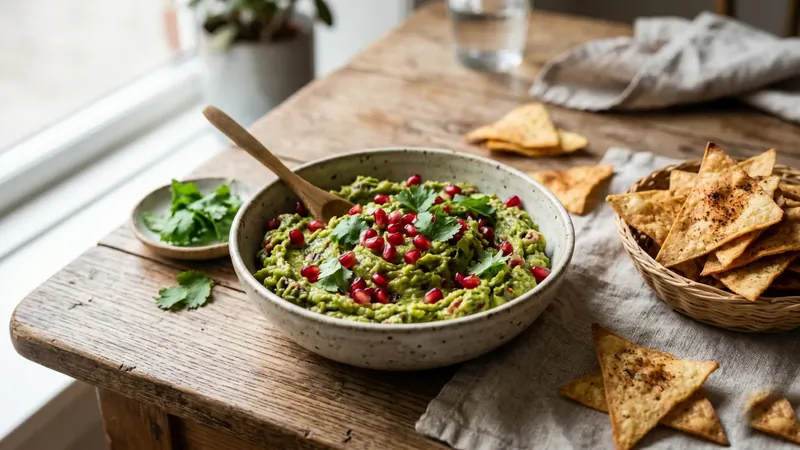
↓ Jump to recipeGuacamole is simple by nature, so the smallest tweaks make the biggest difference. Here the aromatics are charred first in a dry pan until blackened and sweet, lending the whole bowl a gentle smokiness that plain guacamole never has. Then comes the flourish: a generous scatter of ruby pomegranate seeds, which burst with sharp, sweet juice and bring a jewel-bright crunch against the creamy avocado. It is the same comforting dip, dressed up just enough to feel special.
Charred Guacamole with Pomegranate
Ingredients
- 3 ripe avocados
- 1 small red onion, halved (skin on)
- 1 jalapeño or green chilli
- 2 garlic cloves, unpeeled
- 1 lime, juiced
- Small handful of fresh coriander, chopped
- Seeds of half a pomegranate (about 80g)
- Salt, to taste
- Tortilla chips, to serve
Method
- Heat a dry heavy frying pan or griddle over a high heat until very hot.
- Char the red onion halves, whole chilli and unpeeled garlic cloves, turning, until blackened in patches and softened, 5-8 minutes.
- Leave to cool a little, then peel the garlic, deseed the chilli if you prefer less heat, and finely chop the onion, chilli and garlic.
- Halve the avocados, remove the stones, and scoop the flesh into a bowl.
- Mash the avocado with a fork to your preferred texture, leaving it a little chunky.
- Stir in the charred onion, chilli and garlic, the lime juice and the chopped coriander.
- Season generously with salt and taste, adjusting the lime and salt as needed.
- Spoon into a serving bowl and scatter the pomegranate seeds over the top.
- Serve straight away with tortilla chips.
The Story
Guacamole is one of the oldest dishes still in everyday use across the Americas, with roots reaching deep into the cooking of the Aztecs in what is now central Mexico. Its name comes from the Nahuatl language spoken by the Aztecs, combining the words for avocado and sauce, and the dish in its earliest form was much as it is today: ripe avocado mashed to a coarse paste. The avocado itself is native to the region, and it has been cultivated there for thousands of years.
At its heart, guacamole is built around the avocado and very little else, which is why ripeness matters so much. A perfectly ripe avocado yields gently to a squeeze and mashes to a buttery, faintly nutty cream, the foundation on which everything else rests. The classic supporting cast is small and sharp: lime juice for acidity, which also helps slow the browning of the cut flesh, onion and chilli for bite, coriander for its fresh, citrussy note, and salt to draw it all together.
The first twist here, charring the aromatics, draws on a technique that runs throughout Mexican cooking. Dry-roasting onions, garlic, chillies and tomatoes on a hot, dry surface, traditionally a flat earthenware or metal griddle, is a cornerstone of countless Mexican salsas and sauces. The blistering heat blackens the skins, softens the flesh and concentrates the sugars, trading raw pungency for a mellow, smoky sweetness. Bringing that same idea to guacamole adds a layer of depth that lifts it well beyond the everyday.
The second twist, the pomegranate, is a nod to a genuine Mexican tradition rather than an invention from nowhere. Pomegranate seeds appear in one of Mexico’s most celebrated dishes, chiles en nogada, a dish from Puebla traditionally served around the September independence celebrations, where they scatter scarlet across a creamy walnut sauce over a stuffed poblano chilli, its red, white and green echoing the Mexican flag. Their sweet-tart pop and bright colour are a natural foil for rich, savoury food, and they work the same magic here. Against the smoky, creamy avocado, the seeds bring acidity, sweetness and a fresh, juicy crunch that makes the bowl feel alive. The contrast is one of texture as much as taste: soft, rich mash beneath, with little bursts of sharp, glassy fruit on top.
Why ripeness is everything
At its heart, guacamole is built around the avocado and very little else, which is why ripeness matters so much. A perfectly ripe avocado yields gently to a squeeze and mashes to a buttery, faintly nutty cream, the foundation on which everything else rests. Underripe fruit stays hard and grassy and will not mash smoothly no matter how hard you work the fork; overripe fruit collapses into a stringy, brownish sludge with a faintly rancid edge. The classic supporting cast is small and sharp: lime juice for acidity, which also helps slow the browning of the cut flesh, onion and chilli for bite, coriander for its fresh, citrussy note, and salt to draw it all together. Nothing else is strictly necessary, and adding too much only muddies the clean, green flavour that makes guacamole worth eating.
Choosing and ripening the avocados
Everything rests on the avocados, so buy them with the finished dish in mind. A ripe one gives gently when you cradle it in your palm and press with the whole hand rather than a fingertip, which only bruises it; the little stem nub at the top should flick off easily and show green underneath, not brown. Rock-hard avocados will ripen on the windowsill over two to four days, faster if you put them in a paper bag with a banana, whose ethylene gas speeds the process. If they are ready before you are, move them to the fridge, where ripening stalls for a couple of days. Avoid any that feel mushy or have sunken dark patches, because the flesh beneath will be stringy and bruised.
Charring the aromatics
The dry pan is the heart of the method, so let it get properly hot before anything goes in; a griddle pan gives you the best blistering, but any heavy frying pan works. No oil: you want the skins to blacken and blister, not to fry. Give the onion, chilli and unpeeled garlic 5 to 8 minutes, turning them so they char in patches without turning uniformly to ash. The garlic cloves cook fastest inside their skins, going soft and sweet, so pull them the moment they yield to a squeeze. Let everything cool enough to handle before you peel the garlic, slip the seeds from the chilli if you want less heat, and chop the lot finely. That blackening trades the raw, aggressive bite of fresh onion and garlic for a mellow, roasted sweetness with a whisper of smoke, which is the whole point.
Bringing it together, and what can go wrong
Mash the avocado with a fork rather than a blender; a food processor whips it into a smooth paste that loses the honest, rustic texture guacamole should have. Leave it a little chunky. Stir in the charred aromatics, the lime juice and the coriander, then season with salt more generously than feels comfortable, because avocado is bland and soaks up salt; taste and adjust the lime and salt until it tastes bright rather than flat. The single biggest problem with guacamole is browning: cut avocado oxidises fast, turning grey-brown at the surface. The lime juice slows this with its acid, but time is the real enemy, which is why this is a make-and-eat-now dish. Scatter the pomegranate seeds only at the very last moment, or their juice will bleed pink into the pale green and the seeds will soften and lose their snap.
Storage and make-ahead
Guacamole is best eaten within an hour of making, but if you must hold it, press a sheet of cling film directly onto the surface so no air touches it and refrigerate for up to a day, adding the pomegranate only when you serve. Any browning is cosmetic; scrape off the top layer and the guacamole beneath will still be good and green. You can char the aromatics up to a day ahead and keep them chopped in the fridge, which turns the final assembly into a five-minute job when guests arrive.
Eat it as soon as it is made, with plenty of tortilla chips for scooping, while the avocado is at its greenest and the pomegranate at its most vivid. A squeeze more lime just before serving keeps everything bright, and a final pinch of salt over the top draws the flavours together.
Variations and what to serve alongside
The charring idea takes happily to other additions: char a tomato or two alongside the onion for a smoky pico feel, or crumble a little cotija or feta over the top for a salty edge. Toasted pumpkin seeds add crunch if pomegranates are out of season. This bowl belongs on a table of things to scoop and share, so it sits perfectly next to my black bean tacos with charred corn salsa and lime crema, which lean on the same charred-and-fresh contrast, or piled into warm tortillas alongside chicken fajitas for a build-your-own spread. If it is the pomegranate you fall for, you will find it doing similar bright, jewelled work in my harissa cauliflower with tahini and pomegranate.
Related Content