Poached Pears in Red Wine with Star Anise and Cinnamon
Glossy, spiced and almost embarrassingly easy
Contents
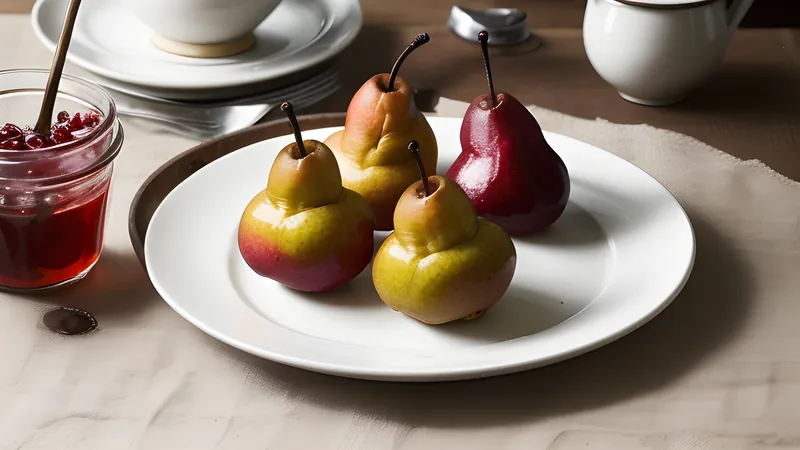
↓ Jump to recipeThere are few desserts that look as quietly impressive as a poached pear, sitting upright in a pool of garnet syrup, glossy and stained deep ruby right through. And there are few that ask so little of the cook. This is the kind of pudding you can make with one pan, half a bottle of wine you were never going to finish, and a handful of spices from the back of the cupboard. The clever twist here is restraint dressed up as generosity: a whole orchard of warm spice, but balanced so the pear and the wine still taste of themselves.
Poached Pears in Red Wine with Star Anise and Cinnamon
Ingredients
- 4 firm, slightly underripe pears (Conference or Williams)
- 750ml bottle of fruity red wine
- 150g caster sugar
- 2 star anise
- 1 cinnamon stick
- 1 strip of orange peel, pith removed
- 1 strip of lemon peel, pith removed
- 4 cloves
- 1 vanilla pod, split (or 1 tsp vanilla extract)
- 1 bay leaf
Method
- Peel the pears, leaving the stalks intact, and trim a thin slice off the base so they sit upright.
- Pour the wine into a saucepan just wide enough to hold the pears snugly. Add the sugar, star anise, cinnamon, orange and lemon peel, cloves, vanilla and bay leaf.
- Warm gently over a low heat, stirring until the sugar dissolves, then bring to a bare simmer.
- Lower the pears in on their sides, cover with a scrunched circle of baking paper to keep them submerged, and poach gently for 25 to 40 minutes, turning occasionally, until a skewer slides in with little resistance.
- Lift the pears out carefully and set aside. Strain the liquid back into the pan, discarding the spices.
- Boil the poaching liquid hard for 10 to 15 minutes until reduced to a glossy, syrupy consistency that coats the back of a spoon.
- Return the pears to the syrup to glaze, turning to coat, then serve warm or chilled with the syrup spooned over.
A dessert with deep roots
Poaching fruit in wine is one of the oldest tricks in the European kitchen, born of necessity long before it became elegant. Before refrigeration, firm autumn pears and a barrel of rough red wine were both things a household needed to use up, and gentle cooking in spiced wine preserved the fruit while softening its grainy flesh. The dish travelled across France and Italy under different names, and you will find versions in medieval cookery manuscripts where the spicing was heavier still, a legacy of the spice trade when cinnamon, cloves and star anise signalled wealth as much as flavour.
The French claimed it most enthusiastically, and poires au vin rouge remain a bistro fixture, often served with a curl of crème fraîche or a scoop of vanilla ice cream. What I love about the dish is how democratic it is. A cheap, fruity wine works beautifully here, perhaps better than a good one, because the sugar and spice transform it entirely. Save the special bottle for the glass in your hand while you cook.
The spices, and why this blend
The spicing is where restraint matters. Star anise gives a warm, aniseed sweetness that reads as almost liquorice-like against the wine; cinnamon brings woody warmth; cloves add a sharp, penetrating note that you want in small amounts, because too many turn the syrup medicinal. The strips of orange and lemon peel, with their pith carefully removed so they do not turn the syrup bitter, lift the whole pan with citrus oils and keep the heavy spices from feeling cloying. The bay leaf is the quiet one, adding a savoury, herbal backbone that stops the dish tasting like mulled wine, and the vanilla rounds everything into softness. Used together and in balance, they perfume the pears without burying the fruit; the twist here really is restraint dressed up as generosity. If you have loose spices lurking at the back of the cupboard, this is the dish that finally uses them, and it is more forgiving than baking, where quantities are exact.
The method, gently
The single most important thing is to choose the right pears. You want them firm and even a little underripe, because a soft, ripe pear will collapse into mush before it has taken on any colour. Conference and Williams both hold their shape well. Peel them neatly, leave the stalks on for the sake of looks, and slice a sliver off the base so each one can stand.
Build your poaching liquid first and let the sugar dissolve before the wine gets hot, then slide the pears in. The key is a bare, lazy simmer rather than a rolling boil, which would knock them about. A circle of baking paper laid on the surface keeps them submerged so they colour evenly; turn them now and then if any part stays stubbornly pale. They are done when a skewer meets only gentle resistance, anywhere from 25 minutes for ripe fruit to 40 for hard.
Then comes the part that turns a nice dessert into a memorable one. Lift the pears out, strain the spices away, and boil the liquid down hard until it thickens into a proper syrup. This concentrates the colour, the spice and the wine into something almost like a thin jam, and it is what makes the dish look so professional with so little effort. Expect to lose roughly half the volume; the syrup is ready when it coats the back of a spoon and a line drawn through it with your finger holds for a moment before closing. Remember that it thickens further as it cools, so stop a shade before you think it is done rather than boiling it to a sticky toffee you cannot pour.
A word on the wine’s alcohol, which people often ask about. A gentle simmer and a hard final reduction drive off most, though not all, of it; the flavour that remains is the fruit and tannin of the wine, deepened and sweetened, rather than anything boozy. If you would rather avoid alcohol entirely, the section below offers a way round it.
Getting the pears right
It is worth dwelling on the pears, because they are the one place this dish can genuinely go wrong. Conference, the long-necked English pear, and Williams, the plump aromatic one known as Bartlett in some countries, are both reliable, but the variety matters far less than the ripeness. You want fruit that is firm enough to feel almost hard at the neck, because it will soften considerably in the poaching liquid and a pear that starts out ripe and juicy will simply disintegrate. If all you can find are ripe pears, shorten the poaching time and watch them closely. Peel them thinly and evenly with a swivel peeler, leaving the stalk on for the sake of the finished look, and rub the peeled fruit with a cut lemon if you are not cooking them straight away, since pear flesh browns quickly once exposed to air. Choose a saucepan just wide enough to hold the pears snugly on their sides; too large a pan needs far more wine to submerge them, and too small a one crowds them so they colour unevenly.
Tips, twists and getting ahead
This is a brilliant make-ahead pudding, arguably better the next day once the pears have had time to soak up the colour and the syrup has settled. In fact I would go so far as to say it is worth planning ahead for: a freshly poached pear is pretty, but a pear that has sat overnight in its ruby syrup is stained a deeper, more even garnet all the way to the core, and the flavour has had time to penetrate rather than sitting on the surface. Keep them submerged in their syrup in the fridge for up to four days, turning them once if any part sits proud of the liquid so they colour evenly; they will only deepen in flavour. Bring them back to room temperature, or warm them gently in the syrup, before serving. This makes them a gift of a dinner-party dessert, since the entire thing can be done the day before and there is nothing left to do at the table but spoon over the syrup.
A few variations are worth knowing. A glass of port or a splash of crème de cassis stirred into the syrup adds a darker, fruitier note. Swap the red wine for a sweet rosé or even a light white with extra honey for a paler, more delicate dish. If you like a sharper edge, add a thumb of fresh ginger to the poaching liquid alongside the star anise. For an alcohol-free version, poach the pears in pomegranate or dark grape juice let down with a little water, keeping all the same spices; you lose the wine’s tannic depth but gain a lovely clean fruitiness, and the reduction still glazes beautifully. The same warm-spice palette turns up across my baking, so if you love the star anise and cinnamon here you will find kindred flavours in my cardamom cinnamon rolls, where the same aromatic warmth is folded into an enriched dough.
For serving, lean into contrast. The pears are sweet, spiced and soft, so they want something cool and creamy: vanilla ice cream, a spoonful of thick yoghurt, or proper crème fraîche, its gentle sourness cutting cleanly through the sweet, syrupy fruit. A few toasted flaked almonds or chopped pistachios scattered over add crunch and a welcome flash of green against all that deep ruby, and a little grating of dark chocolate would not go amiss either.
One honest warning: don’t be tempted to rush the reduction. A loose, watery syrup is the most common way this dessert disappoints. Let it bubble away with confidence until it visibly thickens and coats a spoon, and you will be rewarded with that mirror-like glaze that makes everyone at the table assume you tried much harder than you did.
If you enjoy this kind of low-effort, high-return cooking, where a single pan and a bottle of wine you had open anyway does most of the work, it sits in the same easy, one-pan tradition as my mussels in white wine, garlic and cream: humble ingredients, minimal fuss, and a result that looks and tastes far grander than the effort it asked of you.
Related Content