Plum and Almond Upside-Down Cake
Caramelised plums over a tender brown butter almond sponge
Contents
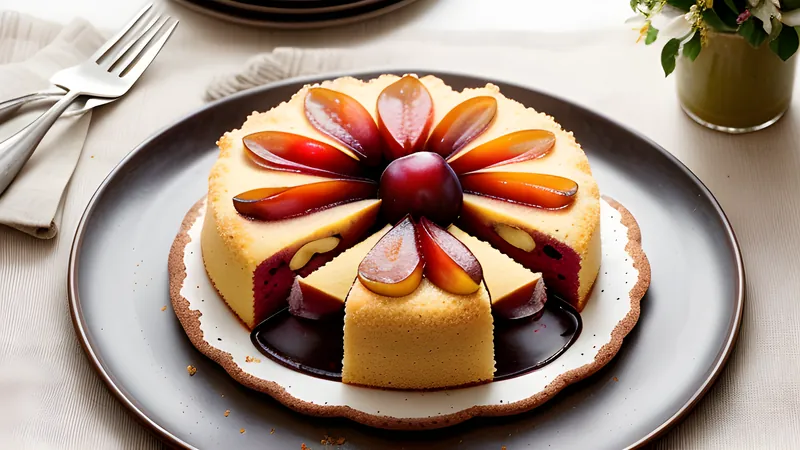
↓ Jump to recipeThere is something quietly theatrical about an upside-down cake. You build it back to front, baking the fruit beneath a layer of batter, then turn the whole thing over to reveal a glistening, caramelised top you could not have arranged so prettily by hand. Plums are perfect for this treatment: as they roast in the caramel they slump and soften, releasing a jammy, slightly tart juice that seeps into the sponge below. The almond sponge is rich and tender, and the small twist that makes it sing is brown butter, which gives the whole cake a toasted, toffee-edged depth that ordinary creamed butter never quite reaches.
Plum and Almond Upside-Down Cake
Ingredients
- 6 to 8 ripe plums, halved and stoned
- 50g unsalted butter (for the topping)
- 80g light brown soft sugar
- 175g unsalted butter, softened
- 175g caster sugar
- 3 large eggs
- 100g plain flour
- 1 tsp baking powder
- 0.25 tsp fine salt
- 100g ground almonds
- 0.5 tsp almond extract
- 1 tsp vanilla extract
- Flaked almonds, to finish
Method
- Heat the oven to 170C fan and line the base of a 23cm round tin with baking paper.
- Make the topping: melt the 50g butter with the brown sugar in a small pan until bubbling and glossy, then pour into the lined tin.
- Arrange the plum halves cut-side down over the caramel in a snug single layer.
- Brown the 175g butter in a pan until nutty and deep gold, then cool until just soft but still spreadable.
- Beat the brown butter with the caster sugar until creamy, then beat in the eggs one at a time.
- Fold in the flour, baking powder, salt and ground almonds, followed by the almond and vanilla extracts.
- Spoon the batter over the plums and spread level, scattering with flaked almonds.
- Bake for 45 to 50 minutes until risen, golden and a skewer comes out clean.
- Cool in the tin for 10 minutes, then invert onto a plate and lift off the paper.
The long tradition of cooking fruit underneath
Upside-down cakes are far older than the famous tinned-pineapple version that swept mid-twentieth-century kitchens. Cooks were baking fruit in the bottom of a pan and turning it out long before purpose-built cake tins existed, using heavy skillets set over or near a fire, a method recorded in American cookbooks of the 1800s under the plain name skillet cake. The technique was practical as much as decorative: arranging fruit and sugar at the bottom meant the heat caramelised it directly, and inverting the cake protected that delicate, sticky surface.
The pineapple upside-down cake became an icon in the 1920s and 1930s, when tinned pineapple was a glamorous novelty, but the method works with almost any fruit that holds its shape. Plums are a particular favourite in British kitchens, where a glut of them in late summer and autumn has always demanded inventive uses. Their natural acidity is exactly what a sweet, buttery sponge needs, cutting the richness and stopping the whole thing tasting one-note.
What goes into it, and why
The ingredient list is short and every item earns its place. The topping is nothing more than 50 g butter and 80 g light brown soft sugar cooked to a loose caramel; the brown sugar is not interchangeable with white here, because its molasses content gives the glaze its toffee flavour and deeper colour. For the sponge, ground almonds do the heavy lifting alongside a modest 100 g of plain flour. Almonds carry fat and moisture, which is why almond sponges stay tender and damp for days where an all-flour cake would dry out; they also bring a gentle marzipan note that pairs naturally with stone fruit, plums and almonds being close cousins on the same botanical family tree. The teaspoon of baking powder is the only lift, and a quarter teaspoon of fine salt sharpens everything so the cake tastes of butter and fruit rather than flat sweetness.
Then there is the twist. Instead of the usual softened, creamed butter, you brown the 175 g of butter for the sponge first, cooking it until the milk solids toast to a deep gold and it smells of hazelnuts and caramel. This is beurre noisette, and it changes the whole character of the cake, adding a nutty, savoury depth that echoes both the caramel above it and the almonds within it. It is one extra pan and five extra minutes, and it is the difference between a nice plum cake and one people remember.
Which plums, and when
British plums come into their own from late July through to October, and the variety you find will shape the cake. Victoria plums, the great English favourite bred in Sussex in the nineteenth century, are sweet, generous and widely sold, and they are an ideal choice here. Firm, dark-skinned varieties such as damsons or the small, tart Mirabelles work beautifully too, their sharpness a natural counter to the sweet sponge, though damsons are so tart you may want a touch more sugar in the caramel. What matters more than the name on the punnet is the state of the fruit: choose plums that are fragrant and give slightly when pressed but are not soft or wrinkled. Out of the plum season, this cake is a fine home for other stone fruit, and later in this piece I suggest how to adapt it.
How it comes together
Begin with the topping, which is really a simple caramel. Melt butter with brown sugar until it bubbles and turns glossy, then pour it into a lined tin and nestle the plum halves cut-side down into it. Take a moment to arrange them thoughtfully in a snug single layer, because this is the face of the cake and the pattern you lay down now is exactly what you will see when you turn it out. As the cake bakes, this layer bubbles up around the fruit and sets into a sticky, burnished glaze.
The sponge itself starts with browning the butter. Cook it gently until the milk solids turn deep gold and it smells of toasted nuts, then cool it until it is soft enough to cream. Beating it with caster sugar and eggs gives an airy base, and folding in ground almonds alongside the flour keeps the crumb moist and dense in the best way, with a flavour that echoes the almond extract. Spoon the batter over the plums, scatter with flaked almonds, and bake until risen and golden.
The crucial moment is the turning out. Let the cake rest in the tin for ten minutes so the caramel firms slightly and the sponge settles, but no longer, or the caramel will set hard and stick. Invert it onto a plate while it is still warm, lift away the paper, and any plum that wants to stay behind can simply be lifted back into place.
What can go wrong
The two most common disappointments both come down to the caramel. If you cool the cake too long in the tin, the caramel sets to a hard glue and the cake tears when you turn it out; ten minutes is the window, warm enough to flow, set enough to hold. If it sticks anyway, sit the tin briefly on a warm hob for 20 seconds to loosen the base before inverting. The other pitfall is soggy fruit: very ripe, soft plums release so much juice that the sponge above them stays wet and refuses to cook through in the middle. This is why ripe-but-firm fruit is worth hunting for, and why a fully clean skewer from the centre, not just the edge, is the only reliable test of doneness. If the top is browning too fast before the middle sets, lay a loose sheet of foil over it for the last ten minutes.
Tips, make-ahead and variations
Choose plums that are ripe but still firm, because very soft ones collapse into mush. If your plums are small, use more of them; if large, fewer halves. Pack them in snugly, as they shrink as they cook and you want a generous coverage of fruit when you flip the cake over.
This cake is best the day it is made, while the top is still glossy and the sponge moist, but it keeps for a couple of days under a cover and is lovely gently warmed with a spoonful of crème fraîche or custard. Thanks to the ground almonds, which hold moisture, it stays tender longer than a plain flour sponge would; a plain Victoria-style cake goes stale within a day, whereas this one is still good on day two and even three, warmed briefly to revive the caramel. If you want to get ahead, you can prepare the caramel and arrange the plums in the tin a few hours in advance, and the cake also freezes well: cool it completely, wrap it whole, and freeze for up to a month, then thaw at room temperature and warm through before serving.
For variations, the same method takes apricots, pears, apples or rhubarb beautifully; just adjust the bake for firmer fruit, giving hard pears or apples a few extra minutes and packing juicier apricots a little more tightly. Pineapple, the classic, works too if you want the retro original, though I find the plums far more interesting. A pinch of cinnamon or the seeds of a cardamom pod in the caramel adds warmth, and a splash of brandy stirred into the plum juices makes it feel decidedly festive. You can also swap a portion of the caster sugar in the sponge for light brown sugar to echo the toffee notes of the topping. Serve it just warm, with cold crème fraîche, custard or a scoop of vanilla ice cream melting into the caramelised fruit.
If it is the brown butter and ground almonds you fall for, they turn up again in my brown butter almond financiers, which are the small, elegant cousins of this cake. And if you like the idea of soft fruit baked into a tender sponge, the seasonal counterpart is my rhubarb and custard cake, which trades autumn plums for spring rhubarb and leans on custard rather than caramel. Whatever you do, keep the brown butter, because it is the small step that turns a pleasant plum cake into one people ask you to make again.
Related Content