Plov: The Uzbek Rice That Feeds Forty
The glistening lamb-and-carrot rice cooked in a great wide cauldron for weddings and Sundays
Contents
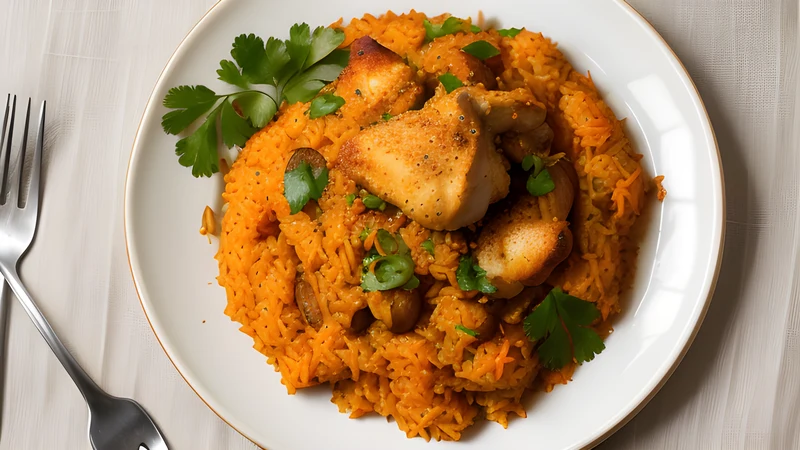
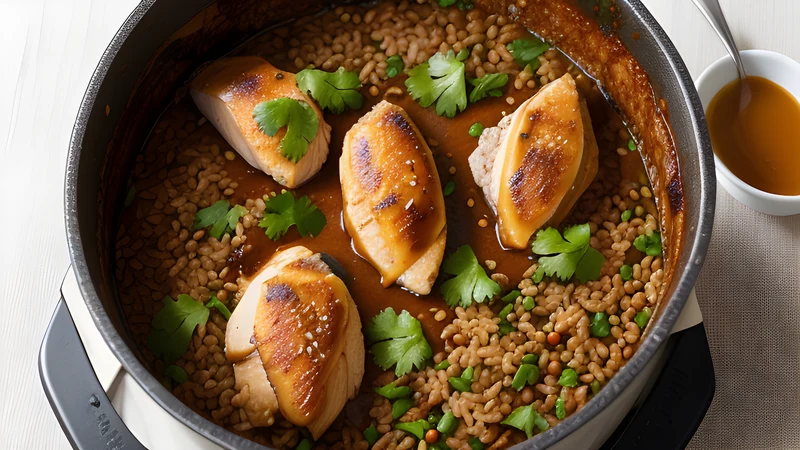
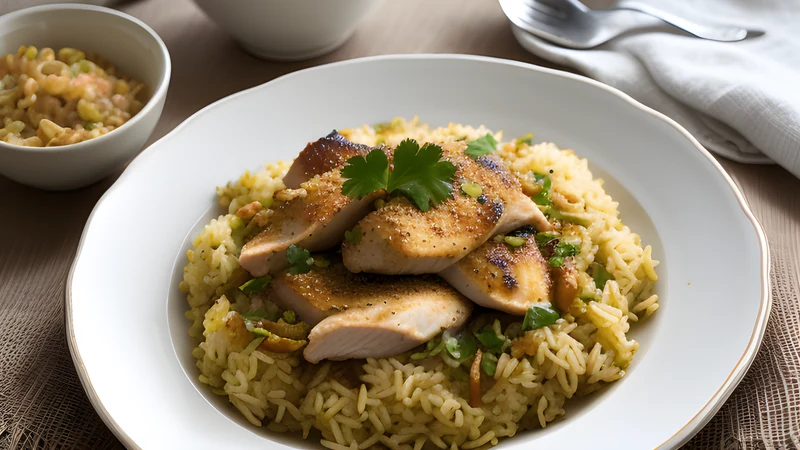
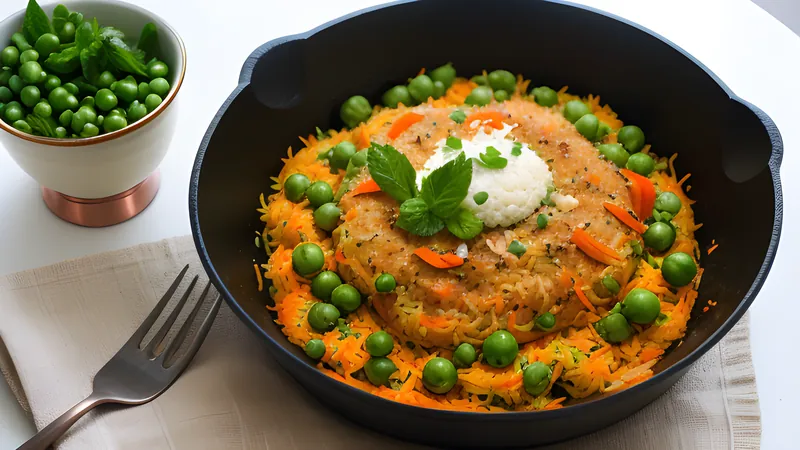
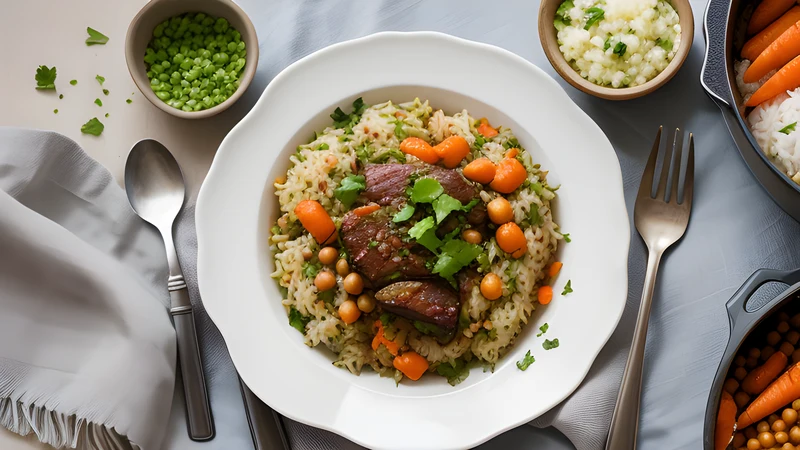
↓ Jump to recipePlov is an event as much as a recipe. Across Uzbekistan and much of Central Asia, the great cauldron of rice, lamb and glistening orange carrot is what you cook when people gather — for a wedding, a birth, a Sunday, a funeral, a Thursday that feels important. It is traditionally the province of men who cook it outdoors in a kazan the size of a bathtub, feeding a hundred guests from a single pot. My version is scaled to a household and a heavy casserole, but the soul of it survives: separate, burnished grains carrying the flavour of slow-cooked lamb and sweet carrot in every mouthful.
Plov: The Uzbek Rice That Feeds Forty
Ingredients
- 500g lamb shoulder, cut into 4cm chunks
- 500g long-grain rice (basmati or a devzira-style rice), rinsed until the water runs clear
- 500g carrots, cut into long 5mm batons (not grated)
- 3 onions, thinly sliced
- 100ml neutral oil (or use some rendered lamb fat)
- 1 tbsp whole cumin seeds
- 1 tbsp whole coriander seeds
- 1 tsp dried barberries (optional)
- 2 whole heads of garlic, papery outer skin removed, kept whole
- 1 fresh red chilli, whole (optional)
- 150g cooked chickpeas (optional)
- 2 tsp fine salt, plus more to taste
- About 600ml boiling water
Method
- Rinse the rice in several changes of cold water until the water runs clear, then leave it to soak in warm salted water while you cook the base.
- Heat the oil in a wide, heavy pot or casserole until shimmering. Brown the lamb chunks in batches on all sides, then set aside.
- In the same oil, fry the sliced onions until deep golden brown — this colour is what gives plov its rich hue and flavour.
- Return the lamb, add the cumin and coriander seeds and 1 tsp salt, and pour in enough boiling water to almost cover. Simmer gently for 40 minutes until the lamb is tender. This base is the zirvak.
- Lay the carrot batons evenly over the meat without stirring, then scatter over the barberries. Nestle the whole garlic heads and whole chilli into the surface. Simmer 10 minutes more so the carrots soften.
- Drain the rice and spread it in an even layer over the carrots. Do not stir — the layers must stay separate.
- Pour boiling water gently over a slotted spoon onto the rice until it sits about 1.5cm below the surface. Add the remaining salt to the water. Bring to a brisk simmer, uncovered.
- Cook uncovered until the water level drops to the rice and craters form on the surface, about 12–15 minutes. With a spoon handle, poke a few holes down to the base to let steam escape.
- Mound the rice into a dome, cover tightly with a lid (or foil then lid), reduce the heat to very low and steam for 20–25 minutes until the rice is fluffy and separate.
- Rest off the heat for 10 minutes. Lift out the garlic and chilli, fold the rice, carrots and meat together from the bottom up, and pile onto a platter with the garlic heads on top.
The dish at the centre of a culture
It is hard to overstate how central plov (osh in Uzbek) is to Uzbek life. There are dedicated plov centres in Tashkent that cook it by the tonne; there is a strict etiquette about who cooks it and how; and in 2016 the culture and tradition of Uzbek plov was inscribed on UNESCO’s list of intangible cultural heritage. Every region has its own version — Samarkand plov keeps the layers separate and pale, Fergana plov mixes everything to a deeper brown, Bukhara plov leans sweet with raisins — and locals will defend their regional style with real passion.
Plov sits at the heart of the pilaf family, that vast web of rice dishes stretching from Spanish paella through Persian polow and Turkish pilav to Indian biryani and the Bahraini spiced rice machboos. What they share is the technique of cooking rice with aromatics and fat so each grain stays distinct and flavoured through. What makes the Central Asian plov itself is the specific quartet of lamb, sweet yellow carrots, whole garlic and cumin, and the layered method that steams the rice over the meat rather than boiling them together. The same Silk Road pantry gives us the tandoor-baked samsa and the hand-pulled lagman noodle; plov is its grandest expression.
The oshpaz and the etiquette of the pot
Plov comes with a whole social architecture that is worth understanding, because it shapes the dish. The master cook is the oshpaz, traditionally a man, who commands the great kazan at weddings and feasts and whose reputation rides on every batch. A famous oshpaz will cook plov for hundreds at a single sitting, judging salt and water by eye and hand for a cauldron the size of a small bath, and his plov is talked about across a city. There is even the osh xotin or “morning plov”, a ritual gathering, often before dawn and often to mark a funeral or a wedding, where men assemble to eat an enormous communal plov and pay their respects. To be invited to cook, or simply to eat, is a matter of standing.
That ceremony is why the recipe carries so many fixed rules that can seem fussy in a home kitchen: the unstirred layers, the whole garlic, the specific cut of the carrot. They are the grammar of a dish that has to scale to hundreds and still come out right, handed down precisely because deviation at that scale is expensive. Cooking it for six in a casserole, you inherit that discipline, and the results reward following it.
The zirvak: the flavour foundation
The secret to plov is a word worth learning: zirvak. This is the flavour base — the browned meat, deeply caramelised onions, spices and carrots simmered in fat and a little water before the rice ever appears. Everything the finished dish tastes of is built here, and a rushed zirvak makes a bland plov.
Two moves matter most. First, brown the lamb properly, in batches, so it develops a savoury crust. Second — and this is the one people underestimate — fry the onions until they are genuinely deep golden brown, almost mahogany. That deep colour is deliberate, and it gives plov its characteristic warm hue and its backbone of flavour. Pale onions make pale, flat plov.
The carrots go in as long hand-cut batons. Sliced into matchsticks the length of your finger, they hold their shape and turn silky and sweet through the long cook, threading orange ribbons through the finished rice. Grated carrot dissolves to mush and is considered wrong. Uzbek cooks traditionally use a sweet yellow carrot; ordinary orange carrots work perfectly.
A note on fat, because plov is unapologetic about it. Traditionally the dish is built on rendered lamb-tail fat, dumba, the prized fat of the fat-tailed sheep, which gives plov a particular richness and aroma that oil alone cannot. If you can get a piece of lamb fat, render it slowly at the start and cook the zirvak in it; otherwise a neutral oil, ideally with some of the lamb’s own rendered fat from browning, does the job. The generous quantity earns its place: the fat is the carrier that coats every grain and lets the rice stay glossy and separate, keeping it from drying out. Skimp on it and the plov turns austere and the grains clump.
Rice: rinse, soak, and choose well
The rice makes or breaks plov. You want a starchy long-grain rice that cooks up separate and firm. In Uzbekistan the prized variety is devzira, a red-tinged rice from the Fergana Valley that drinks up fat and stays plump; basmati is the easiest good substitute abroad.
Rinse the rice hard in several changes of cold water until the water runs clear, washing away the loose surface starch that would otherwise glue the grains together. Then soak it in warm salted water while the zirvak cooks. Soaking hydrates the grains so they cook evenly and expand fully without splitting. These two steps — rinse and soak — are the difference between fluffy plov and a sticky clump.
Layering and steaming, hands off
Here is the cardinal rule of the assembly: once the rice goes in, you do not stir. Plov is built and cooked in layers — meat and zirvak on the bottom, carrots over them, rice on top — and stirring collapses that structure and makes the rice cook unevenly in the fat.
Spread the drained rice over the carrots and pour boiling water gently over the back of a spoon until it sits a centimetre or so above the rice. Simmer uncovered so the water is absorbed from the top down and steam channels form. When the surface craters and the water has dropped to the level of the rice, poke a few holes down to the base with a spoon handle to vent steam, tuck the whole garlic heads in, then mound the rice into a dome, clamp on a tight lid, and drop the heat to its lowest setting to steam. The rice finishes in gentle steam, fluffing up separate and dry, while the flavours from the zirvak rise through it.
The whole garlic heads are a signature touch. Nestled in whole, they steam to a sweet, mellow softness and are set on top of the finished platter for people to squeeze out and spread. Whole chilli and chickpeas are common regional additions.
The turn-out, and how to serve
After steaming, rest the pot off the heat for ten minutes. Then lift out the garlic and chilli, and fold the plov together for the first time — bringing the rich meat and carrots up from the bottom through the rice. Pile it onto a big platter, sit the garlic heads back on top, and serve it in the middle of the table for everyone to share from, which is how it is meant to be eaten.
The traditional accompaniment is a sharp tomato-and-onion salad called achichuk — thinly sliced tomato and raw onion, salted — whose acidity cuts the richness of the rice perfectly. A pot of green tea is the correct drink.
Plov is also a dish of hospitality etiquette on the plate. It is eaten from a shared platter, the lagan, often with the hands or a spoon, and the honoured guest is served the choicest pieces of meat and the garlic. Green tea, poured and repoured from a piala bowl, is the constant companion, its tannins cutting the richness between mouthfuls; something cold or fizzy would be considered wrong at a proper plov. Rounds of non, the tandoor-baked bread, are torn and passed to mop the plate. Eaten this way, unhurried and communal, plov stops being merely a rice dish and becomes what it is meant to be: the centre of a gathering.
Tips and troubleshooting
The rice is mushy or claggy. You did not rinse enough, you added too much water, or you stirred. Rinse until clear, keep the water just above the rice, and never stir during cooking.
The rice is undercooked and hard. Not enough water or steam. If the grains are still firm after steaming, sprinkle over a little boiling water, re-cover and steam a few minutes more.
It stuck and burnt on the bottom. Your heat was too high during the steam, or the pot is too thin. Use a heavy pot and the lowest flame. A little golden crust at the base (like paella’s socarrat) is actually prized; a fully blackened one just tastes acrid, so keep the flame low.
Make it ahead? Plov reheats well, gently, with a splash of water and a lid; the flavours deepen overnight. But it is at its glorious best straight from the pot.
Barberries and other flourishes. The little dried barberries (zirk) scattered over the carrots burst into sharp, ruby points of sourness that lift the whole rich pot; if you can find them, use them. Raisins give the sweeter Bukhara style, a scatter of cumin more of that warm backbone, and a whole quince nestled in with the garlic is an autumn luxury in some regions.
Plov rewards patience and a big appetite for company. Build the zirvak like you mean it, treat the rice with respect, resist the urge to stir, and you will end up with the dish that an entire region reserves for its most important days.
Related Content