Plokkfiskur: Icelandic Fish and Potato Mash
Yesterday's cod, today's supper, with brown butter on top
Contents
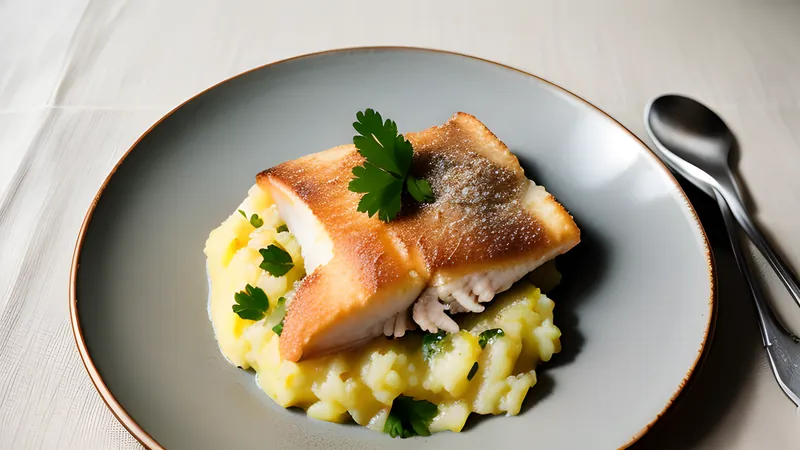
↓ Jump to recipeThere is a particular Icelandic pragmatism in a dish whose name translates, more or less, to “plucked fish”. The verb is doing real work there: plokka means to pull apart with your fingers, in flakes, off something that was already cooked yesterday and has been sitting in the fridge in a bowl with a plate on top of it. Plokkfiskur is what happens to Monday’s boiled cod on Tuesday.
That origin matters, because it explains everything about how the dish behaves. It is a leftovers dish that got so good it outgrew its leftovers. Icelandic canteens serve it. Restaurants in Reykjavík serve it with a straight face and charge properly for it. And the version you eat in someone’s kitchen is very often made from fish bought that morning specifically to be turned into a dish that pretends it was an accident.
Plokkfiskur: Icelandic Fish and Potato Mash
Ingredients
- 600 g skinless cod or haddock fillet, in large pieces
- 800 g floury potatoes (Maris Piper, King Edward or Rooster), peeled and cut into 4 cm chunks
- 700 ml whole milk
- 1 bay leaf
- 6 black peppercorns
- 1 large onion (about 200 g), finely diced
- 70 g unsalted butter, plus 40 g for the brown butter finish
- 45 g plain flour
- 1 tsp fine sea salt, plus more for the potato water
- 0.5 tsp ground white pepper
- 1 tbsp Dijon mustard
- 2 tbsp chopped fresh dill (optional)
- Dark rye bread, to serve
Method
- Put the potatoes in a pan of cold, well-salted water, bring to the boil and simmer for 15-18 minutes until a knife slides in with no resistance. Drain and leave in the colander to steam dry for 5 minutes.
- Meanwhile, bring the milk, bay leaf and peppercorns to a bare simmer in a wide pan. Slide in the fish, take the pan off the heat, cover, and leave for 8-10 minutes until the flesh flakes. Lift the fish out onto a plate and strain the milk into a jug — you need every drop.
- Melt 70 g butter in the empty pan over medium-low heat. Add the onion and a pinch of salt and cook for 8-10 minutes until soft and translucent, with no colour.
- Scatter over the flour and stir for 2 minutes until it smells biscuity. Add the warm poaching milk a ladleful at a time, whisking each addition smooth before the next. Simmer for 4-5 minutes until it coats a spoon thickly.
- Stir in the mustard, 1 tsp salt and the white pepper. Break the potatoes into the sauce with a fork or a masher — coarse lumps are correct.
- Flake the fish in large pieces and fold it through with a spatula, turning no more than five or six times. Warm through over low heat for 2 minutes. Taste and correct the salt.
- Melt the remaining 40 g butter in a small pan over medium heat and swirl for 3-4 minutes until the milk solids are hazelnut brown and it smells nutty. Pour it over the plokkfiskur, scatter with dill if using, and serve at once with dark rye bread.
The fish that built a country
To understand why Iceland has a national dish made of cod and potatoes, you need to understand that for most of its history the country had cod and very little else. Grain barely grew. The medieval Icelandic diet ran on fish, mutton, dairy and whatever the trading ships brought. Dried cod — harðfiskur, torn into strips and eaten with butter — was currency in the literal sense: fifteenth-century Icelandic accounts were kept in units of dried fish. English merchants sailed north for it in such numbers that the fifteenth century in Iceland is called the enska öldin, the English century.
Potatoes arrived embarrassingly late. The first successful Icelandic potato crop is usually credited to Björn Halldórsson, a priest at Sauðlauksdalur in the Westfjords, who got a harvest in 1758 after several failures and then wrote a farming manual telling everybody else how to do it. Icelanders were unenthusiastic for decades. The soil was thin, the summers short, and there was a general sense that a person who ate roots was a person who had run out of options. By the nineteenth century that resistance had collapsed, because potatoes did something no other crop in Iceland managed: they grew.
Plokkfiskur sits exactly at the junction of those two histories. Fish from a thousand years of fishing, potatoes from two hundred years of grudging cultivation, and a white sauce from the Danish culinary influence that came with several centuries of Danish rule. The béchamel is the giveaway — it is the Copenhagen kitchen arriving in the North Atlantic and being handed a bowl of cod.
Why the poaching liquor is the whole trick
Most bad plokkfiskur is bad in the same way: it tastes of flour and milk and has some fish in it. The fix is structural. You poach the fish in milk, and then you build the béchamel out of that same milk.
Cod is about 80% water, and it sheds a good deal of it during poaching, along with soluble proteins and free glutamate. That poaching milk is now a light fish stock wearing a dairy costume. Throw it away and you are making a sauce that has never met a fish. Use it and the sauce is seasoned from the inside.
The second thing that milk does is protect the cod. Poaching at a bare simmer — I take the pan off the heat entirely and let residual heat do the work — keeps the fish below the temperature at which its muscle fibres contract hard and squeeze out moisture. Cod goes from translucent to opaque at around 55-60°C, and that is where you want it to stop. Rolling milk will take it to 80°C and give you cotton wool.
Floury potatoes, coarse mash
Use a floury variety. Maris Piper, King Edward, Rooster — anything with a high starch content and low moisture. Waxy potatoes hold their shape and refuse to blend into the sauce, and you end up with cubes suspended in gravy.
Steam-drying the drained potatoes for five minutes is a step people skip and shouldn’t. Hot potato holds surface water; letting it sit in the colander lets that water leave as steam rather than diluting your sauce. It takes five minutes and costs nothing.
Then mash coarsely. A fork or a masher, in the pan of sauce, until it is broken up and no more. Plokkfiskur has texture — visible lumps of potato, visible flakes of fish. A food processor will turn the starch granules into glue and give you wallpaper paste. This is the one irreversible mistake in the recipe.
The brown butter
Traditional plokkfiskur is finished with melted butter poured over the top. I brown it. This is my one deviation and I will defend it.
Browning butter drives off its water and toasts the milk solids, which are mostly lactose and casein. Heat them past about 150°C and you get the Maillard reaction — the same chemistry that makes toast smell like toast — producing nutty, caramel compounds that plain melted butter simply does not have. Against a dish this pale and this gentle, that nuttiness is the contrast the whole bowl was waiting for. It takes four minutes.
Watch it. Butter goes from brown to burnt in about twenty seconds, and the tell is the smell turning sharp rather than nutty. Pull the pan off the heat while the solids are hazelnut-coloured; carryover heat will finish the job.
Getting the béchamel right
The sauce is a standard white roux thickened with the poaching milk, and it fails in three predictable ways.
It tastes of raw flour. You did not cook the roux long enough. Two full minutes of stirring after the flour goes in, until it smells of biscuits rather than of a paper bag. Flour is mostly starch wrapped in protein, and the heat has to break that structure down before it will thicken cleanly.
It went lumpy. You added the milk too fast. Add it a ladleful at a time and whisk each addition completely smooth before the next goes in — the first two ladles are the dangerous ones, because that is when the mixture is thick enough to seize. Once it is loose and pourable you can be careless.
It is too thick or too thin. The ratio here — 45 g flour to 700 ml liquid — gives a sauce that coats a spoon and then loosens further when the hot potato goes in. Potato drinks liquid. If yours looks perfect before the potato joins it, it will be stodgy afterwards; err on the loose side and let the mash tighten it.
One thing worth knowing: a flour-thickened sauce keeps thickening for several minutes after it looks done, because starch granules carry on swelling as long as they are hot. Judge it a shade thinner than you want.
Tips, substitutions and the honest limits
Fish. Cod and haddock are the standard. Haddock is slightly sweeter and flakes finer. Pollock works and is cheaper. Smoked haddock makes something closer to a Scottish cullen skink and is delicious, though at that point you have left Iceland.
Yesterday’s fish. If you genuinely have cooked cod left over, skip the poaching step, warm 700 ml milk with the bay and peppercorns, and build the sauce with that. The dish loses a little depth and gains its original purpose back.
Mustard. A tablespoon of Dijon divides Icelandic kitchens. It is common enough in Reykjavík home cooking, and it sharpens the sauce enough to stop it going flat. Leave it out and you will want more salt and more pepper to compensate.
Onion. Cook it slowly and take no colour. Browned onion is a loud flavour with strong opinions, and this dish wants quiet sweetness underneath the sauce.
Dill. Icelanders are split on it. I add it because the green cuts the richness, and because if you have dill in the fridge it is usually going to waste. Chives work the same way.
Make-ahead and storage. Plokkfiskur keeps three days covered in the fridge and reheats better than it has any right to — warm it gently in a pan with a splash of milk, stirring as little as possible. It freezes badly: the sauce splits and the potato goes grainy. Make what you will eat.
The case against. If you want a dish where the fish is the star, make something else — a fish pie with a cheddar mash crust keeps the pieces intact and the layers distinct. Plokkfiskur dissolves its fish into the mash on purpose. That is the point of it, and if that idea bothers you, no amount of technique will fix the disagreement.
What to serve with it
Dark rye. This is close to non-negotiable in Iceland, where plokkfiskur arrives with a slice of rúgbrauð — the dense, sweet, steamed rye baked slowly in a tin, or in the geothermal areas literally buried in hot ground for a day. Either an Icelandic steamed rye or a good Danish sourdough rye does the job: something dense enough to scoop with, sour enough to cut the butter, and heavily buttered on top of that.
Beyond bread, nothing. No salad, no vegetables, no garnish beyond the dill. Plokkfiskur is a bowl of mash and it is unembarrassed about it.
Variations worth trying
Some households fold in a handful of grated cheese and grill the top until it blisters — plokkfiskur í ofni, oven plokkfiskur. It is very good and slightly a different dish, closer to a gratin.
Others add a chopped hard-boiled egg, which sounds odd and works, giving little pockets of richness in the mash.
A version I ate in Akureyri had capers folded through it, maybe a tablespoon for four people, and the small sharp bursts against all that soft starch were the best argument for the dish I have encountered. Do it.
And in the Westfjords you will find versions built on salt cod that has been soaked for two days, which pushes the whole thing towards Iberia and gives a bowl with far more backbone. If you have ever made bacalhau à brás, you already know how that flavour behaves.
Make it once with fresh cod, coarse potatoes and brown butter, eat it with rye, and you will understand why a country with an enormous fishing fleet and a serious restaurant scene keeps coming back to yesterday’s leftovers.
Related Content