Plăcintă: The Moldovan Cheese Pastry
A stretched dough, salty brânză, and a coil that fits any pan you own
Contents
↓ Jump to recipeEvery country between Vienna and the Caspian has a pastry that is a thin stretched dough wrapped around a salty cheese, and every one of them will tell you theirs came first. Moldova’s is plăcintă, and it has a better claim than most, because the name is a straight inheritance from Latin.
Placenta in Roman cooking was a flat layered cake — Cato the Elder gives a recipe for it in De Agri Cultura, around 160 BC, involving sheets of dough, sheep’s cheese and honey, assembled in layers and baked. The Latin word came from the Greek plakous, meaning something flat. Romanian took placenta and made plăcintă, and it kept the shape, the cheese and the general idea for two thousand years. The medical sense of the English word “placenta” is the same root, applied much later by anatomists who thought the organ looked like a flat cake. They were naming it after the pastry.
Plăcintă: The Moldovan Cheese Pastry
Ingredients
- 400g plain flour
- 240ml warm water, at 40C
- 8g fine sea salt
- 2 tbsp sunflower oil, for the dough
- 120ml sunflower oil, for stretching and coiling
- 400g brânză de vaci, or dry curd cheese / drained ricotta
- 100g salty white brined cheese (feta or telemea), crumbled
- 2 medium eggs
- 20g fresh dill, finely chopped
- 4 spring onions, finely sliced
- 3g coarsely ground black pepper
- 30g unsalted butter, melted, to finish
- Soured cream, to serve
Method
- Put the flour and salt in a bowl. Add the warm water and the 2 tbsp of oil and mix to a shaggy dough with a fork, then turn out and knead for 8 minutes until smooth, soft and slightly tacky. It should feel much softer than a bread dough — this is deliberate.
- Divide into 4 pieces of about 165g and roll each into a tight ball. Put them in a bowl, pour over 60ml of the stretching oil, and turn each ball to coat completely.
- Cover and rest at room temperature for 60 minutes. The oil bath is the whole technique: it stops the surface drying and, over an hour, relaxes the gluten enough that the dough can be stretched paper-thin without tearing. Thirty minutes is not enough.
- Meanwhile make the filling. Drain the curd cheese in a muslin-lined sieve for 30 minutes if it is at all wet. Mash it with the crumbled brined cheese, the eggs, dill, spring onions and pepper. Do not add salt until you have tasted it — the brined cheese usually brings enough.
- Oil a large clean worktop generously — no flour at any point from here on. Take one ball and press it flat, then stretch it outwards with oiled palms, working from the centre to the edges, into a rough 45cm circle thin enough to read newsprint through. Small tears at the very edge are fine.
- Spread a quarter of the filling over the middle two-thirds of the circle, leaving the thin outer edge bare.
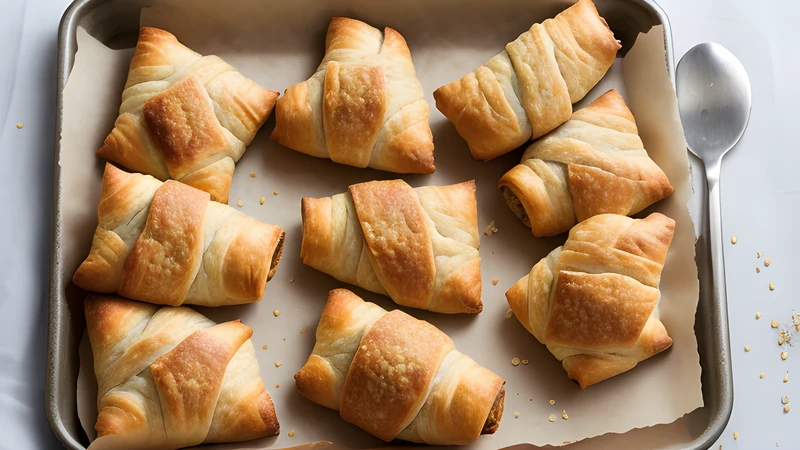
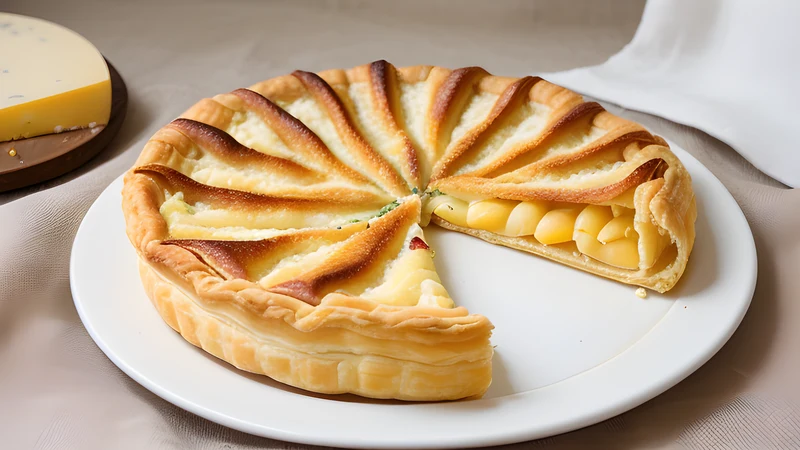
- Fold the bare edges inwards over the filling to make a rough square parcel, then roll the parcel into a loose rope and coil it into a flat spiral, tucking the end underneath. Press gently to a 15cm disc about 2cm thick.
- Repeat with the remaining 3 balls. Rest the coiled pastries for 10 minutes.
- Heat 1 tbsp of the remaining oil in a heavy 24cm frying pan over medium-low heat. Fry one plăcintă at a time for 6–7 minutes per side, covered for the first side, until deep golden with blistered dark patches and the filling is hot through.
- Brush each hot pastry with melted butter and rest for 3 minutes. Cut into wedges and serve warm with soured cream.
What Moldova does with it
Plăcintă exists throughout Romania, but it is Moldovan in the way that a thing can belong to a region without being exclusive to it — both Romanian Moldavia and the Republic of Moldova treat it as the everyday pastry, the thing sold from a hatch, the thing a grandmother produces without being asked.
The fillings are seasonal and the vocabulary is precise. Cu brânză is cheese, the version here, and the default. Cu varză is cabbage, slowly cooked down with onion, and it is the winter one. Cu cartofi is potato and dill. Cu mere is apple and it is a pudding. Cu dovleac is pumpkin, sweetened, and it is autumn’s. In spring you get cu urzici — nettles — or cu ştevie, sorrel, which is the one I would cross a city for.
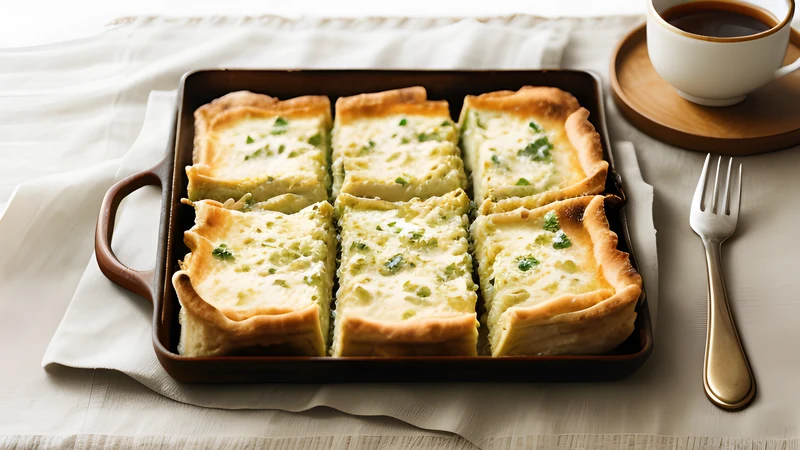
The shape varies more than the filling. The coiled spiral in this recipe is plăcintă învârtită, the twisted one, and it is the most common. There is also a folded square version, and a large tray-baked one cut into pieces. What holds constant is the dough: stretched by hand with oil, never rolled with flour.
The oil, and why there is no flour
This is the technique that separates plăcintă from every other pastry in a British kitchen, and it is worth being clear about because it goes against everything a rolling pin has taught you.
Gluten in a rested dough is a network of proteins that has been developed by kneading and then, given time, allowed to relax. Relaxed gluten stretches. Tense gluten springs back and then tears. The hour in oil does two things at once: it prevents the surface from forming a dry skin that would resist stretching, and it gives the network the time it needs to slacken.
Flour would ruin this. Dusting a worktop with flour works for a rolled pastry because you want the sheet to slide and release. Here you want the opposite — a little grip, so that as you push outwards with your palms the dough anchors and thins rather than sliding around in a lump. Oil gives you a slippery surface that still holds. It also lubricates the sheet as it thins, letting it slide over itself in the fold without welding.
The stretching itself is a matter of nerve. Press the ball flat, then work from the centre outwards with oiled palms and the backs of your fingers, turning as you go, letting gravity help by lifting the sheet over your knuckles. It will get frighteningly thin — you should genuinely be able to read through it — and it will hold, because it is soft and slack and oiled. The edge is always thicker; that is what you fold inwards.
The same logic runs through apfelstrudel and through the Balkan filo traditions. It is one of the oldest ways humans have found to make a dough thin without machinery.
The cheese, and the salt problem
Brânză de vaci is the base — fresh, unaged cow’s curd, mild and slightly sour. On its own it makes a bland filling, which is why the second cheese matters.
Traditionally that is telemea, a Romanian brined sheep’s or cow’s cheese that is close enough to feta that feta is a fair substitute. It brings salt, and the salt is the flavour. My ratio is 400g curd to 100g brined, which lands the filling somewhere around the right salinity without a single grain of added salt. Taste before you season, because feta varies enormously — some brands are ferocious and some are almost sweet.
The eggs bind. Two in 500g of cheese is enough to set the filling into something sliceable rather than something that runs out of the wedge onto the plate. The dill and spring onions are the Moldovan signature and they are not garnish quantities — twenty grams of dill is a whole supermarket packet, and it should read clearly.
Drain the curd if it is wet. A wet filling steams inside the pastry, softens the base from within, and gives you a pale, floppy underside no matter how long you fry it.
The water temperature, and the softness
Two details in the dough do more than they look like they should.
The water goes in at 40C. Warm water hydrates flour faster and more completely than cold, which means the gluten network forms sooner and has longer to relax within the same hour. It also keeps the dough soft and pliable through the kneading rather than tightening as you work. This is the opposite of what you want in a bread dough destined for a long cold ferment, and exactly right for a dough you intend to abuse by hand within ninety minutes.
The hydration is 60%, which is unremarkable on paper, plus two tablespoons of oil worked in from the start. That internal oil is doing a shortening job — coating some proportion of the flour proteins and capping how strong the network can get. A plăcintă dough with no oil in it kneads up too elastic and fights the stretch. A dough with too much fries greasy and refuses to hold a coil. Two tablespoons in 400g of flour is the balance I have settled on.
Knead to smooth and stop. Eight minutes is plenty, and there is no windowpane test here — you want a dough that is developed enough to hold together across 45cm and no more developed than that.
Getting ahead of it
The dough balls will sit in their oil bath, covered, for up to four hours at room temperature, and they improve for the first two. Beyond that the gluten goes past relaxed into slack, and the sheet thins unevenly and tears in the middle.
The filling holds three days in the fridge and is better on day two, once the dill has had time to permeate the curd. Make it the night before and the whole thing becomes a forty-minute job.
Shaped, uncooked coils freeze well on a tray, then bagged. Fry from frozen over low heat with a lid on for 10 minutes a side. This is the version I actually rely on, because four plăcinte is more than two people should eat and the shaping is the part you do not want to repeat.
Where it goes wrong
The dough tears into holes while stretching. Under-rested, or you rushed the centre. Patch it, or give the remaining balls another twenty minutes in the oil.
Springs back and refuses to thin. The gluten is tense. This is entirely a time problem and entirely fixable by waiting.
Pale, soft, greasy base. Pan too cool, or a wet filling. Medium-low means the surface takes six or seven minutes to colour; if it is browning in three, you are too hot and the centre will be cold.
Burnt outside, cold filling. Too hot, and no lid on the first side. The lid traps steam and heats the filling through while the base colours.
Filling leaks out and burns in the pan. The coil was too loose, or overfilled. A quarter of the filling per pastry looks stingy on a 45cm sheet and is correct.
Tough, chewy pastry. You used flour to stretch, or the dough was too firm to begin with. It should feel almost uncomfortably soft when you finish kneading.
Frying, baking, and eating
The pan is traditional and I would keep it. A dry-ish pan with a tablespoon of oil gives you blistered, uneven, dark-gold patches where the coil’s surface touches metal, and the contrast between those crisp spots and the softer folds is most of the pleasure. Covering the first side is a trick I use to guarantee the filling is hot before the base is dark.
Baking works and gives a different result: 200C fan for 25 minutes, brushed with oil, produces something more uniform and drier, closer to a pie. It is easier to do four at once and it is less good.
The butter brush at the end is not optional. It softens the crust slightly, adds the dairy note the sunflower oil cannot, and it is what Moldovan cooks do without thinking about it.
Eat warm, with soured cream, in wedges, with your hands. It is lunch, it is a snack, and with a bowl of soup beside it — the sour Romanian meatball soup is the natural pairing, the sourness cutting straight through the fat — it is dinner. Cold plăcintă the next day, reheated in a dry pan for three minutes a side, is genuinely good. The microwave turns it to leather in ninety seconds, so do not.
Related Content