Pkhali: Georgian Walnut-and-Beet Pâté
Roasted beetroot pounded into walnut, garlic and blue fenugreek, rolled into crimson balls
Contents
↓ Jump to recipeEvery Georgian table starts cold. Before the khinkali, before the roast, before the third toast, there is a row of small dishes that have been sitting out for an hour getting better: pickles, cheese, herbs on a plate to be eaten by the fistful, and a plate of little coloured balls that look like petits fours and taste like nothing you would guess. Those are pkhali, and the crimson ones are beetroot.
Pkhali: Georgian Walnut-and-Beet Pâté
Ingredients
- 800g raw beetroot (about 4 medium), scrubbed, tops trimmed
- 2 tbsp sunflower oil
- 150g shelled walnut halves
- 4 fat garlic cloves, peeled
- 1 small onion (about 100g), very finely diced
- 25g fresh coriander, leaves and thin stalks
- 1 1/2 tsp dried blue fenugreek (utskho suneli)
- 1 tsp dried marigold petals (Imeretian saffron), or 1/4 tsp turmeric
- 2 tsp ground coriander seed
- 1/4 tsp ground cinnamon
- 1/2 tsp dried chilli flakes
- 2 tbsp red wine vinegar
- 1 1/4 tsp fine salt
- 1/2 tsp coarsely ground black pepper
- Seeds of 1/2 pomegranate (about 80g), to serve
- A few small coriander leaves, to serve
Method
- Heat the oven to 200C fan. Rub the whole beetroot with the oil, wrap each tightly in foil, sit them on a tray and roast for 60-75 minutes, until a knife slides into the centre with no resistance.
- Unwrap and leave until cool enough to handle, then rub the skins off with a piece of kitchen paper. Trim away any dry or fibrous ends.
- Coarsely grate the beetroot into a bowl, or pulse it briefly in a food processor. Tip it into a sieve set over a bowl and press firmly with the back of a spoon for 1 minute to drive out excess liquid. You should get 3-4 tbsp of juice. Keep it.
- Pound the walnuts and garlic together in a mortar, in batches, until you have a coarse, damp, oily paste. To use a food processor instead, pulse in 1-second bursts and stop the moment the mixture looks glossy.
- Add the fresh coriander to the walnuts and pound or pulse until it is finely broken down and the paste turns khaki-green.
- In a large bowl, combine the walnut paste, drained beetroot, diced onion, blue fenugreek, marigold, ground coriander, cinnamon, chilli flakes, vinegar, salt and black pepper.
- Mix hard with a spoon or your hand for 1 minute until the mixture holds together in a single mass. If it crumbles, add the reserved beetroot juice 1 tsp at a time until it binds.
- Cover and chill for at least 1 hour, and up to 24, so the flavours settle and the walnut oil firms up.
- Taste and correct: it should be sharp, garlicky and salty enough to make you want bread. Add up to 1 tsp more vinegar and 1/4 tsp more salt as needed.
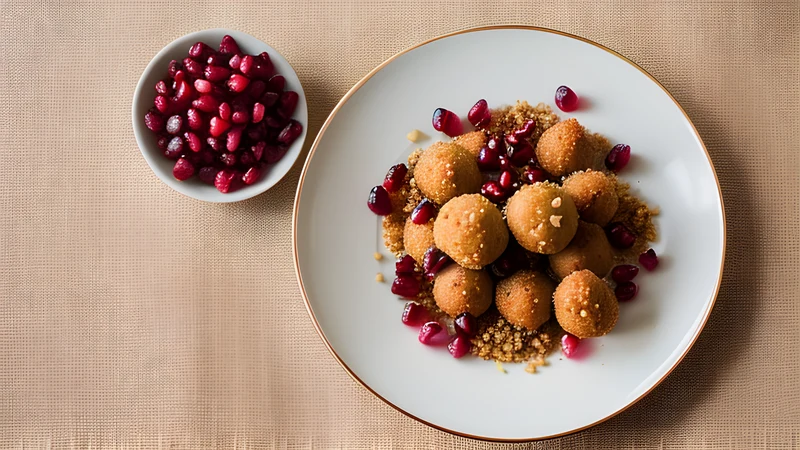
- Roll into 16 balls of about 45g each, using damp hands. Flatten the tops slightly, press a few pomegranate seeds and a coriander leaf into each, and serve cool with flatbread.
One technique, a dozen vegetables
Pkhali describes a method rather than a dish. You take a vegetable, cook it until it is completely soft, drive out its water, and pound it into a paste of walnuts, garlic, coriander and the Georgian spice set. That is it, and it works on almost anything green or root.
The canonical set runs to spinach (ispanakhis pkhali, the dark green one), beetroot (charkhlis pkhali, this one), leek, cabbage, green beans, aubergine and, in spring, nettle. In western Georgia the same thing is called mkhali. On a restaurant plate they arrive as a trio of coloured domes — green, crimson, white — which is charming and also slightly misleading, because in a home kitchen you make one, in quantity, and eat it for three days.
The word comes from the same root as pkha, an old term for a leaf vegetable, which tells you where the technique started. Beetroot pkhali is a relative newcomer to the family and has the advantage of being the sweetest, which makes it the one that converts people.
The supra, and why cold food matters
A Georgian feast is a supra, and it runs under a tamada, a toastmaster who controls the pace of the evening through a sequence of long, formal toasts — to peace, to the dead, to the children, to whoever is at the table. The toasts take hours. Food therefore has to survive hours, which is why so much of the Georgian repertoire is designed to be eaten at room temperature: the pkhali, the cold walnut sauce of satsivi, the pickles, the cheese, the bread. Hot dishes arrive and are dealt with; the cold table stays, and gets picked at all night.
This matters practically. Pkhali is designed to be made ahead. It is better on day two than on the day you make it, because the walnut oil, the garlic and the vinegar need time to stop being three separate ingredients.
Roast the beetroot
Georgian recipes almost all say boil. I roast, and the difference is not subtle.
A beetroot is around 88% water and about 8% sugar, mostly sucrose. Boil it and you lose sugar and earthy geosmin compounds into the water and gain more water on the way in, so you end up with a wet, mild, slightly watery root that then has to be squeezed dry. Roast it wrapped in foil at 200C and it steams in its own moisture: nothing leaches out, some water evaporates, and the sugars concentrate and begin to caramelise at the edges. The colour deepens. The flavour goes from “beetroot” to something closer to a very savoury jam.
That concentration matters here because pkhali has 2 tbsp of vinegar and four cloves of raw garlic in it, and it needs sweetness to push against. Boiled beetroot loses that argument.
Sixty to seventy-five minutes at 200C fan for a medium beetroot. Test with a knife rather than a skewer — a skewer will slide into an undercooked beetroot and lie to you. Rub the skins off with kitchen paper while they are warm; they come away in sheets, and they will not come away at all once cold.
Squeeze the grated beetroot anyway. Even roasted, it carries enough moisture to slacken the paste, and you want the walnut oil doing the binding.
Pounding walnuts, and why the mortar wins
The whole Georgian walnut tradition rests on one physical fact: a walnut is about 65% oil, and if you break the cell walls the oil comes out and binds everything it touches. There is no butter in pkhali, no cream, no oil poured from a bottle. The 150g of walnuts is the fat, the protein and the glue.
A mortar and pestle does this better than a machine, and it is worth ten minutes of your arm. Pounding crushes and smears, rupturing cells progressively and letting the oil bleed out into a paste while some of the nut stays coarse. A food processor chops — it hits the nuts with a blade at speed, and it goes from “coarse crumb” to “walnut butter” in about two seconds of over-enthusiasm. Once the nuts have gone to butter, all the oil has come out at once, the mixture turns greasy and slick, and the pkhali will bead oil on the plate.
If you use the processor, pulse in one-second bursts and stop at the point where the crumb just starts to look glossy. Add the garlic first so it gets crushed rather than left in chunks.
The same technique thickens lobio and every walnut sauce in the country, so the arm work transfers.
The spices
Blue fenugreek (utskho suneli) is the dried ground pod and seed of Trigonella caerulea, grown in the Caucasus and almost nowhere else nearby. It tastes of hay, maple and celery leaf, like fenugreek seed with the bitterness removed. Half quantity of ordinary ground fenugreek stands in.
Marigold petals (kartsakhura, sold as Imeretian saffron) are ground Tagetes florets, used for a warm ochre colour and a mild resinous scent. In beetroot pkhali the colour is invisible under all that crimson, and the aroma is the reason it stays in. A quarter-teaspoon of turmeric substitutes for it badly but acceptably.
Both live in khmeli suneli, the standard Georgian dried blend; 2 tsp of that can replace the fenugreek, marigold and ground coriander here.
Raw garlic, and plenty of it. Four cloves for 800g of beetroot sounds aggressive and is correct — the allicin mellows considerably over the hour in the fridge, and pkhali made with two cloves tastes like a beetroot salad that has lost its nerve.
The onion problem
Every pkhali recipe includes raw onion and most of them under-specify it, which is how you end up with a pâté full of hard white shards. The onion has to be diced to something close to 2mm — smaller than you think is reasonable, small enough that no single piece registers as a piece. At that size it disappears into the paste and contributes only its sulphurous sweetness. At 5mm it stays crunchy, and a crunchy fragment in an otherwise silky mouthful reads as a mistake.
There is a shortcut that Georgian cooks use and that I have adopted: grate the onion on the fine side of a box grater and squeeze the pulp in your fist, discarding the juice. You lose some pungency and gain a purée that vanishes completely. It is the safer route if your knife skills are having an off day.
Some western Georgian versions skip the raw onion entirely and soften it first in a spoonful of oil. The result is sweeter and rounder, and it loses the bite that makes the cold plate interesting. I keep it raw and dice it small.
Getting the texture right
Finished pkhali should hold a shape without being stiff — think of a firm pâté, or a well-made falafel mixture. Squeeze a walnut-sized lump in your fist: it should hold the impression of your fingers cleanly and stay together when you open your hand.
If it slumps, the beetroot is still carrying water. Tip the mixture back into the sieve and press again; ten minutes of draining fixes most of it.
If it cracks and falls apart, add the reserved beetroot juice a teaspoon at a time. Resist the urge to add oil — poured oil sits on the surface and makes the pkhali greasy, whereas the beetroot juice carries sugar and acid and binds without slickness.
The hour in the fridge does more than most people expect. Walnut oil is liquid at room temperature and semi-solid at 4C, so a chilled pkhali firms up considerably. A mixture that looks slightly too loose in a warm kitchen will roll perfectly after an hour cold, then soften again on the plate to exactly the right consistency. Judge the texture cold and serve it cool rather than fridge-cold — twenty minutes out is about right.
What can go wrong
Oily, beaded paste. The walnuts went to butter. Pound, or pulse and stop early.
Wet, slumping balls that will not hold. The beetroot was not squeezed. Sieve and press.
Dry, crumbly mixture. Over-squeezed, or the walnuts were old and dry. Add the reserved beetroot juice a teaspoon at a time.
Bitter. Old walnuts. Walnut oil goes rancid fast, and supermarket walnuts that have sat on a warm shelf will be bitter and stale before you open the bag. Buy from a shop with turnover, taste one before you commit, and keep them in the freezer.
Bland. Under-salted and under-soured. Correct after the chill, when the flavours have settled — pkhali tasted warm always tastes flatter than it will.
Serving, keeping and the other colours
Roll them just before serving with damp hands, or, if that feels fussy, spread the whole lot in a shallow bowl, spike the top with a spoon and scatter the pomegranate over. Pomegranate seeds are the standard finish across the pkhali family, and they earn it: bursts of sharp juice against a dense, oily paste.
Eat with bread. A Georgian table would have shoti, the canoe-shaped bread from a clay oven; a warm flatbread does the job. It keeps four days covered in the fridge and does not freeze — the walnut emulsion breaks and the beetroot weeps.
Spinach pkhali. 1kg of spinach, wilted, squeezed absolutely dry (you will be shocked how little remains), then the identical walnut base. This is the classic, and the one you meet first.
Leek. 800g of leeks, sliced and simmered 15 minutes until surrendering, squeezed, then the same base. Sweet and mild.
Aubergine. Roast 4 aubergines whole at 220C for 45 minutes until collapsed, scrape out the flesh, drain in a sieve for an hour. Smoky and the richest of the lot.
Make two colours if you are feeding people, and put them next to each other on a white plate. If you want to see what the same beetroot-and-walnut pairing does in a completely different register, beetroot with goat’s cheese and candied walnuts takes it sweet and Western. Pkhali takes it sour, garlicky and cold, and I know which one I would rather find waiting on the table.
Related Content