Baklava: Pistachio, Honey, and Rose Water
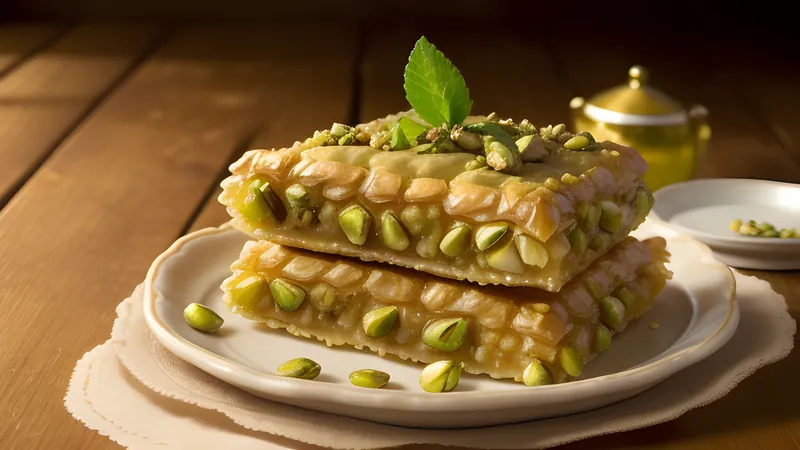
Crisp filo, green pistachios, fragrant rose syrup
Contents
↓ Jump to recipeBaklava is one of those sweets that looks impossibly intricate and tastes like a special occasion, but is in truth mostly an exercise in patience and butter. There is no tricky technique, no thermometer, no resting dough overnight. There is only filo pastry, ground nuts, a great deal of melted butter, and the single most important rule in the whole enterprise: cold syrup goes onto hot pastry, never the other way round. Get that one thing right and you are most of the way to baklava that shatters when you bite it.
Baklava: Pistachio, Honey, and Rose Water
Ingredients
- 400g shelled unsalted pistachios
- 2 tbsp caster sugar (for the filling)
- 0.5 tsp ground cardamom
- 1 x 270g pack filo pastry (about 12 large sheets)
- 250g unsalted butter, melted
- 300g caster sugar (for the syrup)
- 250ml water
- 150g honey
- 1 tbsp lemon juice
- 1.5 tbsp rose water
- 1 strip lemon peel
- Extra chopped pistachios, to garnish
Method
- Make the syrup first: simmer the sugar, water, honey, lemon juice and lemon peel for 10 minutes, take off the heat, stir in the rose water and leave to cool completely.
- Pulse the pistachios with the 2 tbsp sugar and the cardamom until coarsely ground, keeping some texture.
- Brush a 20x30cm baking tin with melted butter and lay in a sheet of filo, brushing each with butter, until you have used half the sheets.
- Spread the pistachio mixture evenly over the layered filo.
- Layer the remaining filo on top, buttering every sheet, and press down gently.
- Using a sharp knife, cut all the way through into diamonds before baking.
- Bake at 170C fan for 45 to 50 minutes until deep golden and crisp throughout.
- Pour the cold syrup evenly over the hot baklava the moment it leaves the oven, then leave several hours or overnight to soak before serving.
A sweet with a contested birthplace
Few desserts are fought over quite so fiercely as baklava. Turkey, Greece, the Levant, Iran, the Balkans, and much of the former Ottoman world all lay claim to it, and the truth is that it belongs to all of them in slightly different dress. The version layered with walnuts and cinnamon is common in Greece and the Balkans; the pistachio version, paler and greener and more perfumed, is the pride of Gaziantep in southern Turkey, where the local pistachios are famous. What everyone agrees on is the architecture: tissue-thin pastry, ground nuts, butter, and a soaking syrup that turns the whole thing from crisp to luscious.
Gaziantep’s claim is now more than local pride. In 2013, Antep Baklavası became the first Turkish product ever to be granted a European Union Protected Geographical Indication, meaning that only baklava made in Gaziantep, with Antep pistachios, local clarified butter and hand-rolled yufka, can carry that protected name. The city’s baklava-making has since been recognised as part of its intangible cultural heritage. The layered-pastry technique itself is older than the pistachio version — the modern form is usually traced to the Ottoman kitchens of the eighteenth and nineteenth centuries — but Gaziantep is where it reached its pistachio-green peak. Home baking with shop-bought filo will never match a Gaziantep master rolling yufka you can read newsprint through, and that is fine; the principles are identical and forgiving enough to give you something excellent.
A note on the nuts: use raw shelled unsalted pistachios, not the salted roasted sort, and pulse rather than blitz them so you keep a coarse, uneven texture with real bite. Ground too finely they turn to a dense paste that packs down and steams under the pastry instead of staying loose and crunchy. The two tablespoons of sugar ground in with them help keep the nuts from clumping and season the filling gently.
The clever twist: rose water and cardamom
My twist here is to lean into the fragrant, rather than the merely sweet. A lot of baklava is one-note sugary; this one is built around perfume. I grind a little cardamom into the pistachios, which adds a warm, almost floral background, and I finish the syrup with rose water stirred in off the heat so its scent survives. The result is a baklava that smells of a Damascus pastry shop, all roses and toasted nuts and honey, rather than just of sugar.
A word on rose water: it is potent, and bad rose water tastes of soap. Buy a good one, add it carefully, and stir it in only once the syrup has come off the boil, because heat drives off the very aroma you want to keep. A tablespoon and a half is generous but not overwhelming; start with one if you are nervous and you can always add more. Cardamom rewards the same care — grind whole green pods and sieve out the papery husks, or use freshly ground seeds, rather than a tired pre-ground jar that has lost its oils. If you love that perfumed register, the same rose-and-pistachio logic runs through my pistachio and rosewater semifreddo, where the scent is folded into cream instead of syrup.
Working with filo
Filo intimidates people, and it needn’t. The two rules are: keep it covered with a damp tea towel while you work so it does not dry and crack, and butter every single sheet without skipping any. The butter is not optional richness; it is the thing that makes the layers separate and crisp instead of fusing into a doughy slab. Work quickly, do not fuss over the odd tear (it disappears once layered), and use a soft pastry brush so you do not drag the delicate sheets.
Lay down half your sheets, buttering as you go, spread the nut mixture evenly, then layer the rest on top. Press the whole thing down gently to compact it.
Butter, and why clarified is better
The 250g of butter here is doing structural work, not just adding richness, so it repays a small extra effort. If you can, clarify it: melt it slowly, skim the white foam from the top, and pour off the clear golden fat, leaving the milky solids behind in the pan. Those milk solids are what burn and turn bitter during the long, low bake, and they hold water that stops the layers crisping fully. Clarified butter — effectively the same as the local sadeyağ used in Gaziantep — gives a cleaner flavour and a shatteringly crisp result. Whole melted butter works and is what most home bakers use; just keep the oven at a steady 170C fan so it does not catch. Brush generously but not so heavily that butter pools in the tin. Frozen filo is fine and often better than fresh, since it is sold in reliable, even sheets; thaw it fully in the fridge overnight so it unrolls without cracking, and bring it to room temperature before you start.
Cut before you bake
This is the step people forget. You must cut the baklava into its diamonds or squares before it goes in the oven, slicing all the way down to the base with a sharp knife. Once it is baked, the pastry is far too brittle to cut cleanly, and trying will shatter the lot. Cutting beforehand also lets the syrup soak in along every edge.
Bake it low and slow until it is a deep, even gold all the way through, not just on top. Underbaked baklava stays pale and goes soft instead of crisp. If the top is browning faster than the middle is cooking, lay a sheet of foil loosely over it for the last fifteen minutes; you are trying to dry and crisp every layer, which takes time, and rushing it with a hotter oven only colours the surface while leaving the centre doughy. Rotate the tin once halfway through if your oven has hot spots.
The crucial soak
The moment it comes out of the oven, blistering hot, pour the completely cold syrup all over it. You will hear it hiss and crackle, which is the sound of success. The reason this works is a matter of physics as much as tradition: hot, crisp pastry has open, dry layers that wick cold syrup in by capillary action while the butter fat stays firm enough to keep each sheet distinct. Pour hot syrup onto hot pastry, or cold syrup onto cold, and the fat softens and the layers glue together into a soggy, greasy slab. The temperature gap is the whole trick. Then comes the hardest part: leave it alone. Several hours at minimum, overnight ideally, so the syrup distributes evenly and the layers settle. Scatter with extra chopped pistachios before serving — a fine dusting of ground pistachio over the diamonds is the classic Gaziantep finish — and serve at room temperature with strong coffee or mint tea, cutting the sweetness with the bitterness of the drink.
If your syrup is too thin it will make the pastry soggy; too thick and it will not soak in, sitting on top as a sticky glaze. Ten minutes of gentle simmering with the given quantities lands it about right — the consistency of runny honey when cooled. Do not stir it hard while it boils or you risk crystallising the sugar; a gentle swirl of the pan is enough.
Keeping and variations
Baklava is one of the few desserts that genuinely improves after a day or two, as the syrup continues to mellow into the pastry, so it is an excellent thing to make ahead. Store it loosely covered at room temperature rather than in the fridge, which dulls the crispness and firms the syrup unpleasantly. It will keep happily for the best part of a week. It also freezes well before syruping: bake, cool, freeze the unsyruped tray, then reheat and douse with cold syrup on the day.
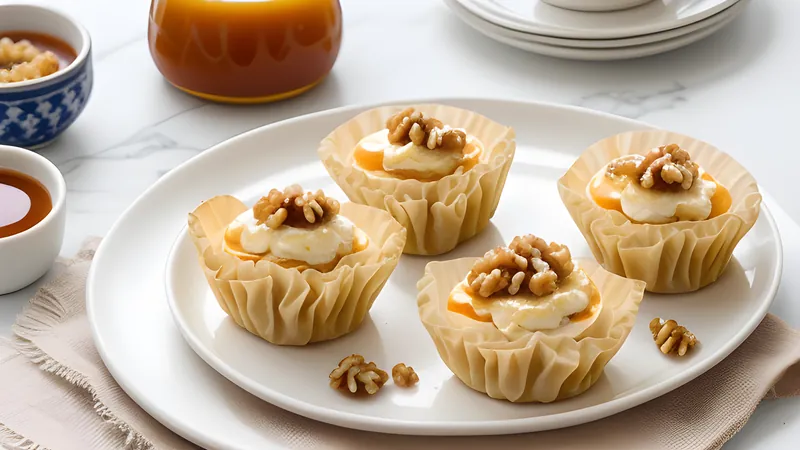
If you want to vary it, walnuts make a more rustic, traditional Balkan filling, while a half-and-half mix of pistachio and almond is lovely and slightly cheaper. A pinch of cinnamon in the nuts, or a little orange-blossom water in place of some of the rose, both nudge it in delicious new directions without losing the essential character. For more of the honey-and-nut register, try my honey and ricotta phyllo cups with walnuts, which use the same filo but skip the long soak.
Related Content