Pistachio and Rosewater Semifreddo
All the glamour of ice cream, none of the churning
Contents
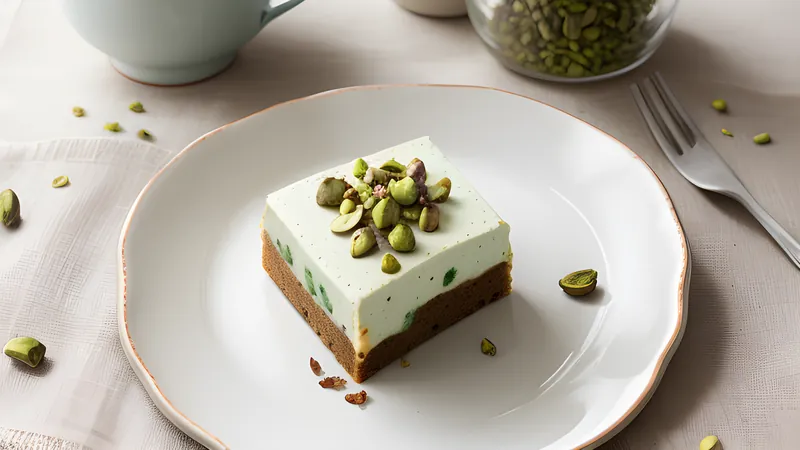
↓ Jump to recipeSemifreddo is a sort of magic trick. It gives you the cool, creamy hit of ice cream with none of the equipment and none of the churning, because the air is whipped in by hand instead of beaten in by a machine. The result is lighter than ice cream, almost mousse-like, and it slices into clean wedges straight from the freezer without that brick-hard chill. Flavoured with ground pistachios and a whisper of rosewater, it tastes like the inside of a very good Middle Eastern sweet shop, and the small clever twist is using the nuts both ground and chopped so you get perfume and crunch in every slice.
Pistachio and Rosewater Semifreddo
Ingredients
- 150g shelled unsalted pistachios, plus extra to decorate
- 4 large eggs, separated
- 150g caster sugar
- 300ml double cream
- 1.5 tsp rosewater (or to taste)
- 1 pinch of fine salt
- 0.5 tsp lemon juice
- Dried rose petals, to decorate (optional)
Method
- Line a 900g loaf tin with cling film, leaving plenty of overhang to fold over the top later.
- Blitz 100g of the pistachios in a food processor to a fairly fine meal, then roughly chop the rest and set aside.
- Whisk the egg yolks with 75g of the sugar until pale, thick and tripled in volume.
- In a separate bowl, whisk the double cream to soft peaks, then fold in the pistachio meal and rosewater.
- In a clean bowl, whisk the egg whites with the salt and lemon juice until foamy, then add the remaining 75g sugar a little at a time, whisking to a glossy, soft-peak meringue.
- Fold the yolk mixture into the pistachio cream, then fold in the meringue in two or three additions, keeping the mixture as light as possible.
- Pour into the lined tin, scatter over the chopped pistachios, fold the cling film over and freeze for at least 6 hours or overnight.
- To serve, lift out using the cling film, peel it away, slice with a warm knife and scatter with rose petals and extra pistachios.
A frozen pudding with two homelands
Semifreddo, meaning simply half-cold in Italian, is the country’s elegant answer to the question of how to make a frozen dessert without an ice cream maker. The technique of folding whipped cream and a meringue or whipped-egg base together, then freezing it, creates a stable mixture full of air that never sets rock solid. It is a fixture of Italian restaurant menus, often flavoured with hazelnut, coffee or amaretti, and served in neat slices with a coulis.
The science behind that texture is worth understanding, because it tells you why the recipe is built the way it is. Plain frozen cream sets into a solid block; the ice crystals grow large and the fat firms up hard. What keeps semifreddo scoopably soft is the air folded in and the sugar dissolved through it. Air pockets interrupt the ice crystals so they never link up into one dense mass, and sugar lowers the freezing point of the water in the mixture, so it stays a fraction below fully solid at freezer temperature. That is the same principle churned ice cream relies on; semifreddo just gets there by hand, which is why the folding is everything.
The pistachio and rosewater pairing, though, reaches further east. Pistachios and roses are the defining duo of Persian and broader Middle Eastern confectionery, the heart of everything from Turkish delight to the syrup-soaked semolina cakes of the Levant. The same combination powers the pistachio, honey and rose water baklava of Gaziantep and the perfumed sponge in my pistachio and rose water cake. Bringing that combination into an Italian technique feels like a small act of culinary diplomacy, and it works because both traditions prize the same things: richness, restraint and a love of perfumed sweetness. The pale green of good pistachios against scattered rose petals also happens to be one of the prettiest sights you can put on a plate.
Ingredients that matter
Use shelled unsalted pistachios and grind them fresh — pre-ground pistachio meal oxidises and dulls on the shelf, losing the green oils that carry the flavour. Buy the best rosewater you can find; a good Lebanese or Iranian one is worth the extra pound, because cheap supermarket versions are often mostly water and you will end up adding so much to get the scent that it tips into soap. The double cream should be full-fat, at least 48% fat, so it whips stably and holds air. Four large eggs, separated, give you both the yolk base and the meringue.
How it comes together
There is no cooking here at all, just careful folding, so the whole thing rests on keeping air in the mixture. You build three separate elements and combine them gently. First, whisk the egg yolks with 75g of the sugar until they are pale and thick enough to leave a ribbon trail, roughly four to five minutes with an electric whisk. Second, whip the cream to soft peaks — stop while it still slumps, because over-whipped cream turns grainy and folds in as lumps — then fold through the pistachio meal and the rosewater. Third, whisk the whites with a pinch of salt and half a teaspoon of lemon juice until foamy, then add the remaining 75g sugar a little at a time to make a glossy, soft-peak meringue. The lemon juice and salt help stabilise the whites so they hold their volume.
The folding is where care matters. Bring the yolk base and the pistachio cream together first, then add the meringue in two or three goes, using a large metal spoon or spatula and a light hand, turning the bowl as you cut down and lift through. You are trying to keep the bubbles intact, so stop the moment it looks combined; every extra stir knocks out air and moves you closer to an icy block. Pour into a cling-film-lined loaf tin, scatter the chopped pistachios through the top for texture, fold the overhang over and freeze for at least six hours, ideally overnight.
What can go wrong, and why
Three failures account for almost every disappointing semifreddo. The first is deflating the mixture by over-folding, which gives you something dense and hard rather than airy — fold less than you think you need to. The second is under-dissolving the sugar in the meringue, which leaves a faint grittiness once frozen; add the sugar slowly and whisk until the meringue feels smooth, not gritty, when you rub a little between finger and thumb. The third is too much rosewater. It varies wildly in strength, and too much tastes of soap and old pot pourri. Start with a teaspoon, taste the cream before the meringue goes in, and build up cautiously. You want a fragrance that arrives a beat after the pistachio, not a perfume counter walking into the room ahead of it.
Getting the pistachios right
Salted, roasted cocktail pistachios will not do here — the salt fights the sugar and the roasting mutes the fresh green flavour you are after. Buy raw shelled unsalted pistachios. If they have their thin papery skins on and you want the brightest colour, blanch them: pour over boiling water, leave for a minute, drain, and rub them in a tea towel to slip off the skins. It is fiddly and you can skip it — the flavour is the same either way — but skinned nuts give a cleaner, more vivid green once ground. Grind 100g fairly fine for the body of the semifreddo and keep the remaining 50g roughly chopped for the scatter, so you get both the perfume of the meal and the crunch of the pieces. Toasting the nuts lightly before grinding deepens the flavour, though it costs you a little of the green; I usually leave them raw for colour and let the freshness carry it.
Tips and make-ahead
This is the ultimate dinner-party pudding because it has to be made in advance, ideally a day ahead. It keeps happily in the freezer for up to a month, well wrapped, so you can make it whenever you have a spare half hour. Take it out about five minutes before slicing so it softens just enough to cut cleanly with a warm knife dipped in hot water and wiped between slices.
If raw eggs are a concern, this is not the recipe for very young children, the elderly, or anyone pregnant; use a pasteurised egg product if you want the same texture safely. For a nut-free version, the same method works beautifully with coffee or with crushed amaretti, though you lose the signature colour. Swapping the rosewater for orange-blossom water nudges the whole thing towards North Africa; a fold of crushed raspberries and a little of their juice sends it somewhere fruitier and sharper.
Serve it simply. A drizzle of honey, a few pomegranate seeds, a scatter of crushed pistachio praline, or a sharp raspberry coulis all cut through the richness, and a little flaky sea salt on top plays the sweetness up beautifully. I like it with nothing more than extra chopped pistachios and a scattering of dried rose petals, letting the semifreddo do the talking. A few buttery shortbread fingers or a crisp tuile on the side give welcome crunch against all that creaminess, and a tiny glass of dessert wine would not go amiss either.
A word on the tin, too. A 900g loaf tin gives you the classic terrine shape that slices into neat rectangles, but any freezer-safe container works — a metal tin freezes faster and more evenly than a thick ceramic dish, which matters because slower freezing lets larger ice crystals form. For individual portions, spoon the mixture into a lined muffin tray or small ramekins and turn them out onto plates; they will be ready sooner, in around four hours, since there is less depth to freeze through. Whatever you use, get it into the coldest part of the freezer and leave it undisturbed, because refreezing a partly softened semifreddo coarsens the texture.
One last practical note: line the loaf tin carefully and leave a generous overhang of cling film, because that overhang is how you lift the whole frozen block out cleanly when the time comes. It looks like you laboured for hours over a churn you do not own, which is exactly the impression a good frozen pudding should give.
Related Content