Pirozhki: The Russian Filled Buns
An enriched yeast dough, a cabbage-and-egg filling, and the pinched seam that decides everything
Contents
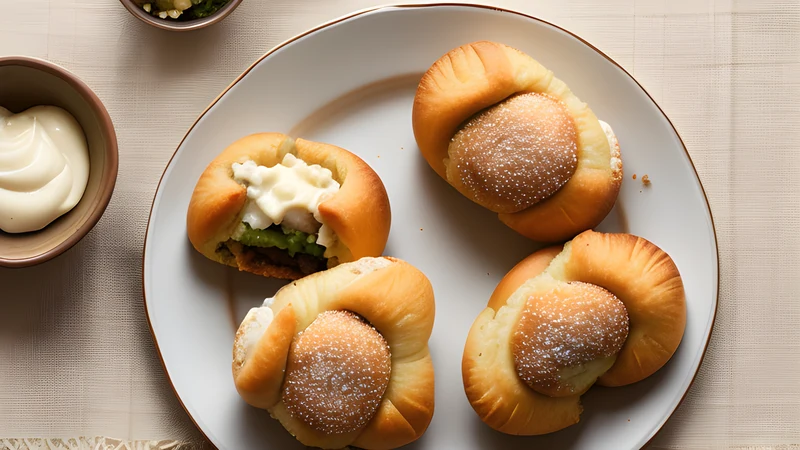
↓ Jump to recipeA pirozhok fails at the seam. The dough puffs in the oven, the seam that was pinched half-heartedly opens, and the filling boils out onto the tray and burns. You are left with a bun that has emptied itself, and there was nothing wrong with either the dough or the filling.
Which is a good way in, because the seam tells you what pirozhki actually are: a bread problem disguised as a filling problem. Once you accept that, everything else about them becomes straightforward.
Pirozhki: The Russian Filled Buns
Ingredients
- 500g strong white bread flour
- 7g fast-action dried yeast
- 40g caster sugar
- 8g fine sea salt
- 200ml whole milk, warmed to 35C
- 2 large eggs, beaten
- 60g unsalted butter, softened
- 1 egg yolk beaten with 1 tbsp milk, to glaze
- For the filling: 600g white cabbage, finely shredded
- For the filling: 1 large onion, finely chopped
- For the filling: 50g unsalted butter
- For the filling: 3 hard-boiled eggs, chopped
- For the filling: 15g dill, chopped
- For the filling: 1 tsp fine sea salt
- For the filling: 1/2 tsp black pepper, freshly ground
- For the filling: 1/2 tsp caster sugar
Method
- Whisk the flour, yeast, sugar and salt together in a large bowl, keeping the salt away from the yeast until mixed.
- Add the warm milk and beaten eggs. Mix to a shaggy dough, then knead on an unfloured surface for 8 minutes until smooth.
- Add the softened butter a third at a time, kneading each addition fully in before the next. The dough will fall apart and come back together; keep going for 8 minutes more until it is glossy and passes a windowpane test.
- Cover and prove at room temperature for 90 minutes, until doubled.
- Make the filling: melt the butter in a wide pan over medium heat, add the onion and cook for 8 minutes until soft. Add the shredded cabbage, salt, pepper and sugar.
- Cook uncovered over medium-low heat for 25-30 minutes, stirring every few minutes, until the cabbage has collapsed, lost its water and turned pale gold. Cool completely, then fold through the chopped eggs and dill.
- Knock the dough back and divide it into 16 pieces of about 55g. Roll each into a ball, then flatten to a 10cm disc, thicker in the centre than at the edge.
- Put a heaped tablespoon of cold filling in the centre of each disc. Bring the long edges up and pinch them together along their whole length into a firm seam, then pinch and tuck the two ends.
- Place each bun seam side down on a lined baking tray, 4cm apart. Press gently to flatten into an oval. Cover and prove for 40 minutes until puffy.
- Heat the oven to 190C fan. Brush the buns with the egg glaze and bake for 20-25 minutes until deep golden. Cool on a rack for 15 minutes before eating.
The name, and its cousins
Pirog is a large filled pie. Pirozhok is its diminutive — literally, a little pie — and pirozhki is the plural. The word shares a root with pir, a feast, and the family runs across the whole Slavic world: Polish pierogi are boiled dumplings and a different creature entirely despite the shared etymology, while Ukrainian pyrizhky are essentially the same as these.
Pirozhki have been Russian street food for as long as there have been Russian streets. Nineteenth-century Moscow and Petersburg had pirozhki sellers on every corner with padded boxes, and the tradition survived the revolution, the Soviet period and the 1990s intact — a stall outside a metro station selling them from a tray at 30 roubles is still a completely ordinary thing to encounter. They were the original portable lunch, and the enriched dough exists precisely because it stays soft for a day rather than staling by noon.
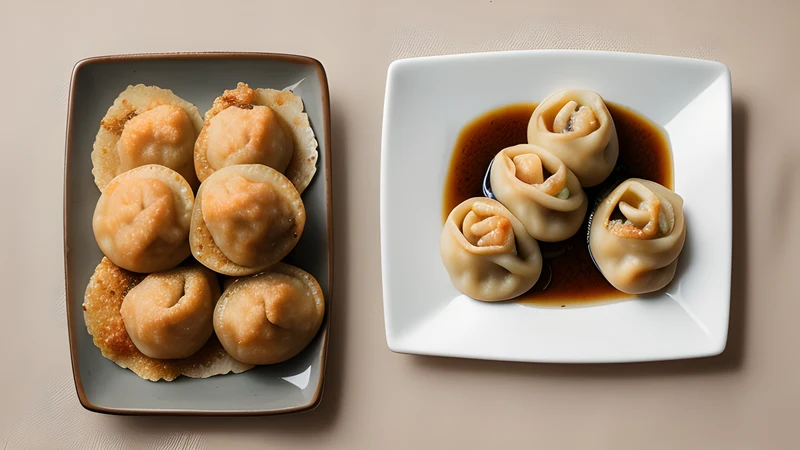
Two forms compete. Baked pirozhki are what I am giving you: soft, glossy, bready. Fried pirozhki are cooked in deep oil, come out puffed and shattery like a doughnut, and are arguably more delicious and definitively more work. The baked version travels and reheats; the fried version has a two-hour window and then goes leathery.
Fillings are open. Cabbage and egg is the everyday classic and what I have written here. Others in the standard rotation: minced beef with onion and a spoon of broth; rice with hard-boiled egg and spring onion; mashed potato with fried onion; braised liver; and on the sweet side, apples with cinnamon, or thick sour cherry jam.
The dough
This is an enriched dough — milk, eggs, butter, sugar — which puts it in the same family as brioche and kanelbullar, though leaner than either. Enrichment does three useful things: fat shortens the gluten and gives a tender crumb, sugar feeds the yeast and browns the crust, and eggs add structure and colour.
The technique that matters is adding the butter late and in stages. Fat coats gluten strands and stops them linking, so butter added at the start of kneading gives you a dough that never develops strength and bakes into a crumbly, greasy bun. Build the gluten network first with eight minutes of plain kneading, then work the softened butter in a third at a time. The dough will look broken and slippery after each addition and will come back together within a minute. Trust it.
Softened means soft — leave it out for an hour. Cold butter will not incorporate and you will chase lumps around the bowl for twenty minutes.
Knead on an unfloured surface. Enriched dough is sticky and the instinct is to flour the bench, which changes the hydration and gives you a tight bun. Use a dough scraper to lift and fold instead. It stops being sticky after about six minutes, which is the dough telling you the gluten has developed.
The windowpane test: pull a walnut-sized piece thin between your fingers. If you can stretch it until light passes through without tearing, stop kneading.
Cooking the filling dry
Cabbage is roughly 92% water and every gram of that water is your enemy. A wet filling steams inside the bun, generates pressure, and blows the seam open. It also soaks the inner crumb into a paste.
So the cabbage gets cooked uncovered, over medium-low heat, for a full half hour, until it has released its water, evaporated it, and started to colour. You are looking for a distinct change: the shreds go from bright and squeaky to limp, glossy and pale gold, and the pan goes from steaming to sizzling. The half teaspoon of sugar helps that colouring along and offsets the slight bitterness of long-cooked brassica.
Then cool it completely. Warm filling melts the butter in the dough it touches, weakens the seam, and starts a second prove from the inside. Cold filling is firm, easy to portion, and behaves. Make it the day before if you can; it keeps three days in the fridge.
The chopped egg goes in after cooling, off the heat. Cooked egg reheated in a pan turns rubbery and sulphurous.
The seam
Roll each disc thicker in the middle and thinner at the edges. The centre carries the weight of the filling; the edges need to be thin enough to pinch into a proper weld. A uniform disc gives you a thick, doughy seam that stays raw in the middle.
Bring the two long edges straight up so they meet like a book closing, then pinch along the whole length, working from one end to the other, pressing firmly enough to fuse the two surfaces. Then pinch the two ends closed and tuck them under. If any filling has touched the sealing edge, wipe it off — fat between two dough surfaces prevents them bonding, exactly as it would in any glue joint.
Then, seam side down on the tray, always. Gravity spends the whole prove and bake pressing the seam shut against the tray, and the bun’s own weight does the work. Seam side up is an invitation.
The other fillings, properly done
Minced beef. 400g of beef mince fried hard until browned, with a chopped onion softened separately in butter, combined, then loosened with 4 tablespoons of beef stock and cooked down until the stock has gone and the mixture is glossy rather than wet. Cool, then fold through a chopped hard-boiled egg. The stock is what stops it eating like sawdust; the mince must be browned in a hot dry pan in two batches or it grey-steams.
Rice and egg. 150g of rice cooked in salted water until soft, drained and cooled, mixed with four chopped hard-boiled eggs, six sliced spring onions and 40g of melted butter. Bland-sounding and superb, and the version most Russians remember from a grandmother. Season it harder than feels right — rice absorbs salt and the filling must taste assertive cold to taste correct hot.
Potato and onion. 600g of floury potatoes boiled, mashed dry with 50g butter and no milk, folded through two onions fried slowly to deep gold. No milk is the rule; a loose mash is a wet filling and wet fillings blow seams.
Apple. 500g of Bramleys, peeled and diced to 1cm, cooked with 60g sugar and a teaspoon of cinnamon until the pieces are soft and the liquid has gone completely. Drain any surviving syrup or it will find its way out of the bun and weld it to the tray.
The rule that governs all of them is the same rule the cabbage taught: the filling must be dry, cold, and seasoned to taste right at fridge temperature.
The prove, and reading the dough
Enriched dough proves slowly. The fat slows the yeast down and the sugar, at 40g in 500g of flour, is high enough to pull water out of the yeast cells osmotically. Ninety minutes at a normal room temperature of about 20C is the figure; a cold kitchen may want two hours, and a warm one may be done in seventy minutes.
Judge by volume rather than the clock. Doubled means doubled — put the dough in a straight-sided container and mark the level with a rubber band if you find it hard to eyeball. Under-proved dough gives dense buns with a tight, tough crumb; over-proved dough collapses when you knock it back and bakes flat, with a boozy smell and a coarse, holey crumb.
The second prove after shaping is shorter and just as important. Forty minutes puffs the buns and relaxes the gluten you tightened while rolling. Shape all sixteen, then start the timer from when the last one is on the tray. The poke test works: press a floured finger 5mm into the side of a bun, and it should spring back slowly and leave a shallow dent. Instant full spring-back means it needs longer; a dent that stays means you have gone too far and should bake them now.
Glaze just before the tray goes in the oven. Egg yolk with a spoon of milk gives the deep lacquered brown that a whole egg cannot manage — the yolk has the fat and the protein, and the white just adds water and a slightly brittle sheen. Brush lightly and avoid pooling glaze on the tray, where it burns and sticks.
Failure modes
Blown seams. Wet filling, or a greasy seam, or seam side up. In that order of likelihood.
Pale, soft buns. Underbaked, or the oven was too cool. Enriched dough needs 190C fan and a full 20 minutes; the sugar and egg give the colour, and if the bun is blond at 20 minutes give it 5 more rather than pulling it.
Dense crumb. Underkneaded, or the butter went in too early, or the second prove was cut short. Forty minutes at room temperature after shaping is a minimum — press the dough gently and it should spring back slowly and incompletely.
Dry inside. Too little filling. A heaped tablespoon per 55g of dough looks like a lot when you are wrapping it and is correct. Timid filling gives you a bread roll with a rumour in it.
Burnt bases. Bake on the middle shelf, on a light-coloured tray. Dark trays and low shelves scorch the seam side while the top is still pale.
Storage and the honest note
Pirozhki keep two days in a tin at room temperature and stay genuinely soft, which is what the enriched dough is for. Refresh them at 160C for 6 minutes. They freeze, baked and cooled, for two months; reheat from frozen at 170C for 12 minutes.
The honest note is the time. Two proves, a filling that needs half an hour and then needs to cool, and sixteen buns to shape by hand puts this at a four-hour afternoon. Treat it as a weekend bake that produces sixteen lunches, and shaping them is oddly meditative once you find the rhythm — I do it standing at the kitchen table with the radio on and I would not trade it.
Related Content