Piperade: The Basque Pepper Stew
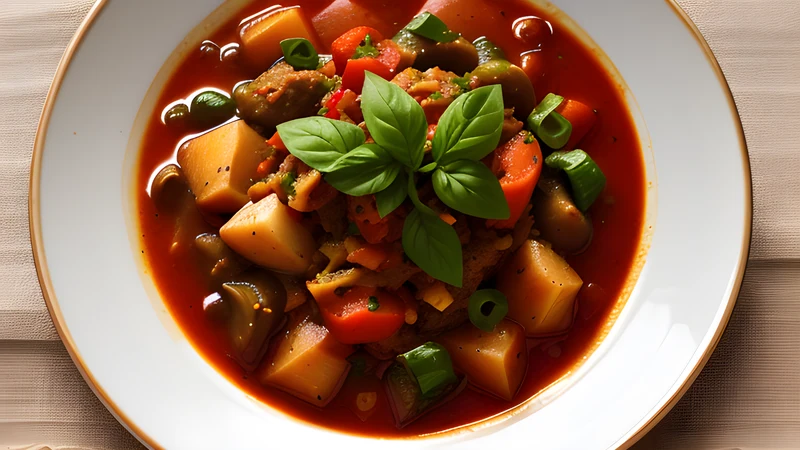
Green peppers, tomato and Espelette, cooked down until the spoon leaves a trail
Contents
↓ Jump to recipePiperade is a dish that punishes hurry and rewards almost nothing else. There is no browning, no stock, no wine, no technique you could describe as difficult. There is a pan of peppers and forty minutes of low heat, and the entire difference between a good piperade and a watery one is whether you were willing to stand there for the last ten minutes while it went from wet to jammy.
Piperade: The Basque Pepper Stew
Ingredients
- 4 tbsp olive oil
- 2 medium onions (about 250 g), sliced 5 mm thick
- 4 garlic cloves, sliced
- 600 g green peppers (about 4), deseeded and cut into 1 cm strips
- 2 red peppers (about 300 g), deseeded and cut into 1 cm strips
- 600 g ripe tomatoes, skinned and roughly chopped, or 1 x 400 g tin plus 200 g fresh
- 1.5 tsp piment d'Espelette, plus more to finish
- 1 bay leaf
- 2 sprigs thyme
- 1 tsp fine salt
- 1 tsp caster sugar, only if the tomatoes are sharp
- 6 large eggs
- 4 slices Bayonne ham (or Serrano), about 80 g
- 1 tbsp chopped flat-leaf parsley
- 4 thick slices country bread, to serve
Method
- Heat 3 tbsp of the olive oil in a wide, heavy pan over a medium-low heat. Add the onions and a pinch of the salt and cook for 12 minutes until soft and sweet, stirring now and then. Keep them pale.
- Add the garlic and cook for 2 minutes more, until it smells nutty rather than sharp.
- Add all the peppers and the rest of the salt. Cook over a medium-low heat for 20 minutes, stirring every few minutes, until they have slumped and lost their squeak.
- Add the tomatoes, the Espelette, the bay and the thyme. Cook uncovered at a lazy simmer for 20-25 minutes, until the liquid has gone and a spoon dragged across the base leaves a trail that holds for two seconds. Taste; add the sugar only if it is sharp.
- Fish out the bay and thyme sprigs. Taste again and correct the salt and Espelette.
- In the last 5 minutes, fry the ham slices in the remaining 1 tbsp oil over a high heat for 30 seconds a side, until the edges frill and the fat goes translucent. Set aside.
- Beat the eggs lightly with a fork, just until the whites and yolks combine and no more.
- Turn the heat under the pepper pan to low. Pour in the eggs and stir slowly with a wooden spoon, scraping the base, for 2-3 minutes, until the eggs are barely set and still glossy. Take the pan off the heat while they look underdone; they will carry on setting.
- Scatter over the parsley and a final pinch of Espelette. Drape the ham on top and serve straight from the pan with the bread.
The word, and what it is not
Piperade comes from piper, the Gascon and Basque word for pepper, via biper in Basque itself. It is the pepper dish, and the name carries no reference to eggs at all — which is worth knowing, because the eggs are optional and contested.
In the Labourd and Basse-Navarre, where the dish belongs, piperade on its own frequently means the pepper stew and nothing else, served as a side with lamb or tuna or spooned onto bread. Piperade à l’omelette, or with eggs stirred in, is the version that travelled and the version most people outside the region mean. Both are correct. The pepper base is the dish; the eggs are a way of turning it into supper.
Ratatouille comparisons come up constantly and they mislead. Ratatouille is a Provençal dish of separately cooked vegetables reassembled, built around aubergine and courgette, perfumed with herbes de Provence. Piperade is built on peppers alone, cooked together in one pan, and its defining flavour is a chilli that grows in one valley.
The dish is old in the way farm food is old: it appears in Basque household accounts in the eighteenth century, which is roughly when peppers had finished their two-hundred-year journey from Mexico through Spain and into the kitchen gardens of the Pyrenean foothills. It arrived as a poor man’s dish and stayed one, and its Sunday-best version simply adds more ham.
Espelette, and why it is worth the money
Piment d’Espelette is a mild chilli grown around the village of Espelette in the French Basque Country, and it has held an AOC since 2000 — one of very few spices in the world with a protected designation. The peppers are strung on the fronts of the houses in autumn to dry, which is a genuine sight and also an accurate description of what the village does for a living.
On the Scoville scale it sits around 4,000 units, roughly a mild jalapeño, which means it is a flavouring rather than a heat source. What you get is a fruity, faintly smoky, slightly sweet warmth that spreads across the back of the mouth without ever spiking. It is the taste of the region, and it turns up in axoa de veau, in Bayonne ham’s cure, in chocolate, in fish soup.
Substituting is possible and it is a compromise. Sweet paprika plus a quarter-teaspoon of cayenne gets you the colour and roughly the heat and misses the fruit entirely. Aleppo pepper is the closest widely available match — similar heat, similar fruitiness, a bit more raisin and less smoke — and I would reach for it before paprika. A tin of Espelette lasts a year of cooking and costs about the price of two coffees a month.
The peppers themselves
Green peppers dominate, and this is the choice that makes people nervous. Green peppers are unripe, faintly bitter, and unfashionable; every modern instinct says to reach for the sweet red ones. Resist most of that instinct. That vegetal bitterness is the backbone of piperade, and a version made entirely with red peppers tastes like sweet tomato jam — pleasant, characterless, and gone in a mouthful.
The Basque original uses a long, thin, pale-green local variety with thin walls, similar to what Spain calls pimiento italiano or a cristal. If you can find long green peppers, use them: thin walls collapse faster and give a silkier texture than the thick-walled bell peppers sold everywhere. Bell peppers work and take about five minutes longer.
I keep two red ones in for colour and a floor of sweetness. Some houses use all green. Nobody in the Basque Country uses all red.
Cut into strips, along the length. Dice cooks unevenly and turns to mush at the corners while staying firm in the middle; strips slump into ribbons that hold together.
Tomatoes, and whether to skin them
Skin them. This sounds fussy for a peasant dish and it is the difference between a silky piperade and one with curls of transparent plastic running through it. Tomato skin does not break down at any temperature you will use here, and forty minutes of stirring rolls it into little tubes that catch on the teeth.
The method takes four minutes: score a cross in the base, drop into boiling water for thirty seconds, lift into cold water, and the skin slips off in your fingers. Out of season, skip the whole exercise and use a good tin of peeled plum tomatoes, which have been skinned for you and will taste better than anything sold as fresh in February.
Quantity matters more than people expect. The tomato is a seasoning here, roughly equal in weight to the peppers and no more. Push past that ratio and you have made a pepper-flecked tomato sauce; the peppers should still be the thing you are eating.
The heat, and the trail test
Medium-low, the whole way. Piperade has no Maillard stage. If your onions colour, if the peppers catch, if you hear an active sizzle, the heat is wrong. What you want is the sound of a slow bubble and vegetables that gradually give up their water and then reabsorb their own concentrated juice.
The test for doneness is the trail. Drag a wooden spoon across the base of the pan. If the gap closes immediately, it needs more time. If it holds for two seconds before the edges creep in, stop. If it holds for five and the base is starting to catch, you have gone slightly too far — a splash of water pulls it back.
Getting to the trail takes twenty to twenty-five minutes after the tomatoes go in, and there is no way to shorten it. Cranking the heat evaporates the water faster and also caramelises the tomato sugars, which gives you something closer to a red sauce.
Eggs, and the moment to stop
Stir the eggs in over the lowest heat you have, and take the pan off while they still look wet. Residual heat in a mass of pepper stew is considerable, and a piperade that looks correct in the pan will be dry and slightly rubbery on the plate ninety seconds later.
Beat the eggs briefly. Whisking them to a foam gives a fluffy, uniform, scrambled-egg texture, and what you want is streaks — pale ribbons running through the red, some parts yolky and some parts white. The Basque instinct is that the eggs should bind the peppers and remain visible as eggs.
Six eggs to that quantity of vegetables is my ratio. Fewer and the eggs disappear into a sauce. More and you have made an omelette with peppers in, which is a real dish, called piperade à l’omelette when it is done properly in a folded pan, and a different one.
Ham, and the rest of the table
Bayonne ham is the local cure — salted with salt from the Adour valley, air-dried nine months, sometimes rubbed with Espelette. It is milder and sweeter than Serrano and much less funky than a long-aged Iberico.
Frying it is controversial and I do it anyway. Thirty seconds a side over a high heat makes the fat translucent and crisps the edges, and it gives you a salt-and-fat contrast against the soft stew that raw ham cannot manage. Purists drape it on cold. Try both once and you will have an opinion.
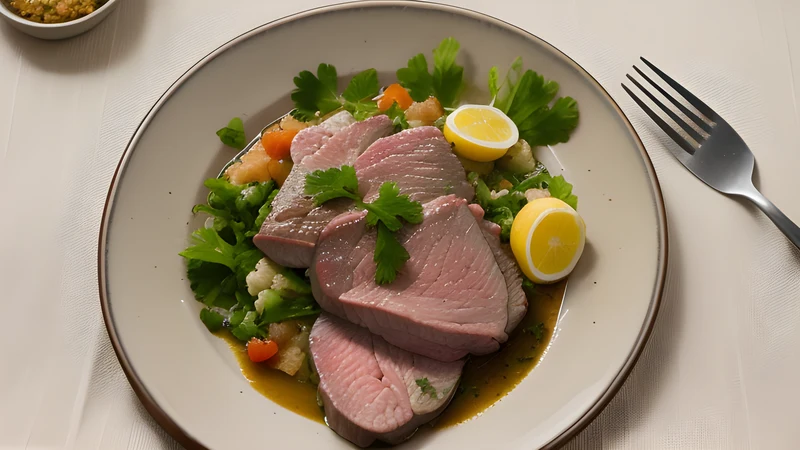
Bread is the only accompaniment needed. Piperade also works underneath grilled tuna, alongside lamb chops, or cold the next day on toast. The Hungarians got to almost exactly the same place independently with lecsó, and the Turks with menemen.
Variations worth cooking
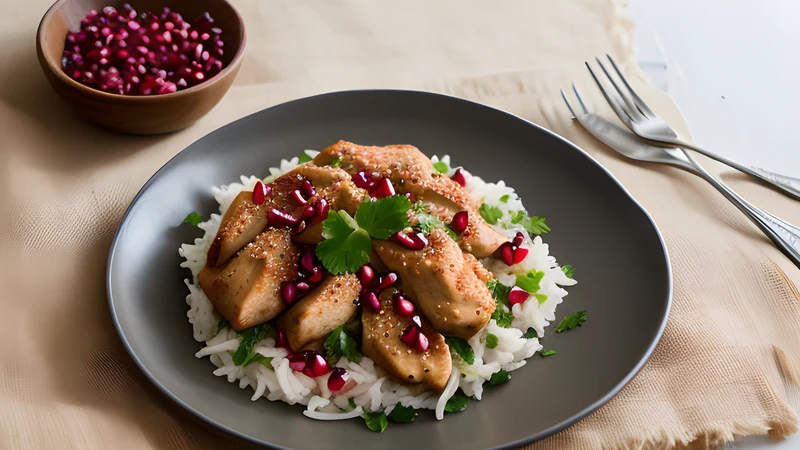
Piperade à la basquaise is the version with chicken: brown eight thighs, lift them out, build the pepper base in the same fat, then bury the chicken in it and braise for thirty-five minutes. It is the Sunday version and it is the one that fills a table.
Salt cod is the coastal answer. Soak 400 g for thirty-six hours with four changes of water, then flake it into the finished base off the heat and let it warm through for five minutes. The cod’s salt replaces most of the seasoning, so hold the salt back until it is in.
Some Bayonne cooks add a spoon of the ham’s fat at the start instead of some of the olive oil. It gives a cured, faintly smoky underlay through the whole pan and it is the single cheapest upgrade available to the dish. Trim it from the ham’s edge and render it slowly before the onions go in.
The version I would argue against is the one that adds chorizo. It appears on Spanish Basque menus and it works, in that everything works with chorizo — the paprika and the cured fat simply steamroll the Espelette, and you end up eating the sausage. If you want a pork dish, cook the chicken version and add the ham twice.
Failures, ahead, after
Watery. You stopped before the trail. Put it back on and reduce.
Bitter. Green pepper seeds and the white pith went in. Strip both.
Rubbery eggs. Off the heat too late, or the heat was too high when they went in.
Flat. Under-salted, or the tomatoes were poor. Out of season, a good tin beats a pale supermarket tomato without any argument.
The pepper base keeps four days in the fridge and improves for the first two — the Espelette spreads and the bitterness softens. It freezes well for three months. Make a double batch of the base, freeze half, and the egg version becomes a fifteen-minute supper on a night when you have nothing.
Never freeze it with the eggs in. They weep on thawing and the texture goes granular, and you will have wasted six good eggs for the sake of five minutes.
Related Content