Pimientos de Padrón: Galicia's Roulette Peppers
Uns pican e outros non
Contents
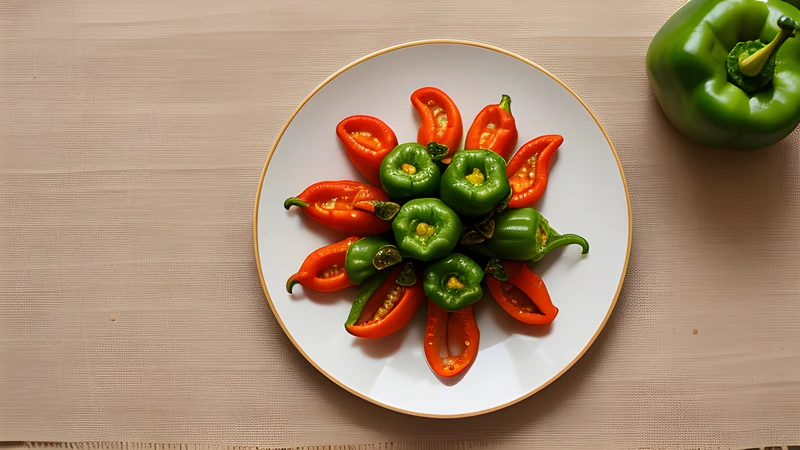
↓ Jump to recipeUns pican e outros non. Some are hot and some are not — the Galician line is printed on every bag of these peppers sold in Spain, and it is the whole appeal. You eat pimientos de Padrón in a group, everyone reaching in, and somewhere around the fifteenth pepper one of you goes silent and reaches for a drink. The rest of the table enjoys this enormously. It is the only tapa that is also a game.
My twist is a reversal of the usual method. Most recipes have you pour a slug of oil into a cold pan and fry the peppers in it. I heat the pan dry, blister the peppers in nothing at all, and add the oil at the end, off the heat. The dry pan gets far hotter than oil will tolerate, so the skins blister in ninety seconds and stay taut and slightly crisp. The oil at the end does everything oil is for — carrying flavour, holding the salt, making them glossy — without ever getting near its smoke point.
Pimientos de Padrón: Galicia's Roulette Peppers
Ingredients
- 300 g pimientos de Padrón (about 40 peppers), stalks left on
- 3 tbsp extra virgin olive oil
- 1.5 tsp coarse flaky sea salt
Method
- Wash the peppers and dry them completely on a tea towel. Any surface water will spit violently in the pan and steam the skins instead of blistering them. Leave the stalks on — they are the handle.
- Put a heavy frying pan, cast iron for preference, over high heat with nothing in it. Let it heat for 3 to 4 minutes, until a drop of water flicked in evaporates on contact rather than skittering.
- Add the dry peppers in a single layer. If your pan will not hold 40 peppers without stacking, work in two batches — crowding drops the heat and steams them.
- Leave them completely alone for 60 to 90 seconds, until the undersides are blackened in patches and the skins begin to whiten and lift.
- Toss or turn the peppers and continue for 3 to 4 minutes total, moving them every 45 seconds or so, until every pepper is blistered in several places, the skins have gone from taut green to wrinkled, and the flesh has collapsed slightly. They should be soft when pressed with a spoon.
- Take the pan off the heat. Pour in the 3 tbsp olive oil and toss immediately for 20 seconds — the residual heat is enough to coat them and the oil will not scorch.
- Tip onto a plate, scatter over the coarse salt from a height so it falls evenly, and serve at once with the plate still hot.
Franciscans, Herbón and a monastery garden
The pepper is a New World plant that came to Galicia by an unusually specific route. In the seventeenth century, Franciscan friars at the monastery of Herbón, on a loop of the river Ulla a few kilometres from the town of Padrón, brought back seeds from their missions in Mexico — the strain is thought to have come from the Tabasco region. They planted them in the monastery garden, in a microclimate sheltered enough for a tropical plant to sulk through a Galician summer.
The friars saved seed from the plants that did best, year after year, for roughly three centuries. What they were doing without the vocabulary for it was selective breeding, and what they produced was a landrace: a pepper adapted to that valley and no other, picked young and small and mostly mild.
Padrón is the market town where the peppers were sold, which is why Padrón has the fame and Herbón has the peppers. The protected designation, granted in 2009, is Pementos de Herbón, and it covers a small area on the Ulla. The vast majority of what is sold in British supermarkets as padrón peppers is grown in Almería or Morocco under polytunnels, from the same seed stock but nothing like the same conditions.
Why one in twenty bites
This is a genuine agricultural phenomenon and worth understanding, because it explains everything about how the peppers behave.
Capsaicin production in a Capsicum annuum plant is governed by genetics but expressed in response to stress. A pepper plant that is short of water, hot, or growing in poor soil produces more capsaicin — it is a defence compound, and a stressed plant defends itself harder. Peppers from the same plant, picked on the same day, will differ depending on where on the plant they grew and how much sun and water that branch got.
Age matters more than anything. A padrón picked at 4 cm is almost always mild; the same pepper left on the plant for another ten days, growing to 8 cm and starting to redden, is very likely to be hot. Capsaicin accumulates in the placental tissue — the white pith the seeds attach to — over time.
So: the true Herbón peppers, picked young in June and July, are mild at a rate of roughly nineteen in twenty. By September, when the plants are stressed and the fruit is being picked larger, the ratio can fall to three in four. Imported peppers from hot dry polytunnels in Almería run hotter and more erratically all year.
There is no way to tell by looking, which is the point. The larger ones and the ones with a slight red blush are worth suspecting. Beyond that, it is a lottery, and the Scoville range runs from a genuine zero to about 2,500 — a jalapeño’s territory. It will not hurt you. It will surprise you.
The pan is the whole technique
Four minutes of cooking, and every mistake is a temperature mistake.
The pan must be properly hot before the peppers go in — hot enough that they hiss on contact. Cast iron or heavy carbon steel, because the thermal mass survives 300 g of cold peppers hitting it. A thin non-stick pan drops forty degrees the moment they land, and never recovers, and you get pale steamed peppers with slack skins.
Dry the peppers obsessively. Water is the enemy twice over: it spits at you, and it puts a layer of steam between the pepper and the metal that prevents contact blistering.
Do not stir for the first ninety seconds. Blistering needs sustained contact between skin and hot metal in one spot. Shaking the pan constantly, which every instinct tells you to do, gives you peppers that are evenly warm and unblistered.
They are done when the skins are wrinkled and blackened in patches and the flesh has slumped. Undercooked padróns are squeaky and taste raw and green, and this is the most common failure — people pull them at two minutes because they look ready. Give them four.
The oil, and the case for adding it late
The conventional method — cold oil, peppers in, heat up — has a real cost. Olive oil in a pan over high heat for four minutes is being pushed hard. Extra virgin oil starts to break down somewhere around 190C to 200C, and a pan hot enough to blister a pepper skin in ninety seconds is running well past that at the metal surface. You get acrid notes, and a kitchen full of smoke, and the good oil you paid for has been destroyed to no purpose.
Adding the oil off the heat sidesteps the whole problem. The pan is still at 150C or so when the peppers come off the burner, which is more than enough to make the oil fluid and fragrant, and nowhere near enough to burn it. Toss for twenty seconds and every pepper is coated.
It also lets you use a better oil than you otherwise would. A grassy, peppery Galician or Andalusian extra virgin, wasted in a screaming pan, is exactly right when it meets the peppers at the end — you can taste the oil as oil, which in a dish with three ingredients matters.
One more advantage: without oil in the pan during the blistering, there is no spitting. Frying wet-ish peppers in hot oil is a genuinely painful experience, and this method removes it.
Salt, and why it must be coarse
Coarse flaky salt, and a lot of it. This is the second half of the dish. Fine salt dissolves into the oil and disappears; flakes sit on the surface of the pepper and crunch, and you get the salt hit and the pepper flesh as two separate sensations. Maldon works. Traditional Galician cooks use sal gorda, a coarse rock salt.
Salt from a height, about 30 cm, so it scatters evenly instead of landing in a pile on three peppers. Salt after the oil, so the flakes stick.
Eating them
Hold the stalk, bite off the pepper, discard the stem. The stalks are edible and unpleasant, and the plate of stalks at the end is the mark of a good tapas session.
They must be eaten hot, within about five minutes, standing up if possible. Padróns go from excellent to depressing as they cool — the skins go leathery and the oil congeals. This is the least make-ahead dish in Spain and there is no point fighting it. Cook them last, carry the pan to the table, and let people eat straight off it.
Bread is compulsory, for the salty oil left on the plate. A cold beer or a glass of Albariño, which is Galicia’s own answer and grows forty minutes down the road.
Variations, and one heresy
Galicia would tell you the dish is finished at pepper, oil, salt, and Galicia is broadly right. But a few departures survive contact with the original.
A squeeze of lemon over the hot plate is common in Basque bars and lifts the whole thing. Half a teaspoon of sweet smoked paprika tossed in with the oil at the end pushes them towards the flavour of romesco and works well when the peppers themselves are a dull imported batch. A grating of Idiazábal or aged Manchego over the top, so it half-melts, turns tapas into a small plate.
The heresy is the oven, and it works when you are cooking for ten and the pan cannot cope. Toss the peppers in 2 tbsp of oil, spread on a tray, and roast at 240C fan for 8 to 10 minutes until blistered. The skins are less taut and the flavour is slightly flatter, and it lets you serve forty people at once. Grill setting, top shelf, is closer to the pan result.
What does not work is deep frying — the peppers inflate, the skins slip off, and you get sad green balloons.
Around the table
Padróns are a first plate and want company. Patatas bravas bring the smoke and the starch. A wedge of Spanish omelette is the other thing on every tapas bar counter in the country, and the two together with bread and something cured is dinner for four. If you are staying in Galicia, grilled octopus with smoked paprika and potato is pulpo á feira, the region’s other great export, and the coarse salt and paprika logic is identical.
Things that go wrong
They are pale and floppy. The pan was not hot enough, or you crowded it. Padróns need a fierce dry pan and room. Two batches, always.
They taste raw. Undercooked. Four minutes, and wait for the flesh to slump.
They are bitter and the kitchen is full of smoke. The oil went in at the start and burned. Add it at the end.
They spat oil everywhere. Wet peppers. Dry them properly on a towel, and give them five minutes on the worktop after washing.
Every single one was hot. Late-season peppers, or big ones, or a batch grown under stress in a polytunnel. Nothing to be done except buy smaller ones next time.
Growing and buying them
They are easy to grow, which is the honest answer to their price. Sow in March under glass, plant out after the last frost, keep them watered — and this is the part that matters — pick them relentlessly at 4 to 5 cm. A plant picked over every two days keeps producing until October and stays mild. Let a few grow big and the plant slows down and the whole crop gets hotter.
Buying: look for small, uniform, glossy peppers with firm stalks and no wrinkles or soft spots. Wrinkled skin in the bag means dehydration, and a dehydrated pepper browns instead of blistering. They keep about five days in the fridge in a paper bag, and lose quality every day.
Related Content