Pilau: Zanzibar Spice Rice with Beef
Rice cooked in the smoke of its own spices
Contents
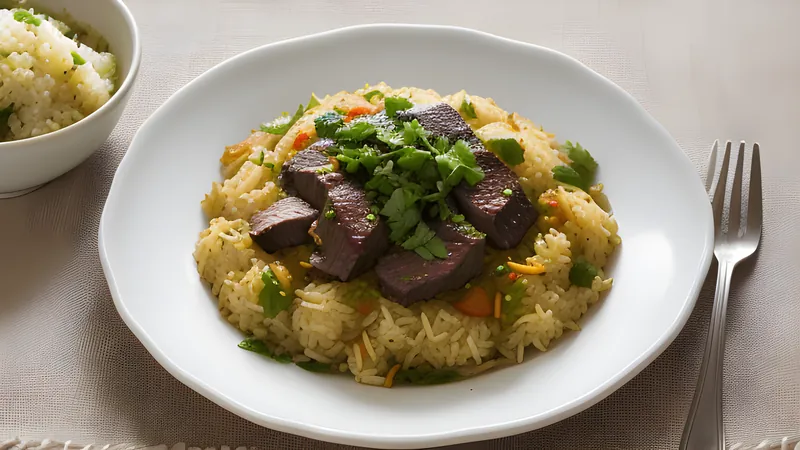
↓ Jump to recipeZanzibar pilau is rice that tastes of the pot it was cooked in rather than the water it was boiled with. Beef browns hard in oil until the base of the pan turns nearly black with fond, whole spices toast in that same fat until the kitchen fills with smoke, and the rice cooks down through all of it, absorbing colour and flavour rather than being seasoned on top afterwards. The result is deeply savoury rice with a dark, almost mahogany tint and whole spices you eat around rather than through. My twist is a scatter of toasted, cracked cumin seeds over the finished dish, which adds a last burst of warmth that ground spice alone cannot deliver.
Pilau: Zanzibar Spice Rice with Beef
Ingredients
- 800g beef chuck, cut into 3cm cubes
- 3 tbsp vegetable oil
- 2 large onions, thinly sliced
- 6 garlic cloves, crushed
- 4cm piece ginger, grated
- 1 tbsp pilau masala (or 2 tsp ground cumin, 1 tsp ground coriander, 0.5 tsp ground cardamom, 0.5 tsp ground cinnamon, 0.25 tsp ground cloves, mixed)
- 8 whole cloves
- 6 green cardamom pods, bruised
- 2 cinnamon sticks
- 1 tsp black peppercorns
- 2 bay leaves
- 2 tbsp tomato puree
- 600g basmati rice, rinsed until the water runs clear
- 900ml beef stock, hot
- 2 tsp fine salt, plus more to taste
- 1 tsp cumin seeds, toasted and lightly crushed, to finish (the twist)
- Fresh coriander, chopped, to serve
Method
- Pat the beef dry and season with 1 tsp salt. Heat the oil in a heavy pot over high heat and brown the beef hard in batches, 4-5 minutes per batch, then set aside.
- Lower the heat to medium and fry the onions in the same pot for 15-18 minutes, stirring often, until deeply browned.
- Add the garlic, ginger, pilau masala, whole cloves, cardamom pods, cinnamon sticks, peppercorns and bay leaves, and fry for 2 minutes until fragrant.
- Stir in the tomato puree and cook for 2 minutes, then return the beef to the pot along with any resting juices.
- Add the rinsed rice and stir gently to coat every grain in the spiced fat and browned bits.
- Pour in the hot stock and remaining 1 tsp salt, bring to a simmer, then cover tightly and cook on the lowest heat for 25 minutes without lifting the lid.
- Remove from the heat and rest, still covered, for 10 minutes.
- Fluff the rice with a fork, scatter over the toasted cumin seeds and fresh coriander, and serve.
Why the technique works
Two decisions make Zanzibar pilau taste the way it does, and both come before the rice is added. The first is browning the beef hard, in batches, rather than crowding the pot. A crowded pan steams the meat instead of searing it, and a pale, boiled cube of beef will never build the dark crust that seasons the whole dish later. Working in batches keeps the pan hot enough for a proper sear, and every fond left behind gets picked up again when the onions and spices hit the same fat.
The second is patience with the onions. Fifteen to eighteen minutes sounds like a long time to stand over sliced onions, but that slow caramelisation is where most of the dish’s depth and colour actually comes from; rushed, pale onions produce a pilau that tastes correctly spiced but visually and flavour-wise flat. The tomato puree added afterward goes in to deglaze the sugars stuck to the pot and add a faint sweet-acid backbone that balances all the warm spice.
Method
- Pat the beef dry with kitchen paper and season with 1 teaspoon of salt. Heat the oil in a heavy, lidded pot over high heat and brown the beef in two or three batches, 4-5 minutes per batch, without crowding the pan. Set the browned beef aside.
- Lower the heat to medium and add the sliced onions to the same pot, using the residual fat. Fry for 15-18 minutes, stirring regularly, until they are deeply browned and starting to catch at the edges.
- Add the garlic, ginger, pilau masala, whole cloves, cardamom pods, cinnamon sticks, peppercorns and bay leaves. Fry for 2 minutes, stirring constantly, until the spices smell toasted and fragrant.
- Stir in the tomato puree and cook for a further 2 minutes, scraping up any browned bits from the base of the pot.
- Return the beef to the pot with any resting juices. Add the rinsed rice and stir gently until every grain is coated in the spiced fat and fond.
- Pour in the hot stock and remaining teaspoon of salt. Bring to a simmer, then cover tightly with a lid and cook over the lowest possible heat for 25 minutes, resisting the urge to lift the lid.
- Remove the pot from the heat and let it rest, still covered, for 10 minutes so the rice finishes steaming through.
- Fluff the rice gently with a fork to separate the grains without breaking the beef. Scatter over the toasted, cracked cumin seeds and fresh coriander, and serve hot.
Tips and Substitutions
Whole spices sit in the dish purely for aroma, so warn your guests to pick them out at the table rather than biting into a whole clove or a piece of cinnamon bark. If you would rather not fish for them, tie the cloves, cardamom, cinnamon and peppercorns loosely in a square of muslin before adding them, then lift the bundle out before serving.
Basmati rice is standard because its long grains stay separate after steaming, but a good aged long-grain rice works as a substitute if that is what you have; avoid short-grain or pudding rice, which turn the dish gluey. Beef chuck rewards the long simmer with tenderness, but lamb shoulder or goat both work well in the same method and are traditional alternatives on the island. For a lighter version, chicken thighs can replace the beef; reduce the initial browning time to 3 minutes per side and cut the simmering time by 5 minutes, since chicken cooks faster than beef chuck.
If your rice comes out sticky rather than fluffy, the most common cause is under-rinsed rice; keep rinsing until the water runs genuinely clear of starch, not just pale. If it is undercooked at the 25-minute mark, add a splash more hot stock, re-cover, and give it another 5 minutes on the lowest heat rather than raising the temperature, which risks burning the base.
Variations
Vegetable pilau, built the same way but with the beef replaced by cubed potato and carrot added at the rice stage, is common during Ramadan when meat is scarcer at the family table. Chicken pilau is the everyday variant in most Zanzibari households, quicker to cook and lighter on the stomach, while a full beef or goat version tends to signal a celebration. Some cooks add a handful of sultanas or a few whole dried chillies to the rice for extra sweetness or heat; both are legitimate regional habits rather than deviations from any fixed recipe, since pilau has never had a single correct formula, only a shared technique that every family bends slightly to its own taste.
Storage and Serving
Pilau keeps well in an airtight container in the fridge for up to 3 days, and it reheats better than most rice dishes because the spice-laden fat keeps the grains from drying out; warm it gently in a covered pan with a tablespoon of water, or in the microwave with a damp sheet of kitchen paper over the top. It freezes well for up to 2 months in a sealed container; thaw fully in the fridge before reheating.
Serve pilau with kachumbari, a quick salad of diced tomato, red onion, chilli and lime, whose acidity is the traditional counterweight to all that rich spice. For a full Zanzibar spread, pair it with a bowl of urojo on the side, or serve it alongside Kenyan chapati for a table that leans into the coastal East African repertoire rather than sticking to a single dish.
Related Content