Pepián: Guatemala's Toasted Seed Stew
The other national dish, thickened with pumpkin seeds and sesame
Contents
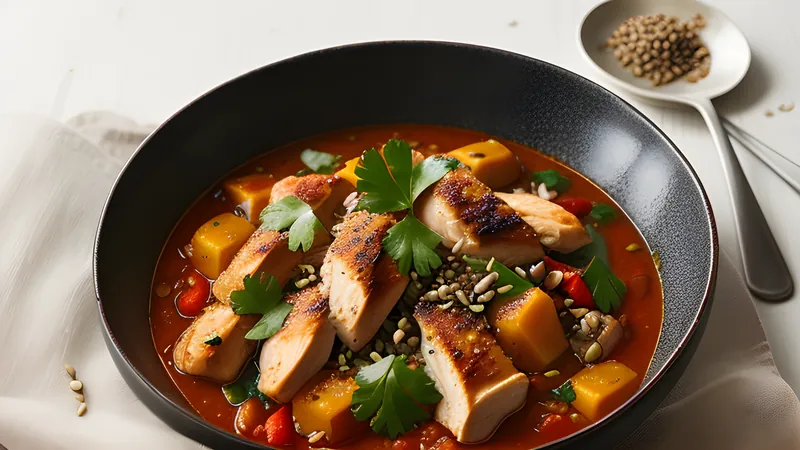
↓ Jump to recipeAsk a Guatemalan what the national dish is and you will start an argument, because there are two correct answers and neither of them is wrong. Kak’ik, the smoky turkey soup from Cobán, gets more attention abroad. Pepián is the one that actually turns up on a Sunday table in Antigua, in Chiquimula, in a kitchen in Zone 1 in Guatemala City, and it has a serious claim on being the older of the two. It is a stew built on toasted seeds rather than cream or flour, a thickening method that goes back to a kitchen the Spanish never invented.
Pepián: Guatemala's Toasted Seed Stew
Ingredients
- 1.5 kg bone-in chicken thighs and drumsticks
- 1 onion, quartered, plus 1/2 onion for the poaching liquid
- 6 garlic cloves
- 2 ripe tomatoes
- 4 tomatillos, husked and rinsed
- 2 dried guajillo chiles, stemmed and deseeded
- 1 dried pasilla or ancho chile, stemmed and deseeded
- 125 g raw pumpkin seeds (pepitas)
- 2 tbsp sesame seeds, plus extra to garnish
- 4 black peppercorns
- 2 whole cloves
- 2 cm piece cinnamon stick
- 1 corn tortilla, torn into pieces
- 30 g dark chocolate (70%), grated
- 2 chayotes (güisquil), peeled and cut into 2 cm chunks
- 4 small waxy potatoes, halved
- 250 g green beans, trimmed
- 2 tbsp neutral oil
- Fine salt, to taste
- Cooked white rice, to serve
Method
- Put the chicken pieces in a large pot with the half onion and 2 garlic cloves, cover with 2 litres water, salt generously, and bring to a simmer. Poach gently for 35 minutes until the chicken is cooked through. Lift the chicken out and set aside; strain and reserve the stock.
- Heat a dry cast-iron or heavy pan over high heat. Char the tomatoes and tomatillos, turning, until blackened and blistered in patches, about 8 minutes. Set aside.
- In the same dry pan, toast the guajillo and pasilla chiles for 20 to 30 seconds a side until fragrant and slightly darker, then drop them into a bowl and cover with 250 ml of the hot reserved stock to soften for 10 minutes.
- Toast the pumpkin seeds in the dry pan over medium heat, stirring constantly, until they puff, pop and turn golden, 3 to 4 minutes. Toast the sesame seeds separately until golden, about 1 minute. Set aside a spoonful of each for garnish.
- Toast the peppercorns, cloves and cinnamon in the pan for 30 seconds until fragrant. Add these, the toasted pumpkin and sesame seeds, the charred tomatoes and tomatillos, the softened chiles with their soaking liquid, the remaining onion and garlic, and the torn tortilla to a blender. Add 500 ml of the reserved stock and blend until completely smooth, in batches if needed.
- Heat the oil in the pot over medium heat. Pour in the blended sauce through a sieve, pressing the solids to extract every bit, and discard what remains in the sieve. Simmer, stirring often so it doesn't catch, for 15 minutes until it deepens in colour and the raw chile smell cooks off.
- Stir in the grated chocolate until melted, then add enough of the remaining stock to reach a soup-like consistency, about 500 to 750 ml more. Season with salt.
- Add the potatoes and chayote, simmer 15 minutes, then add the green beans and the poached chicken pieces. Simmer 10 more minutes until the vegetables are tender and the chicken is heated through.
- Ladle into bowls, scatter with the reserved toasted seeds, and serve with white rice alongside.
A sauce older than the chile that gets the credit
Pepián’s base is pepitoria, ground toasted pumpkin seeds, and that single ingredient is the whole story of the dish. Pumpkin, in its many Mesoamerican forms, was domesticated in the region thousands of years before maize agriculture consolidated, and the seeds were never a byproduct thrown away. Maya cooks toasted and ground them into a paste that thickened sauces and stews the way a roux does in a French kitchen, except this technique predates the arrival of wheat flour on the continent entirely. When guajillo and pasilla chiles, tomatoes and tomatillos entered the pot after Spanish contact, they layered onto a seed-based sauce that was already centuries old, rather than replacing it.
The name itself comes from the Nahuatl pipián, referring to a sauce thickened with ground squash seeds, and versions of it appear across the old Mesoamerican culinary sphere from central Mexico down through Guatemala. What makes the Guatemalan version distinct is the addition of sesame seeds alongside the pumpkin seeds, and the deliberate charring of the tomatoes and tomatillos on a dry comal before they go into the blender, a step that gives the finished sauce a smoky backbone that lighter Mexican pipianes don’t share. Every family has a ratio they’ll defend: more pumpkin seed for a thicker, nuttier stew, more sesame for a rounder, slightly sweeter one. Some cooks in the eastern departments add a whole roasted tomato skin and all, seeds included, arguing the bitterness the seeds contribute is the point.
There is also a colour distinction worth knowing if you start reading Guatemalan cookbooks: pepián rojo (red), made with guajillo and tomato as the dominant colour, is what most households cook weekly and what this recipe follows; pepián negro leans on charred chiles and sometimes a touch of chocolate or achiote for a darker, more bittersweet result, closer in spirit to a simple mole. The two are not competing dishes so much as siblings from the same toasted-seed family, and the chocolate in this recipe nods toward the darker branch without fully committing to it.
The char is not optional
The single biggest mistake home cooks make with pepián outside Guatemala is skipping the dry-pan charring of the tomatoes and tomatillos, because it looks like an extra step for no visible reward once everything gets blended smooth anyway. It is not optional. Charring breaks down the vegetables’ cell walls and caramelises their sugars before they ever hit liquid, building a layer of bitter-sweet complexity that boiling or simmering raw vegetables cannot replicate, no matter how long you cook the finished sauce. The blackened skin isn’t scraped off either; it goes straight into the blender, and that carbon note is what separates a good pepián from a merely competent tomato-chile stew.
The grated dark chocolate at the end is my one deliberate addition, and it is a smaller, quieter version of what pepián negro does with a fuller dose of cacao. A single ounce melted into the finished sauce rounds off the guajillo’s fruitiness and deepens the smoke from the char without making the dish taste like dessert or announcing itself as chocolate at all. If you want to taste the difference, make the sauce, divide it in half, and stir the chocolate into only one portion; the version with it will taste unmistakably more finished, though most guests won’t be able to say why.
Getting the seeds right
Buy raw, hulled pumpkin seeds rather than the roasted and salted snacking kind; you want to control the toast yourself and stop it exactly when the seeds pop and turn from pale green to gold, because a few seconds past that point they turn bitter. Do this over medium heat in a dry pan, shaking or stirring constantly, and pull them off the heat the moment the popping slows. Sesame seeds toast even faster, closer to a minute, and burn if you look away, so do them in a separate small batch rather than trying to time both in the same pan. Grinding both fully before adding the stock, rather than blending seeds and liquid together from the start, gives a smoother finished sauce with none of the gritty texture that under-blended pepián sometimes has in less careful kitchens.
The straining step after blending matters as much as the charring. Pumpkin and sesame seed hulls do not fully liquefy no matter how powerful your blender, and pushing the sauce through a fine sieve, using the back of a ladle to force every drop of flavour through while leaving the fibrous solids behind, is what gives pepián its characteristic silky body rather than a grainy one. Don’t rush this part; a few minutes of pressing makes a genuine difference to the final texture.
Chicken, other proteins, and the vegetables that belong in the pot
Chicken thighs and drumsticks are the standard, poached first in salted water to build the stock the sauce is thinned with, which means you are cooking the protein and making the base liquid in a single pot. Beef short rib or shin works the same way and is common in the eastern highlands; simmer it longer, closer to 90 minutes, before it’s tender enough to pull. Some coastal versions use shrimp added at the very end so they don’t overcook, with a lighter seafood stock standing in for the poaching liquid.
The vegetables are not garnish; they are load-bearing. Chayote, called güisquil locally, holds its shape and turns tender without disintegrating, giving the stew textural contrast against the smooth sauce. Potatoes add starch and body. Green beans go in last because they turn grey and mushy if they simmer as long as the potatoes need to soften. Some cooks add a few whole baby carrots or a chunk of green plantain; both are reasonable additions if you want to stretch the pot for a bigger table, added at the same point as the potatoes.
Storage and the next day
Pepián keeps for four days refrigerated and, like most seed- and chile-thickened stews, tastes better on day two once the sauce has had time to settle into the vegetables and chicken. Reheat gently over low heat, stirring occasionally, and thin with a splash of stock or water if it’s thickened too much in the fridge; the pumpkin seeds keep absorbing liquid even off the heat. It freezes well for up to three months, though the chayote softens further on thawing, so slightly undercook it if you know a batch is headed for the freezer.
Rice on the side is standard, though a stack of warm corn tortillas for scooping and mopping is just as traditional and, in my kitchen, the better vehicle for the sauce. If you’re building out a wider Central American spread, the toasted-chile, tomato and seed logic here sits close to what happens in mole poblano, and the masa-forward cooking of neighbouring El Salvador shows up in pupusas — both worth putting on the same table as pepián if you’re working through the isthmus one pot at a time.
A dish tied to a feast day
Pepián has a specific date attached to it in a way most stews don’t. In Antigua Guatemala, the dish is central to the celebrations around La Antigua’s patron saint festivities and to Semana Santa food culture more broadly, and the city has run a Feria del Pepián in recent years specifically to celebrate it, with dozens of cooks competing over whose version has the right balance of char, seed and chile. That civic pride matters because it tells you pepián was never a humble everyday leftover-bin stew invented out of necessity; it has always been cooked for company, for a Sunday, for a saint’s day, in a pot large enough to feed whoever turns up.
Ask five Guatemalan grandmothers for their pepián and you’ll get five different chile ratios, but almost none of them will skip the toasting step, and almost all of them will insist on grinding the seeds by hand on a stone metate if one is available, a physical, unhurried process that a blender only approximates. The flavour difference between metate-ground and blender-ground pepitoria is real but small enough that no one outside a Guatemalan kitchen would notice; what the hand-grinding preserves is the rhythm of a dish that was built around slow, communal kitchen labour rather than a fifteen-minute weeknight shortcut. Cooking it in a hurry misses the point almost as much as skipping the char does.
What can go wrong
The most common failure, beyond skipping the char, is over-thinning the sauce before it’s had time to reduce and concentrate. Pepián should coat the back of a spoon generously, closer to a thick soup than a broth, and if yours tastes watery after the first 15-minute simmer, keep reducing rather than reaching for more stock. The second failure is scorching the sauce once the seed paste is in the pot; ground pumpkin and sesame seeds have enough natural oil that they can catch and stick to the base of the pot if you walk away, so stir every minute or two during that simmering stage.
Chile heat is the third variable worth getting right for your own table. Guajillo and pasilla are both mild to medium chiles, closer to a deep raisiny fruitiness than genuine heat, so pepián as written here is a warmly spiced dish rather than a fiery one. If you want more heat, a single chile de árbol toasted alongside the guajillo does the job without throwing off the balance of the rest of the sauce; add it whole and blend it in with everything else rather than dosing the finished stew with hot sauce at the table, which changes the flavour rather than just the heat level.
Related Content