Penne Arrabbiata with Roasted Garlic
Fiery, garlicky and quick
Contents
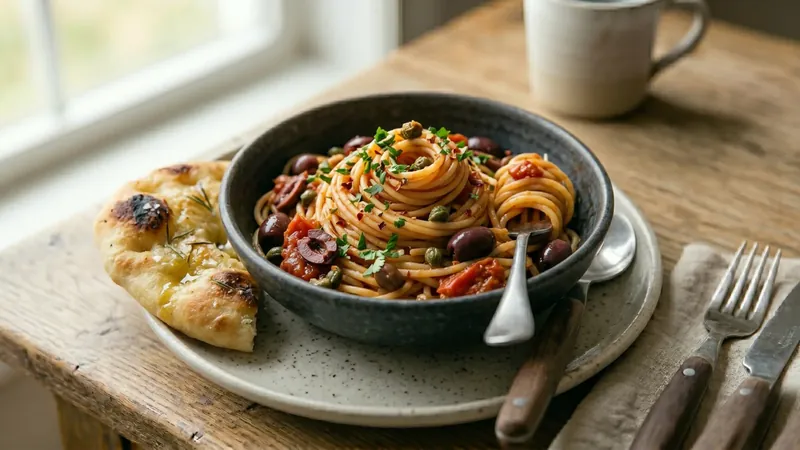
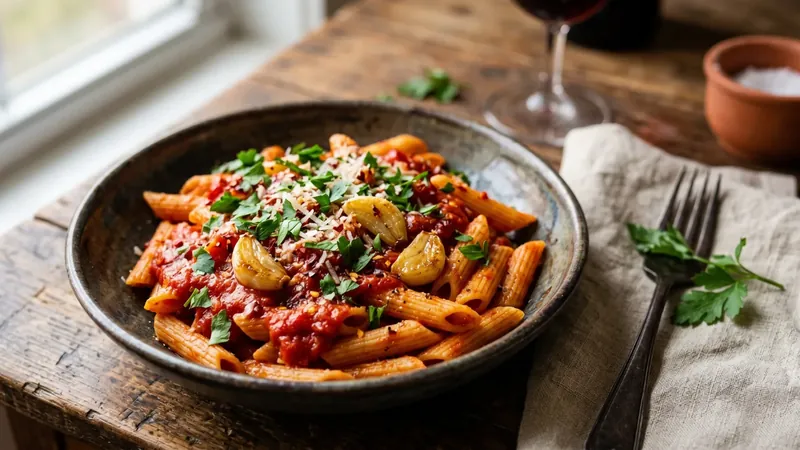
↓ Jump to recipeArrabbiata means “angry”, a nod to the chilli heat that gives this quick Roman sauce its name and its kick. The twist is roasting a whole head of garlic until sweet and mellow, then mashing it into the tomatoes for a rounder, deeper background behind the fire, with an optional spoonful of spicy ’nduja for those who want even more punch. It is fast, fierce and deeply satisfying, exactly the kind of pasta to cook on a busy evening.
Penne Arrabbiata with Roasted Garlic
Ingredients
- 1 whole head of garlic, plus 1 extra clove
- 4 tbsp extra-virgin olive oil, plus extra for roasting
- 1-2 dried red chillies, crumbled (to taste)
- 400 g tin of good chopped tomatoes
- 1 tbsp tomato purée
- 1 tsp 'nduja (optional)
- 400 g penne
- Sea salt and freshly ground black pepper
- Small handful of flat-leaf parsley, chopped
- Grated Pecorino, to serve (optional)
Method
- Heat the oven to 190°C (170°C fan). Slice the top off the head of garlic, sit it on foil, drizzle with oil and a little salt, then wrap and roast for 35-40 minutes until soft and golden.
- Squeeze the roasted garlic cloves from their skins and mash to a paste. Finely chop the extra raw clove.
- Warm the olive oil in a wide pan over a medium-low heat and gently fry the raw garlic and crumbled chilli for a minute, without browning.
- Stir in the 'nduja, if using, and let it melt into the oil.
- Add the chopped tomatoes, tomato purée and roasted garlic paste. Season and simmer for 12-15 minutes until thickened and glossy.
- Meanwhile, cook the penne in well-salted boiling water until al dente, reserving a mugful of the water.
- Drain the pasta and toss it through the sauce, loosening with a splash of pasta water so it coats every piece.
- Stir through most of the parsley, check the seasoning and serve with the rest scattered over and Pecorino if you like.
The Story
Penne all’arrabbiata is a cornerstone of Roman home cooking, a sauce built from storecupboard staples that delivers a great deal of flavour for very little effort or expense. The name, which translates roughly as “angry pasta”, refers to the chilli heat that makes the dish tingle, said to leave the eater flushed and fired up. It belongs to the same tradition of frugal, ingredient-light Roman cooking as cacio e pepe, relying on technique and good basic produce rather than a long list of components.
The choice of pasta shape is not incidental. Penne, with its hollow tubes and ridged surface, is built to trap a clinging tomato sauce, which is why it is the traditional partner here. The chilli is the defining note, and the amount is entirely a matter of taste; Italian cooks use dried peperoncino, but any good dried red chilli will do, crumbled into the warm oil so its heat blooms gently rather than scorching.
Garlic is the ingredient this version sets out to celebrate. In the classic recipe it is fried briefly in oil to flavour the base, sharp and pungent. Roasting a whole head transforms it completely: the long, slow heat tames its bite and draws out a deep, almost sweet mellowness, the cloves collapsing into a soft paste that melts into the sauce. Keeping a single raw clove for the initial frying preserves the bright, savoury hit of the original, so the finished dish carries both the sweetness of the roasted garlic and the freshness of the raw.
The optional spoonful of ’nduja is a nod to the south of Italy. This soft, spreadable sausage from Calabria is made with pork and a generous quantity of fiery chilli, and it dissolves into warm oil to lend a rich, smoky, deeply savoury heat. It pushes the dish well beyond a simple tomato sauce, adding a meaty depth that suits the “angry” spirit of arrabbiata perfectly. Whether you include it or keep things vegetarian, the principles are the same: good tinned tomatoes, enough chilli to make your lips tingle, and pasta cooked until just firm to the bite, all brought together in a matter of minutes.
Arrabbiata sits within the broader Roman canon of primi built on almost nothing. Alongside cacio e pepe there is aglio e olio (garlic, oil, chilli, no tomato) and pasta alla gricia, and arrabbiata is essentially a pomodoro sauce with the volume turned up. That frugality is the point: it is peasant and trattoria cooking both, the sort of plate a Roman would knock together late in the evening from a tin and a jar of dried chillies hanging in the kitchen.
Where it can go wrong, and why
The mistakes in this dish are all about heat, in both senses. Burnt garlic is the first and most common: raw garlic and chilli fried too hard turn acrid in seconds, and there is no rescuing a scorched base. Keep the pan at a gentle medium-low and pull it back the moment the garlic smells fragrant rather than harsh. This is exactly why the roasted head goes in later, as a paste — it has already given up its bite in the oven and only needs warming through.
Undercooked tomatoes are the second. A tin of tomatoes needs a proper simmer, at least 12 to 15 minutes, to lose its raw, metallic tang and turn glossy and sweet. Rush it and the sauce tastes sharp and thin. If it still tastes acidic after simmering, a tiny pinch of sugar or the roasted garlic’s natural sweetness will round it off; resist the urge to drown it in cheese to cover the fault.
The third is dry, claggy pasta. Arrabbiata should cling and gloss, and the trick is finishing the drained pasta in the sauce with a good splash of the starchy cooking water, tossing hard for a minute so the starch emulsifies the oil and tomato into a silky coat. Drain the penne a shade before it is fully al dente and let it finish in the pan; it keeps cooking in the sauce and soaks up flavour as it goes.
The garlic, roasted low and slow
Roasting is what makes this version mine. A whole head wrapped in foil with oil and a little salt, given 35 to 40 minutes in a moderate oven, comes out with the cloves collapsed to a soft, spreadable, caramel-sweet paste. The long gentle heat converts the harsh sulphur compounds that make raw garlic pungent into mellow, nutty sweetness, so it deepens the sauce without shouting. Squeeze the softened cloves straight from their papery skins and mash them with the flat of a knife.
You can roast a head or two extra while the oven is on and keep the paste in the fridge under a film of oil for a week — it is magnificent stirred into mash, spread on toast, or whisked into dressings. If you have baked with roasted garlic before, the same sweet, jammy paste is what perfumes my roasted garlic and rosemary sourdough, and the balance of raw heat against cooked sweetness echoes the way garlic works in mussels in white wine, garlic and cream.
Substitutions, storage and serving
No ’nduja? Leave it out for a clean vegetarian version, or use a little finely chopped spicy sausage or a pinch of smoked paprika for a hint of its smoky heat. Fresh red chilli works in place of dried, added early so its heat mellows; for a milder plate, deseed the chillies or cut the quantity in half. Pecorino is traditional and sharper than Parmesan, but either finishes the dish, and purists will tell you arrabbiata needs no cheese at all.
The sauce keeps in the fridge for three days and freezes well for a month, so it is worth doubling and stashing a batch for a fast weeknight meal — just cook fresh pasta to order. Serve with plenty of chopped parsley and good bread to mop the bowl, and a glass of something Italian and unfussy alongside.
A word on the tomatoes, because they carry the dish. A tin of whole plum tomatoes crushed by hand tends to beat pre-chopped ones, which often contain firmer, more acidic fruit and added calcium salts that stop them breaking down. San Marzano or another good plum variety rewards the small extra cost with a sweeter, rounder sauce. If all you have is a passata, it works but reduces faster, so keep an eye on it and loosen with a little pasta water at the end.
The pasta shape genuinely matters here too. Penne rigate, with its ridges, grips more sauce than the smooth kind, and rigatoni or a good bronze-die tube works just as well — the rough, chalky surface left by bronze dies clings to sauce far better than the slick surface of cheaper Teflon-extruded pasta. Salt the cooking water until it tastes of the sea, because it is the only chance you get to season the pasta itself, and reserve more starchy water than you think you need before draining. It is the cheapest and most useful thing in the whole dish, and the difference between a sauce that sits in a puddle and one that clings to every tube.
Related Content