Pelmeni With Black Vinegar and Smetana
Tiny Siberian meat dumplings, boiled fast and dressed two ways — sharp and creamy
Contents
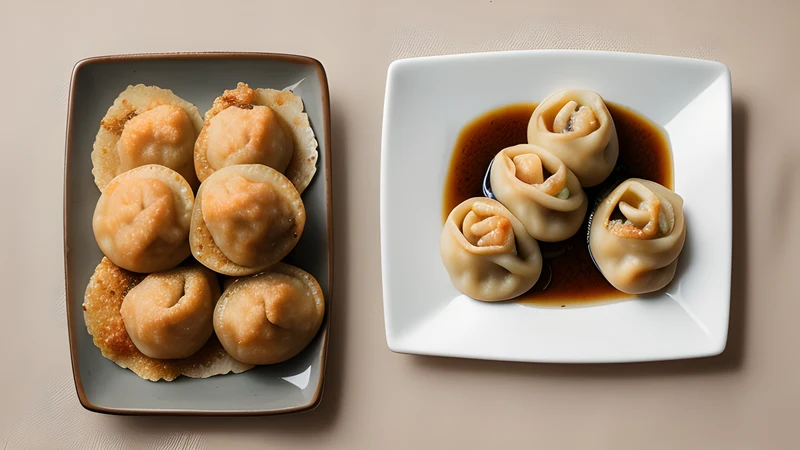
↓ Jump to recipePelmeni are the fast food of Siberia, and I mean that as the highest praise. Tiny meat dumplings in a thin, springy pasta wrapper, they boil in the time it takes to lay the table, and a bag of them in the freezer is the eastern equivalent of always having pasta in the cupboard. My small twist is in the serving: half the bowl gets a sharp lash of Chinese black vinegar, half gets a cold spoon of smetana, and you decide which you like better while you eat.
Pelmeni With Black Vinegar and Smetana
Ingredients
- 300g plain flour, plus extra for dusting
- 1 egg
- 120ml cold water
- ½ tsp fine salt for the dough
- 250g minced beef
- 150g minced pork
- 1 small onion, grated or very finely minced
- 1 garlic clove, crushed
- 1 tsp fine salt for the filling
- ½ tsp ground black pepper
- 2 tbsp very cold water or ice, mixed into the filling
- Chinkiang black vinegar, to serve
- 150g smetana (soured cream), to serve
- Fresh dill and cracked black pepper, to serve
- 1 tbsp butter (optional, to toss the drained dumplings)
Method
- Make the dough: mix the flour and salt, beat in the egg and cold water, and knead for 8–10 minutes until smooth and firm. Wrap and rest for 30 minutes at room temperature.
- Make the filling: combine both minces with the grated onion, garlic, salt, pepper and the very cold water. Mix hard with a spoon for 2 minutes until slightly sticky and paste-like — this keeps the filling juicy and bound.
- Roll the dough as thin as you can, about 1.5mm, on a well-floured surface. Cut out 6cm rounds with a cutter or glass.
- Place ½ teaspoon of filling in each round. Fold into a half-moon and pinch the edges shut, then bring the two points together and press them to form the classic pelmeni ring.
- Lay the finished pelmeni on a floured tray, not touching. At this point they can be frozen solid on the tray, then bagged.
- Bring a large pan of well-salted water to a rolling boil. Drop in the pelmeni in batches and stir gently so they do not stick to the base.
- Boil for 4–5 minutes from fresh, or 6–7 from frozen. They are done 2–3 minutes after they float to the surface and the wrapper looks translucent.
- Lift out with a slotted spoon, toss with a little butter if you like, and serve half the batch with black vinegar and cracked pepper, and half with a cold spoon of smetana and dill.
Dumplings born of the deep freeze
Pelmeni come from the cold. The dish is associated above all with Siberia and the Urals, and the story that gets told — plausibly — is that they were the original convenience food of people who lived through winters cold enough to be a natural freezer. You made hundreds of pelmeni in an autumn session, carried them outside in a sack where the air froze them solid within the hour, and boiled a handful at a time through the winter months. A hunter could carry a bag of frozen pelmeni into the taiga and have a hot, complete meal by dropping them into boiling water or melted snow.
The word itself likely comes from the Finno-Ugric languages of the region — pelnyan, meaning “ear bread,” a nod to the little folded-ear shape. That points to the deeper truth about pelmeni: they sit in the great Eurasian family of filled dumplings that runs from the Italian tortellini in the west to the Central Asian manti with cumin and lamb and the Chinese jiaozi in the east. Pelmeni are the small, meat-only, boiled, thin-skinned Russian branch of that family, distinct from their doughier cousins.
They are the savoury sibling of the fruit- and curd-filled vareniki, and first cousin to the Polish pierogi ruskie — but where pierogi are plumper and often vegetarian, pelmeni are defined by three things: a very thin wrapper, a small size, and a raw meat filling that cooks entirely in the boil.
A folk food with a whole culture around it
Pelmeni are woven so deeply into Russian and Siberian life that they come with their own rituals. Making them was traditionally a family production line, the pelmennitsa: everyone round the table, one rolling, one filling, one pinching, turning out hundreds in an evening to stock the winter. Some households still hide a single pelmen filled with something unexpected — a whole peppercorn, a coin, a twist of dough alone — and whoever finds it on their plate is promised luck for the year, a small game that turns dinner into an event. There is even a monument to the pelmen in Izhevsk, a giant dumpling on a fork, staking the Udmurt region’s claim to be their birthplace.
The mechanical pelmennitsa mould, a metal tray of hexagonal holes, became a fixture of the Soviet kitchen, letting a cook press out a sheet-full of pelmeni in one go. It works, but hand-shaping gives a thinner seam and a better seal, and it is worth the extra minutes for a special batch. Factory-frozen pelmeni, meanwhile, were one of the reliable staples of the late Soviet freezer aisle, which is why for millions of people the smell of pelmeni boiling is the smell of a quick supper after school or a cold day’s work.
The wrapper: thin, strong, and rested
Pelmeni dough is a plain egg-and-water pasta dough, and its job is to be as thin as possible while still holding together. Knead it properly — a full eight to ten minutes — to develop the gluten that gives the wrapper its snap and lets you roll it whisper-thin without tearing. Then rest it, wrapped, for half an hour so the gluten relaxes and the dough rolls out without fighting back.
Roll it thinner than feels sensible, around 1.5mm. A thick pelmeni wrapper is stodgy and the ratio of dough to meat goes wrong. Keep everything well floured and work in batches, cutting rounds and keeping the rest covered so it does not dry out.
The filling, and why you add water to raw mince
Classic pelmeni filling is a mixture of minced beef and pork, seasoned simply with salt, pepper, onion and garlic. The traditional blend often includes a little lamb as well; the point is a mix rather than a single meat. Grate the onion rather than chopping it so it disappears into the filling and releases its juice.
The one technique that separates juicy pelmeni from dry, tight little pellets is adding cold water to the raw filling. Mix a couple of tablespoons of ice-cold water or crushed ice into the mince and beat it hard for a minute or two until the filling turns slightly sticky and paste-like. The water is absorbed into the meat, and when the sealed dumpling boils, that moisture turns to a little pocket of savoury juice inside. Beating the mince also develops the meat proteins so the filling binds and holds together rather than crumbling. Keep the filling cold throughout; a warm filling is greasy and hard to work.
Regional pelmeni open the door to other fillings once the technique is yours. Across the Urals and Siberia you will meet pelmeni of elk, bear, venison and other game, a reminder of their origins as a hunter’s carry-food. In the far north, fish pelmeni made with pike or whitefish are a genuine speciality, lighter than the meat kind and lovely in a clear broth. The Udmurt and Komi peoples, who have the strongest claim to inventing them, favour a mix that leans on local game and a higher proportion of onion. For a domestic kitchen, the beef-and-pork blend here is the reliable everyday standard, but a third of lamb, or a spoon of grated onion more than feels sensible, both push the flavour in directions worth trying once you are comfortable with the folding.
Shaping, and freezing the way Siberians do
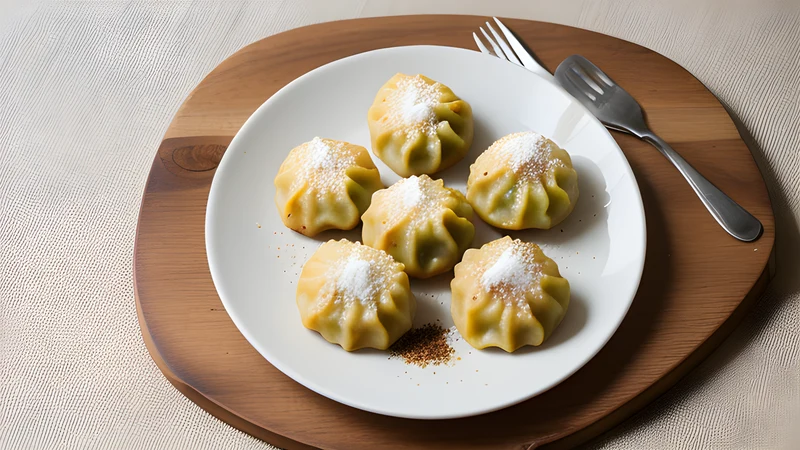
Put a small amount of filling — half a teaspoon, no more — in each round, fold into a half-moon and pinch the curved edge firmly shut. Then bring the two pointed ends around to meet and pinch them together, so the dumpling forms a little ring or bonnet. The ring shape earns its keep beyond looks: it helps them cook evenly and stops the seam bursting.
Half a teaspoon of filling sounds mean, but pelmeni are meant to be small. Overfilling is the classic beginner error — the seam splits in the boil and the filling escapes into the water.
Now do the Siberian thing. Lay the finished pelmeni on a floured tray, not touching, and freeze them solid before bagging. Freezing on the tray first stops them clumping, and pelmeni cooked straight from frozen are arguably better than fresh — the wrapper firms up and holds its bite. A freezer full of them is the whole reason to make a big batch.
Cooking and the two dressings
Boil pelmeni in plenty of well-salted water at a proper rolling boil. Stir gently as they go in so they do not stick to the base. They float when nearly done; give them two to three minutes more once they surface, until the wrapper is translucent and the meat is cooked through. Four to five minutes total from fresh, six to seven from frozen.
Some cooks add a bay leaf, a few peppercorns and a halved onion to the boiling water, so the wrappers pick up a faint aromatic note as they cook. It is a small touch that costs nothing and makes the plainest butter-and-dill bowl taste that bit more considered.
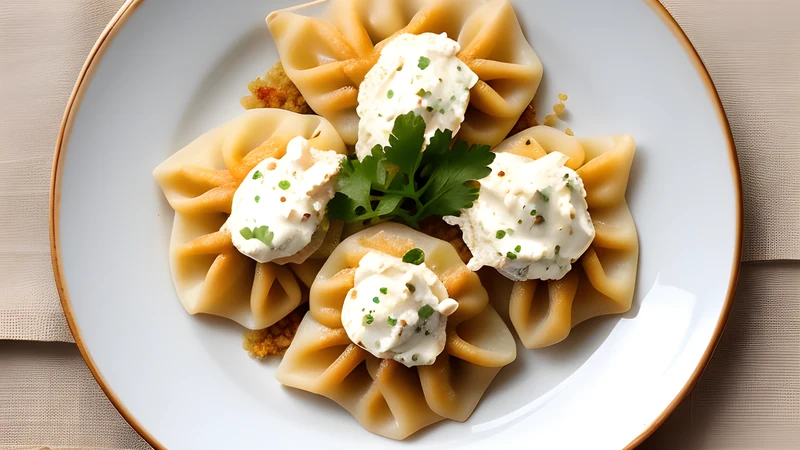
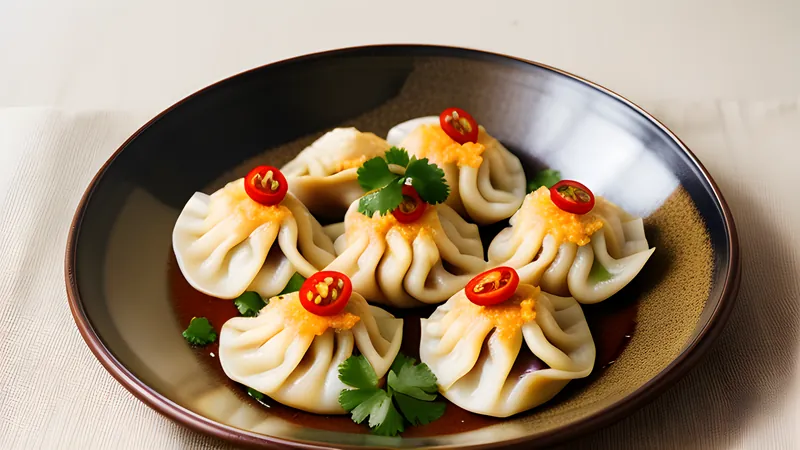
Then the fun part. Drain them, toss with a knob of butter if you like, and dress two ways. The traditional Russian finish is a cold spoon of smetana and a little dill, the sour cream melting into the hot dumplings. My favourite is a completely untraditional drizzle of Chinkiang black vinegar — the malty, faintly sweet Chinese black vinegar that dresses jiaozi — with plenty of cracked black pepper. The vinegar cuts the richness of the meat exactly the way a squeeze of acid always should. Serve half and half and let everyone find their preference.
A note on why the two dressings, because it is more than novelty. Smetana, the thick, high-fat Russian soured cream, is the orthodox partner: cool and rich, it slides over the hot dumplings and rounds out the meat. The black vinegar comes from the eastern edge of the same dumpling continent, where jiaozi are dipped in exactly that malty, dark, faintly sweet vinegar, and it does the opposite job, cutting straight through the richness with acidity. Serving both is a small argument in a bowl about how a meat dumpling wants to be finished, and letting each eater settle it for themselves is half the pleasure. Butter and dill, the plainest finish of all, splits the difference and never disappoints.
Tips, troubleshooting and variations
The seams burst. You overfilled them, or the water was boiling too violently against under-sealed edges. Use less filling and pinch firmly.
The wrapper is stodgy. Rolled too thick. Get it thinner and knead the dough well so it can take it.
The filling is dry. You skipped the cold water, or used very lean mince. Add the water, and choose beef and pork with some fat.
No smetana or black vinegar? Melted butter with dill and pepper is the plainest traditional dressing and completely legitimate. A splash of soy and rice vinegar works if you have no black vinegar.
Broth version. Pelmeni are also lovely dropped straight into a clear meat broth and served as a soup, the way a light dumpling soup like chikhirtma uses its garnish.
Make a huge batch on a rainy afternoon, freeze most of it, and you have bought yourself a dozen fast dinners. Pelmeni are the reason a Siberian winter never has to mean a bad meal.
Related Content