Pelau: The Caramel-Browned Rice Pot
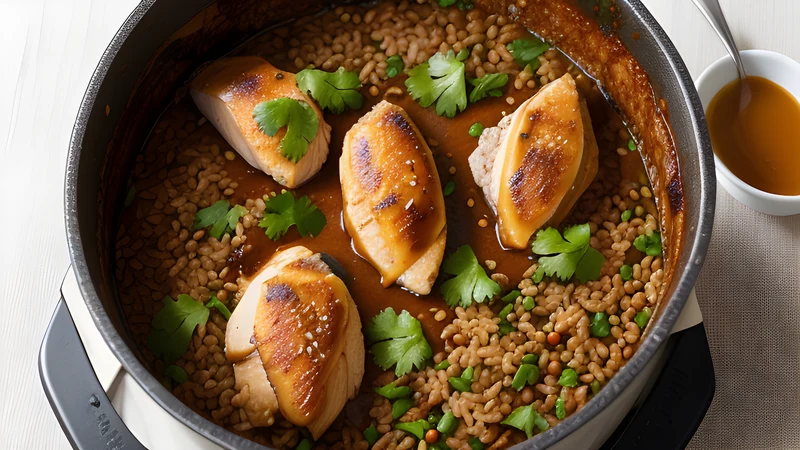
Sugar burnt on purpose, then chicken, rice and pigeon peas piled in
Contents
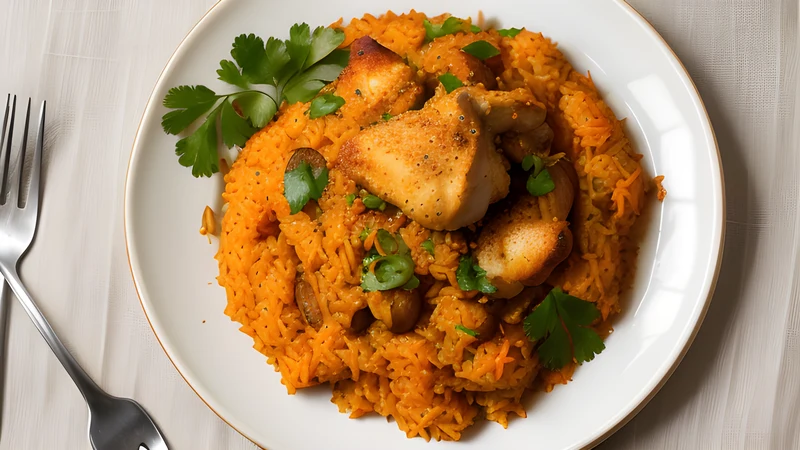
↓ Jump to recipeThere is a moment in making pelau that feels like a mistake even after you have done it a hundred times. You put sugar in hot oil and you wait, and wait, and the whole pot turns dark and starts to smoke, and every instinct built up over years of being told not to burn things screams at you to stop. You do not stop. You let it go almost to the edge of bitter, and only then throw in the chicken. That controlled near-disaster is the soul of Trinidadian pelau, and it is the reason the dish tastes of nothing else on earth.
Pelau: The Caramel-Browned Rice Pot
Ingredients
- 1 kg bone-in chicken thighs, cut into 3 to 4 cm pieces (skin on or off)
- 3 tbsp green seasoning (blended chives, culantro, thyme, garlic, spring onion)
- 2 tbsp neutral oil
- 3 tbsp soft brown sugar
- 1 onion, finely chopped
- 3 garlic cloves, minced
- 1 Scotch bonnet, whole
- 400 g pigeon peas, cooked or drained from a tin
- 350 g long-grain parboiled rice, rinsed
- 400 ml coconut milk
- 500 ml chicken stock or water
- 150 g pumpkin or butternut squash, in 2 cm dice
- 1 carrot, diced
- 1 tbsp ketchup
- 2 tsp fine salt
- 1 tsp coarsely ground black pepper
Method
- Toss the chicken with the green seasoning, cover and marinate at least 1 hour, ideally overnight.
- Heat the oil in a heavy pot over medium-high heat. Add the brown sugar and leave it, swirling occasionally, until it melts, foams and turns the colour of dark treacle with wisps of smoke, about 3 to 4 minutes. This is the point of no return: too pale and the dish is bland, too far and it turns bitter.
- Immediately add the marinated chicken (stand back, it spatters). Stir to coat every piece in the caramel and cook, turning, for 6 to 8 minutes until browned all over.
- Add the onion, garlic and whole Scotch bonnet; cook 3 minutes. Stir in the pigeon peas and rinsed rice and coat in the oil for 1 minute.
- Pour in the coconut milk and stock, add the pumpkin, carrot, ketchup, salt and pepper. Bring to a boil, then lower to a bare simmer, cover and cook 20 to 25 minutes until the rice is tender and the liquid absorbed.
- Turn off the heat and rest, covered, for 10 minutes. Fluff gently, fish out the Scotch bonnet, and serve.
A one-pot meal with a colonial and Indian tangle behind it
Pelau belongs to Trinidad and Tobago and, in slightly different forms, across the wider Caribbean. Its name and its logic trace back to pilau and pilaf, the family of seasoned rice dishes that fan out from Persia through South Asia and the Middle East. Indentured labourers from India brought that rice tradition to Trinidad in the nineteenth century; African cooks brought the technique of browning meat in burnt sugar, a method with deep West African roots; and the pigeon peas, the coconut and the Scotch bonnet are the Caribbean speaking in its own accent. Pelau is what happened when all of that cooked in one pot for long enough.
It is Sunday food, beach food, lime food (a lime in Trinidad being a relaxed gathering rather than the fruit, though the fruit turns up too). People make it in enormous pots for cricket matches and river days precisely because it is a complete meal that improves sitting in its own steam. It travels in a covered pot in the boot of a car and is somehow better for the journey. Everyone’s grandmother has an opinion about it, and most of those opinions are about the sugar.
Burnt sugar, done right
The technique at the heart of pelau is browning: caramelising sugar until it is dark and almost bitter, then using it to colour and flavour meat. You take the sugar well past the gentle amber caramel of a dessert, to the point where the sucrose has broken down into hundreds of bitter-sweet, roasted, faintly smoky compounds. Add the chicken a touch too early and the dish tastes flat and oddly sweet. Push it too far and the whole pot turns acrid and you start again.
The window is maybe thirty seconds wide, and you learn it by smell and colour: dark as strong coffee, foaming, the first threads of smoke rising. The instant it looks right, the marinated chicken goes in. The cold, wet meat stops the caramel cooking further and the sugar seizes onto the chicken as a dark glaze. Have the chicken within arm’s reach before you start the sugar, because there is no time to go hunting for it.
Use a heavy pot with a pale interior if you have one, enamelled cast iron is ideal, because you need to read the colour of the caramel and a black non-stick pan hides it from you until it is too late. Some cooks use commercial browning (a bottled burnt-sugar syrup) as a shortcut or an insurance policy. It works, but making your own in the pot is what gives real pelau its slight edge of bitterness that keeps the coconut and the sweet pumpkin honest.
The chemistry of burnt sugar, briefly
It helps to know what is actually happening in the pot, because it takes the fear out of pushing the sugar so far. Plain caramelisation, the toffee stage, tops out around 170C and gives you sweetness and a light amber colour. Keep going and the sugar begins to decompose, throwing off water and carbon dioxide and building a cascade of new molecules: some bitter, some roasted, some with the dark, almost coffee-and-liquorice notes that define Caribbean browning. This is the same reaction that gives a good gravy browning or a bottle of gravy master its colour, controlled and stopped at exactly the right instant. Go a shade too far and those bitter compounds dominate and there is no coming back. The window is narrow, but once you have hit it a few times your nose learns it before your eyes do, catching the shift from sweet caramel to that first thread of acrid smoke.
Green seasoning, the other engine
The chicken is marinated in green seasoning, the Trinidadian herb blend that does for the southern Caribbean what epis does for Haiti. The non-negotiable herb is culantro, known locally as chadon beni or shado beni, a long saw-toothed leaf with a coriander flavour turned up loud. If you cannot find it, use a generous amount of coriander plus a little extra thyme. Blend it with chives, garlic, spring onion and thyme into a rough paste and let it sit on the chicken, overnight if you have the foresight. Make a big batch of green seasoning while you are at it; it keeps for a fortnight in the fridge and freezes into ice-cube portions, and you will find yourself reaching for it on everything from fish to stewed beans.
Building the pot
Once the chicken is browned in the caramel, the rest is a well-behaved one-pot rice. Onion, garlic and a whole Scotch bonnet go in to build the base; keeping the bonnet whole means you get its fruity perfume without committing the pot to real heat. Then the pigeon peas and the rinsed rice, tossed to coat, followed by coconut milk and stock. The coconut milk is doing real work here beyond adding richness: its fat carries the caramel and spice flavours and coats each grain so the finished rice glistens rather than sitting dry. The pumpkin matters just as much. As it cooks it collapses slightly and sweetens the pot from within, a gentle counterweight to the bitter sugar.
Use parboiled (converted) long-grain rice if you can. It shrugs off the long liquid cooking and the resting far better than basmati, staying separate rather than turning to porridge. Rinse it until the water runs clear to wash off surface starch, which is the difference between fluffy pelau and a claggy one.
Bring it to a boil, then drop it to the barest simmer and cover. Resist lifting the lid; you need that trapped steam to cook the rice evenly, and every peek lets it escape. After twenty-odd minutes the liquid should be gone and the grains tender. Then comes the rest that too many cooks skip: ten minutes off the heat, lid on, so the rice firms up and the flavours settle. Fluff gently with a fork, fish out the Scotch bonnet before someone bites it, and you are done.
The rice question deserves a little more. Trinidadians argue about pelau’s ideal texture as fiercely as they argue about the sugar. Some like it drier and more separate, closer to a Sunday cook-up rice; others want it a touch sticky and moist, the grains just clinging, so it holds together on a fork at a beach lime. The moisture comes down to your liquid and your resting: a splash more coconut milk and a shorter rest give a moister pot, while a longer covered rest firms it up. Neither camp is wrong, and half the fun of making pelau often is landing on the texture your own household prefers, then defending it to everyone else.
Variations across the islands
Pelau is a template as much as a recipe. In Tobago you will find it made with saltfish or with crab, the shells cracked and cooked right in the rice so you eat with your fingers. Guyanese cooks tilt theirs sweeter and sometimes richer with more coconut. Beef pelau is common, and a version built on browned oxtail, given an extra hour of simmering before the rice goes in, is a genuinely special thing. Vegetarians can drop the meat entirely and lean harder on the pigeon peas, pumpkin and coconut, though you then lose the browning step, so cheat with a spoonful of bottled browning to keep the colour.
Tips, swaps and storage
Peas. Pigeon peas (gandules) are traditional and give pelau its slightly earthy, chestnut note. Black-eyed peas are the usual stand-in. Tinned peas are entirely acceptable; dried ones want soaking and pre-cooking until just tender before they join the pot.
Consistency. Trinidadian pelau is meant to be a little bit moist and sticky rather than bone dry like a pilaf. If yours looks dry before the rice is cooked, add a splash of hot stock. If it is too wet at the end, cook uncovered for a few minutes to drive off the excess.
Meat. Bone-in thighs give the best flavour and stay juicy through the long cook. Boneless works but check it a few minutes earlier so it does not dry out.
Coconut. Full-fat tinned coconut milk is standard and gives the pot its gloss and body. Some cooks grate fresh coconut and squeeze their own milk for a rounder flavour, and in Tobago you will find pelau made richer still with the first thick pressing. Light coconut milk works at a pinch but leaves the rice drier and less lacquered, so top up with a little extra stock if you use it.
Make ahead and storage. Pelau keeps for three days in the fridge and, if anything, tastes better on day two once the seasoning has bedded in. Reheat with a splash of water to loosen it. It freezes well for up to two months.
Serve it as it comes, or with a sharp slaw to cut the richness; a spoonful of Haitian pikliz does the job beautifully, traditional or not. For a fuller spread it sits happily next to jerk chicken or a bowl of coconut rundown, both of which lean on the same island larder of Scotch bonnet, thyme and coconut. But pelau is really a meal on its own, the pot you make when you want one thing to feed everybody, dark and sweet and faintly smoky, cooked around a mistake you make on purpose.
Related Content