Pear Frangipane Tart with Cardamom
Almond cream, poached pears, a haze of spice
Contents
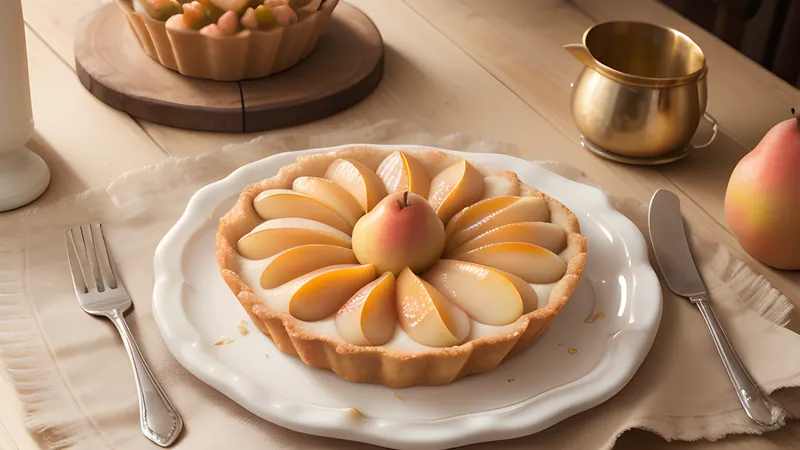
↓ Jump to recipeA pear frangipane tart is, to my mind, one of the most quietly elegant things you can bake. There is something deeply satisfying about the contrast: crisp sweet pastry, a dense almond filling that puffs up around the fruit, and soft poached pears sitting on top like they have always belonged there. It looks like patisserie and tastes like a hug. The only thing I have changed from the classic is to fold ground cardamom through the almond cream, which sounds small but turns a lovely tart into something you cannot quite stop thinking about.
Pear Frangipane Tart with Cardamom
Ingredients
- 200g plain flour
- 100g cold unsalted butter, cubed, for the pastry
- 50g icing sugar
- 1 large egg yolk
- 2 tbsp cold water
- 4 ripe but firm pears
- seeds from 8 cardamom pods, finely ground
- 125g soft unsalted butter, for the frangipane
- 125g caster sugar
- 125g ground almonds
- 2 large eggs
- 1 tbsp plain flour
- 0.5 tsp almond extract
- 30g flaked almonds
- 2 tbsp apricot jam, to glaze
Method
- Rub the cold butter into the flour and icing sugar, bind with the egg yolk and water to a dough, then chill, roll out and line a 23cm tart tin and chill again.
- Blind bake the case at 180C fan for 15 minutes with baking beans, then 8 minutes more until pale gold and dry.
- Halve and core the pears, leaving the skin on or off as you prefer, and set aside.
- Beat the soft butter and caster sugar until pale, then beat in the eggs one at a time, followed by the ground almonds, flour, almond extract and ground cardamom.
- Spread the frangipane into the cooled pastry case and arrange the pear halves cut-side down on top, fanning them slightly.
- Scatter over the flaked almonds and bake at 170C fan for 35 to 40 minutes until the frangipane is set and golden.
- Warm the apricot jam with a splash of water and brush over the warm tart to glaze.
- Cool to just warm before slicing, and serve with cream or crème fraîche.
Frangipane, the Pastry Cook’s Secret Weapon
Frangipane is an almond cream, a simple mixture of equal parts butter, sugar and ground almonds bound with egg. It is one of the genuinely great building blocks of European baking, the soft almond filling inside everything from a Bakewell tart to a galette des rois to a French apple tart. Its name is wreathed in legend, often traced to a sixteenth-century Italian nobleman, the Marquis Frangipani, who is said to have invented an almond-scented perfume for gloves; pastry cooks supposedly created an almond cream to echo the fashionable scent. Whether or not that tale holds up, the name stuck, and frangipane has been a fixture of fine baking ever since.
What makes it so useful is its texture. Raw, it is a thick, spoonable cream. In the oven it puffs and sets into something between a sponge and a baked custard, moist and rich, and it has the structural courtesy to hold fruit in place while it bakes. Pears, apples, plums, apricots, raspberries: almost anything you press into it will be cradled and lifted as it cooks.
There is a nice distinction worth knowing. Strictly, crème d’amande is the raw almond cream, while true frangipane in classic French pastry is that almond cream cut with a portion of crème pâtissière, giving a lighter, more custardy set. Most home bakers, myself included, use “frangipane” loosely to mean the straight almond-cream version, which is sturdier and more forgiving in a fruit tart. It is the same building block that fills a galette des rois at Epiphany and a Bakewell, and once you have the ratio in your hands you will find yourself reaching for it constantly.
What you need
For the sweet pastry: 200g plain flour, 100g cold cubed unsalted butter, 50g icing sugar, one large egg yolk and 2 tablespoons of cold water. For the frangipane: 125g each of soft unsalted butter, caster sugar and ground almonds — that equal-weights trio is the classic ratio — plus 2 large eggs, a tablespoon of plain flour, half a teaspoon of almond extract and the ground seeds of 8 cardamom pods. To finish: 4 ripe but firm pears, 30g flaked almonds and 2 tablespoons of apricot jam for the glaze.
Ground almonds do the structural work, so buy them fresh; almonds go rancid quietly, and stale ones taste faintly of paint. Conference and Williams pears are ideal — they hold their shape while softening — and the apricot jam should be a smooth one, or sieved, so the glaze goes on clear.
The Cardamom Difference
Almond and pear is a serene, almost demure flavour pairing. It is wonderful, but it can be a touch one-dimensional, all soft sweetness. Cardamom is what gives it edges. Ground from its little pods, cardamom carries a complex, resinous, faintly citrusy warmth with a cool eucalyptus note underneath, and it has a particular affinity with both almonds and pears that feels almost inevitable once you have tasted it.
The key is to grind the seeds yourself. Crack open the green pods, tip out the small black seeds, and grind them fresh in a pestle and mortar. Pre-ground cardamom from a jar loses its volatile oils within weeks and tastes dusty and flat by comparison. Freshly ground, it perfumes the whole frangipane, and as the tart bakes the scent fills the kitchen in the most extraordinary way. Eight pods sounds like a lot but disperses into a gentle, haunting warmth rather than anything overpowering.
Building the Tart
Start with a sweet shortcrust, blind baked until crisp and dry, because frangipane is moist and will soften a raw base. Use ripe but firm pears; a rock-hard pear stays chalky, while an overripe one collapses into mush. Conference and Williams both work well. Halve and core them, then arrange them cut-side down on the frangipane, fanning each half with a few cuts if you want that classic patisserie look, though simply nestling them in works just as beautifully.
Do not overfill the case with frangipane. It rises considerably, and you want it to set proud around the fruit, not overflow the pastry rim. A scattering of flaked almonds across the top toasts to a fragrant crunch and stops the surface looking pale. Bake at a moderate temperature so the almond cream cooks through to the centre without the edges scorching; it is done when the frangipane is golden, puffed and set with no wet wobble in the middle.
The Finishing Glaze and Serving
A warm apricot glaze is the final flourish, the trick that takes a homemade tart from rustic to professional. Melt a couple of spoonfuls of apricot jam with a splash of water, sieve out any lumps, and brush it over the warm pears and almonds. It sets to a soft, glossy sheen that makes the fruit gleam and keeps it from drying out.
Serve the tart just warm or at room temperature, never hot from the oven, so the frangipane has time to firm and the flavours to settle. A spoonful of cold crème fraîche or a jug of pouring cream is the perfect partner, the slight sourness cutting through the richness of the almonds. It keeps happily for three days under a cloche, and a slice with strong coffee is, I would argue, a near-perfect afternoon.
Where it can go wrong
The commonest disappointment is a soggy base, and it always traces back to the blind bake. Frangipane is a wet filling, so the pastry must be fully cooked and dried out before it goes in — pale gold and sandy to the touch, not blond and soft. Bake it with beans until set, then a few minutes more without them so the base dries. A raw base under a wet filling never recovers in the oven.
The second is a frangipane that sinks or weeps. This happens if you overfill the case, so it cannot set through before the edges catch, or if the butter and sugar were not creamed enough to hold air. Beat them until genuinely pale and fluffy, add the eggs one at a time so the mixture does not split, and fill the case only about two-thirds deep. The frangipane should rise proud around the pears, not brim over the rim.
Underbaking leaves a wet, custardy centre that collapses when you cut it. It is done when the top is evenly golden, puffed and set with no liquid wobble in the middle; a skewer into the almond cream between the pears should come out clean. If the top is colouring too fast before the centre sets, lay a loose sheet of foil over it and carry on.
Substitutions and make-ahead
Apples make a fine swap for pears, sliced a little thinner as they hold more water; plums, apricots and pitted cherries all work, cut-side up. If you have not got cardamom, a scrape of orange zest and a splash more almond extract keeps it fragrant, though the cardamom is the whole point of this version. Ground almonds can be part-swapped for ground hazelnuts or pistachios for a different perfume, keeping the total weight the same.
The pastry can be made and chilled up to two days ahead, or frozen raw in the tin. The frangipane is best mixed fresh, but the whole tart bakes and keeps beautifully — it is arguably better on day two, once the cardamom has bloomed through. Store it under a cloche at room temperature for three days, or freeze slices well wrapped.
A note on the pears themselves. If yours are a little firm, poach the halves gently first in a light syrup with a strip of lemon and a cardamom pod for ten minutes or so, until a knife slides in with slight resistance, then cool and pat them dry before laying them on the frangipane. Poaching guarantees a tender, evenly cooked pear and lets you tint the syrup with vanilla or a splash of white wine. Whatever you do, dry the fruit well: wet pears bleed juice into the almond cream and can leave a soggy patch beneath them. A quick pat with kitchen paper is all it takes.
Presentation is worth thirty seconds of care. Fanning each pear half with three or four lengthways cuts, then pressing gently so the slices splay, gives that classic patisserie look as the fruit spreads over the baking frangipane. But honestly, whole halves nestled in and scattered with almonds look rustic and lovely too, so do whichever suits your mood and your patience on the day.
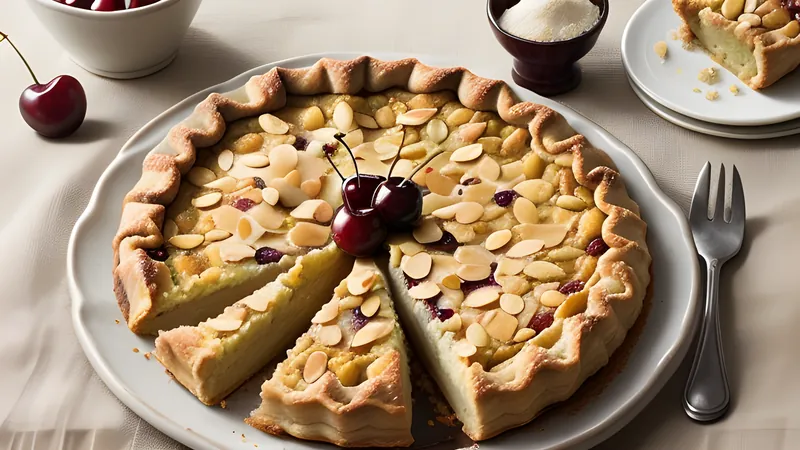
If cardamom in baking is your thing, it does the same lifting work in my cardamom cinnamon rolls and, most fittingly, in a cherry and almond frangipane galette that uses this exact almond-cream base in a free-form, no-tin-required guise.
Related Content