Pastrami de Oaie: The Romanian Smoked Mutton
The shepherd's autumn preserve, thyme-heavy and cold-smoked over beech
Contents
↓ Jump to recipeAsk a Romanian shepherd about pastrami and you will get a look. The word has been so thoroughly annexed by New York delicatessens — beef navel, coriander crust, rye bread, mustard — that its origin has quietly detached from it. The Romanian word is pastramă, from the verb a păstra, to keep, to preserve. It is what you did to a sheep in October when you could not feed it through the winter and could not eat it all in a week.
Pastramă de oaie is that original: mutton, salted hard, dressed with thyme and garlic, and hung in the smoke of a beech fire. It is one of those dishes that explains its own existence the moment you know the calendar it belongs to.
Pastrami de Oaie: The Romanian Smoked Mutton
Ingredients
- 1.5kg boneless mutton or hogget leg, trimmed and opened out to an even 4cm thickness
- 45g fine sea salt (3% of the meat weight)
- 3.8g curing salt no. 1 / Prague powder #1 (0.25% of the meat weight)
- 15g caster sugar
- 20g dried thyme
- 8 garlic cloves, crushed to a paste
- 10g coarsely cracked black pepper
- 5g ground coriander seed
- 3g crushed dried chilli flakes
- 2 bay leaves, crumbled
- 1 tbsp sunflower oil, for the rub
- Beech or fruitwood dust or chips, for cold smoking
Method
- Weigh the trimmed meat and recalculate the salts if it differs from 1.5kg: fine salt at 3% of meat weight, curing salt no. 1 at 0.25%. Do not estimate these — accuracy is the whole safety margin.
- Combine the fine salt, curing salt, sugar, 10g of the thyme, the coriander, half the pepper and the crumbled bay in a bowl. Mix thoroughly so the pink curing salt is evenly dispersed through the mix.
- Rub the cure over every surface of the meat, working it into folds and seams. Put the meat in a non-reactive dish or a zip bag, pour in any loose cure, and refrigerate at 3–5C for 5 days for a 4cm thickness, turning daily and redistributing the liquid that draws out.
- After 5 days the meat should feel firm and springy throughout, with no soft raw give in the centre. Rinse thoroughly under cold water for 2 minutes to remove surface cure.
- Soak the meat in a bowl of fresh cold water for 2 hours, changing the water once. This equalises the salt from the surface inwards and stops the finished meat tasting aggressively salty at the edges.
- Pat completely dry. Mix the garlic paste, remaining 10g thyme, remaining pepper, chilli flakes and oil into a slurry and rub it over the entire surface.
- Hang the meat or set it on a rack in the fridge, uncovered, for 24 hours until the surface is dry and tacky to the touch — this pellicle is what smoke adheres to. Smoke will not stick to a wet surface; it will run off as bitter condensate.
- Cold-smoke over beech at below 25C for 6 hours total, in two 3-hour sessions with a rest in the fridge between. Keep the chamber temperature under 25C throughout — check with a probe, not by feel.
- Hang the smoked meat in the fridge, uncovered, for a further 3 days to let the smoke settle and mellow. It will taste harsh and ashy on day one and rounded by day three.
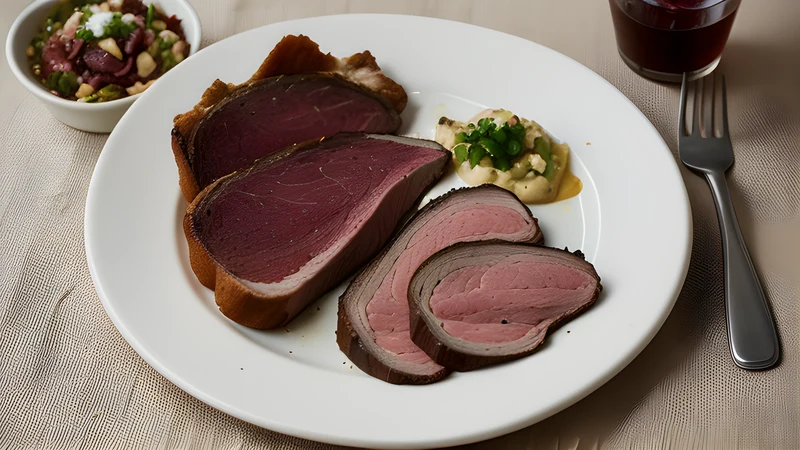
- To serve, slice as thinly as you can across the grain. To cook, griddle 5mm slices over high heat for 40 seconds per side until the fat renders and the edges catch.
The transhumance, and why October
Romanian sheep farming ran on transhumance — flocks moving up to the Carpathian pastures in spring and back down to the lowlands in autumn, a rhythm that shaped the Romanian language, the folk ballads and the food. The Mioriţa, arguably the country’s central folk poem, is a shepherd’s story. This is not a marginal tradition.
The autumn descent forced an annual arithmetic. A shepherd came down with more animals than he had winter fodder for, and the culled ones — usually older ewes and wethers past their best breeding or wool years — had to be turned into something that would last until spring. The older animal is the point rather than a compromise. Mutton from a three-year-old ewe has the intramuscular fat, the collagen and the frank sheepy flavour that stands up to salt and smoke. Lamb, cured this way, tastes of very little.
The date matters too. The feast of St Demetrius, 26 October in the Romanian calendar, marked the end of the shepherding year and the settling of contracts. Pastramă season ran from then through November, in weather cold enough that a hanging carcass was in no danger. This was a preservation technique that depended on ambient temperature, which is precisely why your fridge is doing the work the Carpathian autumn used to do.
The word travelled with people. Romanian and Sephardic Jewish communities in the Ottoman lands and later in Romania made and traded pastramă; Romanian Jewish emigrants carried the term to New York in the 1870s and 1880s, where it met cheap American beef navel, acquired a second r somewhere in the transliteration, and became pastrami. The New York version is brined, spiced, smoked hot and then steamed. The Romanian original is dry-cured, cold-smoked, and eaten in slivers. They share an ancestor and a name, and almost nothing else.
Salt, and the number that matters
This is a cured meat, so I am going to be dull about salt for a paragraph, because the alternative is worse.
You need two salts. Fine sea salt at 3% of the meat weight controls the seasoning and draws out water. Curing salt no. 1 — sodium chloride with 6.25% sodium nitrite, sold as Prague powder #1 or pink curing salt — at 0.25% of the meat weight controls Clostridium botulinum. Cold smoking holds meat for hours in the 15–25C range, which is the temperature band that organism likes best, in an environment with no oxygen deep in the muscle. Nitrite is what makes that safe. It is also what gives cured meat its pink colour and its characteristic tang.
Weigh both on a scale that reads to 0.1g. Do not scale by eye, do not “add a bit extra to be safe” — nitrite has a genuine upper limit and 0.25% of meat weight is the standard equilibrium-cure figure. If you would rather not use nitrite, then hot-smoke this instead: cure with salt alone, then cook at 110C to an internal 68C. You get a good roast dinner. You do not get pastramă, because the texture depends on the meat never being cooked.
The five-day cure time assumes an even 4cm thickness. The working rule for equilibrium curing is roughly one day per centimetre of thickness plus two days, and thickness means the shortest distance from surface to centre. A leg left at 7cm at the thick end and 2cm at the thin end will be simultaneously over- and under-cured, which is why the first instruction is to open it out flat.
The thyme, the garlic, and my one deviation
The classic Romanian rub is thyme and garlic in quantities that look wrong written down and taste right on the plate. Twenty grams of dried thyme on a leg of mutton reads as an error; it is not. Mutton carries a family of branched-chain fatty acids that produce the flavour people mean when they say “sheepy”, and thyme is one of the few herbs with the phenolic weight — thymol, carvacrol — to meet it head-on rather than sit politely beside it. Use dried rather than fresh here. Fresh thyme has water in it, water works against the pellicle, and the woody stalks steam rather than adhere.
Garlic goes on after the cure and after the soak. Raw garlic in a five-day salt cure turns bitter and faintly metallic as its allicin degrades against the salt, and the fridge does the rest. Applied as a paste at the pellicle stage, it dries onto the surface, takes the smoke with it, and mellows over the three-day rest into something warm and round.
My deviation is the coriander seed, which is a nod across the Atlantic to what the New York branch of the family did with the name. Five grams in the cure adds a citrus top note that lifts the thyme without announcing itself. Purists will tell you it does not belong. They are historically right and I am keeping it.
The smoke
Cold smoking is flavour and surface drying. It is not cooking, and the temperature is the entire distinction. Above about 30C the fat in mutton starts to soften and weep, the surface proteins begin to set, and you end up in the worst zone — warm enough to encourage bacteria, cool enough to do nothing about them.
Beech is the traditional wood and it is traditional for a good reason: it burns clean and gives a mild, slightly sweet smoke that lets the thyme through. Fruitwoods work. Avoid oak here, which is heavy enough to bury the herbs, and never use conifer, which deposits resin.
The pellicle stage is the one people skip and then wonder why their meat tastes of ash. Smoke particles are carried in water vapour and they adhere to a dry, tacky protein surface. On a wet surface, that vapour condenses and runs, concentrating the acrid phenolic fraction in streaks. Twenty-four hours uncovered in the fridge gives you a surface that feels like a slightly sticky drum skin. That is what you want.
Two three-hour sessions rather than one six-hour session is my preference, and it is about temperature control more than chemistry. A smoke generator running for six hours will creep upwards in an enclosed chamber. Splitting the sessions lets everything reset.
Where it goes wrong
Acrid, ashtray flavour. Wet surface, or the smoke ran too hot and you got combustion rather than smouldering. A cold smoke should produce thin blue smoke you can barely see, never billowing white.
Salty at the edges, bland in the middle. You skipped the two-hour soak, or the cure time was too short for the thickness.
Grey rather than rose in the centre. The curing salt was under-dosed or unevenly mixed. It is a colour cue for nitrite penetration — take it seriously.
Tough and dry. You used lamb rather than mutton, or trimmed off all the fat. The fat cap is a moisture barrier during the fridge-hang.
A slick, slightly slimy surface after smoking. Condensation during the fridge rest. Pat it dry and hang it uncovered with better air circulation.
Harsh, thin, aggressive smoke flavour after three days. You went past six hours, or the wood was damp. Damp dust smoulders dirty and deposits creosote, and no amount of resting will round that off.
Kit, and what to do without a smoker
You do not need a smokehouse. The standard domestic setup is a cold smoke generator — a perforated metal maze that holds a bed of fine hardwood dust and smoulders for eight to ten hours from a single tealight lighting — sitting in the bottom of any enclosed box with a vent. A kettle barbecue with the lid on and both vents cracked works. A cardboard wine box with a hole in the top and a hole in the side works, and I have used one. The generator produces almost no heat of its own, which is the whole reason the technique is available to people with no equipment.
The two things you genuinely need are a probe thermometer to confirm you are under 25C, and a cool day. Cold smoking in a British February is easy. Cold smoking in July requires a tray of ice in the chamber and a lot of checking, and I would simply wait.
Eating it
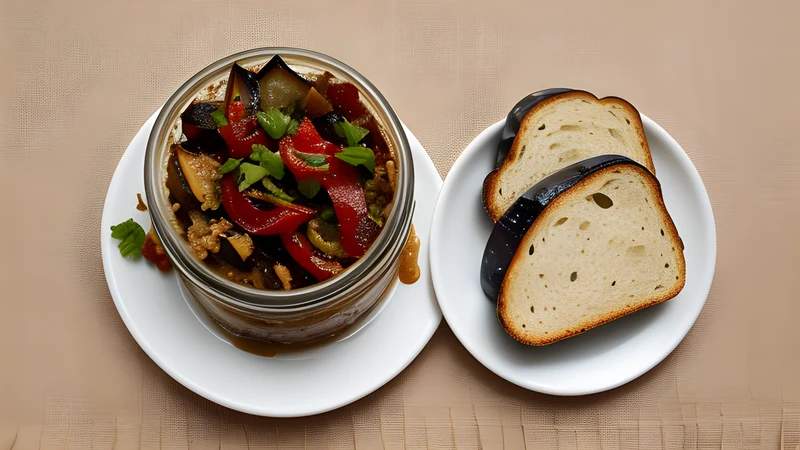
Thin slices, cold, with raw onion and a piece of dark bread, is the shepherd’s way and still the best one. It goes properly well with the Romanian aubergine spread — the smoke and the roasted pepper are arguing about the same territory and somehow agree.
Griddled is the other option and it changes the dish completely. Cut 5mm slices, get a dry pan properly hot, and give them 40 seconds a side. The fat renders, the edges catch, and the thyme lifts off the surface as it heats. Served this way with polenta it becomes a full plate, and it sits beside mititei on a Romanian grill without either one apologising.
It keeps, wrapped in paper rather than plastic, for three weeks in the fridge, and it freezes well in 200g pieces. The Icelandic approach in hangikjöt reaches almost the same place from a different direction — smoked sheep, cold climate, winter meat — which is what happens when two peoples with mountains and mutton solve the same problem independently.
Related Content