Pastitsio: The Greek Bake of Pasta, Mince and Béchamel
Three layers, one cinnamon-scented argument
Contents
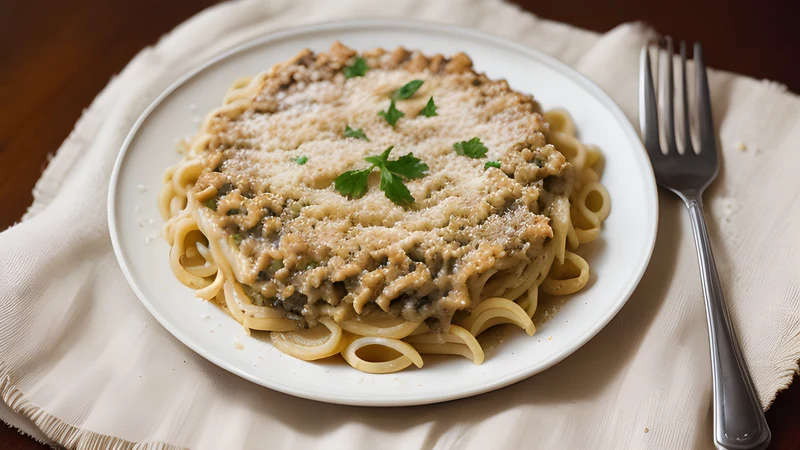
↓ Jump to recipePastitsio is the dish people describe as Greek lasagne and then get told off for describing as Greek lasagne. The complaint is fair. Lasagne is flat sheets and ragù; pastitsio is long hollow tubes laid in one direction, a mince spiced with cinnamon and clove, and a béchamel so thick with egg yolk and hard cheese that it bakes into something closer to a savoury custard than a sauce. Cut it and the slice stands up. That is the entire point.
The name comes through Italian — pasticcio, a pie or a mess, from the same root as pastiche — and arrived via the Venetians who spent four and a half centuries in Greek waters. The version you eat now, though, is largely the work of Nikolaos Tselementes, the Greek chef who trained in Vienna and Paris and published a cookbook in 1910 that reformed Greek cooking along French lines. Tselementes is the reason both pastitsio and moussaka wear a béchamel hat. Greeks have been arguing about whether that was an improvement or a colonisation ever since. It is a good hat.
Pastitsio: The Greek Bake of Pasta, Mince and Béchamel
Ingredients
- 500g pastitsio no. 2 pasta, or bucatini
- For the mince: 3 tbsp olive oil
- 1 large onion, finely diced
- 4 garlic cloves, finely chopped
- 700g minced beef, or 500g beef and 200g minced lamb
- 2 tbsp tomato purée
- 400g tinned chopped tomatoes
- 150ml dry red wine
- 1 cinnamon stick
- 2 bay leaves
- 1/4 tsp ground allspice
- 1/4 tsp ground cloves
- 1 tsp dried Greek oregano
- 1.5 tsp fine sea salt
- For the béchamel: 120g unsalted butter
- 120g plain flour
- 1.2 litres whole milk, warmed
- 1/2 tsp freshly grated nutmeg
- 1 tsp fine sea salt
- 150g kefalotyri or pecorino, finely grated
- 3 large egg yolks
- 50g kefalotyri, extra, for the top
Method
- Heat the oven to 180C. Grease a deep 30x22cm roasting dish.
- Make the mince first. Warm 3 tbsp olive oil in a wide pan over a medium heat, add the onion with a pinch of salt and cook for 10 minutes until soft and golden. Add the garlic for 2 minutes.
- Raise the heat, add the mince, and break it up. Cook for 10-12 minutes, stirring, until the liquid has gone and the meat is browning and sticking. This is the flavour; do not stop early.
- Stir in the tomato purée and cook for 1 minute. Pour in the wine and let it bubble away almost completely, 3 minutes.
- Add the tomatoes, cinnamon stick, bay, allspice, cloves, oregano and 1.5 tsp salt. Simmer uncovered for 30-35 minutes, until thick enough that a spoon dragged through leaves a clear channel. Remove the cinnamon and bay. Cool slightly.
- Cook the pasta in heavily salted water for 2 minutes less than the packet says. Drain, rinse briefly under cold water to stop it, and toss with 1 tbsp olive oil.
- Make the béchamel. Melt the 120g butter in a heavy pan over a medium heat and keep cooking it, swirling, for 4-5 minutes past melting: it will foam, then quieten, and the milk solids will turn hazelnut brown and smell nutty. Watch it constantly.
- Whisk in the flour immediately and cook for 2 minutes, whisking, to a sandy paste.
- Add the warm milk in five additions, whisking each to smooth before the next. Cook, whisking, for 8-10 minutes until it thickly coats a spoon.
- Off the heat, whisk in the nutmeg, 1 tsp salt and 150g grated cheese. Cool for 5 minutes, then whisk in the egg yolks one at a time.
- Assemble: spread half the pasta in the dish, aligning the tubes in one direction. Spoon over a third of the béchamel and spread thin. Add all the mince in an even layer. Top with the remaining pasta, again aligned.
- Pour over the remaining béchamel and level it with a spatula. Scatter the extra 50g cheese on top.
- Bake for 45-50 minutes, until deep golden with dark patches and set in the middle when you press it.
- Rest for 30 minutes before cutting. This is not negotiable if you want clean slices.
The pasta, which is specific
Greek shops sell it as pastitsio no. 2 — a thick hollow tube about 20cm long, roughly the diameter of a pencil, sometimes with a groove down one side. Bucatini is the substitute everyone reaches for and it works, though the tubes are thinner and the slice is slightly less architectural. Macaroni elbows produce something that tastes correct and falls apart on the plate.
Cook it two minutes short. It will finish in the oven, in a dish full of moisture, over fifty minutes, and pasta cooked to package time goes to paste. Rinse it briefly to stop the cooking and toss it in oil so it does not weld into a brick while you assemble.
Lay the tubes in one direction. Aligned tubes give the finished bake a grain, and the slice cuts cleanly across them rather than dragging. It takes an extra ninety seconds.
Brown the butter
Here is the change, and it is the reason to make my version rather than any other. The béchamel starts with 120g of butter that you take past melted and into brown.
Butter is about 16% water and 2% milk solids. When you keep heating it, the water boils off — that is the foaming stage — and then the milk solids, which are protein and lactose, hit the pan and go through the Maillard reaction. You get hundreds of new compounds and the butter smells of hazelnut and toffee. Whisk the flour straight into that and the entire roux, and everything built on it, carries the toast.
Pastitsio’s béchamel has a hard job. It is a litre and a bit of milk with flour, and by nature it tastes of milk and flour. Nutmeg is the traditional attempt to give it interest and nutmeg only goes so far. Brown butter gives it a base that stands up to the cinnamon mince underneath instead of sitting on it like a white blanket. The top also colours better, because you started with browned solids.
Four to five minutes past melting, over medium heat, in a pan you can see the bottom of — stainless rather than black non-stick, because the colour is your only gauge. When it smells nutty and the specks are the colour of a digestive biscuit, the flour goes in immediately. Ten seconds later it is burnt, and burnt butter is bitter and there is no coming back.
The egg yolks
Three yolks, whisked in off the heat once the sauce has cooled for five minutes. They are what makes pastitsio sliceable. Egg proteins set at around 65-70C and turn a pourable sauce into a firm custard-like layer that holds the shape of a knife cut.
Cool it first. Yolks added to a sauce at 90C scramble into yellow threads instantly. Five minutes and a vigorous whisk, one yolk at a time.
Kefalotyri is the cheese: a hard salty Greek sheep’s-milk cheese, sharper than parmesan and saltier. Pecorino romano is a very close stand-in. Parmesan works and tastes slightly wrong in a way you will only notice if you have had the real thing.
The mince and the spice
Cook the mince until it is properly browning and catching on the pan — ten to twelve minutes past the point the liquid has gone. Most people stop while it is still grey and stewing in its own juice, and the finished dish is flat for exactly this reason. You want fond on the base of the pan.
Cinnamon stick, allspice, clove. Restrained: a quarter teaspoon each of the ground spices. The mince should read as warm and faintly sweet under the tomato, and someone who does not know should be unable to name what is in it. Overdo the clove and it tastes of dentistry.
Reduce it hard, until a spoon dragged across the base leaves a channel that stays open for a second. A wet mince makes a wet bake, and the béchamel above it goes soggy from below.
The thin béchamel layer in the middle
A third of the béchamel goes between the bottom pasta layer and the mince. This is a trick from Greek home cooks and it is worth doing: it glues the pasta to itself and creates a barrier that stops the mince’s moisture wicking down into the base. Thin — a few millimetres.
Béchamel without lumps
A litre and a bit of milk is a lot of sauce to keep smooth and the failures are predictable.
Warm the milk. Cold milk hitting a hot roux shocks the starch granules and they clump before they have a chance to disperse. Warm — not hot, not boiling — is the easy insurance.
Add it in five additions, and whisk each one completely smooth before the next. The first addition is the difficult one and it will look like wallpaper paste; that is correct, and it is the stage where lumps are formed or prevented. Once you have a smooth thick paste, everything after it is easy.
Cook it for the full eight to ten minutes after the last of the milk. Flour starch needs to gelatinise and it needs the raw taste cooked out, and a béchamel pulled at four minutes tastes of flour and thins as it sits. It is ready when it thickly coats the back of a spoon and a finger drawn through leaves a clean line.
If it lumps anyway, a stick blender for ten seconds fixes it entirely and nobody will know.
Getting the layers to stay layers
The bake should cut into three clean bands and this is largely about moisture control.
The mince must be properly reduced, to the point where it is dry. The pasta must be underdone and lightly oiled. The béchamel must be thick enough to sit on top rather than sink through the pasta into the mince below, which is why the flour-to-milk ratio here is heavier than a sauce you would pour over cauliflower.
The thin béchamel layer in the middle is the seal. And the final béchamel goes on levelled flat with a spatula, right to the edges, so it forms a lid — any gap at the rim lets steam escape upward and the surface cracks.
What can go wrong
It collapsed when I cut it. You cut it hot, or you left the egg yolks out. Thirty minutes rest, and the yolks are structural.
The top is pale. Not enough time uncovered, or no cheese on top. Kefalotyri browns hard and it is the main colour source.
The béchamel is grainy and yellow-flecked. The yolks went in too hot and scrambled. Cool the sauce for five minutes first.
The bottom is swimming. A wet mince, or pasta that was not drained properly.
It tastes flat despite everything. The mince was not browned. Grey mince makes grey pastitsio, and no amount of cinnamon fixes it.
The dish in a Greek week
Pastitsio is Sunday food and funeral food and taverna food, and it occupies a specific slot: the thing you make when there are more people than you planned for. A 30x22cm tin feeds eight generously and ten if you add a salad, it costs very little per head, and it sits happily in a warm oven for an hour while everyone arrives late.
It is also the standard Greek freezer investment. Most households I have eaten in make two and freeze one, because the labour is in the mince and the béchamel and doubling those costs almost nothing in time. If you are going to spend an evening browning mince and whisking a litre of milk, spend it once.
The other thing to know is that it is eaten warm rather than hot. Straight from the oven the béchamel is loose and the spice is muted; twenty minutes later everything has settled and you can actually taste the cinnamon. Greeks are relaxed about this to a degree that alarms visitors.
Buying the cheese
Kefalotyri is worth hunting down. It is a hard sheep’s or sheep-and-goat’s milk cheese, aged three months minimum, pale straw-coloured with small irregular holes, and it is aggressively salty and slightly sharp in a way that cow’s milk cheeses are not. That sharpness is what cuts through a litre of béchamel.
Pecorino romano is the closest thing in a British supermarket and it is a genuinely good substitute — same milk, similar age, similar salt. Kefalograviera is the other Greek option, milder and nuttier, and it is what a lot of tavernas actually use.
Grate it finely and grate it yourself. Pre-grated hard cheese is coated in potato starch or cellulose to stop it clumping, and that coating stops it melting cleanly into the sauce, leaving you with a béchamel that is slightly gritty and refuses to go glossy.
Hold 50g back for the top. It is what gives you the dark blistered crust, and it needs to be sitting on the surface rather than dissolved into the sauce to do that.
Resting, storing, changing it
Thirty minutes out of the oven before you cut it. The custard needs to set and the layers need to relax. Cut it hot and you get a landslide.
It keeps five days in the fridge and is arguably better on day two, reheated in slices at 170C for 20 minutes. It freezes well, whole or in portions, for three months. Do not microwave it unless you want the béchamel to weep.
For variations: a vegetarian version with brown lentils and mushrooms in place of the mince works genuinely well, provided you reduce it just as hard. Some islands add a layer of grated cheese between the mince and the top pasta. And if you want the same Greek-Venetian bake logic with vegetables instead, gemista is the summer answer while this is the winter one.
Related Content