Pastilla: Fez's Sweet and Savoury Pigeon Pie
Crisp warqa pastry over spiced chicken and almonds, finished with cinnamon and sugar
Contents
↓ Jump to recipePastilla refuses to declare itself. The first bite is savoury: shredded chicken, soft egg curds, a whisper of cinnamon and saffron in the sauce. Then the crust shatters and the icing sugar and toasted almonds arrive, and for a second it tastes like pudding. Pastilla has always wanted to be both at once, savoury and sweet, and it has been getting away with it in Fez for the better part of five centuries.
Pastilla: Fez's Sweet and Savoury Pigeon Pie
Ingredients
- 1.2kg bone-in chicken thighs and drumsticks, skin removed
- 2 onions, grated
- 3 garlic cloves, crushed
- 1 cinnamon stick
- 1 tsp ground ginger
- 1 tsp ground turmeric
- ½ tsp ground black pepper
- Large pinch of saffron threads
- 2 tbsp butter, plus 100g melted for the pastry
- 500ml chicken stock
- 3 eggs, beaten
- 30g coriander, chopped
- 30g flat-leaf parsley, chopped
- 200g blanched almonds
- 3 tbsp caster sugar
- 1 tsp ground cinnamon, plus extra for dusting
- 12 sheets filo pastry (warqa if you can find it)
- 2 tbsp icing sugar, for dusting
Method
- Put the chicken, onions, garlic, cinnamon stick, ginger, turmeric, pepper, saffron and 2 tbsp butter in a wide pan with the stock. Bring to a bare simmer, cover, and cook for 45 minutes until the chicken falls from the bone.
- Lift out the chicken, strip and shred the meat, and discard the bones and cinnamon stick.
- Boil the remaining braising liquid hard, uncovered, for 15 minutes until reduced to about 150ml.
- Off the heat, stir in the beaten eggs, then return to low heat and stir constantly until the mixture forms soft curds, about 4 minutes. Fold in the shredded chicken, coriander and parsley. Season and leave to cool.
- Toast the almonds in a dry pan for 5 minutes, tossing constantly, until golden. Pulse with the caster sugar and 1 tsp cinnamon in a food processor until coarsely ground.
- Preheat the oven to 190C fan (210C/gas 6-7).
- Brush a 26cm round cake tin or ovenproof dish with melted butter. Layer 6 sheets of filo across the base, brushing each with butter, letting the edges overhang.
- Spread half the almond mixture over the base, top with the chicken and egg filling, then cover with the rest of the almond mixture.
- Fold the overhanging filo over the filling, then layer the remaining 6 sheets on top, each brushed with butter, tucking the edges under to seal the pie.
- Bake for 30-35 minutes until deep golden and crisp all over.
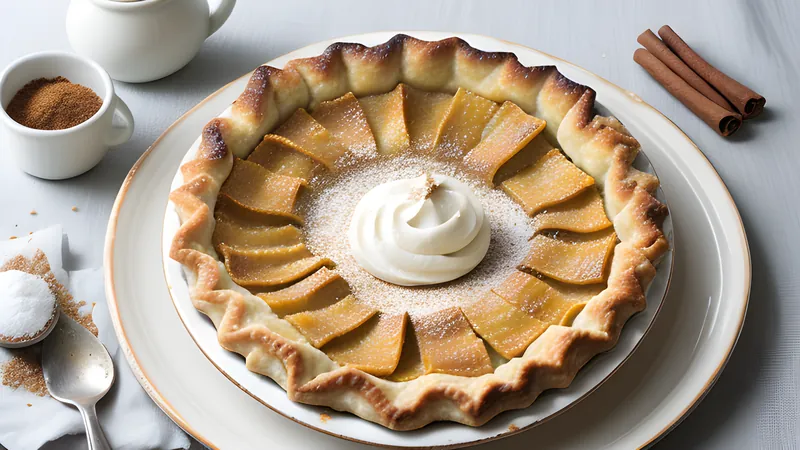
- Rest for 5 minutes, then invert onto a serving plate. Dust generously with icing sugar and mark a cinnamon diamond lattice across the top.
- Serve warm, cut into wedges.
Andalusia Landed in Fez
The story usually told is that Andalusian Muslims and Jews, expelled from Granada and the rest of southern Spain through the late fifteenth and early sixteenth centuries, carried their kitchen habits south across the strait and settled thickest in Fez, Tétouan and Rabat. Andalusian cooking already ran sweet and savoury together without apology, almonds and sugar folded into meat dishes the way medieval European kitchens did before sugar became a dessert-only ingredient. Fez had the wealth, the court, and the culinary ambition to take that habit and turn it into a set piece. Pastilla, called bastilla or b’stilla depending on which souk you’re standing in, became the dish a Fassi household serves to say the occasion matters: weddings, the start of a feast, a guest you want to impress rather than just feed.
The traditional filling is pigeon, and old-guard cooks in the Fez medina will tell you nothing else is really pastilla. Pigeon is lean, faintly gamey, and it braises quickly, all of which made it practical for a court kitchen with birds on hand. Outside Morocco, and increasingly inside it too, chicken thighs do the job with none of the sourcing trouble and very little compromise. The braise, the egg curds, the almonds and the crisp shell are what make the dish, not the specific bird underneath them.
Where Pigeon Still Rules
Squab, young farmed pigeon, is still what you’ll find labelled bastilla ma’ammara in the older butchers around the Fez medina, sold whole and plucked rather than jointed, because the birds are small enough that a whole one barely makes a single portion once boned. Wild pigeon, hunted rather than farmed, turns up seasonally and has a stronger, more mineral flavour that some Fassi cooks prefer specifically for pastilla, arguing that chicken’s milder meat needs the almonds and spice to do more of the work to reach the same depth. A butcher who sells squab will usually bone it on request; ask for the carcass too, since it makes a short, intensely flavoured stock that beats plain water or shop-bought stock if you’re set on the traditional bird. Duck breast, though not traditional, is a reasonable stand-in if you want gamier flavour than chicken without hunting down squab; braise it the same way, but check it earlier, since duck cooks through faster than either chicken thighs or pigeon.
Warqa Versus Filo
Warqa is the pastry that gives pastilla its structure: a paper-thin dough stretched and dabbed by hand onto a hot inverted pan, peeled off in a single sheet, and stacked in towers of a dozen or more. Making it properly takes a wet, sticky dough, a steady wrist, and enough practice that most Fassi households buy it from a warqa specialist rather than making their own. It isn’t sold fresh outside Morocco in any reliable way, so filo pastry, thinner and drier but structurally similar, is the honest substitute. Buy the best filo you can find, keep it under a damp tea towel while you work so it doesn’t crack, and butter every sheet generously; that fat is doing the crisping work that warqa’s slightly higher moisture content would otherwise handle on its own. Yufka, the Turkish equivalent sold in some Middle Eastern grocers, also works and is a shade closer to warqa in texture if you can find it.
Building the Layers
The braise is the part that rewards patience. Grated onion rather than sliced gives you a sauce with body instead of visible strands, and it breaks down fully into the reduction. The egg-curd step, tipping beaten egg into the hot reduced stock and stirring until it sets into soft ribbons, is borrowed from the same technique that thickens Moroccan chicken kedra, and it’s what gives the filling its distinctive, almost custard-like richness rather than leaving you with plain shredded meat in gravy. Don’t rush the reduction; a thin sauce means a soggy pie.
Two almond layers, one under the filling and one over it, keep the crumb structure even through the pie and stop the filo directly above the wet filling from turning gummy before it bakes. Toast the almonds properly, until they smell nutty and have gone a shade past pale gold, because a food processor will mask underdone almonds as fine crumbs that taste of nothing.
Assembly is a construction job more than a cooking one: base layers overhanging the tin, filling, top layers, fold and tuck. Work quickly once the filo is out from under its damp cloth. A little tearing doesn’t matter, since it’s all going to be hidden under sugar and cinnamon in the end, but keep the top surface reasonably smooth so the lattice pattern reads clearly.
Getting the Crust Crisp
Two things ruin a pastilla crust: a filling that’s still warm when you build the pie, and pastry that’s underbuttered. Let the chicken and egg mixture cool fully, ideally to room temperature, before it goes anywhere near the filo, or residual heat will steam the bottom layers from the inside before the oven even starts. Butter each sheet edge to edge, not just down the middle, and don’t skimp on the tin’s base coating either. A hot oven and a metal tin (rather than glass or ceramic, which conduct heat more slowly) will crisp the underside as reliably as the top.
Saffron, Sugar and the Diamond Lattice
The saffron in the braise is doing more than colouring the sauce; bloom the threads in a tablespoon of the warm stock for five minutes before adding them to the pot, rather than dropping them in dry, and you’ll get a rounder, less bitter flavour along with the colour. Buy whole threads rather than powder if you can, since powdered saffron is the easiest spice to adulterate and the first thing worth being suspicious of if a Moroccan spice stall’s prices look unusually low.
The finishing sugar is a matter of household taste more than fixed rule. Two tablespoons of icing sugar and a dusting of cinnamon is a restrained Fassi finish; some families dust more heavily, closer to a proper sweet crust, and others add a thin drizzle of orange blossom water to the icing sugar before it goes on, which perfumes the top layer without adding more sweetness. However you finish it, do the sugar and cinnamon separately rather than mixing them in one bowl first: a solid white field of sugar with a cinnamon lattice drawn through it, traditionally in a diamond or radiating-spoke pattern using the edge of a knife as a stencil, reads far better on the table than a uniform beige dusting.
Serving Pastilla the Fassi Way
At a Fassi wedding or a big family gathering, pastilla is served first, ahead of the main tagine, in slices cut like a cake rather than in the individual small parcels sometimes seen elsewhere. Everyone eats with their hands or a fork depending on the household, and mint tea, poured hot and sweet from height into small glasses, is the drink that goes alongside it almost without exception; nothing else really keeps pace with the mix of savoury spice, sugar and buttery pastry sitting on the plate at once. A whole pastilla feeds six as a course before a larger meal, or four as the centrepiece of a lighter dinner with a salad, such as taktouka, alongside it. Cut it with a sharp, heavy knife straight off the tin’s cooling rack rather than after it has been moved to a serving plate, since a cooked pastilla is fragile enough that lifting it whole risks the top layer cracking before a single slice comes off.
Make Ahead, Storage and Variations
The chicken and egg filling can be made up to two days ahead and kept covered in the fridge; the almond mixture keeps just as long in an airtight jar. Assemble the pie close to baking, though, since raw filo left filled and unbaked in the fridge overnight will absorb moisture and lose its crispness. Baked pastilla reheats well in a moderate oven, 15 minutes at 180C, uncovered, to bring the crust back; the microwave will turn it soft and is worth avoiding. A whole pastilla can also be frozen unbaked: assemble it fully in a freezer-proof tin, wrap tightly, and freeze for up to two months, then bake from frozen at 170C fan for around an hour, checking the top doesn’t catch before the centre is hot; this is the more reliable route if you’re making it ahead for a specific date rather than freezing individual portions.
Seafood pastilla, filled with prawns, monkfish and vermicelli bound in a saffron and preserved-lemon sauce instead of the chicken and egg mixture, is a coastal variation you’ll find in Essaouira, entirely savoury and skipping the sugar dusting. For a smaller, individual version, divide the same filling into filo parcels the size of a hand pie; they crisp faster and make good freezer stock, uncooked, layered between baking paper for up to two months. If you’re building out a Moroccan spread, this pairs naturally with the braise techniques in our chicken and preserved lemon tagine, and the same warm-spice, long-cook logic carries through to mrouzia, the raisin-and-lamb dish that shows up on the same festive tables. Around Tétouan, the same pie sometimes appears with a milk-and-rice filling instead of chicken, a legacy of the city’s own Andalusian refugee history running slightly differently from Fez’s; it’s sweeter still and closer to a dessert than a savoury course, proof that even within Morocco pastilla was never pinned down to one recipe.
Related Content