Pasta con le Sarde: The Sardines and Fennel of Palermo
Saffron, raisins, pine nuts and a fish that costs almost nothing
Contents
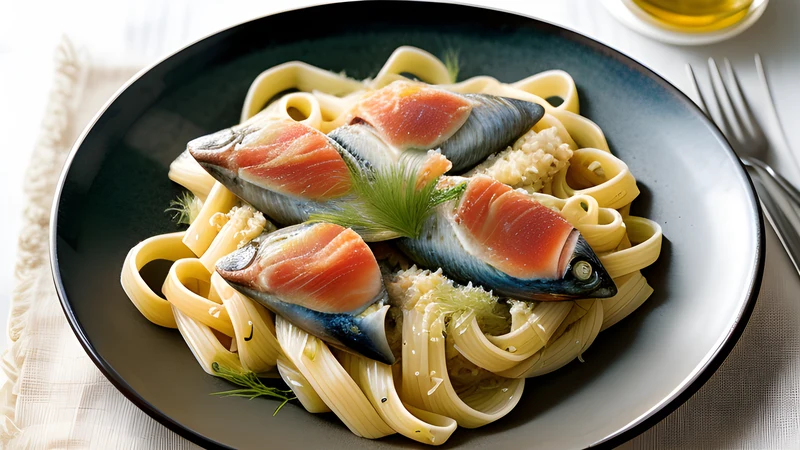
↓ Jump to recipeThere is a pasta in Palermo that contains fish, raisins, saffron and pine nuts, and every one of those decisions sounds like a mistake until you eat it. Pasta con le sarde is the dish I would point at if someone asked what Sicily actually tastes like, because it holds two thousand years of arrivals in one bowl and manages to be a cheap Tuesday dinner while doing it.
It is also a dish people get wrong in a specific way: they cook it like a Northern European fish pasta, hot and stirred and finished with cheese. It wants to be warm, barely mixed, and covered in fried breadcrumbs.
Pasta con le Sarde: The Sardines and Fennel of Palermo
Ingredients
- 400g bucatini
- 500g fresh sardines, scaled and filleted (about 250g of fillet)
- 250g wild fennel fronds, or 1 large fennel bulb with its fronds plus 1 tsp fennel seeds
- 1 large onion, finely chopped
- 4 salted anchovy fillets, rinsed
- 50g raisins
- 40g pine nuts
- a large pinch of saffron threads, about 0.2g
- 80ml extra virgin olive oil
- 20g fine sea salt, for the water
- 80g coarse dry breadcrumbs, from stale country bread
- 2 tbsp extra virgin olive oil, for the breadcrumbs
- finely grated zest of 1 orange
- 1/4 tsp flaky sea salt, for the breadcrumbs
Method
- Bring 3 litres of water to the boil with the 20g of salt. Add the fennel fronds (or the bulb, quartered, with its fronds) and boil for 12 minutes, until soft. Lift the fennel out with tongs and keep every drop of the water.
- Squeeze the fennel dry, chop it finely, and set it aside. Put the raisins and the saffron in a small bowl and pour over a ladleful of the hot fennel water. Leave for 15 minutes.
- Toast the pine nuts in a dry frying pan over medium heat for 3 minutes, shaking often, until patchy gold. Tip out immediately.
- Make the breadcrumbs: heat the 2 tbsp of oil in the same pan over medium heat, add the breadcrumbs and the flaky salt, and stir constantly for 4 minutes until deep gold and loose. Take the pan off the heat, stir in the orange zest, and tip into a cold bowl.
- Heat the 80ml of olive oil in a wide pan over medium-low heat. Cook the onion for 12 minutes, stirring, until soft and sweet with no colour.
- Add the anchovies and mash them into the oil with a wooden spoon until they dissolve, about 90 seconds. If you are using fennel seeds, add them here.
- Cut half the sardine fillets into 2cm pieces and leave the rest whole. Add the chopped pieces to the pan and cook for 3 minutes, breaking them up, until they collapse into the onion.
- Add the chopped fennel, the pine nuts, and the raisins with their saffron liquid. Simmer for 5 minutes, then lay the whole fillets on top, cover, and cook for 4 minutes more without stirring.
- Return the fennel water to a hard boil and cook the bucatini until 1 minute short of the packet time. Drain, keeping a mugful of the water.
- Fold the pasta into the sauce over low heat for 1 minute, loosening with the reserved water until it is glossy and just slack. Rest off the heat for 5 minutes.
- Serve warm rather than hot, scattered heavily with the orange breadcrumbs. No cheese.
Arabs, Normans and a fish nobody wanted
The origin story you will hear in Palermo credits a cook in the army of Euphemius, the Byzantine commander who invited an Arab force into Sicily in 827 and started three centuries of Islamic rule on the island. The cook, so the story goes, landed at Mazara del Vallo with hungry troops and no supplies, and made dinner from what was in front of him: sardines from the shallows, wild fennel from the hillside, and the dried fruit and nuts the army carried. It is a good story and there is no evidence for it whatsoever. Treat it as folklore.
What is true is that every element in the dish maps onto a real historical arrival. Saffron, raisins, pine nuts and the sweet-savoury instinct came into Sicilian cooking with Arab agriculture and Arab trade, along with citrus, sugar cane, aubergines and rice. Wild fennel — finocchietto selvatico — is native and grows on every roadside in Sicily from February to May. Sardines cost nothing because the waters between Sicily and Tunisia are full of them. The dish is what happens when an Arab pantry meets a Mediterranean coastline, and it took several centuries rather than one afternoon.
There is a poverty version with a wonderful name: pasta con le sarde a mare — pasta with the sardines still at sea. Everything else is there, fennel and saffron and raisins and breadcrumbs, and the fish is simply absent because there was no money for it that week. It is genuinely good, which tells you where the flavour actually lives.
Palermo and Catania argue about the details, as they do about everything. The Palermo version tends towards more onion, a wetter sauce and a rest before serving; further east you find versions baked in a dish and sliced. Neither side puts cheese on it. The rule against cheese on fish pasta is real in Sicily and it has a reason behind it: grated pecorino flattens sardine completely, and the breadcrumbs cover the same ground — salt, fat, texture — while leaving the fish audible.
One more piece of Palermo context: this is a spring dish and it always was. Wild fennel is at its best between February and May, sardines are cheapest and fattest in the same months, and the sagra calendar around the Conca d’Oro reflects it. Making it in November with a cultivated bulb is a compromise, and a reasonable one, but the version you eat in a Palermo trattoria in April is a different intensity of thing.
Muddica, the poor man’s cheese
Muddica atturrata is stale bread, grated coarse and fried in olive oil until it is the colour of a hazelnut. In a Sicily where cheese cost money and stale bread did not, it became the standard finish on pasta, and it is better than the thing it replaced. It gives salt, fat and crunch and it does not compete with fish.
Use bread you have to work at. A dry, open-crumbed country loaf grated on a box grater gives irregular crumbs that fry unevenly and therefore taste of several things at once. Fine dry crumbs from a packet fry to sand.
The one thing I add is orange zest, stirred in off the heat. This is the small change in this recipe and it earns its place. Sicilian oranges are everywhere in the island’s savoury cooking, and the volatile oils in the zest go straight at the two things that can drag this dish down: the oily heaviness of the sardine and the sweetness of the raisin. Add it off the heat. Zest hitting a 180°C pan turns bitter within seconds; zest hitting warm crumbs releases its oil into the fat and holds its brightness for an hour.
The fennel water is the stock
The single most important technique in this dish is also the easiest to skip: boil the fennel in the pasta water and then cook the pasta in the same water. That water is now a light fennel stock, faintly aniseed and properly salted, and the bucatini drinks it for eight minutes. It is the difference between a fennel sauce on pasta and a fennel pasta.
Wild fennel is the correct ingredient and it is difficult to find outside the Mediterranean. If you can get it — Italian greengrocers, sometimes farmers’ markets in spring — use the fronds and the tender stalks, 250g of them, and no seeds. If you cannot, a bulb with its fronds gets you most of the way, and a teaspoon of fennel seeds bloomed in the oil restores the aniseed intensity that a cultivated bulb lacks. Fennel bulb alone tastes of celery. The seeds are doing real work.
Squeeze the boiled fennel hard before chopping. Water clinging to it will thin the sauce at exactly the point where you want it clinging.
Sardines: half collapsed, half whole
Half the fillets go in early and dissolve. They melt into the onion and become the sauce — the savoury base, the fat, the fish flavour that gets everywhere. The other half go on top for four minutes under a lid and stay in pieces, so there is something to find with a fork.
Ask the fishmonger to fillet them, or do it with your thumb: head off, slit the belly, run a thumbnail along the spine from head to tail, lift the backbone out in one piece. Sardine bones are soft and edible, but the backbone in a pasta is an annoyance. The pin bones are fine and you will not notice them.
Fresh matters more here than in almost any other fish dish. Sardines are oily and the oil goes off fast; a sardine more than two days out of the water tastes of fish oil rather than of sardine. Look for firm bodies, clear eyes, and scales still attached. If they smell of anything beyond the sea, walk away. Tinned sardines are already cooked, and they turn to paste in the pan without ever giving you the whole fillets.
Serve it warm, and let it rest
Five minutes off the heat before serving is a Palermo instruction and it is correct. Raisin, saffron and fennel all need a moment to move out of the sauce and into the pasta, and sardine flavour is blunted by high heat — served straight from the flame, the dish is louder and less interesting. Warm, it opens up.
Timing this properly means having everything in bowls before the pan gets hot. The sauce takes twelve minutes of unattended onion and then moves fast, and the pasta water is already made because it is the fennel water. Toast the crumbs first, off to one side, and forget about them.
Bucatini is the traditional shape because the hole fills with sauce and the thickness stands up to a heavy dressing. Spaghettoni or a good bronze-die spaghetti works. Anything short and ridged is a different dish.
What goes wrong
The sauce is watery and slides off. The fennel was not squeezed, or the pasta went in with too much water clinging. Drain the bucatini properly and add the reserved water back a splash at a time; the starch in it is what makes the sauce cling.
It tastes of fish oil. Old sardines. There is no cooking around this and no seasoning that hides it.
It is cloyingly sweet. Too many raisins, or raisins that were already sugary. Fifty grams in a 400g pasta is the ceiling. Sicilian passolina, the small Corinth-type raisin, is more sour than a standard sultana and better suited; if all you have is jumbo sultanas, cut to 35g.
The saffron has vanished. Saffron needs liquid and time — 15 minutes in warm fennel water extracts the crocin and the picrocrocin properly. Threads dropped dry into a hot pan give you colour and nothing else. Never buy powdered saffron; there is no way to tell what is in it.
The breadcrumbs went soft the moment they hit the plate. They were fried in too little oil and never dried out, or they went on the pasta in the pan instead of at the table. Crumbs meet pasta at the last possible second, always.
The onion browned. Medium-low for twelve minutes, and stir. Browned onion brings a caramel note that fights the saffron. You want it collapsed and sweet with no colour at all.
Storage, variations and the neighbours
It reheats badly and eats well cold, which is the opposite of what you expect. A bowl at room temperature the next day, with fresh breadcrumbs on top, is a legitimate lunch — the fried crumbs go soft overnight, so make a small extra batch and keep them in a jar.
The sardines-at-sea version, with 60g more pine nuts and raisins to compensate, is worth cooking on purpose rather than as a fallback. A vegetarian reading swaps the anchovy for a tablespoon of capers and gains a lot.
If this register of Sicilian cooking is new to you, caponata with capers, olives and pine nuts runs on exactly the same sweet-sour-savoury logic with aubergine in place of fish. For a plainer, faster way with the same tin of fish, sardines on toast with charred lemon takes about nine minutes. And the anchovy-melted-into-oil move at the start here is the same one that drives spaghetti puttanesca, which is worth knowing as a technique rather than as a recipe.
One practical note on quantity. Five hundred grams of whole sardines sounds like a great deal for four people and it yields around 250g of fillet, which is barely 60g of fish each once half of it has dissolved into the sauce. That is the correct ratio. This is a pasta dish that happens to contain fish, and a version loaded with sardine reads as a fish course with pasta on it — heavier, oilier, and further from Palermo.
Cook the whole 500g of sardines even if it looks like too much. It is not.
Related Content