Papanași: The Romanian Fried Doughnut With Soured Cream and Jam
A cheese doughnut with its own hat, drowned in smântână and sour cherry
Contents
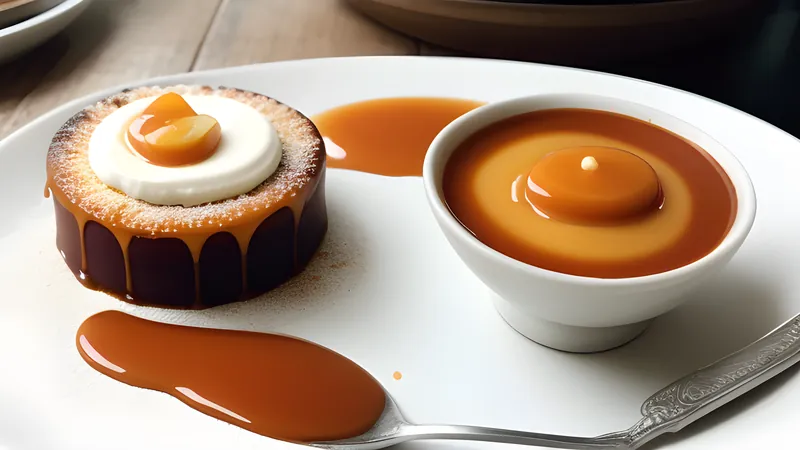
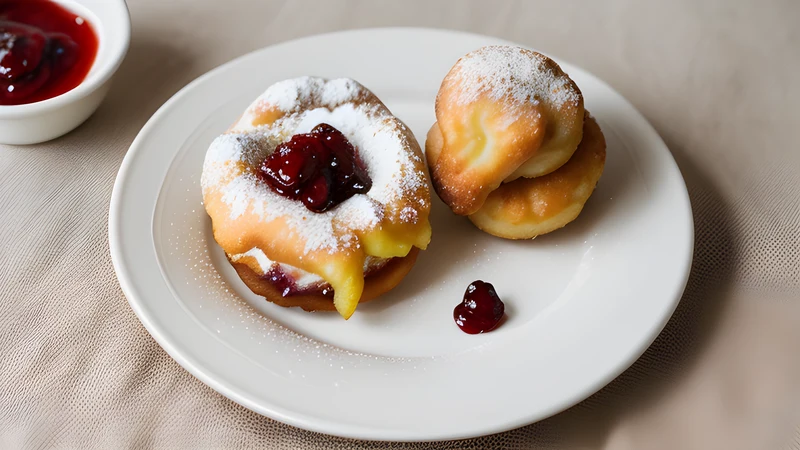
↓ Jump to recipeThe first time I was served papanași I assumed a mistake had been made. It arrived at a table in a Bucharest restaurant looking like a doughnut wearing a small doughnut as a hat, buried under a white drift of soured cream and bleeding sour cherry syrup down its sides, and it was the size of a side plate. There were four of them on the menu as one portion. One is a portion. Whoever wrote that menu was being optimistic about human capacity.
It is Romania’s great pudding, and its architecture — the ring, the ball on top, the two sauces — is completely fixed. You can argue about the cheese. You cannot remove the hat.
Papanași: The Romanian Fried Doughnut With Soured Cream and Jam
Ingredients
- 500g brânză de vaci, or full-fat dry curd cheese / drained ricotta (see note on draining)
- 2 medium eggs
- 60g caster sugar
- 180g plain flour, plus 20g for shaping
- 5g baking powder
- 3g fine sea salt
- Finely grated zest of 1 lemon
- 1 tsp vanilla extract
- 20g semolina
- 1.5 litres sunflower oil, for deep frying
- 250g smântână, or full-fat soured cream at 20% fat minimum
- 200g sour cherry jam (dulceață de vișine), preferably with whole fruit
- 1 tbsp icing sugar, to finish
Method
- Drain the cheese if it holds any visible moisture: tip it into a muslin-lined sieve set over a bowl, gather the cloth, and press gently. Leave in the fridge for 2 hours. You are aiming for a cheese that crumbles rather than spreads — this single step decides whether the recipe works.
- Press the drained cheese through a sieve into a large bowl with the back of a ladle. This breaks the curd into a fine, even texture and takes about 3 minutes. Skipping it gives you lumpy papanași with wet pockets.
- Add the eggs, sugar, salt, lemon zest and vanilla. Mix with a fork until smooth and uniform, about 1 minute.
- Sift the flour, semolina and baking powder over the top. Fold with a spatula until just combined and no dry flour remains. Stop the moment it comes together — every extra stroke develops gluten and turns the finished doughnut chewy.
- Cover and rest in the fridge for 20 minutes. The flour hydrates and the dough firms enough to shape.
- Heat the oil in a deep, heavy pan to 165C, measured with a thermometer. The oil should be at least 8cm deep and fill the pan no more than halfway.
- Flour your hands well. Divide the dough into 4 equal portions of roughly 190g, plus 4 small portions of 20g. Roll each large portion into a ball, flatten to a 2cm-thick disc, and push a floured finger through the centre to make a 2cm hole, widening it gently. Roll the small portions into balls.
- Fry the small balls first, 2 at a time, for 2 minutes until deep gold, turning once. Lift onto kitchen paper.
- Fry the rings 2 at a time for 3–4 minutes total, turning once at the halfway point, until deep golden brown and firm. Keep the oil between 160C and 170C — check between batches and let it recover.
- Drain on kitchen paper for 1 minute only. Papanași are served hot, and a doughnut left to sit steams itself soft.
- Plate each ring, spoon over 60g of soured cream, add a generous spoonful of cherry jam with its syrup, and set the small ball on top as a lid. Dust with icing sugar and serve immediately.
Cheese, and the word that gave it a name
Start with the etymology, because it tells you what the dish is. Papanaș comes from the Latin pappa, the same root that gives Italian pappa and English pap — soft food, baby food, the thing you feed someone with no teeth. It is a word about texture.
That fits, because a papanaș is a cheese product held together by the minimum flour required. Five hundred grams of curd cheese to a hundred and eighty of flour is a ratio that would horrify a baker and is the entire reason the finished thing tastes of dairy rather than dough.
The cheese in question is brânză de vaci — literally cow’s cheese — a fresh, unaged, slightly sour curd made by souring milk and draining it. Every Romanian household with a connection to a village had access to it, and it is a byproduct of a subsistence dairy economy: you make butter, you make cheese from what is left, and you use both before they turn. Papanași belong to the same family as Russian syrniki, Polish sernik and Ukrainian syrnyky — a broad Central and Eastern European habit of turning fresh curd into something sweet and fried, which exists because that is what a household had on a Sunday.
The regional split is worth knowing. In Moldova and Bucovina, papanași are frequently boiled rather than fried — dropped into water like a dumpling, then rolled in toasted breadcrumbs and butter. The fried version is what conquered restaurant menus, and it is what most people now mean. Both are correct; the boiled one is older and considerably harder to sell to a table of tourists.
The moisture problem
Everything that goes wrong with papanași goes wrong because of water.
Fresh curd cheese is somewhere between 70% and 78% water depending on how hard it was drained. Ricotta, the usual substitute outside Romania, sits at the wet end and is often wetter still because it has been sitting in whey in a tub. That water has to go somewhere. In a 165C oil bath it turns to steam, and steam inside a fried dough ring is a structural event: it either escapes through the surface, leaving the doughnut greasy and collapsed, or it stays put and gives you a raw, wet centre under a cooked crust.
The instinctive fix is more flour. This is the wrong fix, and it is why so many home versions turn out heavy. Adding another hundred grams of flour absorbs the water and gives you a dough that fries fine and tastes like a scone. The right fix is to remove the water before it becomes your problem — two hours in muslin, gently pressed, until the cheese crumbles when you squeeze a pinch.
The semolina is my small insurance policy and my one addition to the standard recipe. Twenty grams of coarse semolina absorbs residual moisture during the twenty-minute rest, then gelatinises in the fryer to give a slightly crisper, sandier edge without contributing gluten the way more flour would. It is a trick borrowed from gnocchi and it earns its place.
Sieving the cheese matters more than it sounds. Curd cheese arrives in irregular lumps, and a lump that survives into the dough is a pocket of concentrated moisture with a different cooking rate from everything around it. Three minutes with a ladle and a sieve buys an even crumb.
Frying temperature, and why 165C
This is a thick, dense, wet dough, and the oil temperature is a compromise between two failure modes.
At 180C — normal doughnut temperature — the surface of a 2cm-thick ring is deep brown in ninety seconds while the centre is still cold cheese. At 150C the heat penetrates evenly but the crust takes so long to form that oil soaks inwards, and you get a greasy, heavy result. At 165C the crust sets fast enough to seal and slow enough that four minutes brings the centre to a set, fluffy 90C.
Use a thermometer. Frying two large rings at a time drops the oil temperature of a 1.5-litre bath by roughly 15C, which is exactly why batches of four go wrong and batches of two do not. Let the oil come back before the next pair.
The baking powder does the lifting, and it needs the heat to arrive quickly to do it. Chemical leavening in a cold dough dropped into cool oil gives up most of its gas before the structure can set around it, which is the mechanism behind a dense papanaș that tasted fine raw.
Shaping, and the hat
The shaping stage is where most people’s confidence goes, because the dough is soft, sticky and refuses to behave like a dough. Flour your hands properly — genuinely coated, re-floured between each piece — and work fast. The warmth of your palms softens the cheese, so a portion handled for ninety seconds is noticeably slacker than one handled for thirty.
Divide by weight rather than by eye. Four portions of 190g and four of 20g out of roughly 850g of dough gives you rings that cook at the same rate, which matters when you are fishing them out of oil on a four-minute timer. Uneven portions mean one is raw and one is dark.
The hat does real work, whatever it looks like. Rolled from the same dough and fried first in the same oil, it is a portion-control device from a time when a household stretched a batch: the small ball uses the offcut, and it sits in the cream soaking up syrup while you eat the ring. It also serves as a doneness test. Fry the balls first, break one open, and you learn exactly what your oil is doing before you commit the large pieces to it. If the ball is raw at the centre after two minutes, your oil is too cool and you have lost nothing.
Some restaurants now serve papanași with the hat skewered on a cocktail stick, standing up. This is a plating fashion of the last twenty years or so. The ball belongs sitting in the cream, absorbing.
Where it goes wrong
Greasy and heavy. Oil below 160C, or a dough overworked into gluten.
The ring bursts open in the pan. Too much moisture in the cheese. The steam had to go somewhere.
Raw in the middle, dark outside. Oil too hot. Drop to 165C and give it the full four minutes.
Chewy and bready. You mixed after the flour went in. Fold, count the strokes, stop early.
The hole closes up while frying. Make it wider than looks right — 2cm before frying becomes about 1cm after. The hole is functional, letting heat into the centre from both sides.
It falls apart when you lift it. Under-rested. Twenty minutes in the fridge is a minimum.
The two sauces
Smântână deserves its own word. It runs thicker and higher in fat than the soured cream most British shops sell — typically 20–30% — and its sourness is lactic and clean where ours tends sharp. Full-fat soured cream is the sensible substitute; crème fraîche at 30% fat is arguably closer on texture and slightly wrong on flavour. Low-fat soured cream will split into a watery mess against a hot doughnut, so do not.
The jam is traditionally dulceață de vișine, sour cherry preserve, and the sourness of the fruit is doing structural work against the sugar in the dough and the fat in the cream. Sweet cherry jam collapses the whole balance. If you cannot get sour cherry, use blackcurrant or a sharp plum. The syrup matters as much as the fruit — you want it to run.
Blueberry and wild strawberry versions exist and are common in Transylvania. Whatever you use, it needs acid.
The order of assembly is fixed and it is worth respecting. Cream first, directly onto the hot ring so it slackens slightly and settles into the hole; jam second, so its syrup runs over the white rather than under it; hat last. Reverse any of that and you get a plate that tastes identical and looks like an accident.
Serving, and the honest warning
Hot, immediately, and one per person. A papanaș that has waited ten minutes has steamed its own crust soft from the inside and lost the contrast that makes it worth the oil. This is not a make-ahead dish and there is no version of it that survives a night in a tin.
The dough will hold in the fridge for 24 hours before frying, which is the only useful advance step. Fried papanași reheat badly in every method I have tried.
If you are building a Romanian table around it, it wants to land after something savoury and substantial — sarmale is the obvious partner, and the sour cherry does the same job at the end of the meal that the fermented cabbage did in the middle. Serve it with coffee and do not plan anything for the afternoon.
Related Content