Pan-Seared Duck Breast with Cherry and Port Sauce
Crisp skin, blushing pink, and a glossy fruit sauce
Contents
↓ Jump to recipeDuck breast has a reputation as restaurant food, the sort of thing you order out because surely it is too tricky to cook at home. It is not. In fact it is one of the most forgiving impressive dinners I know, because the technique that gives you that lacquered, crackling skin is almost lazy: you start it in a cold pan and let time do the work. Pair it with a sauce of dark cherries and port, all sweet, sharp and faintly boozy, and you have a meal that tastes like a special occasion but takes barely half an hour of actual effort.
Pan-Seared Duck Breast with Cherry and Port Sauce
Ingredients
- 2 duck breasts, skin on (about 200g each)
- Salt and black pepper, to taste
- 1 shallot, finely chopped
- 150ml ruby port
- 200ml chicken or beef stock
- 200g cherries, fresh or frozen, pitted
- 1 tbsp red wine vinegar
- 1 tbsp redcurrant jelly or honey
- 1 sprig fresh thyme
- 15g cold butter, cubed
Method
- Take the duck out of the fridge 30 minutes before cooking and pat the skin completely dry.
- Score the skin in a fine crosshatch, cutting through the fat but not into the meat, then season both sides generously with salt.
- Place the breasts skin-side down in a cold, dry frying pan and set over medium heat.
- Cook for 8 to 10 minutes as the fat renders out, pouring off excess fat now and then, until the skin is deep golden and crisp.
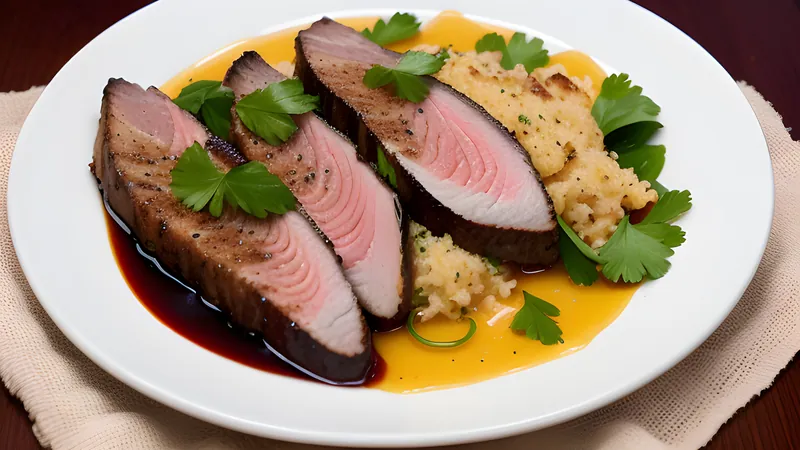
- Flip and cook for a further 3 to 4 minutes for blushing pink, then rest the duck skin-side up on a warm plate for at least 5 minutes.
- Pour off all but a tablespoon of fat, add the shallot to the pan and soften for 2 minutes.
- Pour in the port and let it bubble and reduce by half, scraping up any sticky bits.
- Add the stock, cherries, vinegar, redcurrant jelly and thyme, and simmer for 6 to 8 minutes until syrupy.
- Remove the thyme, whisk in the cold butter to give a glossy finish, and season to taste.
- Slice the duck thickly on the diagonal and serve fanned out with the cherry sauce spooned over.
A classic French pairing
Duck and cherries are an old, happy marriage in French cooking, best known through the dish canard aux cerises and its sibling canard à la Montmorency, named after the sour Montmorency cherries grown around the eponymous town north of Paris. The richness of duck — that generous layer of fat under the skin — practically demands something tart and fruity to cut through it, which is why classic duck sauces so often lean on cherries, oranges or blackcurrants.
Port found its way into these sauces as a fortified shortcut to depth: its sweetness and its gentle warmth from the brandy it is fortified with give a reduction real body without long simmering. The combination became a staple of bistro menus and dinner-party cookbooks alike, the kind of dish that felt grand in the 1970s and has quietly never gone out of style. What I love about it is how the sweet-sharp sauce flatters the duck rather than burying it; you still taste the bird.
Duck itself has long been prized in French country cooking, particularly in the south-west, where the whole bird is put to use — the legs confited, the fat rendered for cooking, the breasts seared as magret. That nose-to-tail thriftiness is part of why duck dishes feel both rustic and luxurious at once. A single seared breast, sliced and sauced, is the most accessible way into that tradition for a home cook, asking for one good pan and very little else.
The cherry version leans specifically on Montmorency, a sour cherry long cultivated in France and named for the valley north-west of Paris. Sour cherries hold their tartness through cooking where sweet dessert cherries turn cloying, which is exactly the quality a fatty piece of meat wants alongside it. If you can only find sweet cherries, you compensate with a firmer hand on the vinegar, and the sauce lands in the same place.
What you need
The ingredient list is short and every item earns its place. Two skin-on duck breasts of about 200g each feed two generously; buy them with a good even layer of fat, which is where the crackle comes from. For the sauce you need one finely chopped shallot, 150ml ruby port, 200ml chicken or beef stock, 200g pitted cherries (fresh or frozen), 1 tbsp red wine vinegar, 1 tbsp redcurrant jelly or honey, a sprig of thyme and 15g of cold butter cubed for the finish. Salt and black pepper season throughout.
Ruby port is the workhorse here rather than a fine tawny; you are cooking it down hard, so save the good bottle for drinking. Redcurrant jelly is the classic French sweetener for meat sauces because it brings sharpness alongside its sweetness, unlike plain sugar.
How to make it
The whole game with duck breast is rendering the fat slowly. Pat the skin bone-dry, score it in a fine crosshatch so the fat can escape, and lay it skin-side down in a cold, dry pan. As the pan heats, the fat melts out gradually instead of seizing, leaving the skin thin, golden and shatteringly crisp. Be patient and pour off the rendered fat as it pools — save it in a jar for the best roast potatoes of your life.
Once the skin is done, a quick flip finishes the meat to blushing pink, then it rests while you build the sauce in the same pan. Shallot, then port reduced down hard, then stock, cherries and a little vinegar and jelly to balance sweet against sharp. A knob of cold butter whisked in at the end pulls it together into something glossy and spoonable. Slice the duck thickly so each piece carries a ribbon of that crisp skin.
Resting is the step people skip and then wonder why their duck is dry. Give it five minutes minimum, loosely tented, skin-side up so the crisp skin does not steam and soften against the plate. As it rests, the juices that have been driven to the centre by the heat redistribute back through the meat, so when you finally slice it the board stays dry and the duck stays succulent. Use that resting time to finish the sauce, and the whole thing comes together to the minute.
Tips and variations
A meat thermometer takes the guesswork out: aim for around 54°C in the thickest part for pink, pulling it before it climbs as it rests, as carry-over heat will take it a couple of degrees higher off the pan. If you prefer it more cooked, give it an extra minute or two on the flesh side, but do try it pink at least once — duck is far better that way, tender and rosy rather than grey and firm. Without a thermometer, press the meat: a rare breast feels soft and yielding, medium springs back gently, and well-done feels firm.
Duck breasts vary a lot in size and fat thickness between breeds, so treat the timings as a guide rather than a rule. A plump Barbary breast wants longer on the skin than a smaller Gressingham one, and a thick fat cap needs more patient rendering. Trust what you see: the skin should be genuinely crisp and the fat almost entirely melted away before you flip. If in doubt, render longer rather than shorter — the meat side cooks in minutes, but there is no fixing flabby skin once the breast is off the heat.
Frozen pitted cherries are a brilliant year-round shortcut and need no prep, though fresh ones in season are a treat. No port to hand? A robust red wine with an extra teaspoon of honey does the job. For the redcurrant jelly, a good dollop of honey or even cherry jam works in a pinch.
Serve with something to soak up the sauce — creamy mash, dauphinoise or simple sautéed potatoes — and a green vegetable with a bit of bite, like wilted chard or buttered green beans. Resting the duck properly is non-negotiable; cut it too soon and all those lovely juices end up on the board instead of in the meat.
Where it can go wrong
The single most common mistake is a hot pan at the start. A cold pan is not a suggestion, it is the whole method: it lets the fat render slowly and fully before the skin sets, so you end up with a thin crisp shell rather than a thick rubbery band of underdone fat. Start hot and the skin seizes shut, trapping the fat inside. If your skin is browning fast but still flabby underneath, your heat is too high — drop it and be patient.
The second is skimping on the drying and scoring. Water is the enemy of crisp skin, so pat the breasts bone-dry and, if you have time, leave them uncovered in the fridge for a few hours so the surface dries further. Score in a fine crosshatch, cutting through the fat but stopping short of the meat; the cuts open as the fat renders and let it escape. Salt the skin generously just before cooking, which seasons and draws out a little more moisture.
For the sauce, the risk is a split or greasy finish. Pour off most of the duck fat before you start the shallots, or the sauce turns oily. Reduce the port properly — it should look syrupy and smell of alcohol cooked off, not sharp — before the stock and cherries go in. And take the pan off the heat before whisking in the cold butter, adding it in a couple of pieces so it emulsifies into a glossy sauce rather than melting to a slick.
Substitutions and make-ahead
No port to hand? A robust red wine with an extra teaspoon of honey does the job, as does Madeira or even a splash of good balsamic loosened with stock. Frozen pitted cherries are a brilliant year-round shortcut and need no defrosting; tip them in straight from the freezer and give the sauce an extra minute. Blackcurrants, or cherries with a spoonful of cherry jam, work beautifully in the same role. For the redcurrant jelly, honey or a good fruit jam stands in without fuss.
The sauce can be made a day ahead up to the point before the butter goes in; cool it, refrigerate, then reheat gently and whisk in the cold butter to finish just before serving. The duck itself wants cooking fresh — it does not reheat well without overcooking — but you can score and salt the breasts hours ahead and leave them in the fridge, which only improves the skin.
If you love this sweet-savoury balance on richer meats, the same instincts turn up in my chicken thighs with preserved lemon and olives, where sharpness cuts fat in a very different register. And when you want the sauce’s glossy butter-finish technique in a purely sweet setting, the method has a lot in common with a proper salted caramel sauce: patience, then emulsion, then restraint.
Related Content