Pad Thai with Tamarind, Palm Sugar and Toasted Peanuts
Balanced sweet-sour noodles, properly done at home
Contents
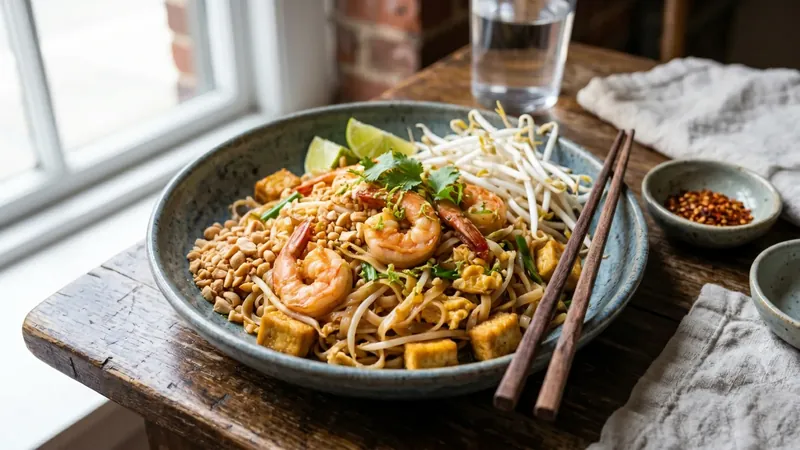
↓ Jump to recipeReal pad thai is a careful balancing act: sweet palm sugar, sour tamarind and salty fish sauce playing off slippery noodles. This version gets the proper tamarind-and-palm-sugar sauce right, finishes with peanuts toasted fresh for maximum crunch, and chars the lime halves so their juice turns smoky-sweet. It is faster than a takeaway and far more vivid, with that addictive sweet-sour tang.
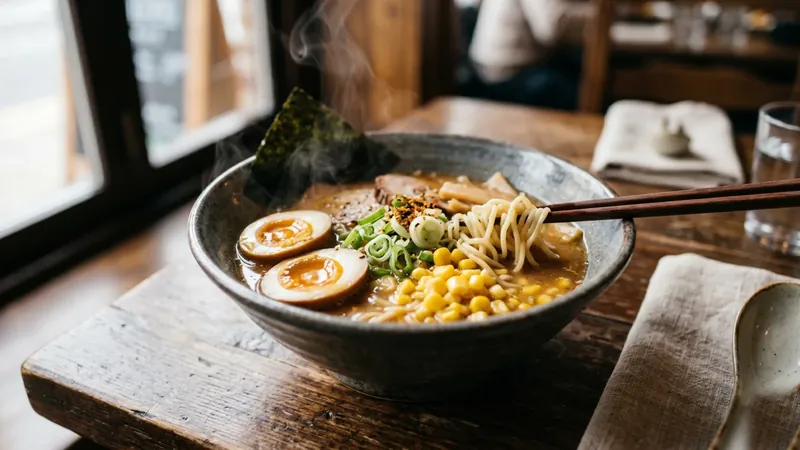
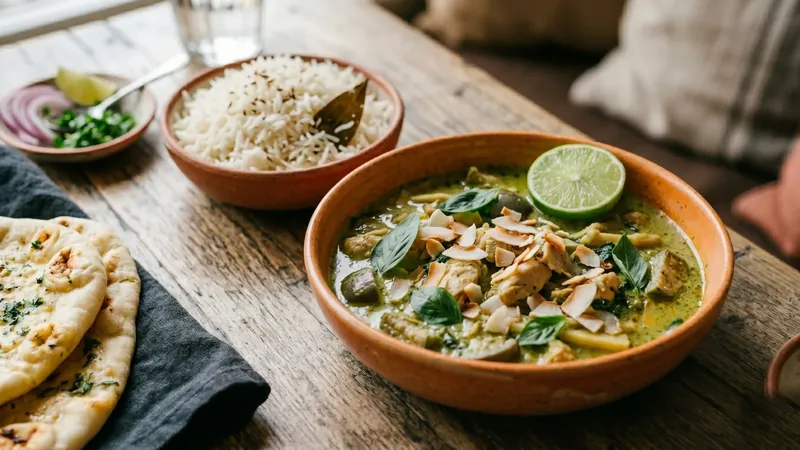
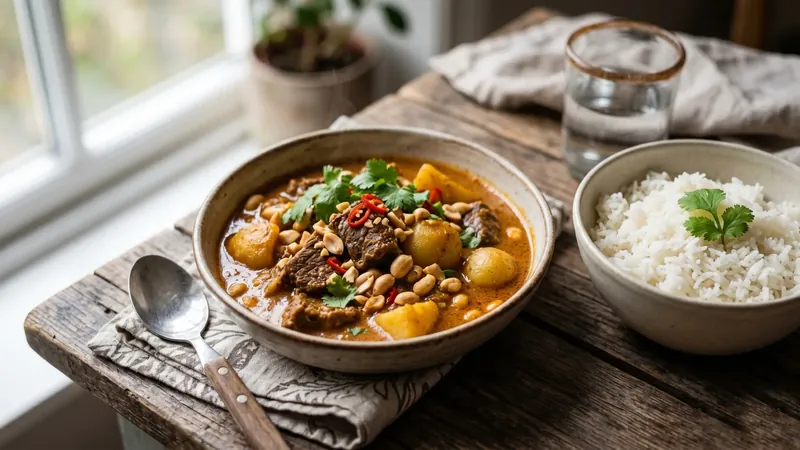
If you are cooking your way through the Thai canon, this belongs on a shortlist with the Thai green curry, the milder massaman curry and the fragrant tom kha coconut soup, which between them show off the sour, sweet, salty and hot balance that runs through the whole cuisine.
Pad Thai with Tamarind, Palm Sugar and Toasted Peanuts
Ingredients
- 120g flat rice noodles
- 2 tbsp tamarind paste
- 2 tbsp palm sugar (or soft brown sugar)
- 2 tbsp fish sauce
- 200g raw king prawns (or sliced chicken or firm tofu)
- 3 tbsp vegetable oil
- 3 garlic cloves, finely chopped
- 2 shallots, thinly sliced
- 2 eggs, beaten
- 100g beansprouts
- 3 spring onions, cut into batons
- 50g roasted unsalted peanuts
- 1 lime, halved
- Dried chilli flakes, to serve
Method
- Soak the rice noodles in warm water for 15-20 minutes until pliable but not soft, then drain.
- Toast the peanuts in a dry pan until fragrant and golden, then roughly chop. Set aside.
- Make the sauce by warming the tamarind paste, palm sugar and fish sauce in a small pan until the sugar dissolves into a glossy syrup. Taste; it should be balanced sweet, sour and salty.
- Char the lime halves cut-side down in a hot dry pan until blackened. Set aside.
- Heat the oil in a wok over high heat. Add the prawns and stir-fry for 1-2 minutes until just pink, then push to one side.
- Add the garlic and shallots and stir-fry for 30 seconds until fragrant.
- Pour the beaten eggs into the empty side of the wok, let them set briefly, then scramble lightly.
- Add the drained noodles and the sauce, tossing constantly for 2-3 minutes until the noodles are tender and coated.
- Throw in the beansprouts, spring onions and most of the peanuts, tossing for another minute.
- Squeeze in the juice of one charred lime half and toss through.
- Pile onto plates, scatter with the remaining peanuts and chilli flakes, and serve with the other charred lime half.
The Story
Pad thai is probably the most internationally recognised Thai dish, a stir-fry of rice noodles tangled with egg, beansprouts and the bright sweet-sour sauce that defines it. It is street food at heart, cooked to order over fierce heat in woks across Thailand, and it rewards quick movements and good preparation far more than any single rare ingredient.
The dish rose to national prominence in the 1930s and 1940s under Prime Minister Plaek Phibunsongkhram, usually known as Phibun. His government pushed pad thai as part of a deliberate nation-building campaign, one strand of the same programme that renamed the country from Siam to Thailand and introduced a new national anthem. There was a practical motive too: the early 1940s brought a rice shortage, worsened by wartime disruption and flooding, and because one bowl of rice could be turned into two bowls of rice noodles, the state promoted noodles to stretch the supply. Under a campaign called “Noodle is Your Lunch”, the Public Welfare Department handed out noodle carts and a standardised recipe to street vendors, and the dish spread fast. Its enduring appeal lies in balance: no one flavour should dominate. Get that right and everything else falls into place.
That balance comes down to three ingredients. Tamarind, the sticky pulp of a tropical pod, provides a fruity sourness quite unlike lemon or vinegar; it is mellow and slightly sweet at the same time. Palm sugar, tapped from palm trees and sold in soft blocks or tubs, gives a caramel-like sweetness with more depth than refined sugar. Fish sauce brings the salt and a savoury, umami backbone. Warming the three together into a syrup before cooking, as here, means you can taste and adjust before the noodles ever hit the pan, which is the surest route to a properly balanced plate.
Texture matters as much as flavour. Soaking the noodles rather than boiling them keeps them springy, and they finish cooking in the wok as they drink up the sauce. Toasting the peanuts yourself just before serving makes a real difference; shop-bought roasted nuts are fine, but a few minutes in a dry pan wakes up their aroma and crunch.
The charred lime is a small flourish borrowed from the way smoky heat transforms citrus. Blistering the cut face in a dry pan caramelises its sugars, so the juice you squeeze over is rounder and a touch smoky rather than sharply acidic. A scattering of chilli flakes lets each person dial up the heat to taste, in the spirit of the condiment caddies found on Thai tables. Cook it fast, in small batches if you can, and serve straight away while the noodles are at their best.
Getting the sauce balanced
The sauce is the dish, so make it first and taste it before anything hits the wok. Warm the tamarind paste, palm sugar and fish sauce together until the sugar melts into a glossy, pourable syrup, then taste it on a teaspoon. It should land as sweet, then sour, then salty, in roughly that order, with no single note sticking out. Tamarind pastes vary enormously in strength and acidity, so treat the quantities as a starting point: if it tastes sharp and puckering, add another teaspoon of palm sugar; if it is cloying, another squeeze of tamarind or a little more fish sauce. This is the moment to fix the flavour, because once the noodles are in the wok there is no time to adjust.
The noodle problem, and how to avoid it
The single most common way pad thai goes wrong at home is mushy, clumping noodles. Two rules keep them right. First, soak, do not boil: cover the flat rice noodles in warm, not boiling, water for 15 to 20 minutes until they are bendy and pliable but still have a firm core, then drain. They should be undercooked at this stage because they finish in the wok, drinking up the sauce as they go. Boiled noodles are already soft before they hit the heat and collapse into a sticky mass. Second, keep the wok hot and keep everything moving. Tossing constantly stops the noodles catching and sticking, and the fierce heat drives off moisture so the dish stays glossy rather than wet.
If you are cooking for more than two, resist the temptation to pile it all into one pan. Home hobs cannot keep a big load hot, so the noodles stew instead of frying. Cook in batches of two portions, wipe the wok between rounds, and you will get a far better result.
Substitutions and variations
The protein is flexible: raw king prawns are classic, but sliced chicken breast or thigh works well, as does firm tofu for a vegetarian version. For a fully vegetarian or vegan plate, swap the fish sauce for light soy sauce plus a teaspoon of white miso or a little seaweed to replace the savoury depth, and use tofu, pressed and cubed, browned first in the hot oil. A tablespoon of dried shrimp, pounded and added with the garlic, gives a more authentic salty-sweet backbone if you can find them. Some cooks add a spoonful of sweet preserved radish for a traditional funky note; a handful of garlic chives in place of some of the spring onion is another classic touch. Beansprouts and peanuts are non-negotiable for me, one for freshness and crunch, the other for that toasty finish. Toast the peanuts yourself just before serving: a few minutes in a dry pan wakes up their aroma far more than the tired pre-roasted sort.
Pad thai does not keep or reheat well, since the noodles soften and lose their spring, so make only as much as you will eat and serve it the moment it leaves the wok.
The order of assembly
The reason pad thai comes together so fast is that all the real work happens before you turn on the heat. Soak the noodles, toast and chop the peanuts, mix the sauce, beat the eggs, slice the aromatics and char the limes, and line everything up beside the hob. The actual stir-frying then takes only a few minutes, and it moves too quickly to stop and chop anything mid-flow. This is true of most wok cooking, but pad thai is especially unforgiving: the window between perfectly tender noodles and a sticky, overcooked tangle is a matter of a minute or two, so there is no time to go hunting for the spring onions once the pan is hot. Cook with your ingredients arranged in the order they go in, work briskly, and you will have a plate that genuinely rivals a good Thai kitchen, made in less time than it takes to walk to the takeaway and back.
Related Content