Pabellón Criollo: Venezuela's Plate of Four Things
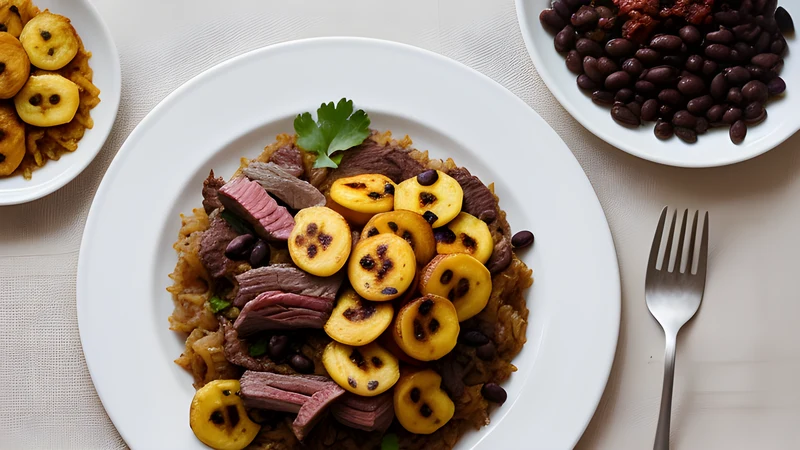
Shredded beef, black beans, white rice and fried plantain on one plate
Contents
↓ Jump to recipePabellón criollo is a plate of four separate things that add up to far more than their parts: threads of slow-cooked beef in a rich tomato sofrito, soupy black beans, plain white rice, and slices of sweet fried plantain caramelised at the edges. Nothing on the plate is complicated on its own. What makes it Venezuela’s national dish is the way the four elements play against each other — savoury against sweet, soft against caramelised, plain rice pulling the whole thing together.
It is comfort food that happens to look like a composed plate, and it rewards a bit of organisation more than any special skill. Each component is easy; the job is simply to have all four ready at once. Cook the beef and beans ahead and the final assembly is a fifteen-minute affair.
Pabellón Criollo: Venezuela's Plate of Four Things
Ingredients
- 700 g beef flank or skirt steak, in large pieces
- 1 onion, halved (for the broth) plus 1 onion finely diced (for the sofrito)
- 1 carrot, roughly chopped
- 3 bay leaves
- 1 red pepper, finely diced
- 4 garlic cloves, minced
- 4 ripe tomatoes, grated, or 1 x 400 g tin chopped tomatoes
- 1 tsp ground cumin
- 1 tbsp tomato purée
- 3 tbsp neutral oil
- Salt and black pepper
- 250 g dried black beans, soaked overnight
- 1 tsp brown sugar
- 300 g long-grain white rice
- 2 very ripe (black-skinned) plantains
- Oil for frying the plantain
Method
- Put the beef in a pot with the halved onion, carrot, 2 bay leaves and 1 tsp salt. Cover with water, bring to a boil, then simmer gently, partly covered, for about 1.5 hours until the meat shreds easily. Reserve the cooking broth.
- Cool the beef slightly, then shred it into fine threads with two forks or your fingers, following the grain of the meat.
- Make the sofrito: heat 3 tbsp oil and cook the diced onion and red pepper for 8 minutes until soft. Add the garlic and cumin and cook 1 minute, then the grated tomatoes and tomato purée. Simmer 10 minutes until thick and jammy.
- Stir the shredded beef into the sofrito with a ladleful of the reserved broth. Simmer 15 minutes until the beef has soaked up the sauce and glistens. Season well.
- For the beans, drain the soaked black beans and simmer in fresh water with 1 bay leaf for 1 to 1.5 hours until soft. Add 1 tsp salt and the brown sugar in the last 15 minutes; keep them soupy, not dry.
- Cook the rice: rinse until the water runs clear, then cook in 1.5 times its volume of salted water, covered, for 12 minutes, then rest off the heat 10 minutes and fluff.
- Peel the plantains and slice on the diagonal into 1.5 cm pieces. Fry in 1 cm of hot oil until deep golden and caramelised on both sides, 2 minutes per side. Drain on kitchen paper.
- Plate each of the four elements separately, side by side: a mound of rice, the shredded beef, the black beans and a fan of fried plantain.
The flag on a plate
The name gives the dish away. A pabellón is a flag or a pavilion, and the arrangement of the components — the white rice, the dark beans, the brown beef, with the golden plantain often draped over the top — is popularly read as the colours of Venezuela laid out side by side. Whether the visual patriotism came first or the name was applied later, the dish is bound up with national identity in a way few plates are.
Its roots are in the llanos, Venezuela’s vast cattle plains, and in the resourceful home cooking of the nineteenth century, where shredded leftover beef, beans and rice were the staples of the day and plantain the ever-present starch. Shredded-beef dishes run right across the Caribbean and northern South America — the technique of boiling a tough, flavourful cut until it falls into threads, then frying it back up in a seasoned sauce, is a shared inheritance. In Venezuela that shredded beef is called carne mechada, and it is the heart of the plate.
Pabellón sits in the same family of hearty, sofrito-built plates as the other dishes I keep returning to, from the arepas of Venezuela’s breakfast table — try arepas reinas pepiadas — to the great festive parcel, hallacas, the Christmas parcel.
Carne mechada: getting the beef right
The beef is the star, and two things make it good: the right cut and the two-stage cooking.
Use flank or skirt steak. These are long-grained, well-exercised cuts full of flavour that, when simmered slowly, break down into exactly the fine threads pabellón wants. Brisket also works. Avoid lean, fine-grained cuts like fillet, which turn dry and refuse to shred properly.
The method is boil-then-fry. First you simmer the beef gently in aromatics — onion, carrot, bay — for around an hour and a half, until a fork twisted into the meat pulls it apart with no resistance. Do not boil it hard; a fierce boil tightens the muscle fibres and makes stringy, dry meat. A lazy simmer keeps it tender. Save that cooking liquid: it is a light beef broth that goes back into the sauce and can flavour the rice or beans too.
Then you shred. Pull the cooled beef along the grain into fine strands — forks work, fingers are quicker. The finer the threads, the better they drink up the sauce.
Finally you fry the shredded beef into a proper sofrito. This is where the flavour is built: onion and red pepper cooked soft, garlic and cumin, grated fresh tomato reduced until jammy, then the beef stirred through with a ladle of its broth and simmered until every thread glistens and the pan is nearly dry. Taste and season hard at this stage — shredded meat needs a lot of salt to come alive.
The black beans
Venezuelan black beans for pabellón — often nicknamed caraotas negras — are cooked soft and kept slightly soupy, and there is a small, lovely quirk to them: a touch of sugar. A teaspoon of brown sugar stirred in near the end gives the beans a faint sweetness that sets off the savoury beef beautifully. Some cooks add a little more and lean properly sweet; find your own line.
Soak the beans overnight for even cooking, then simmer in fresh water with a bay leaf until completely tender, an hour to an hour and a half depending on their age. Season with salt and the sugar only in the final fifteen minutes. Keep them loose and brothy rather than cooking them dry — a little of their liquor on the plate is part of the pleasure, mingling into the rice.
Rice and plantain
The rice is deliberately plain: rinsed until the water runs clear to wash off surface starch, then steamed until fluffy and separate. Its job is to be the neutral, restful centre of the plate, a counterweight to the intensely seasoned beef and the sweet plantain. Do not be tempted to jazz it up.
The plantain — plátano frito, or tajadas — must be made from very ripe fruit, the kind with black, almost frightening-looking skins. That is when the starch has turned to sugar and the flesh fries up soft, sweet and caramelised at the edges. Green or yellow plantains will not do here; they stay starchy and bland. Peel, slice on the diagonal into thick pieces, and shallow-fry in hot oil until deep golden and sticky. Drain on paper. The sweet, soft plantain against the savoury beef is the contrast that makes pabellón sing, and I always fry a couple of extra slices because they vanish before the plate reaches the table.
The sofrito is the flavour base
Everything savoury on this plate runs through the sofrito, so it is worth cooking it properly rather than rushing it. Sofrito — the slow-cooked foundation of onion, pepper, garlic and tomato that underpins so much Latin American and Caribbean food — is where you build depth before the main ingredient ever arrives. The mistake is to hurry it. Onion and red pepper want a full eight to ten minutes over medium heat to turn soft, sweet and translucent; if you rush them, they stay sharp and the finished beef tastes raw underneath its seasoning.
Grated fresh tomato is worth the small mess. Halving a tomato and grating the cut face against a box grater gives you smooth pulp and leaves the skin behind in your hand, which is exactly what you want — no chunks of skin in the sauce. Cook that pulp down with the tomato purée until it turns from bright red and watery to a darker, jammy paste that pulls away from the base of the pan. That reduction concentrates the flavour and is the difference between a sauce that coats the beef and one that just wets it.
Cumin is the defining spice here, warm and earthy, and it wants to hit the hot oil with the garlic for a few seconds before the tomato goes in, so it toasts and blooms rather than tasting dusty. A little goes a long way; a teaspoon for this quantity is plenty.
Timing four components at once
The genuine challenge of pabellón lies in getting all four elements to the table together, hot and at their best, rather than in any single one of them. The way I run it: cook the beef and the beans a day ahead, since both improve overnight and reheat without complaint. On the day, put the rice on first, because it needs its full rest to fluff up and will sit happily covered for a while. Reheat the beef and beans gently while the rice steams. Fry the plantain last of all, so it arrives sweet, hot and just-caramelised rather than sitting and going leathery. Worked that way, the fifteen minutes before serving is calm, and everything lands together.
Assembling and serving
Plate the four elements separately, side by side rather than mixed: a mound of white rice, a pile of the shredded beef, a spoonful of the soupy black beans, and a fan of fried plantain. Traditionally the components are kept distinct on the plate so you can see the “flag,” and each forkful is your own combination. Some like a fried egg on top, which turns it into pabellón a caballo — “on horseback.” A wedge of white salty cheese or a few slices of avocado on the side are welcome too.
- Pabellón a caballo. Top each plate with a fried egg, yolk soft, to break over the rice.
- Tapa’o / con barandas. A version “with railings” tucks slices of fried plantain upright around the edge of the plate like little fences.
- Vegetarian. A meat-free version swaps the beef for shredded green plantain or seasoned mushrooms fried in the same sofrito; the beans, rice and plantain carry it happily.
- Make-ahead. The beef and beans are both better the next day and reheat perfectly, so cook them in advance. Make the rice fresh and fry the plantain at the last minute, when it is at its best.
Get the four things ready, lay them out side by side, and let everyone build their own forkful of savoury, soft and sweet. That interplay is the whole idea, and it is why a plate of four simple things has stood as the taste of home for generations of Venezuelans.
Related Content